

A waterproof baseball cap is a construction project, not a fabric label. For a brand, importer, or wholesale buyer, the cap must keep its intended five-panel or six-panel shape while managing rain exposure, seam leakage, logo attachment, sweatband comfort, and bulk consistency. The practical buying decision is to define the level of water protection first, then select the shell, visor, seam treatment, closure, and decoration around that requirement.
The best waterproof baseball cap brief gives the factory a clear use case, exposure level, material target, seam plan, logo method, sample test, bulk inspection method, packaging requirement, and reorder reference. It also prevents a common mistake in headwear sourcing. A cap can resist surface wetting and still leak through a seam, needle hole, eyelet, sweatband opening, or visor attachment.
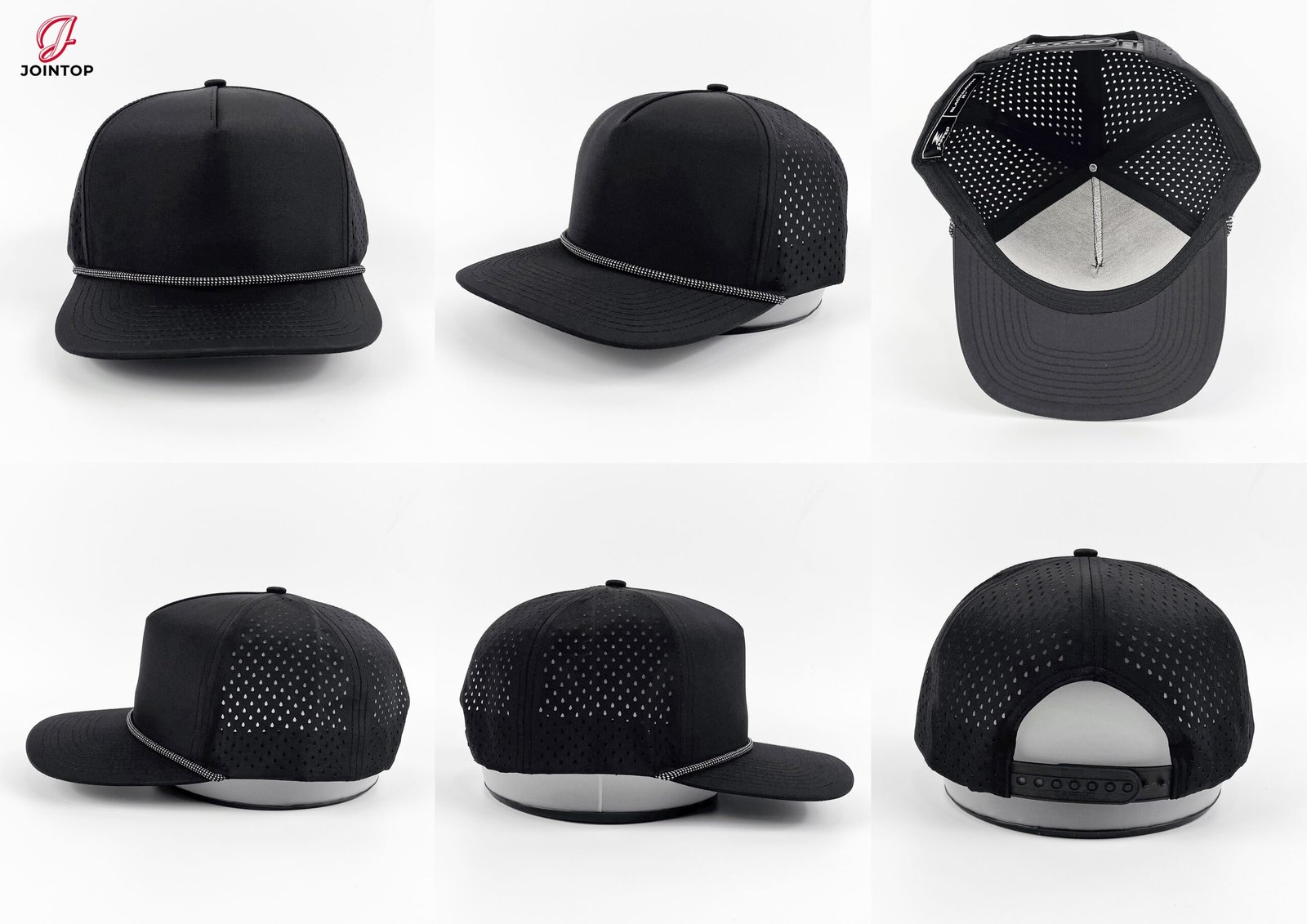
Define what waterproof means for the product
Buyers use waterproof, water resistant, weatherproof, and water repellent as if they describe the same result. They do not. A water-repellent finish can reduce wetting on the fabric surface. A water-resistant construction can handle a defined level of rain or spray. A waterproof claim usually requires a stronger product definition, evidence, and a clear understanding of where water can enter.
| Product language | What the buyer should define | Evidence to request | Risk if left vague |
|---|---|---|---|
| Water repellent | Surface wetting target, fabric finish, care limits, and color or hand-feel effect | Material or finished-cap spray evaluation under an agreed method | The fabric may bead water while seams, needle holes, or the sweatband still allow entry. |
| Rain resistant | Expected exposure, duration, rain direction, and areas requiring protection | Finished-cap rain or spray check with documented observations | A cap approved in light spray may fail under sustained rain or pressure from movement. |
| Vattentät | Defined test method, pass condition, seam treatment, and claim scope | Test evidence that applies to the finished construction | A coated shell may be marketed beyond what the complete cap can support. |
| Weatherproof | Which weather conditions the cap is designed to handle and which are outside the claim | Written product specification, sample review, and supporting test plan | The word can hide different expectations between a brand, factory, and customer. |
AATCC TM22 is used to evaluate water repellency through a spray test. AATCC TM127 measures resistance to water penetration under hydrostatic pressure. These methods answer different questions, so a buyer should state the intended method instead of asking for a generic “waterproof certificate.” The AATCC explanation of the spray test and the AATCC TM127 overview show why fabric construction and test method need to be considered together.
Choose the cap structure around the rain problem
A waterproof baseball cap can use a five-panel or six-panel structure. The right choice depends on the brand’s silhouette, logo area, fit expectation, and where the cap needs protection. The waterproof treatment does not remove the normal construction decisions.
| Structure | Useful when | Water-control decisions | Procurement watch-out |
|---|---|---|---|
| Five-panel baseball cap | The brand wants a broad front area and a modern outdoor or Performance Cap direction | Front-panel fabric continuity, side seam sealing, rear-panel protection, visor attachment | A large logo or patch can add punctures, weight, and local leakage risk to a light shell. |
| Six-panel baseball cap | The range needs a familiar baseball or golf silhouette | Center seam, front-panel seams, eyelets, crown-to-visor join, sweatband opening | More seams create more points that need a consistent construction and inspection method. |
| Structured cap | The cap must hold a clear front profile during outdoor wear | Support material, seam layers, stiffener compatibility, logo attachment | Some support materials absorb or retain moisture and may change the hand feel. |
| Unstructured cap | The product is soft, packable, or lifestyle-led | Shell recovery, seam stability, visor construction, closure and sweatband | A soft crown may lose its intended shape if the finish or wet handling is not controlled. |
Five-panel and six-panel caps should have separate specification sheets when a collection uses both. Record crown height, front slope, finished circumference, visor length, visor curve, seam positions, eyelet locations, closure range, and sweatband width. A factory can use a proven block, but the waterproof treatment still needs to be evaluated on the actual block because different seam layouts change the risk.
Den five-panel versus six-panel comparison helps explain the structural choice. For a performance-led collection, the custom Performance Hats guide gives a separate reference for lightweight active headwear.
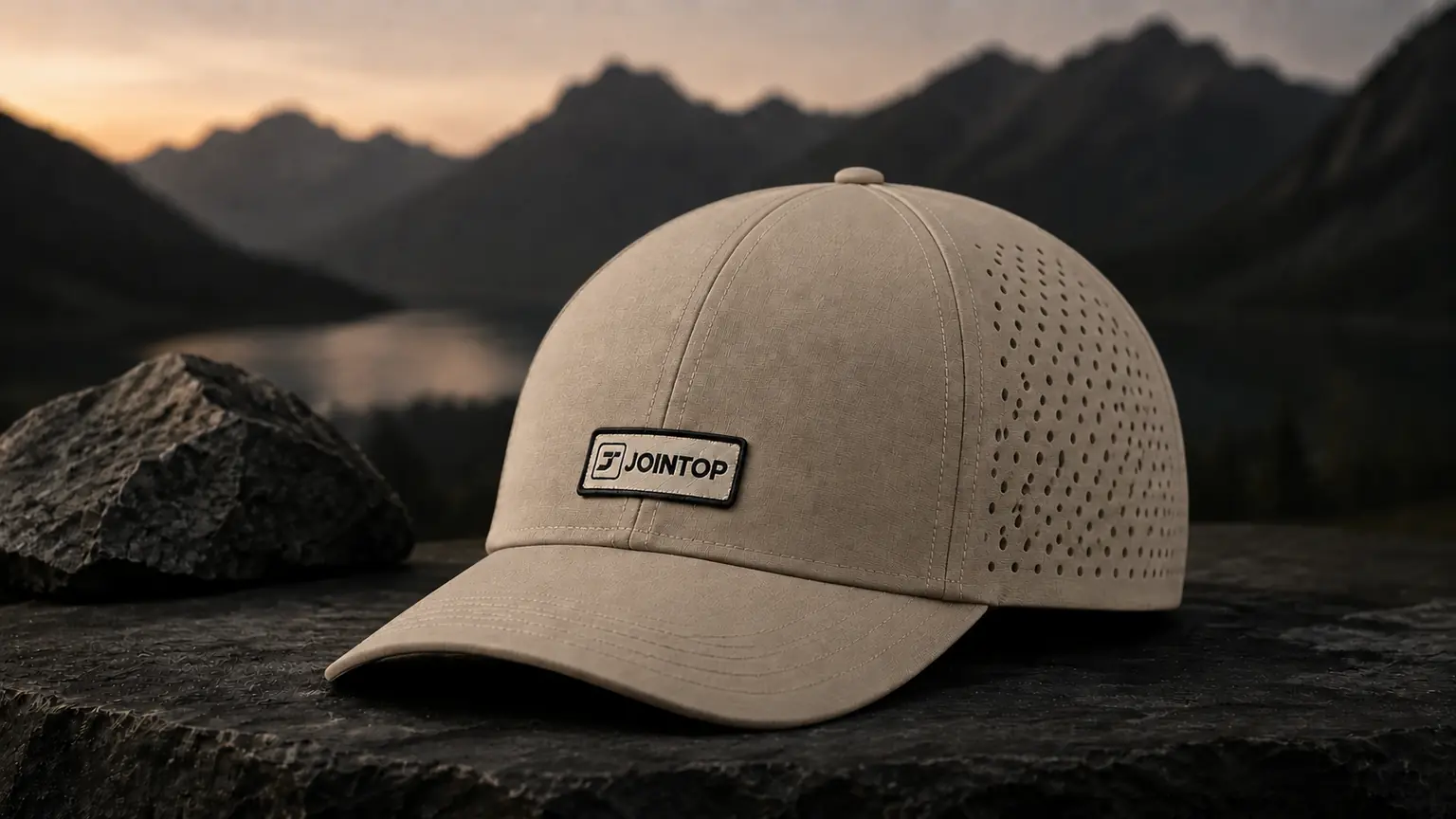
Match the shell fabric to the intended exposure
Shell selection should begin with exposure, not with the word waterproof. A tightly woven polyester or nylon can reduce water entry at the fabric surface. A coated fabric can add a barrier, but the coating can change hand feel, breathability, fold recovery, noise, and decoration compatibility. A membrane or laminated construction can provide a different barrier, but it also requires a review of seam construction and production handling.
Technical woven polyester and nylon
Technical woven fabrics can support lightweight baseball caps and Performance Caps. Ask for the fiber content, construction, weight target, finish, stretch direction, coating or lamination details, color reference, and care guidance. If the fabric is described as breathable or quick drying, define how the finished cap will be evaluated. The shell may allow air movement while the sweatband, lining, or seam treatment behaves differently.
Coated or laminated fabrics
A coating can reduce water passage, but it can also make a panel less flexible and change how embroidery or heat transfer adheres. The supplier should test the logo method on the actual treated fabric. If the coating is damaged by needle penetration or heat, the decoration plan may need to change. A clean logo on an untreated swatch does not prove that it will work on the production shell.
Mesh and perforation
Ventilation changes the protection brief. A cap with open mesh or laser perforation should describe where water protection ends and airflow begins. It can be reasonable to use a water-resistant front panel with ventilated side or rear zones, but the buyer should define the exposure expected for each zone. A “waterproof cap” description becomes misleading if the construction intentionally includes open ventilation.
Keep the shell swatch with the finished sample. Compare color, hand feel, surface, seam appearance, and fold recovery under the same light. If the cap will be offered in several colors, evaluate the finish and decoration across the color range. Dark and light fabrics can respond differently to heat, coating, printing, and visible water marks.
Control seams, needle holes, and visor attachment
Water usually enters a cap through the places where the construction changes. A waterproof baseball cap brief should identify the crown seams, eyelets, center seam, side seams, sweatband, closure attachment, rear opening, and crown-to-visor join. Each location needs a control method that the factory can repeat.
| Construction area | Questions for the supplier | Sample approval check | Bulk QC check |
|---|---|---|---|
| Crown seams | Are seams bound, sealed, taped, or protected by another construction? | Inspect inside and outside of the seam after handling and wet exposure | Check skipped stitches, open edges, puckering, and irregular treatment |
| Eyelets or perforation | Are openings decorative, ventilating, or part of a protected zone? | Confirm size, location, backing, and the intended water path | Check hole consistency and accidental openings outside the approved map |
| Visor join | How is the brim connected to the crown and finished at the edge? | Check shape, edge finish, and water entry at the join | Inspect uneven binding, exposed layers, and seam gaps |
| Sweatband | Does the band cover the seam allowance and rear opening as intended? | Wear the cap and inspect the inside after wet handling | Check rolling, detached sections, stains, and inconsistent attachment |
| Förslutning | How are the strap, buckle, snap, or adjuster attached? | Check adjustment, comfort, rear opening, and local reinforcement | Check attachment strength, exposed holes, and hardware finish |
Seam sealing is a construction decision, not a decorative add-on. It can affect the seam’s flexibility, thickness, appearance, and production sequence. Ask the factory to show the proposed seam treatment on a physical sample. If a buyer needs a higher level of protection, the brief should state which seams need treatment and how the result will be verified.
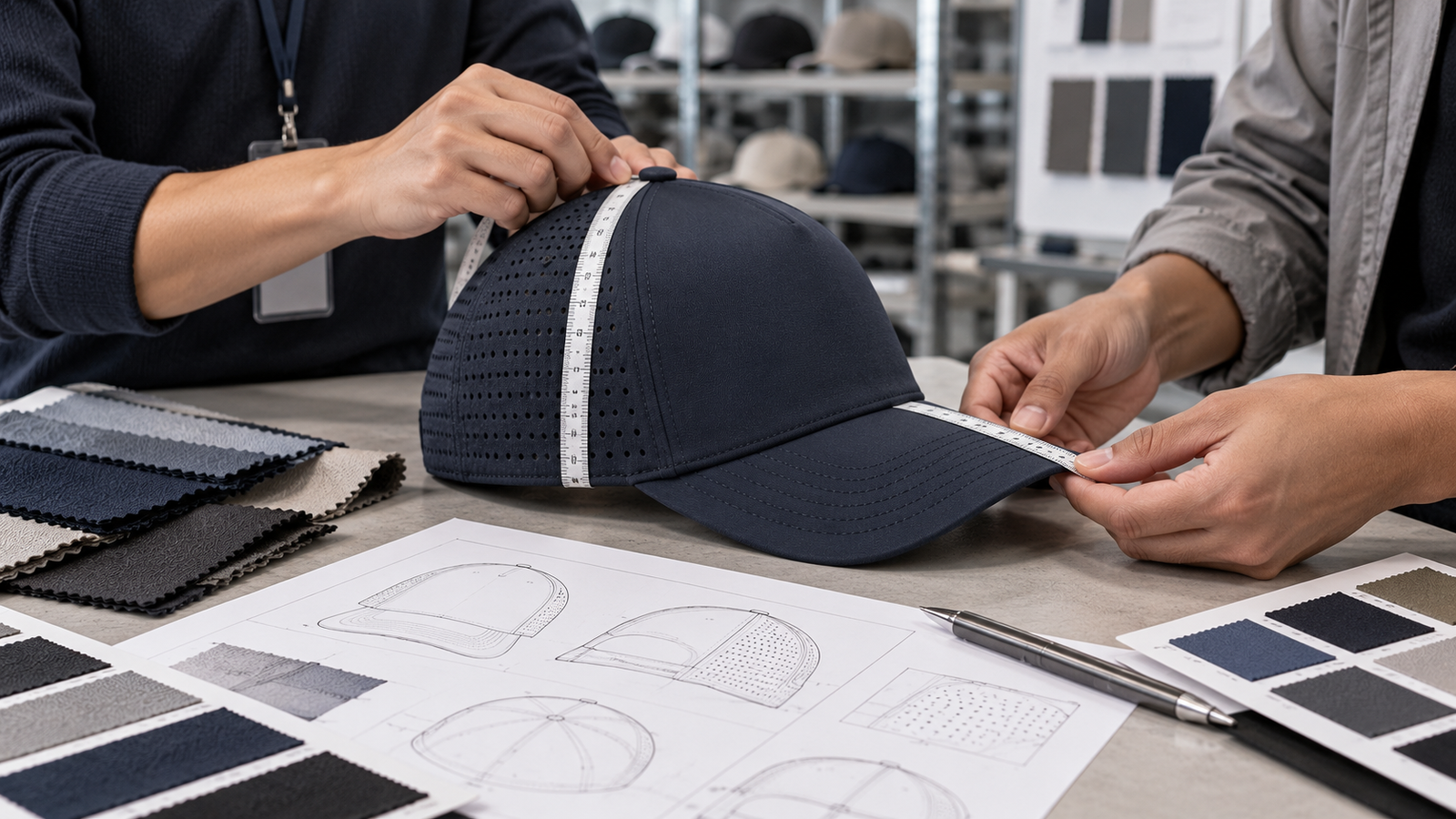
Choose a logo method that does not compromise the barrier
Logo decoration can create new entry points or damage a finish if the method is selected without testing. Embroidery uses needles that penetrate the fabric and any barrier behind it. A woven patch adds an attachment perimeter. A silicone badge changes the weight and bond area. Printing avoids needle holes, but heat, ink, curing, and adhesion still need to suit the shell.
| Logo method | Why a buyer may choose it | Waterproof-cap risk | Approval requirement |
|---|---|---|---|
| Flat embroidery | Precise brand mark and familiar baseball-cap finish | Needle holes, backing exposure, panel pull, and possible leakage around dense stitches | Sew-out on the finished treated fabric, then inspect the inside and wet-handling result |
| Woven patch | Detailed artwork and a patch-led identity | Stitching, edge lift, added weight, and water path around the patch | Finished patch sample with edge, attachment, and exposure check |
| Silicone or molded badge | Raised technical appearance with limited small detail | Bond or stitch failure, edge lift, local stiffness, and water path at the perimeter | Adhesion or attachment review on the actual shell and curve |
| Heat transfer | Fine graphics and a low-puncture decoration route | Heat can affect coatings, adhesive may fail, and the film may change hand feel | Transfer trial on the treated fabric with wash, flex, and wet-handling checks |
| Screen print | Bold flat graphics on a compatible front panel | Ink may not bond to a coating, cure temperature may affect color, and the surface may be uneven | Printed sample with adhesion, opacity, color, and cure review |
Printing on polyester performance fabric can require low-bleed ink and controlled curing because dye migration may change the print color. Avient’s technical guidance explains why a print system and curing process should be tested on the actual polyester substrate. The same principle applies to a treated nylon or coated fabric. The Avient performance-wear printing guidance is a useful reference for the issue, while the final approval still belongs to the product’s own fabric and decoration trial.
For a general comparison of embroidery, patches, and printing, use JoinTop’s logo techniques page. For waterproof work, add one more step. Check whether the decoration method changes the protection level after the cap has been bent, worn, cleaned, or exposed to the intended rain condition.

Approve the sample in a fixed order
A waterproof baseball cap should not move directly from a digital mockup to bulk. Use a staged sample review so the team can isolate fit, material, seam, logo, and exposure decisions.
- Confirm the use case. State whether the cap is for occasional rain, outdoor work, golf, travel, fishing, running, or a broader weather range. Record the expected exposure and the areas that must stay protected.
- Approve the blank construction. Review the five-panel or six-panel block, crown profile, visor curve, closure, sweatband, eyelets, and rear opening before adding the final logo.
- Approve material and seam samples. Compare the shell, coating or finish, seam treatment, visor join, and inside construction. Keep the approved swatch and sample ID together.
- Approve decoration on the treated cap. Review sew-out, patch, badge, transfer, or print at the final size and position. Inspect both sides of the panel.
- Run the agreed exposure check. Use the defined spray, rain, or pressure method and record the result. Do not turn a quick visual check into a universal waterproof claim.
- Lock the master sample. Record measurements, color references, decoration file, seam treatment, packaging, and defect definitions. The same master sample should be available for bulk inspection and reorders.
JoinTop’s custom hat sampling process explains the approval logic for custom headwear. For waterproof caps, add the exposure method and the exact claim wording to the approval record.
Use a bulk inspection plan that catches leakage risk
Bulk inspection should compare construction and appearance against the approved sample. It should also identify the defects that affect water protection. A buyer does not need to test every cap with a laboratory method, but the production plan should say which checks occur on the line, during final inspection, and during periodic verification.
| Inspection group | Release checks | Escalate when |
|---|---|---|
| Fit and shape | Crown height, circumference, visor length, curve, panel balance, closure range | Shape shifts across sizes, colors, or production batches |
| Shell and finish | Color, surface, coating appearance, stains, creases, finish uniformity | Finish is patchy, the fabric feels different, or shade changes across lots |
| Seams and openings | Skipped stitches, open edges, seam treatment, eyelet placement, rear opening | Any opening appears outside the approved ventilation or construction map |
| Logo and trims | Position, size, stitch or print quality, patch edge, badge bond, thread or ink color | Decoration adds holes, lifts, pulls the panel, or changes the protection result |
| Exposure sample | Check a defined number of caps or panels against the agreed exposure method | Results vary materially within a colorway or carton |
| Förpackning | Shape protection, individual bags, labels, cartons, care instructions, carton marks | Compression or packing creates visor distortion, creases, or finish damage |
Use the hat quality control process as the base for inspection planning. Define major and minor defects before production. If the cap is sold with a water-related claim, include the claim wording, test method, and responsible approver in the release file.
Plan MOQ, delivery, packaging, and reorders
JoinTop can discuss suitable custom programs from a standard MOQ of 100 pieces per style and color. Confirm the actual minimum for the selected shell, coating, seam treatment, color plan, logo method, and packaging. A custom waterproof baseball cap may require material or trim minimums that differ from a standard cap, so the quote should show the assumptions.
For standard developments, plan around 20–25 days for sampling and 40–45 days for bulk production after sample approval. Styles requiring molds or peak-season scheduling may need 25–30 days for sampling and 45–50 days for bulk. These are planning ranges, not guarantees; design revisions, approvals, material availability, production location, shipping, and the required in-warehouse date can change the schedule. Ask the supplier to return a dated sequence.
- State quantity by style and color.
- Identify whether the cap is five-panel or six-panel.
- Define the water-protection level and exposure method.
- List shell, coating, seam, visor, sweatband, closure, and logo requirements.
- Confirm packaging, labels, cartons, care information, and destination market.
- Retain the approved master sample and a versioned reorder specification.
Reorders should use the same fabric reference, logo file, seam treatment, measurement tolerance, and packing instruction. If a supplier changes the fabric finish or production location, require a change review before the next bulk release. A waterproof baseball cap is especially sensitive to small changes at seams, coatings, and decoration attachment.
Waterproof baseball cap sourcing checklist
- Use case and rain exposure are written in buyer language.
- Water repellent, rain resistant, weatherproof, or waterproof wording is defined.
- Five-panel or six-panel structure is selected and measured.
- Shell fabric, coating or finish, lining, visor, sweatband, and closure are specified.
- Seams, eyelets, perforation, rear opening, and visor join have a control method.
- Logo method is tested on the treated fabric and finished cap.
- Sample approval includes fit, structure, decoration, exposure, and inside construction.
- Bulk QC includes shape, seams, openings, logo, exposure checks, and packaging.
- MOQ, quantity by color, production location, delivery date, and packing are confirmed.
- Reorder files identify the approved sample and the current material and logo version.
A waterproof baseball cap earns its product claim through the complete construction. The shell, seams, visor, sweatband, closure, and logo method must support the same use case. If the buyer can trace each claim to a specification and each specification to a sample or inspection check, the product is easier to quote, approve, manufacture, and reorder.
Request a waterproof cap development review
Send JoinTop your company or brand website, cap type, intended use, quantity by style and color, logo file or reference image, target market, delivery date, packaging requirements, and any existing sample. Include the level of rain protection you need and the test or exposure method your team expects. JoinTop can then review the five-panel or six-panel route, suggest a material and logo evaluation path, and confirm the applicable MOQ and quotation assumptions through the JoinTop contact page.



 English
 German
 Spanish
 French
 Amharic
 Portuguese
 Italian
 Swedish
 Turkish
 Belarusian
 Danish