A startup brand does not need a large collection to look credible. It needs one cap that fits the customer, carries the logo cleanly, can be quoted without missing assumptions, and can be reordered against a clear reference. A disciplined first product reduces the risk of spending money on a sample that cannot be repeated.
Choose one commercial job for the first cap
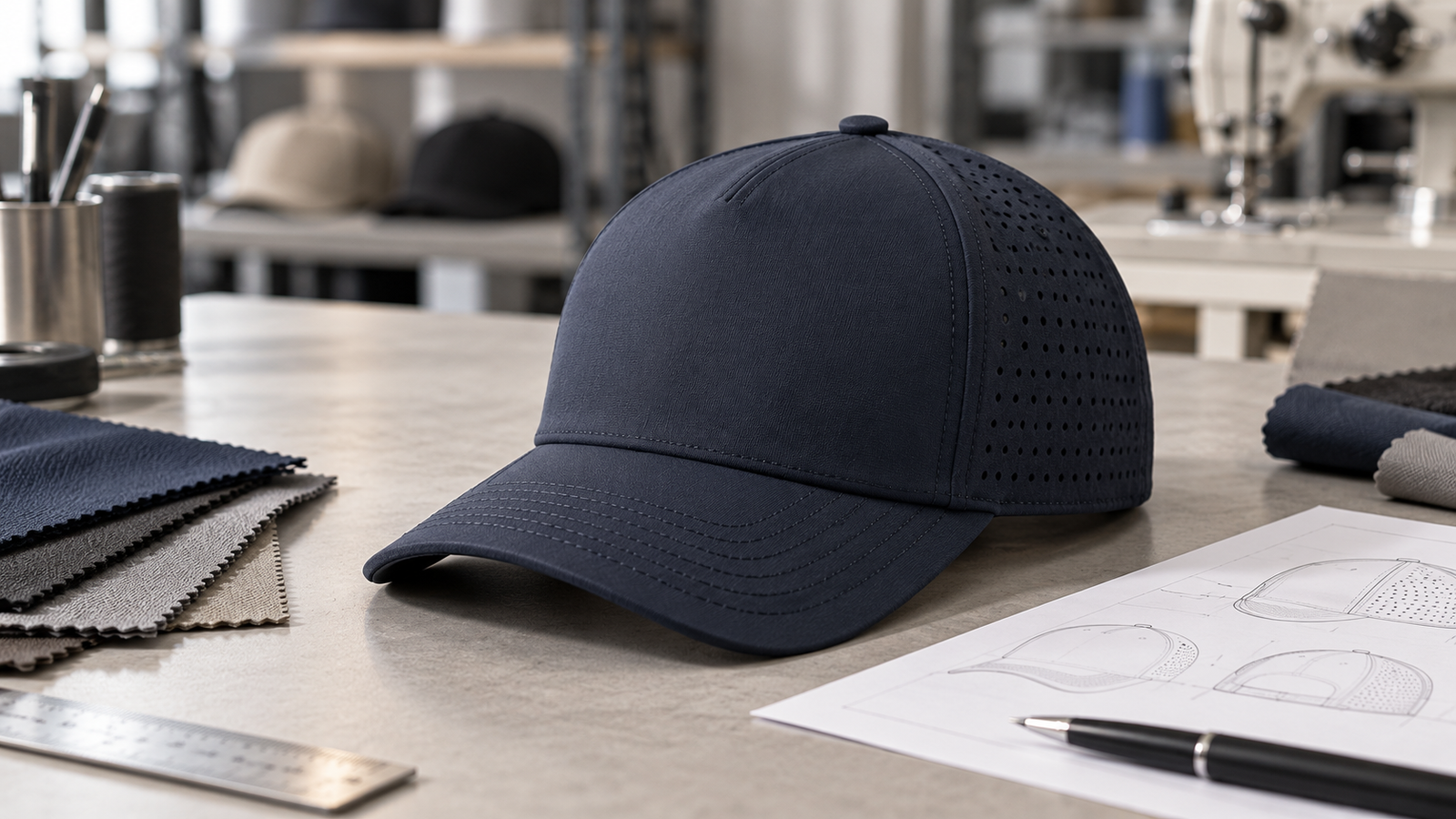
Define who will wear the cap and where it will be used. Running, golf, travel, and outdoor customers may value a lightweight laser-perforated Performance Cap. A lifestyle customer may prefer a softer cotton feel. This decision affects fabric, sweatband, visor, closure, logo method, and the product story.
Choose a normal five-panel or six-panel platform before discussing decoration. The five-panel format can provide a clean uninterrupted front area. The six-panel format gives a familiar baseball-cap profile with a center seam. Both can work for a startup program when the fit and logo placement are documented.
Build a brief a factory can price
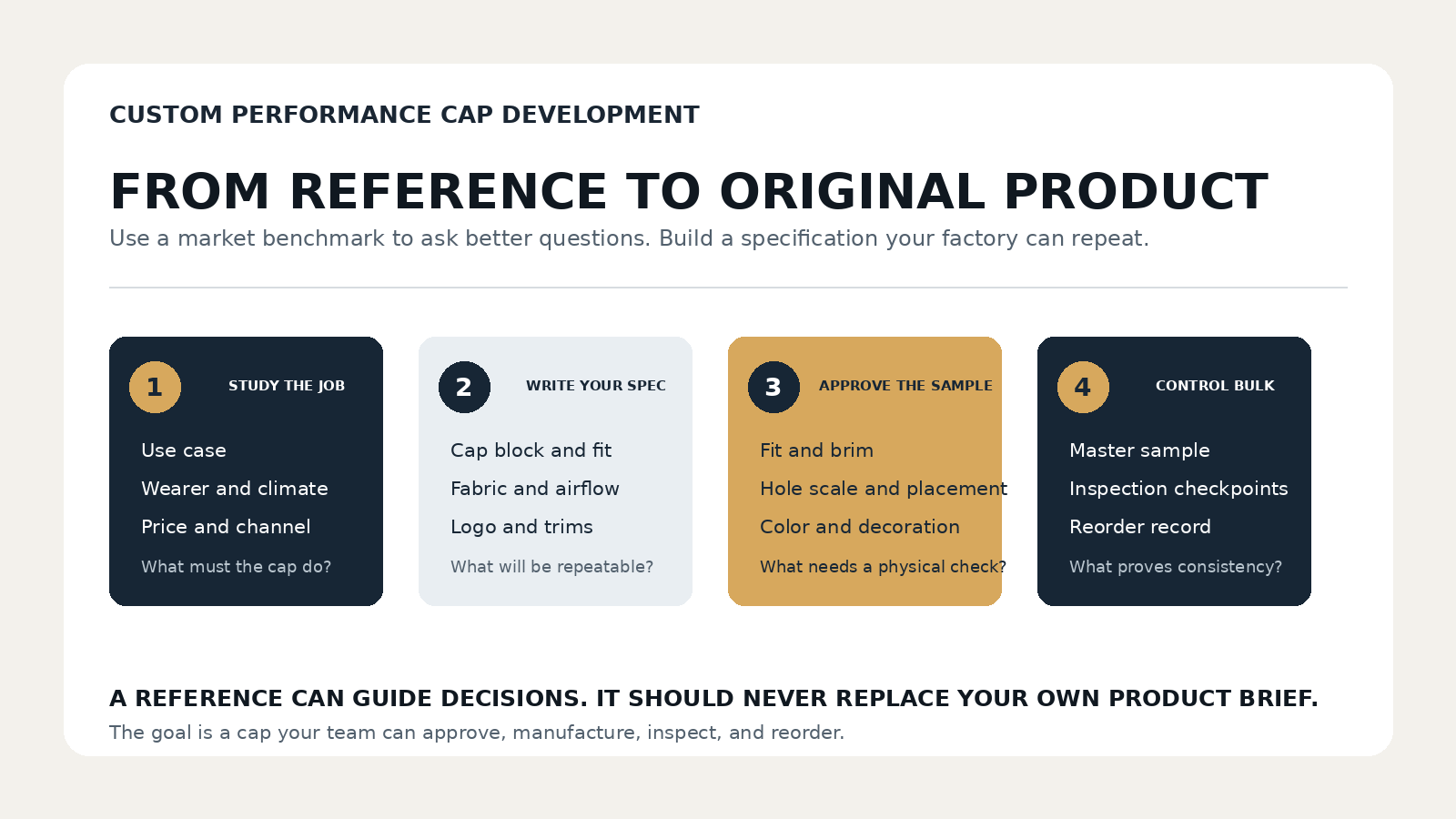
Include the cap structure, fabric reference, colors, artwork, logo position, decoration preference, quantity by style and color, packaging, target market, and delivery date. If you only send a screenshot, the quotation will contain assumptions that may change later.
Ask the factory to separate sample, cap, decoration, packaging, and freight assumptions. A low unit price is not useful if it excludes the material or finish the brand actually needs.
Use the first sample to learn, not just to approve
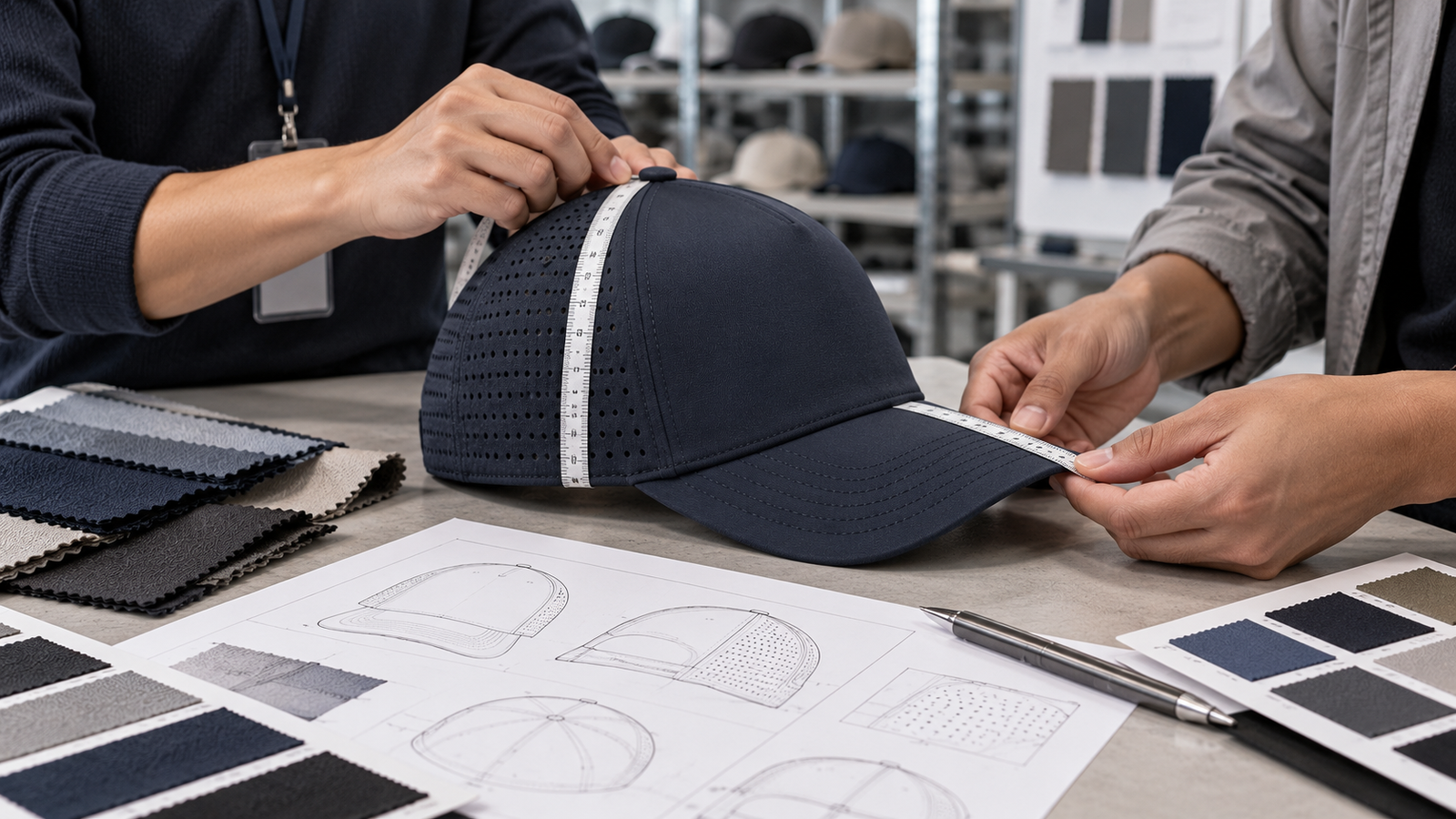
Review crown balance, visor curve, sweatband feel, closure adjustment, seam quality, logo scale, color, and overall proportion. Try the cap on the intended wearer or a representative fit block. Record each change with a measurement or clear reference image.
Reduce risk in the decoration and materials
Simple artwork is easier to repeat, but a startup does not need to limit its identity to one-color embroidery. Ask whether printing, embroidery, a woven patch, or a molded badge suits the fabric and expected use. The decision should be made on the finished cap, especially when using lightweight or perforated Performance Cap materials.
Plan the first order around cash flow
JoinTop accepts projects from 100 pieces per style and color, subject to the final specification. A startup can use that threshold to test one focused product rather than spreading cash across too many colors or silhouettes. Confirm packaging, labeling, and inspection expectations before the order is released.
Keep an approval record for the next order
- Approved cap structure and measurements
- Fabric and color references
- Logo file and decoration standard
- Packaging and label instructions
- Quantity by style and color
- Delivery and inspection requirements
The record becomes more valuable after the first sale. It gives the brand a practical starting point for a second color, a new logo position, or a reorder without reopening every decision.
Questions buyers should settle before approval
What should be included in the first quote?
Send the company or website, target wearer, cap structure, material reference, artwork, decoration method, quantity by style and color, packaging needs, target market, and required delivery date. Those details let a factory separate product assumptions from freight and packaging assumptions.
Can JoinTop support a small first production run?
JoinTop accepts projects from 100 pieces per style and color, subject to the final specification. The exact quotation still depends on the cap construction, material, decoration, packaging, and quantity.
How should the approved sample be used?
Keep the approved sample and its measurement notes as the reference for bulk inspection and future reorders. A photograph alone does not record crown balance, hand feel, or the exact logo position.
Send the complete brief before sampling so the production team can identify risks early and recommend a cap that is practical to repeat.


 English
 German
 Spanish
 French
 Amharic
 Portuguese
 Italian
 Swedish
 Turkish
 Belarusian
 Danish