

Weatherproof caps should be sourced as a complete product system, not as a fabric claim. For a normal five-panel or six-panel performance cap, rain protection depends on the face fabric, finish or barrier layer, panel seams, stitch holes, ventilation, brim, sweatband, closure, logo method, and care conditions. A buyer should define the expected exposure and the evidence required for the finished cap before comparing materials or suppliers.
Buyer’s answer: Define the rain scenario, cap structure, test method, acceptance level, and care condition in one specification. A fabric result alone does not prove that a sewn cap is weatherproof.
The word “weatherproof” is useful for search and merchandising, but it is too broad for a purchase order. A cap for a short walk in light rain has a different construction target from one intended for an exposed golf round, a wet commute, or regular outdoor work. Treat the term as the start of the brief. The approval standard should describe the wearer’s use, the areas that need protection, the amount of ventilation allowed, and the claim the brand plans to publish.
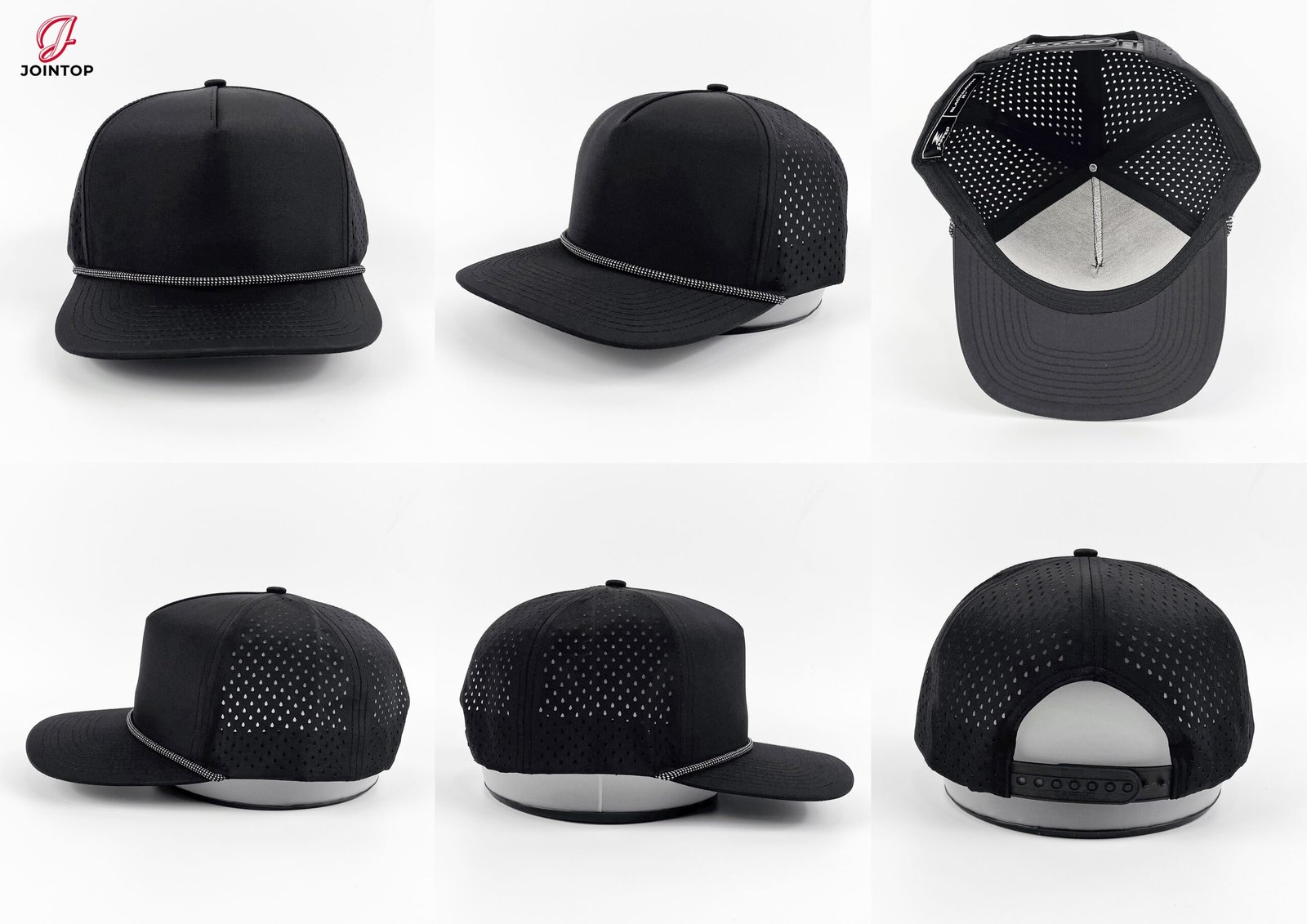
Turn “weatherproof” into an acceptance standard
A useful weatherproof-cap specification separates surface wetting, water penetration, and finished-product performance. Surface repellency concerns how water behaves on the fabric face. Resistance to penetration concerns how a material performs under an agreed method and condition. Finished-cap performance includes every opening and stitched area. Keeping those three layers separate prevents a spray result on flat fabric from being presented as proof for the complete cap.
| Claim level | What the buyer should record | Approval evidence | Common purchasing risk |
|---|---|---|---|
| Weather-ready for light rain | Expected exposure, drying expectation, care method, and areas allowed to wet through | Finished sample review under the agreed use simulation | The supplier and marketing team interpret “light rain” differently |
| Water-repellent surface | Fabric face, finish, test method, initial condition, and condition after agreed care | Supplier report or buyer-approved test result tied to the selected fabric lot | A good surface result is treated as evidence for seams and openings |
| Water-resistant material | Material construction, pressure or exposure method, units, specimen condition, and minimum result | Test data for the approved material, with the method and result stated | A different production lot, color, coating, or backing is substituted without review |
| Finished-cap rain protection | Panel seams, brim join, button, ventilation, closure, logo, sweatband, and test condition | Approved finished sample plus an agreed bulk verification plan | The shell passes while water enters through stitch holes or open components |
For material testing, ISO 811:2018 specifies a hydrostatic-pressure method for measuring a fabric’s resistance to water penetration. AATCC TM127 addresses water resistance under hydrostatic pressure, while AATCC TM22 covers water repellency by spray testing. These methods answer different questions. The RFQ should name the method, specimen, condition, units, and acceptance level instead of asking whether the fabric “passed waterproof testing.”
Marketing language needs the same discipline. The US Federal Trade Commission states that objective advertising claims need a reasonable basis before they are published. Its advertising substantiation policy is a useful reminder for brands selling into the United States. A buyer does not need to turn the tech pack into legal copy, but product development and marketing should rely on the same approved evidence.
Choose the five-panel or six-panel platform first
Weather protection cannot be evaluated without the cap pattern. A five-panel cap may use a broad front section with fewer front intersections, which can help a large logo sit away from a center seam. A six-panel cap has a center-front seam and a more segmented crown. Neither platform is automatically better in rain. Seam placement, crown shape, backing, stitch density, and ventilation have more practical value than the panel count by itself.
Start with the wearer and the intended silhouette. A low-profile running cap needs less structure and usually more movement than a firmer golf or lifestyle cap. A deep crown may provide coverage but can feel unstable if the circumference, closure range, and sweatband are not balanced. If a brand already has a successful dry-weather fit, use that cap as the dimensional reference and identify which construction changes are allowed. A coating, laminate, seam treatment, or different sweatband can change the hand and shape even when the pattern remains the same.
- Record the platform: five-panel or six-panel, structured or unstructured, crown profile, visor shape, closure type, and target head-size range.
- Mark water-entry paths: panel seams, top button, front-to-visor join, eyelets or perforations, rear opening, closure slot, and logo stitching.
- Protect the approved fit: measure the sample before and after the agreed wet exposure and drying condition, then note any shape or circumference change that matters to the wearer.
- Separate required and optional features: do not let an optional rope, metal trim, decorative eyelet, or large patch create an unreviewed entry point.

Brands that need a standard active-cap starting point can review the existing custom performance hats manufacturer page. Use the page to identify a relevant platform, then place the project-specific fit, rain, logo, and testing requirements in the RFQ. A category page should not replace the approved product specification.
Build protection from the face fabric inward
Face fabric and finish
Polyester and nylon are common starting points for performance caps, but the fiber name does not establish water resistance, drying speed, stretch recovery, abrasion resistance, or colorfastness. Fabric construction, weight, yarn, finish, coating, backing, and color can change the result. Compare the actual candidate materials and request the evidence that applies to the selected quality, not a report for a similar fabric.
A surface treatment may reduce wetting while preserving a softer hand. A coating or laminated layer may provide a stronger barrier, although it can also affect stiffness, noise, breathability, sewing, and recovery around curved seams. Those tradeoffs should be checked on a finished cap. The performance-cap fabric guide provides a broader comparison of polyester and nylon; the weatherproof brief still needs a project-specific finish and test requirement.
Seams, stitch holes, and curved areas
Every sewing needle creates a path through the material. Thread, seam allowance, stitch density, seam position, backing, and any tape or sealing process affect that path. Seam tape can help on compatible constructions, but a curved cap crown is more difficult than a flat jacket panel. The tape, adhesive, temperature, pressure, width, and placement must suit the selected material. Inspect adhesion around the crown curve, front seam, and visor join rather than assuming that visible tape equals a sealed seam.
If seam sealing is required, define which seams receive it and how the finished sample will be checked after flexing and the agreed care condition. Some projects may accept controlled wetting at the rear opening or ventilation zone. Others may need those areas redesigned. Writing the permitted exceptions prevents an inspector from rejecting an intentional opening or approving an unintended leak.
Brim, sweatband, button, and closure
The brim assembly needs separate review because water can travel through the top shell, edge stitching, and crown-to-visor seam. Confirm whether the insert, shell, and edge maintain the approved curve after wet exposure and drying. The top button and any decorative stitch line also need review. Removing the button may reduce one entry point, but it changes the look and should be approved on the actual crown.
A sweatband manages wearer moisture and contact comfort; it does not prove that the outside shell is waterproof. Ask how the band feels when damp, whether its color transfers under the agreed conditions, and whether it changes the fit as it dries. The rear closure deserves the same attention. A wide open back offers adjustment and ventilation but leaves an exposed area. A strap, snapback, hook-and-loop closure, or buckle should be selected for fit and corrosion or care requirements, then checked as part of the finished sample.
Balance ventilation with the rain claim
Laser perforations and eyelets can make a performance cap more comfortable in heat, but they are deliberate openings. Their size, pattern, location, and any internal layer affect how easily wind-driven rain reaches the inside. A cap with extensive side and back perforation may be appropriate for intermittent rain and active use, while a more closed crown may suit longer exposure. The buyer should choose that tradeoff instead of asking for maximum breathability and full protection without stating which requirement takes priority.
Evaluate ventilation on the correct panel and in the wearing position. A perforated zone high on the side crown behaves differently from an opening near the sweatband or rear cutout. If the design uses a backing or membrane behind the holes, check whether it remains stable, whether the holes stay clean after cutting, and whether the layer changes the cap’s hand. The approved sample should record the perforation file or pattern, not only a reference photograph.
Choose logo methods that do not undermine the brief
Direct embroidery adds needle holes and can pull a coated or laminated front panel if the stitch count, backing, or tension is poorly matched. A sewn patch creates a perimeter stitch line. Heat-applied badges and transfers reduce some sewing, yet heat and pressure may mark the face or affect a finish. Molded silicone, TPU, woven patches, and printed methods each need an actual application trial on the selected fabric.
Approve the logo after the rain and care review, not before it. Check the face for puckering, adhesive shadow, color change, edge lift, and visible water paths. Review the reverse side as well, especially when a front-panel backing, seam treatment, or sweat barrier is part of the construction. JoinTop’s existing custom hat logo techniques page can help a buyer compare decoration formats before selecting the sample route.

Use one specification matrix for supplier comparison
Supplier quotations are difficult to compare when each factory interprets the word “weatherproof” differently. Send the same matrix to every supplier and require each response to identify assumptions, alternatives, and items still awaiting confirmation. A lower price based on an open seam, different finish, or untested logo is not an equivalent quote.
| Decision field | Information to place in the RFQ | Evidence to approve |
|---|---|---|
| Use and claim | Target activity, rain duration and direction, climate, and exact marketing language under consideration | Written claim basis linked to the agreed tests and finished sample |
| Cap platform | Five-panel or six-panel, crown profile, structure, visor, head-size range, and closure | Measured fit sample and approved pattern reference |
| Shell material | Fiber content, construction, weight if required, stretch, color, finish, coating or backing | Approved swatch and data for the selected material and color |
| Water performance | Test method, units, specimen, conditioning, care state, and minimum result | Report or agreed verification record tied to the approved material |
| Seams and openings | Seams to seal, tape or treatment, button, eyelets, perforations, rear opening, and allowed exceptions | Interior and exterior sample review plus agreed wet check |
| Comfort components | Sweatband, lining, ventilation, contact feel, and damp-state expectations | Wear and fit review on the finished sample |
| Branding | Logo file, dimensions, position, method, backing, colors, and trim materials | Approved decoration sample after the agreed exposure and care review |
| Bulk controls | Critical measurements, appearance defects, lot traceability, functional sampling, and inspection timing | Signed approval reference and written inspection checklist |
| Packaging and delivery | Shape protection, moisture precautions, carton requirements, destination, and required arrival window | Approved packing method and shipment documents |
Approve the finished sample under agreed conditions
A fabric swatch can screen material options, but the sewn sample is the decision point for fit, construction, and claim risk. Keep the test proportional to the intended claim. A light-rain lifestyle cap may need a different review from a product marketed for sustained exposure. Record the condition rather than relying on a video of water beading on one area.
- Freeze the use case. State activity, exposure, temperature range if relevant, target market, care method, and proposed claim.
- Approve the material identity. Record supplier reference, fiber content, construction, finish, color, face and reverse appearance, and the evidence available for that quality.
- Review the dry sample. Check crown shape, circumference, depth, visor, closure, sweatband, logo, stitch quality, perforation pattern, and interior construction.
- Run the agreed wet review. Apply the named method or controlled use simulation to the correct areas and record duration, direction, observations, and any permitted exceptions.
- Check drying and recovery. Follow the intended care condition, then review shape, hand, color, odor, adhesion, seam treatment, logo surface, and fit.
- Sign the production reference. Keep photographs, measurements, material and trim codes, test records, comments, and the final approved sample under one style revision.
The website’s custom hat sampling process explains the broader approval sequence. For a weatherproof project, add the rain claim, test condition, seam map, and post-drying review to the ordinary fit and appearance checks.
Translate the approved sample into bulk quality control
Bulk inspection should verify the approved inputs and the finished construction. It should not invent a new pass level after production. Identify critical defects before the order starts. A missing seam treatment, wrong perforation pattern, damaged coating, exposed adhesive, changed shell quality, or unapproved closure may be more serious than a small cosmetic variation because it can affect the product claim.
- Incoming material: match the fabric and finish reference, color, face and reverse appearance, hand, stretch direction if used, and lot identification.
- Cutting and sewing: check panel orientation, seam allowance, stitch condition, needle damage, crown symmetry, and the specified treatment on every required seam.
- Openings and components: verify the button, brim join, ventilation pattern, rear opening, closure, sweatband, and any metal or molded parts against the approved sample.
- Decoration: confirm logo size, position, color, surface condition, backing, edge adhesion, puckering, and interior appearance.
- Fit and shape: measure the agreed control points and compare the crown, visor curve, closure range, and overall silhouette with the signed reference.
- Functional verification: use the agreed sampling frequency and method. Record results by lot or inspection batch when the project requires traceability.
- Packing condition: make sure caps are dry, clean, protected from crushing, and packed under the approved arrangement before cartons are closed.
En hat quality control process page provides the site’s broader inspection framework. The weatherproof-cap checklist should sit beside it as the style-specific control document.
Protect repeat orders from silent material changes
A repeat order should use the approved material, finish, color, trims, decoration settings, and construction revision. If a supplier proposes a replacement because an original component is unavailable, request a new swatch and identify which tests or sample checks must be repeated. A material with the same fiber content can still differ in weave, weight, coating, hand, color, or water behavior.
Keep the approval file practical. Store the style number, revision date, approved sample photographs, measurement table, material and trim references, logo file, seam map, test records, packaging standard, and any allowed deviations. For multi-color programs, confirm whether the evidence covers every color or only the tested color. Dark and light versions may show surface marks, shade changes, or adhesive shadow differently even when the base quality is shared.
Prepare a quote-ready weatherproof cap brief
A qualified inquiry gives the supplier enough information to identify gaps before sampling. Include the reference cap or sketch, five-panel or six-panel preference, target quantity, colors, logo method and size, target market, intended activity, rain or water requirement, test method if already specified, closure, care expectation, packaging needs, delivery region, and required arrival window. Flag any claim that still needs evidence instead of treating it as approved copy.
Use JoinTop’s contact page to submit those details and request a discussion of material, construction, and sample options. A complete brief makes it possible to compare an actual cap proposal rather than a supplier’s interpretation of one word.




 English
 German
 Spanish
 French
 Amharic
 Portuguese
 Italian
 Swedish
 Turkish
 Belarusian
 Danish