I talked to a brand owner last month who told me something that stuck.
He’d spent six months going back and forth with three different factories. Samples came back with crooked center seams. Embroidery that looked fine in photos but felt flat in person. One factory shipped him a pre-production sample where the sweatband started peeling after two wears. Two wears.
He wasn’t being picky. He was trying to sell a $48 hat to customers who already own $48 hats from established brands. They notice when a brim doesn’t hold its curve. They notice when the logo sits half a degree off center. They might not be able to tell you why it feels wrong, but they’ll put it back on the rack.
And that’s the part most “find a hat manufacturer in China” guides skip right past. They’ll tell you about MOQs and shipping terms and FOB pricing — useful stuff, sure. But none of it matters if the hat doesn’t feel like it’s worth what you’re charging for it.
I work with brands at JoinTop. We’ve been making hats since 2003 — 23 production lines across China, Vietnam, and Bangladesh. What I’m about to walk through comes from watching hundreds of brands go through this exact process. Some of them nailed it on the first try. Some of them learned expensive lessons. The difference almost always came down to a handful of things that nobody talks about in sourcing guides.
What “Quality” Actually Means on a Production Floor
Most people think quality starts and ends with fabric weight. It doesn’t.
A hat is maybe fifteen separate decisions stacked on top of each other. If any one of them is off, the whole thing feels wrong. You’ve probably experienced this — you pick up two hats that look identical in photos, same fabric spec, same construction type, and one just feels cheaper. You can’t immediately point to why. But your customer will.
Panel alignment — the thing nobody talks about
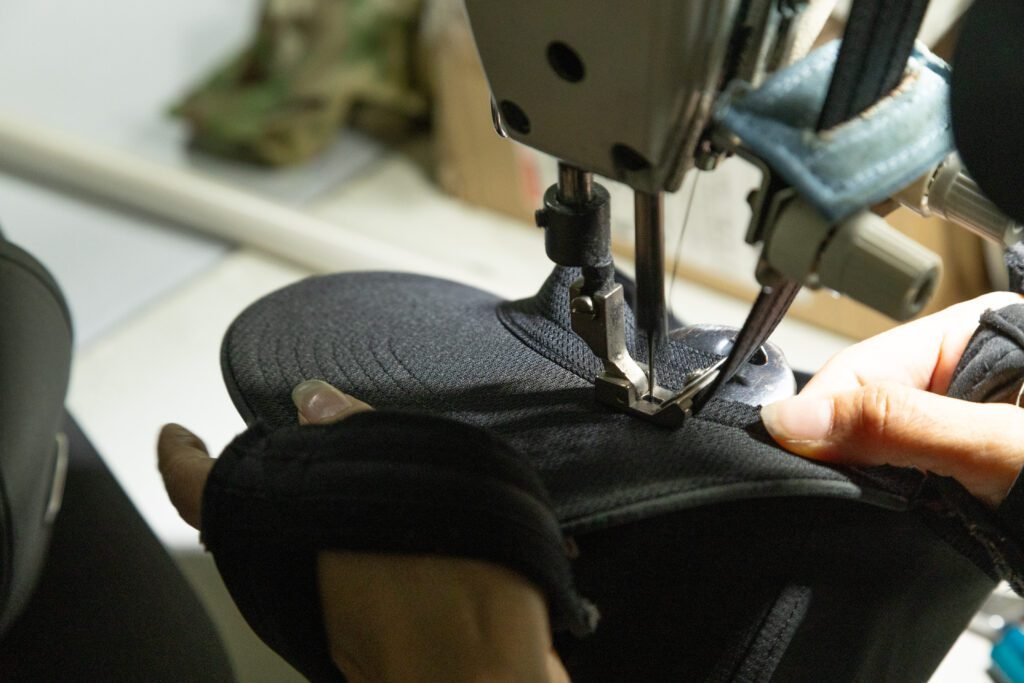
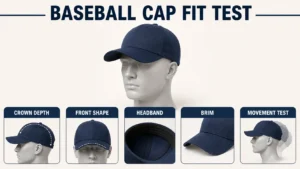
Baseball caps, truckers, snapbacks — they’re all built from panels. Five or six pieces of fabric sewn into a dome. If the cutting is off by two millimeters, the center seam drifts. Your embroidered logo could be dead straight and it’ll still look crooked because the panel underneath it isn’t sitting right. That’s the kind of thing your customer clocks in half a second, even if they can’t explain it.
A factory that cares about this uses laser-guided cutting tables, not manual scissors at each station. They run panel symmetry checks during production, not just at the end. It costs more. It’s also the difference between a hat someone wears twice and a hat they reach for every morning.
Brims are harder than they look
Flat brim that stays flat. Pre-curved brim with the same arc across a run of 5,000 units. Sandwich brim with even stitching all the way around the edge — no thread breaks, no wobble. These aren’t things that happen by default. They’re processes the factory has to build and maintain.
I’ve seen brands approve a brim sample and then get bulk production where the curve is visibly different from hat to hat. The issue wasn’t the materials. It was the pressing station — inconsistent heat, inconsistent dwell time. A factory that runs brim QC at the station level catches this before it becomes 5,000 hats you can’t sell.
Sweatbands — boring until they’re not
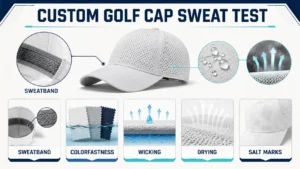
Nobody thinks about the sweatband until it’s bad. Cheap cotton bleeds dye. Stiff polyester feels like sandpaper after thirty minutes. And if you’re selling to golf brands or outdoor brands — exactly the kind of customers we work with at JoinTop — a bad sweatband kills repeat business instantly.
The brands that actually get repeat customers pay attention here. Moisture-wicking tape. Antimicrobial treatments on the inner band. A soft-touch finish that doesn’t irritate after hours of wear. All invisible unless you know what to look for. All immediately felt by whoever’s wearing it.
Embroidery density and digitizing
Hold two embroidered logos next to each other. Same design file, same thread color. One pops off the fabric — you can see dimension, texture, the shadow under the stitching. The other one looks printed on. The difference isn’t the thread or the machine. It’s the digitizing file and the tension settings.
A good digitizer treats your logo like a piece of artwork — adjusting stitch angles, building proper underlay, picking stitch types that work with your specific fabric. A bad one runs it through a template at default settings. Same logo file. Completely different result. If you’re paying for embroidery that sells your brand, you want the first kind.
Why Most of This Industry Still Runs Through China
The short answer: nobody else has the same density of factories, pattern makers, and accessory suppliers within driving distance.
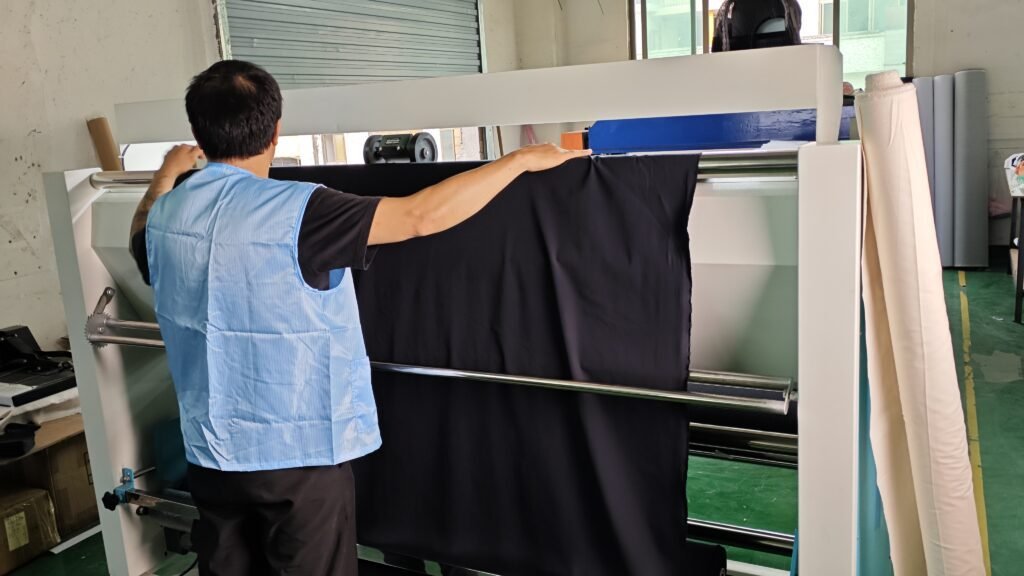
The global headwear market hit about $37 billion in 2025 and is tracking toward $63 billion by 2033, growing at nearly 7% a year. A big chunk of that supply chain is concentrated in a handful of Chinese cities — specialized thread mills, custom hardware stamping, premium sweatband materials, embroidery backing suppliers. You can drive between them in an afternoon. That density makes a difference in turnaround time, minimums, and the sheer range of what’s possible.
But here’s where people get it wrong. They assume every hat manufacturer in China is operating at the same level. They’re not. There are factories that make hats for PGA Tour brands and factories that make hats for tourist gift shops. Same country. Completely different skillsets, equipment, and standards.
It’s like restaurants. New York has thousands of them. Some serve meals you’ll remember for years. Some will give you food poisoning. The fact that they’re in New York tells you nothing.
Same here. The signal isn’t the country. It’s in things like:
Do they have design teams in-house, or do they just execute whatever tech pack you send them? A factory that only does execution can keep costs down, I get that. But a factory with designers who understand that a golf hat needs to look clean at address and a lifestyle hat needs to work on Instagram — that’s where the real advantage sits. They’re not just building what you ask for. They’re making your idea better before you ever see the first sample.
Can they actually produce across multiple countries? This one’s become a surprisingly big deal. Tariff structures change. Shipping lanes get backed up. The brand I mentioned earlier — he was selling into both the U.S. and EU markets. Running everything through one country meant he was paying unnecessary duties on half his volume. When he switched to a partner with lines in China, Vietnam, and Bangladesh, he could route different collections through different countries based on where they were landing. Saved him about 12% on landed costs within the first year.
That’s the kind of flexibility most brands don’t think about until they’re already locked into a single-country setup. Not every factory can offer it. But the ones that can — they have production lines in China for the complex stuff (performance hats, bonded brims, anything with technical construction), Vietnam for premium basics that need to hit the EU market without tariff headaches, and Bangladesh for high-volume blank caps or entry-level price points where you need solid quality at scale.
One partner. One quality standard. One account manager. Three countries. It sounds like a luxury. In practice, it’s becoming the baseline for brands that are serious about growth.
The Stuff Good Factories Do That Nobody Writes About
Pushing back on bad ideas is the first one.
A factory that says yes to everything doesn’t care what leaves their floor. The best ones will tell you: that embroidery spec won’t hold on lightweight ripstop. The crown seam construction you’re asking for has a tendency to pucker after ten washes — we’ve seen it before, here’s what we’d use instead. That kind of pushback isn’t attitude. It’s two decades of production data walking you away from a mistake.
When someone on the factory floor has run more production orders than you’ve had meetings, and they tell you “we tried that and here’s what happened,” you listen. It’s free R&D.
The sampling process tells you almost everything you need to know about a factory. Not just the sample itself — how you got there.
Did they ask clarifying questions about your design, or just say “send file, we’ll make”? Did they suggest fabric alternatives that might drape better for your specific crown height? Did the sample arrive with a spec sheet showing actual measurements next to target measurements, or just a hat in a plastic bag?
If the sampling process feels chaotic and uncommunicative, production will be about twelve times worse. If it’s organized, if they ask good questions and the sample shows up with documentation, you’ve probably found someone worth working with.
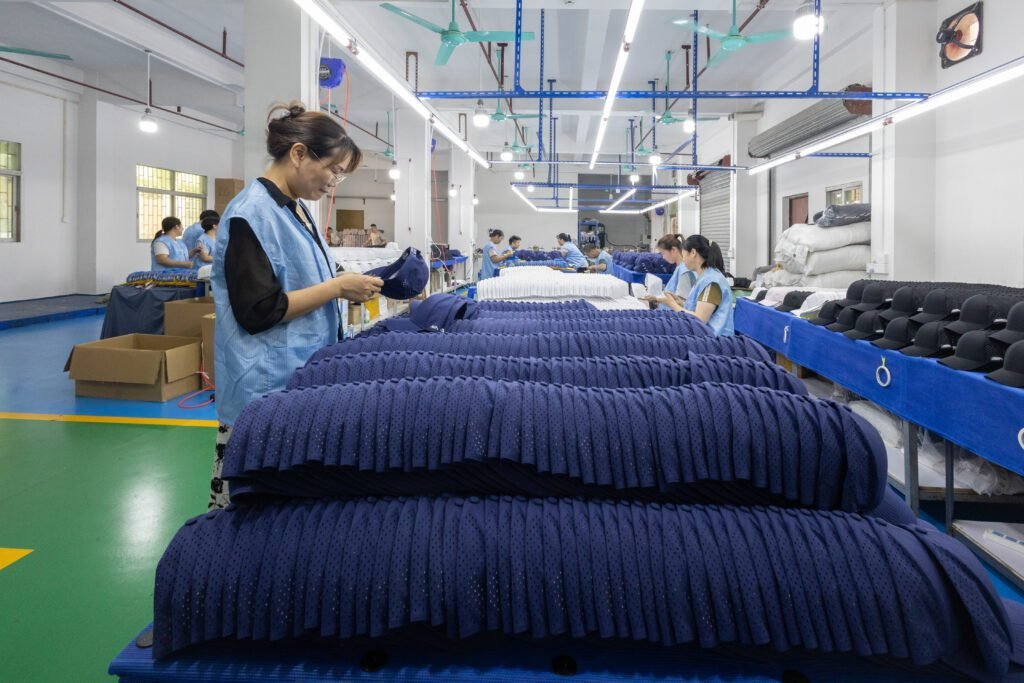
Then there’s quality control. Every factory says they do it. The question is whether it’s real or just for show.
Real QC means in-line inspection — someone checking panels and stitching during production, not just at the end when problems are already baked into the batch. It means pre-shipment sampling against AQL (Acceptable Quality Limit) standards — statistically valid batch inspections that catch problems before they leave the factory. And it means CAP — corrective action planning — for when quality drifts. A factory that writes up formal corrective action reports and tracks them over time is a factory that treats your brand’s quality seriously. Most won’t bother.
The last one is bigger than it sounds: a factory that thinks in seasons, not just orders.
Your customer doesn’t disappear after buying one hat. They come back for a beanie in the fall. They grab a trucker for a bachelor party. They impulse-buy your new five-panel at 11 PM because it popped up on Instagram. A factory that treats every order like a one-off transaction isn’t thinking about any of that. A factory that thinks seasonally asks: what’s in your Q3 lineup? Should we start pulling fabric options that complement your spring collection? What trends are you seeing in your customer base that we should build into the next round of samples?
That shift — from transactional to strategic — is subtle. But the brands that find it tend to stick around for years.

The Design Team Difference
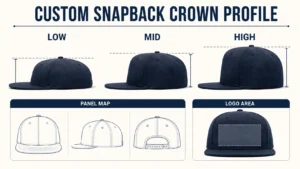
A lot of brands come to us with a rough idea. A sketch, maybe a mood board, a reference photo from a competitor. They know what they want the hat to feel like. They might not know what crown height works best for their target customer, or which fabric weight holds structure without being stiff, or how a leather patch affects the overall balance of a five-panel.
When a factory has designers who’ve worked across different markets — someone who knows that streetwear customers in Seoul prefer a slightly shorter crown, and someone else who knows that U.S. consumers generally need a deeper fit — the sample comes back better than the brief. Not because the factory guessed. Because they brought design intelligence to the table.
We run design studios in the U.S., Korea, and China. Three different perspectives on the same project. A designer in LA might flag that the crown height needs to drop 2mm for the American market. The Seoul team might suggest a fabric finish that photographs better on social media. The China team knows which mills are running on schedule and which fabrics are available at what minimums. Three inputs. One sample. And usually, a result that makes the brand owner say “okay, that’s better than what I had in my head.”
That doesn’t happen by accident. It happens when the factory treats product development as a creative partnership, not just a production job.
If You’re Vetting Factories Right Now
Skip the “top 10 hat manufacturers in China” blog posts. Here are the questions that actually separate the real operations from the noise:
- “Walk me through your sampling process — timeline, cost, how many revision rounds are included.” Listen for specifics. Vague answers here mean vague answers later.
- “What’s your in-line QC process — how often are inspections done during a production run?” If they say “we check everything before shipping,” that’s a red flag. Real QC happens on the line.
- “Do you have designers on staff, or do I need to submit a finished tech pack?” If you’re not a hat construction expert, and most brand owners aren’t, you want a factory with designers who can fill the gaps.
- “Which countries do you produce in, and when would you recommend one over another?” A factory that can answer this with confidence and specific reasoning has been at it long enough to have earned an opinion.
- “Can I talk to one of your existing brand partners?” Not every factory will say yes — client relationships are sensitive. But if they can connect you with a reference, take the call. A twenty-minute conversation with someone already running production through them is worth more than any factory tour.
One Last Thing
Finding a good hat manufacturer in China isn’t really about China. It’s about finding a production partner who treats your brand’s quality the way you do — maybe even more seriously.
The factories behind the hats on PGA Tour players, on lifestyle brand feeds with serious followings, on the heads of people who didn’t even realize they’d become loyal to a hat brand — they’re not competing on who can quote the lowest unit price. They compete on precision, consistency, design input, and the kind of reliability that means you’re not sweating bullets two weeks out from a launch because samples are late or QC reports are incomplete.
If the factory you’re talking to asks about your customer, your seasonal calendar, your brand story — not just your quantity and your target FOB — there’s a good chance you’ve found a real partner.
And if they can run production in China, Vietnam, and Bangladesh with design teams who actually collaborate across markets? That’s not a nice-to-have anymore. That’s how the serious brands are building their supply chains.
Want to see if we’d be a fit? Here’s how we work with brands on custom hat manufacturing. Or check out what we can produce — if you’ve got a project in mind, we’ll tell you honestly whether it’s something we’d knock out of the park or something that’s not in our wheelhouse. Either way, you’ll get a straight answer.

 English
  German
  Spanish
  French
  Amharic
  Portuguese
  Italian
  Swedish
  Turkish
  Belarusian
  Danish