
Custom golf performance hats should be developed as performance products, not ordinary caps with a sports logo. A brand buyer needs to define the fabric, moisture management, ventilation, sun-protection evidence, fit, decoration, sample approval, and bulk quality controls before requesting a production quotation.
This guide is for golf, outdoor, sports, lifestyle, and promotional brands planning a custom performance cap collection. It explains which decisions belong in the brief, what to inspect in a sample, and how to move from a first concept to a repeatable wholesale or OEM program.
What makes a golf performance cap suitable for a brand?
A useful performance cap specification connects a customer need to a controllable product feature. “Cool,” “premium,” and “comfortable” are not enough for a factory to quote or for a buyer to approve. Translate them into decisions such as a lightweight fabric, a defined sweatband, a laser-cut ventilation pattern, a target fit, and a logo method compatible with the material.
| Customer need | Product decision | Sample evidence to review |
|---|---|---|
| Stay comfortable during long outdoor use | Fabric hand feel, moisture-management direction, sweatband width and material | Fit, skin comfort, moisture response, stitching, and wash-care instructions |
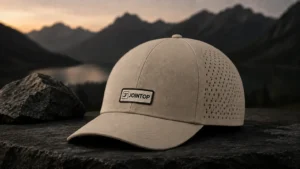
| Reduce heat around the crown | Laser-cut perforation, mesh panel, eyelet placement, or another ventilation method | Clean edges, symmetry, airflow, comfort, and crown stability |
| Protect the brand from weak claims | Define whether the product is water resistant, weather resistant, or waterproof; define any UPF claim separately | Material documentation or testing required for the final claim |
| Keep a consistent retail look | Crown profile, brim curve, closure, color standard, and decoration placement | Measurement sheet, approved artwork, color reference, and pre-production sample |
How to specify fabric, moisture wicking, ventilation, and UPF
Begin with the environment in which the cap will be used. A warm-weather golf collection may prioritize airflow and moisture management. A rain-ready collection may require a different fabric finish and a more careful definition of the water-protection claim. A lifestyle line may need a softer hand feel and a shape that works away from the course. The right option depends on the product brief, not on a universal “best” material.
For moisture management, identify which component is expected to move moisture: the crown fabric, the sweatband, or both. Ask the manufacturer what material information or test evidence is available. Do not treat a “moisture-wicking” label as proof by itself.
Laser-cut ventilation can become a useful brand detail when the pattern is developed with the crown and fabric. Specify the location, density, shape, and visual intent. Review the sample for clean cuts, symmetry, comfort, and whether the crown still holds its approved profile.
UPF is a separate claim from moisture wicking or water resistance. If a brand plans to use a UPF number in product copy or packaging, confirm the supporting fabric or finished-product evidence before publishing the claim. If evidence is not available, describe the construction without assigning a rating.
Sample approval checklist for custom golf performance hats
A sample should be reviewed against a written brief. Record the version, fabric, color, logo artwork, ventilation pattern, closure, measurements, and requested changes. This gives the factory and the brand one reference for the pre-production sample and later bulk inspection.
- Fit and shape: Check crown height, front-panel structure, brim curve, adjustment range, and comfort during movement.
- Fabric: Compare hand feel, weight, color, surface finish, and the intended weather or moisture feature.
- Ventilation: Inspect laser perforations, mesh, or eyelets for placement, clean execution, and comfort.
- Sweatband: Check width, attachment, contact comfort, branding, and whether the approved material is used.
- Logo: Compare size, position, color, stitch density, backing, adhesion, and distortion with the approved artwork.
- Brim and closure: Review recovery, stitching, adjustment, hardware, and the way the cap sits on the target head range.
- Packaging: Confirm folding, labels, SKU separation, carton marks, and protection required for shipment.
OEM, ODM, wholesale, and bulk quotation information
A manufacturer can give a more useful quotation when the request includes the target market, use case, reference shape, fabric preference, colors, logo files, decoration method, ventilation idea, size and closure, quantity by style and color, packaging requirements, destination, and target launch date.
MOQ, sampling cost, production timing, and unit pricing depend on the selected construction and order requirements. Confirm them against the final brief rather than using a generic number for every performance cap. If the brand is still deciding between stock materials and a custom development, ask for both options to keep the trade-off visible.
For the wider development sequence, see the custom hat development process. For a structured quotation request, use the custom hat RFQ checklist. The Performance-Kappen page shows the product direction, while the custom performance hats manufacturer page supports supplier evaluation.
Quality control from approved sample to repeat orders
The approved sample should become the comparison reference for bulk production. Keep the fabric, color, artwork, measurements, ventilation layout, logo position, closure, and packing method in one controlled specification. Inspection should focus on the details that affect fit, performance claims, branding, and cross-lot consistency.
For a multi-SKU collection, use a shared measurement and artwork system while allowing each style to keep its intended use. This helps the collection feel consistent without forcing every performance cap into the same fabric, crown, or ventilation design.
Common development mistakes brands should avoid
- Choosing a fabric because it looks good without defining the intended use or claim.
- Approving a logo from a flat image without testing it on the actual fabric and construction.
- Using “waterproof,” “UPF,” or “moisture-wicking” as marketing language before confirming evidence.
- Changing the brim, crown, sweatband, or logo placement after approval without updating the reference sample.
- Comparing quotations without checking what each supplier includes in sampling, packing, inspection, and decoration.
FAQ: custom golf performance hats
What should a brand include in a performance cap brief?
Include the target customer and use case, reference shape, fabric direction, color, logo files, decoration method, ventilation, sweatband, closure, quantity by style and color, packaging, destination, and required sample milestones.
Can laser-cut ventilation be added to a custom golf cap?
Yes. The pattern should be developed with the fabric, crown structure, comfort, and appearance in mind. Approve the actual cut pattern and sample execution before bulk production.
Does every performance cap need a UPF rating?
No. A UPF rating is a specific product claim. Use one only when the relevant material or finished-product evidence supports the wording used by the brand.
How should a brand compare performance cap manufacturers?
Compare how each supplier handles fabric selection, sample revisions, logo testing, measurement control, inspection, packing, communication, and repeat orders. The lowest initial quote does not describe the complete production risk.
What is the next step for an OEM performance cap project?
Send the reference shape or tech pack, logo artwork, target use, preferred performance features, quantity by style and color, and target launch date. JoinTop can then review the brief, recommend a development route, arrange samples, and prepare a quotation based on the confirmed requirements. Request samples or a technical quotation.



 English
  German
  Spanish
  French
  Amharic
  Portuguese
  Italian
  Swedish
  Turkish
  Belarusian
  Danish