Custom sports hats are easier to source when the buyer fixes the cap
structure before choosing fabric, ventilation, and decoration. A
five-panel or six-panel platform changes the front branding area, seam
map, crown profile, brim, and the way a sample should be checked. For a
golf, running, training, or outdoor program, those construction
decisions should sit in the brief before a factory quotes the order.
This guide gives brand and procurement teams a practical way to
specify custom sports hats without turning “performance” into an
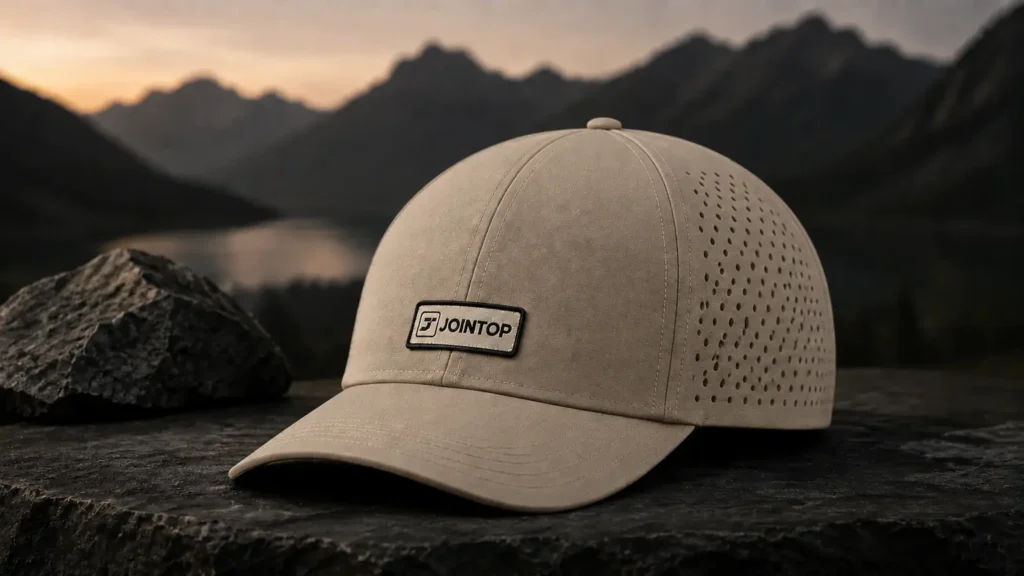
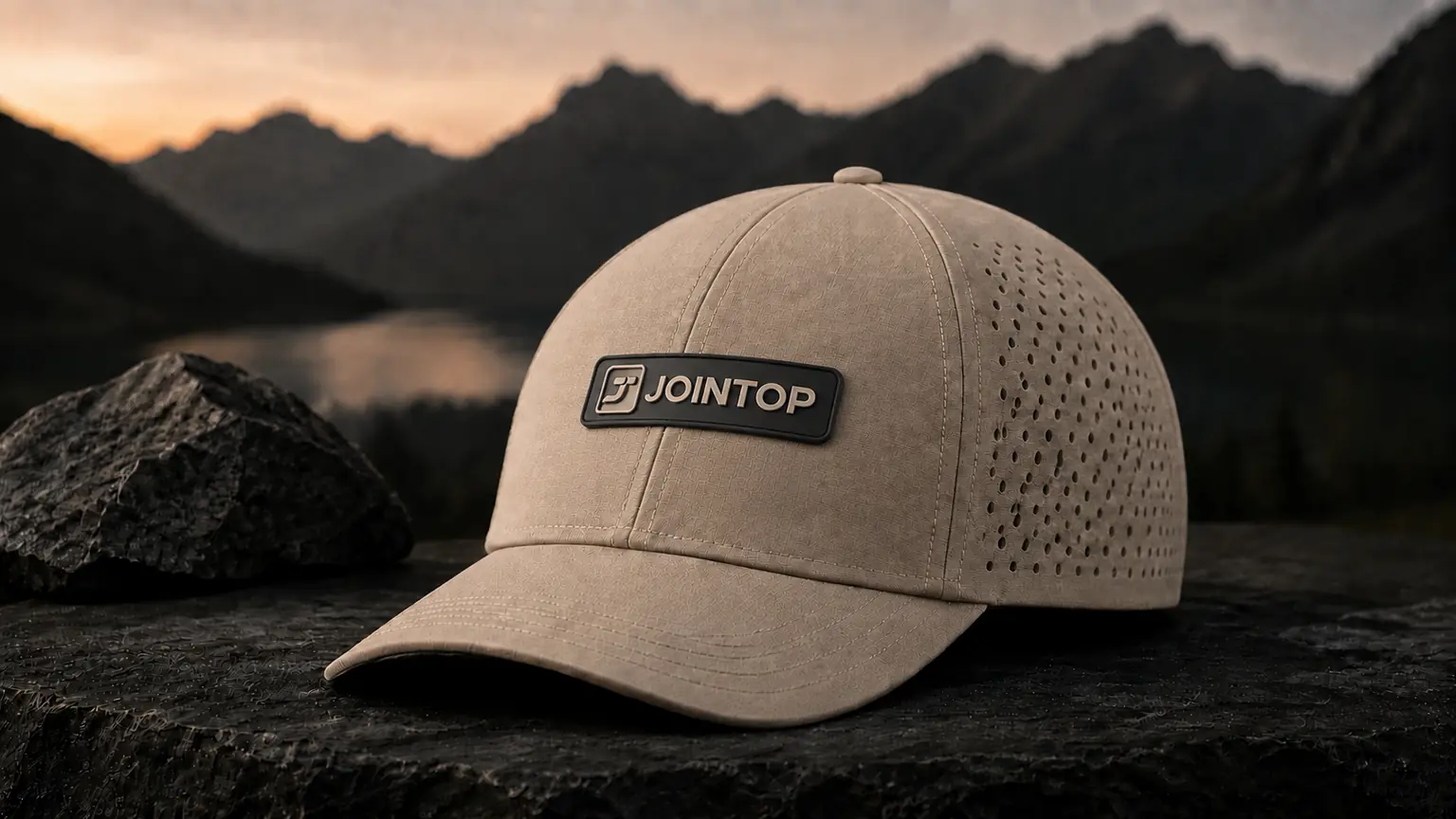
unsupported promise. The active example is a laser-perforated
Performance Cap, but the same approval logic can be applied to other
five-panel and six-panel sports programs.
Start with
the use case, then lock the cap platform
“Sports hat” describes a buying context, not one universal pattern. A
golf cap may need a stable brim and a clean front for a small logo. A
running cap may prioritize low weight, airflow zones, and a secure fit.
An outdoor brand may need a durable hand feel and a defined coverage
brief. The factory needs those priorities in writing before it can
recommend a construction.
The first decision is whether the program should use a five-panel or
six-panel cap.
| Platform | Useful when | What to approve first | Risk when left vague |
|---|---|---|---|
| Five-panel sports cap | The brief needs one uninterrupted front panel and a clean technical silhouette |
Front-panel shape, side/rear ventilation, crown height, brim curve, closure, and logo safe zone |
A sample arrives with a different front shape or with perforations too close to the logo |
| Six-panel sports cap | The brief wants a traditional segmented baseball-cap profile or a center-seam reference |
Center seam, front-panel symmetry, crown profile, brim attachment, ventilation zones, and logo clearance |
The center seam crowds the artwork or changes the visual balance between sizes |
Neither platform is automatically more technical. A five-panel cap
can still have weak fit control, and a six-panel cap can still be built
with carefully planned airflow. The procurement requirement is to name
the platform and show it in the construction drawing.
Build a
sports-cap specification that can be sampled
A useful brief separates fixed decisions from items the factory may
recommend. Include:
- Cap structure: five-panel or six-panel, front-panel
construction, crown height, brim shape, closure, sweatband, and seam
finish. - Use case: golf, running, training, outdoor work,
event staffing, or another defined activity. - Airflow plan: solid or perforated zones, the
location of laser perforations or other ventilation, and any areas that
must stay solid for branding. - Fit expectation: adjustable range or fitted size
block, target wearer, and any reference cap the team already
approves. - Decoration: embroidery, heat transfer, patch,
print, or a mixed application, with logo size and placement. - Colorway matrix: fabric, trim, thread, closure, and
brim colors by style and color. - Commercial inputs: quantity by style and color,
target market, packaging or label needs, and required delivery
date.
If the brief is still exploratory, mark the open items. A factory can
then separate a development recommendation from a quote based on a fixed
specification.
Compare
ventilation with the actual branding area
Airflow details should be mapped against the logo area, not described
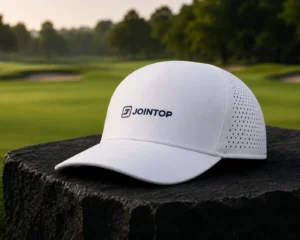
as a general feature. In a five-panel Performance Cap, a solid
uninterrupted front panel can preserve a clean branding zone while side
and rear panels carry laser perforations. In a six-panel program, the
center seam and front-panel boundaries need to be shown before the logo
is digitized.
Ask the factory to provide a panel drawing or annotated sample that
identifies:
- Which panels are solid and which panels are perforated.
- The size and distribution of ventilation zones.
- The minimum clearance between perforations, seams, brim attachment,
and decoration. - The fabric and backing used under the logo.
- The closure and sweatband details that affect the fit range.
This is a construction review, not a claim that a cap will deliver a
specific cooling or moisture result. If the buyer needs a testable
performance outcome, the requirement and test method should be agreed
before production.
Review the brim,
crown, and fit as one system
A sports cap can look correct from the front and still sit
incorrectly on the wearer. Review the sample from the front, both sides,
rear, top, and interior. Record the crown height, front angle, brim
length and curve, closure range, sweatband attachment, and any visible
distortion around the ventilation zones.
For an adjustable cap, measure the closed and open range using the
same points each time. For a fitted program, record the size block and
how the pattern changes between sizes. The tolerance is only useful when
the buyer and factory agree on the reference point and the acceptance
range.
Use a real head form or a consistent fit model when checking the
silhouette. Photos remain useful evidence, but they cannot replace a
physical fit check or a measurement record.
Choose
the decoration after the panel map is approved
Decoration should follow the construction, not force the construction
to change. Embroidery needs stable support, a clear stitch area, and
enough space from seams and the brim. A patch or transfer may need a
different surface and heat or pressure process. A printed mark may
require a different fabric finish or color-control reference.
Before approving artwork, record:
- the logo file version and final size;
- the horizontal centerline and distance from the top seam or
brim; - the maximum width and height on the chosen panel;
- the thread, ink, patch, or transfer references;
- the backing or support layer, if used;
- the physical sew-out or decoration sample required before the
finished cap sample.
The same logo can fit a five-panel front panel and fail on a
six-panel cap with a center seam. The approval record should show the
actual platform, not just a flat artwork file.
Sample
approval: a short sequence for sports programs
Use a fixed sequence so product, sourcing, and factory teams are
comparing the same evidence.
1. Confirm the panel
construction
Check that the five-panel or six-panel layout, seam map, front-panel
support, ventilation zones, brim, and closure match the brief.
2. Confirm fit and silhouette
Review the crown, brim, adjustment range or size block, sweatband,
and interior finishing on a head form or consistent wearer.
3. Confirm the decoration
Check placement, scale, stitch or print coverage, thread or color
references, edge definition, and interaction with seams and
perforations.
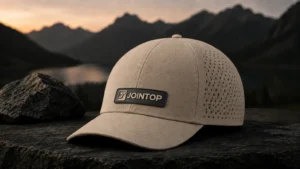
4. Confirm each colorway
Compare the actual fabric, thread, trim, and closure combination
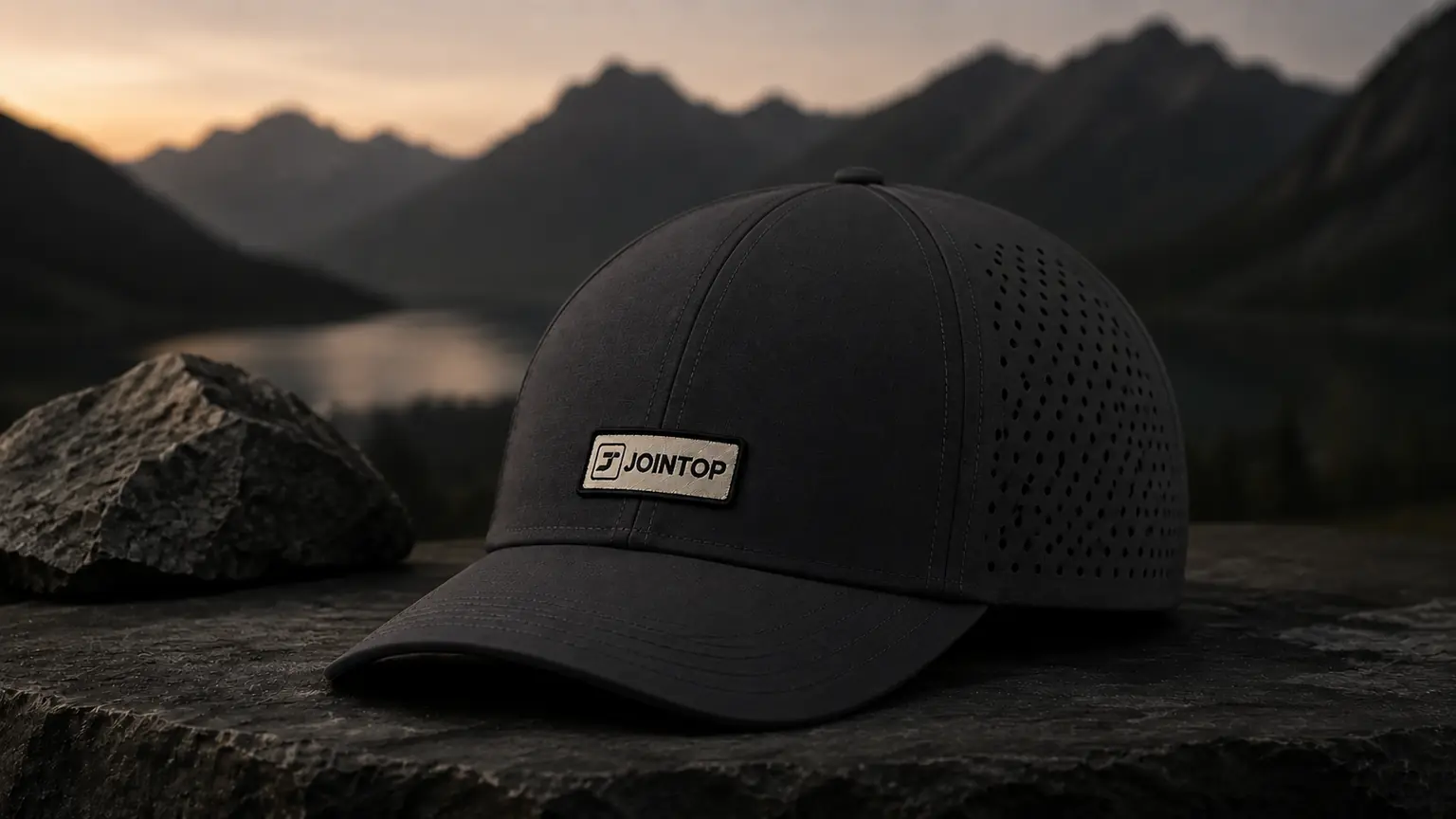
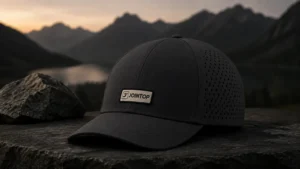
under consistent lighting. Do not approve a dark technical fabric from a
light-color sample alone.
5. Freeze the reference
Record the approved sample number, artwork version, measurements,
colorway matrix, inspection points, and any open change. A reorder
should point to this reference rather than memory.
After the main decisions are clear, a buyer can request a Performance
Cap manufacturing review. Send the company or website, panel
preference, use case, quantities by style and color, logo files, target
market, and requested delivery date.
MOQ and timing belong
in the first brief
JoinTop’s current working guidance is 100 pieces per style
and color. Sampling is usually 7–14 days, and
bulk production is commonly 35–45 days after sample
confirmation, excluding design changes, buyer approval delays,
sample transportation, and international logistics. These are planning
ranges, not unconditional guarantees; material availability and the
final approved specification control the confirmed schedule.
Discuss quantity and timing before the sample is finalized. A
five-panel cap with several ventilation and color combinations may
require a different review path from a single-color six-panel team cap.
The quote should identify what is included, what remains open, and which
assumptions could change the timeline.
For the next step, use the custom hat
sampling process to organize the reference sample and approval
record. The existing running
and golf Performance Hat guide can support use-case discussion,
while this article keeps the focus on panel-level specification and
release evidence.
What to send
for a qualified sports-hat inquiry
Send enough information for the factory to identify the actual
production decision:
- Company name or website and the customer or market served.
- Five-panel or six-panel preference and the intended sports or
outdoor use. - Front-panel, crown, brim, closure, and ventilation references.
- Logo files, preferred decoration, placement, and any clear-space
rule. - Quantities by style and color, target market, labels or packaging,
and requested delivery date. - Existing sample, tech pack, or reference cap if one is
available.
If the cap is still at concept stage, say which items are fixed and
which are open to a factory recommendation. That keeps the first sample
useful instead of hiding uncertainty inside a generic quote.
FAQ
Are
five-panel custom sports hats better than six-panel hats?
Neither panel count guarantees a better sports product. A five-panel
cap offers one uninterrupted front area, while a six-panel cap provides
a segmented front with a center seam. The right choice depends on the
use case, fit, logo, ventilation plan, and approved sample.
Can a
five-panel Performance Cap use laser perforations?
It can, when the side and rear zones, front-panel branding area,
fabric, and decoration clearance are shown in the construction brief and
confirmed on the sample. The exact airflow or durability result should
not be promised without an agreed verification method.
What
should a buyer approve before ordering custom sports hats?
Approve the panel map, crown and brim, fit range, ventilation zones,
fabric and trim references, logo placement, physical decoration sample,
colorway matrix, inspection points, and version record.
What information
affects the quote most?
Panel platform, fabric, ventilation, decoration, quantity by style
and color, colorway count, sample revisions, target market, and delivery
date all affect the production plan. A clear brief makes the first quote
more useful.
Conclusion
Custom sports hats become easier to source when the buyer treats the
five-panel or six-panel platform as a production decision, not a styling
detail. Lock the panel map, fit, brim, ventilation zones, logo
clearance, colorways, and approval evidence before releasing the order.
Then send a complete brief so the factory can recommend a realistic
sample and bulk path for the actual sports use case.


 English
  German
  Spanish
  French
  Amharic
  Portuguese
  Italian
  Swedish
  Turkish
  Belarusian
  Danish