

Waterproof beach hats for a branded program should be specified as a finished headwear system, not purchased from a fabric label alone. The shell, panel seams, visor join, ventilation, sweatband, closure, decoration, and care method all affect the result. For a beach or resort collection, the buyer also needs to account for salt water, sand, heat, packability, and color change before approving a five-panel or six-panel cap for bulk production.
The first decision is the exposure level. A cap intended for spray during coastal travel needs a different construction from one promoted for repeated rain or waterside activity. Define the claim, test method, wearer, fit, and retail use before choosing the fabric. This prevents a surface-repellent textile result from being presented as proof that every seam and opening on the finished cap is waterproof.
Define the beach use case before selecting a shell
“Beach hat” can describe a resort accessory, a technical cap for shoreline activity, or a packable travel product. Each direction creates a different balance of weather protection, airflow, coverage, structure, and appearance. A useful product brief states the expected exposure and the points where the brand will accept intentional openings.
| Program | Primary product job | Specifications to prioritize | Main sourcing risk |
|---|---|---|---|
| Resort and lifestyle | Maintain a clean silhouette through light spray, sunscreen contact, and travel | Soft hand, color stability, controlled brim, clean logo, packability | A heavy barrier can make the cap stiff, noisy, or difficult to decorate. |
| Coastal activity | Handle wind, spray, movement, and repeated wet handling | Secure closure, stable visor, protected seams, defined water test, sweatband | A shell can repel surface water while seams and attachment points still leak. |
| Travel and packable | Recover after folding and fit into luggage | Light shell, crease recovery, flexible visor, compact packing method | Reinforcement or coating can reduce fold recovery. |
| Performance beach cap | Balance weather protection with heat and movement comfort | Five-panel or six-panel block, ventilation map, light shell, quick-drying components | Open ventilation conflicts with an unrestricted waterproof claim. |
If your team is evaluating a beach-cap line, send JoinTop the intended cap style, quantity by color, logo method, performance requirements, target market, and delivery location through the waterproof beach-hat feasibility review. A precise brief lets the factory compare workable constructions before sampling costs and timelines are locked.
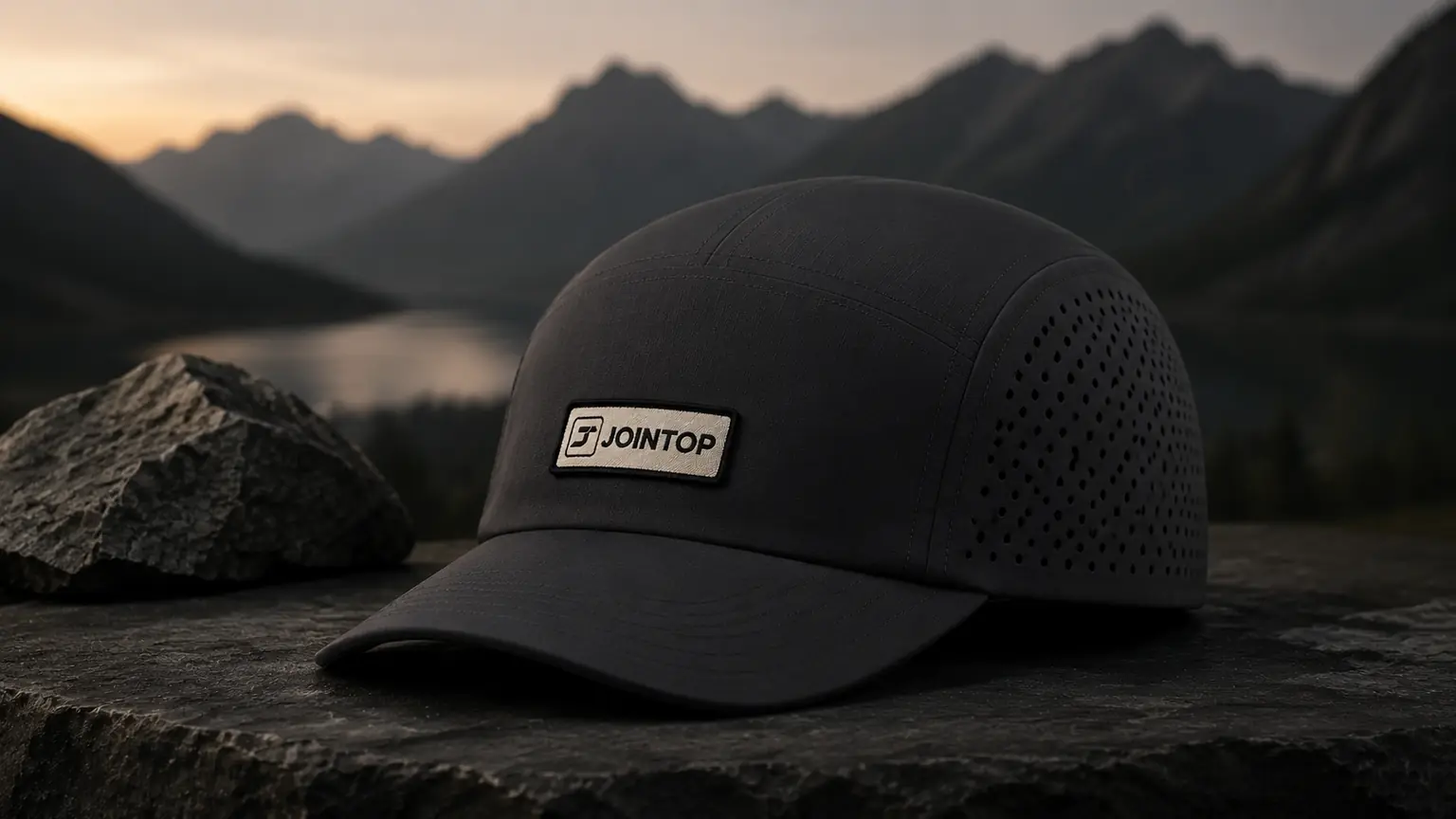
Choose a five-panel or six-panel construction
Panel count does not determine waterproof performance by itself, but it changes the seam map, fit, logo area, and ventilation options. A five-panel cap can provide a broad technical front and fewer front-panel joins. A six-panel cap gives a familiar baseball profile, yet the center-front seam becomes a critical location for appearance, decoration, and water entry.
| Construction | Useful brand direction | Control points before sampling |
|---|---|---|
| Five-panel performance cap | Modern outdoor, running, surf, resort, or technical lifestyle collection | Front support, side seams, ventilation zones, visor angle, logo safe area, rear fit |
| Six-panel baseball cap | Golf, travel, resort, or lifestyle collection using a familiar silhouette | Center-front seam, panel balance, eyelets, crown height, visor join, logo placement |
| Structured crown | Stable retail display and a crisp logo field | Support-layer compatibility, heat response, wet recovery, seam thickness |
| Soft or unstructured crown | Packability and a relaxed coastal look | Front collapse, crease recovery, seam stability, logo distortion |
Record the finished circumference, crown depth, front height, visor length and width, rear opening, closure range, sweatband width, and critical seam positions. Use wearer trials for the target market rather than assuming that one unisex block will fit every collection. The five-panel versus six-panel guide explains the structural differences; the beach specification should add the water path, wind stability, and packability requirements.
Separate water repellency from water resistance
Water-repellent, water-resistant, and waterproof are not interchangeable purchase terms. AATCC TM22 evaluates resistance to surface wetting by a spray. AATCC TM127 measures resistance to water penetration under hydrostatic pressure and notes that its results may differ from rain or spray methods. Neither flat-fabric result automatically proves the performance of a sewn cap.
| Buyer requirement | What to define | Evidence to retain | Failure if left vague |
|---|---|---|---|
| Surface repellency | Fabric, finish, color, test method, initial target, and after-care target | Material report tied to the approved lot or specification | The shell beads water initially but wets after care or on another color. |
| Water penetration resistance | Method, specimen, pressure or exposure, number of tests, and acceptance level | Report for the actual production-intent material | A swatch result is generalized to seams, eyelets, and decoration. |
| Finished-cap rain behavior | Spray direction, duration, movement, critical zones, and pass criteria | Recorded test on a complete production-intent cap | Water enters through stitches, visor attachment, or the rear opening. |
| Marketing claim | Exact wording, territory, evidence owner, and care limitations | Approved claim file connected to the sold construction | A broad waterproof statement exceeds the evidence available. |
A practical specification can use more than one method. Surface wetting helps a buyer compare finishes; hydrostatic pressure helps compare barrier performance; a finished-cap exposure check reveals construction entry points. State which result applies to fabric and which applies to the complete cap. If the design changes its seam, ventilation, logo, or finish, review whether the original evidence still represents the product. Before publishing an objective waterproof or performance claim, retain evidence that provides a reasonable basis for the exact wording; the FTC advertising substantiation policy explains this principle for express and implied claims.
Balance the shell barrier with heat and ventilation
A tightly woven polyester or nylon shell can support low weight, quick drying, and reduced surface wetting, depending on its yarn, construction, and finish. A coating or laminate can add a stronger barrier, but it may reduce air exchange, change drape, create noise, affect fold recovery, or complicate heat-applied decoration. Fiber content alone does not settle the decision.
ASTM D737 covers air-permeability measurement for textile fabrics and notes its use for weather-resistant, rainproof, and coated materials. For sourcing teams, the important point is to compare air permeability on the shell and any supported or coated panel that will actually be used. A face fabric result may change after backing, lamination, printing, or seam treatment.
- Map every intentional opening, including laser perforation, mesh, eyelets, rear gaps, and closure slots.
- Keep ventilation away from high-spray zones when the product requires stronger rain protection.
- Test the shell together with front support, lining, sweatband, and decoration.
- Compare dry comfort, damp comfort, air movement, and recovery after packing.
- Use claim language that acknowledges open zones instead of implying a sealed product.
The visor also affects comfort and weather behavior. Define insert material, shell layers, stiffness, curve, stitch rows, edge finish, and recovery after wetting. A wider or flatter visor can add face coverage, but it can catch more wind and may pack poorly. A shorter curved visor can be more stable during movement, although it covers less area. Select the tradeoff for the wearer, not only for the product photograph.
Design for salt water, sand, sunscreen, and care
Beach exposure is not the same as clean laboratory water. Salt residue can remain on the shell, rope, metal hardware, thread, and sweatband. Sand can abrade printed surfaces and collect at seams. Sunscreen and skin oils can mark light colors or alter some coatings. These risks should be included in the sample review even when the primary claim concerns rain or spray.
AATCC TM106 measures resistance of colored textile yarns and fabrics to artificial sea water. It is a useful reference when dark shells, contrast trims, or light sweatbands create a transfer risk. If the product will be washed, ISO 6330:2021 provides defined domestic washing and drying procedures for textile testing. The buyer and laboratory still need to agree on the procedure, cycles, observations, and acceptance level.
At this stage, qualified buyers can send JoinTop the chosen shell reference, cap block, quantity and colors, logo technique, water and colorfastness targets, target market, delivery destination, and any required care method for a material and logo compatibility review. This review is most useful before a finish, patch adhesive, transfer temperature, or custom trim minimum has been committed.
Match logo, trim, and closure to the shell
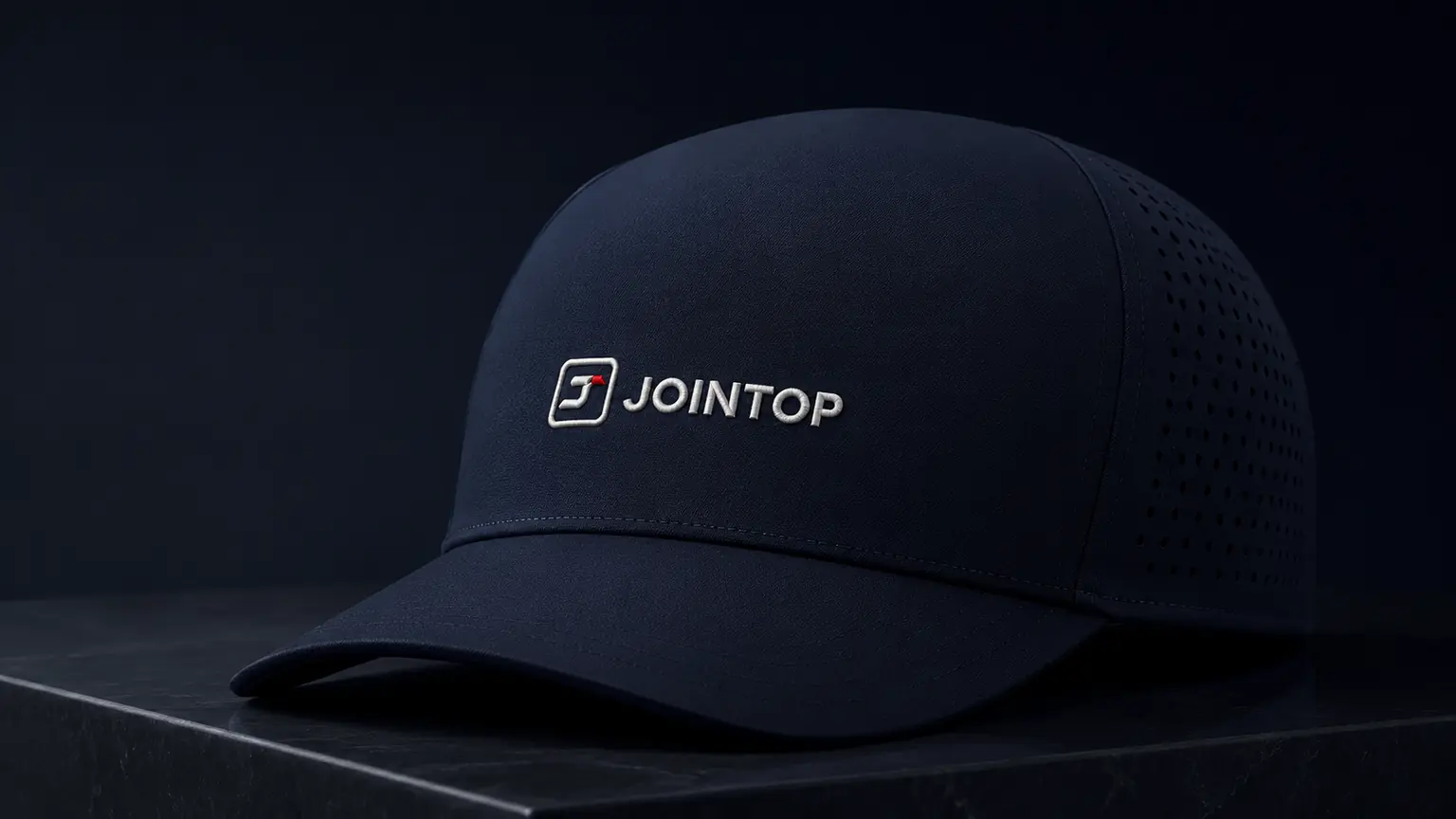
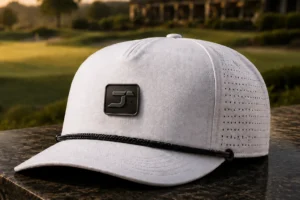
Decoration changes both appearance and the water path. Direct embroidery adds needle holes, thread, backing, and local stiffness. A woven patch adds an attachment perimeter. A silicone badge can create a technical look, but its bond or stitches must survive flexing, damp handling, and the care method. Heat transfer avoids dense embroidery penetration, yet heat and adhesive can interact with coatings or create color migration.
| Logo method | Useful for | Beach-cap risk | Approval evidence |
|---|---|---|---|
| Flat embroidery | Wordmarks and athletic symbols | Needle penetration, puckering, backing visibility, local water entry | Production-size sew-out on the final supported shell |
| Woven patch | Fine detail and resort or heritage branding | Edge lift, attachment perimeter, weight, wet handling | Patch on the curved crown after flex and care checks |
| Silicone or molded badge | Technical and modern performance identity | Bond failure, stiffness, edge lift, color migration | Attachment trial on the actual finish and crown curve |
| Heat transfer | Fine graphics with limited needle penetration | Coating damage, adhesive response, strike-through, migration | Temperature-controlled trial with after-care inspection |
| Screen print | Bold flat graphics on a compatible surface | Ink adhesion, cure temperature, abrasion, cracking | Printed production shell after flex, wet, and rub checks |
Record logo size, centerline, distance from seams and visor, backing, colors, relief, and minimum line width. Approve it on the cap rather than on a flat panel alone. The custom hat logo techniques guide provides the general method comparison; a waterproof beach-cap program adds the requirement to check how the decoration affects the finish, seam map, and care behavior.
Choose closures with the same discipline. A plastic snap avoids metal corrosion but can feel rigid. A woven strap with a metal buckle offers a refined appearance, yet the hardware finish needs damp and salt-exposure review. Hook-and-loop systems can be light and adjustable but may collect fibers or sand. Soft molded closures can support active use, subject to grip, color, tooling, and quantity requirements.
Use a staged sampling and validation plan
The first prototype can establish silhouette and component direction. The confirmation sample should use production-intent shell, finish, visor, support, sweatband, closure, logo, seams, and labels. A pre-production sample should then lock the approved construction before bulk cutting. Keep comments measurable and tied to a location, current result, required result, and verification method.
- Approve the use case. Record activity, climate, water exposure, heat, wearer, retail channel, and claim language.
- Approve the block. Select five-panel or six-panel construction, crown profile, fit range, visor, and closure.
- Approve the material package. Confirm shell, finish, support, sweatband, thread, trim, and colors.
- Approve decoration. Review logo size, placement, attachment, and compatibility on the actual treated shell.
- Run the named tests. Separate flat-fabric results from finished-cap observations and record all conditions.
- Review care and exposure. Inspect color, shape, adhesion, seam appearance, visor recovery, and closure function.
- Seal the master sample. Retain the dated cap, measurement sheet, component standards, reports, packing method, and revision history.
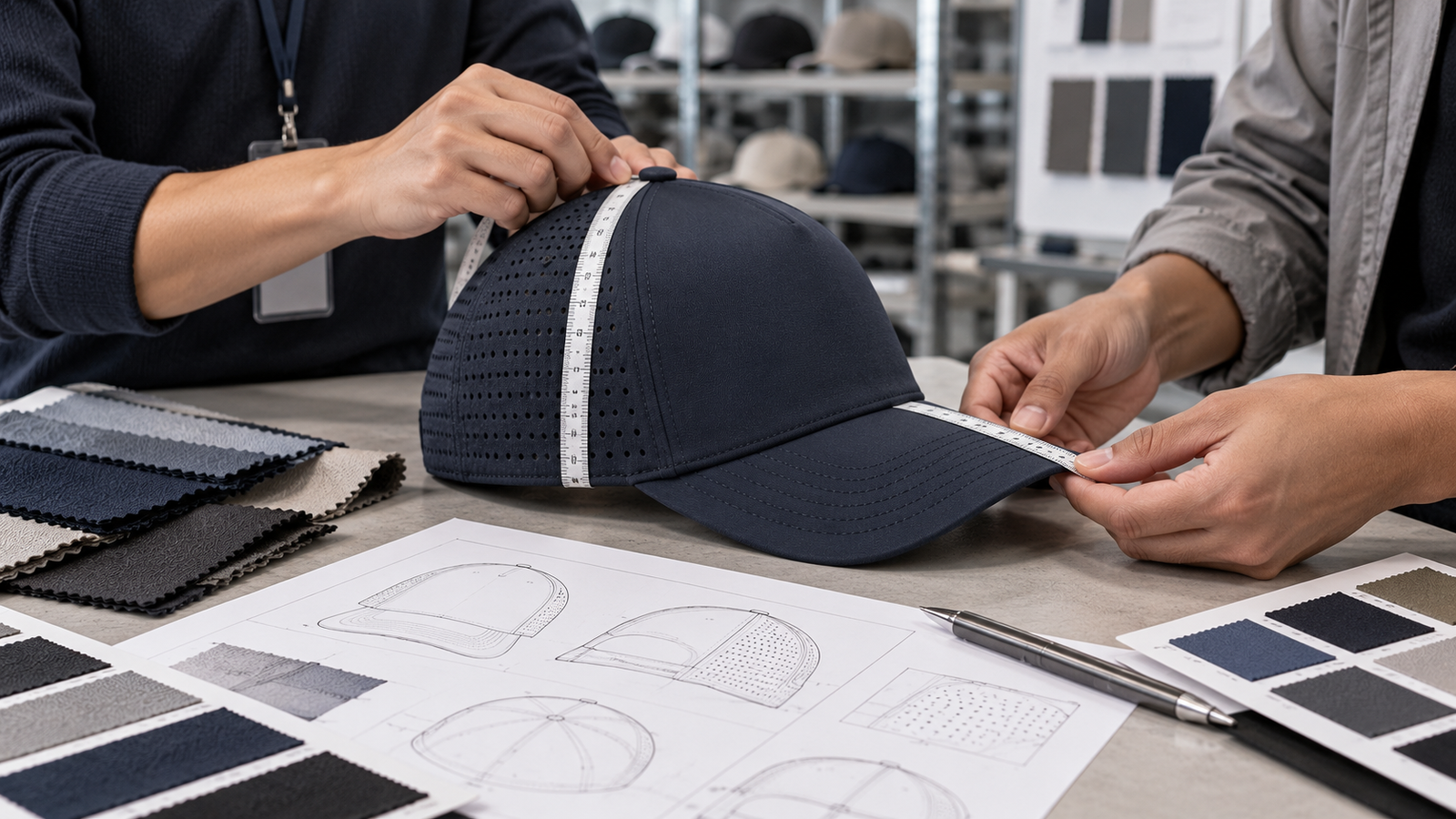
The custom hat sampling process gives the broader approval sequence. For this program, add a zone map showing seams, openings, decoration, and expected water entry. Photograph the cap from the front, sides, rear, top, interior, visor underside, and closure before and after the agreed exposure.
Inspect bulk production against a sealed standard
Bulk inspection should verify the product that was approved, not merely count finished pieces. Check across colors, material lots, and packing cartons. Define critical, major, and minor defects before inspection so the buyer and factory use the same release logic. Functional checks should be sampled during production when the order depends on water behavior, colorfastness, closure security, or logo adhesion.
If the purchase order uses acceptance sampling, ISO 2859-1:2026 defines AQL-indexed schemes for lot-by-lot inspection by attributes. The buyer and supplier still need to agree on the inspection level, sample plan, defect classifications, acceptance limits, and switching rules. A sampled lot decision does not guarantee that every individual cap is defect-free.
| Bulk control | What to verify | Typical defect | Release record |
|---|---|---|---|
| Materials and color | Shell lot, finish, support, sweatband, trim, thread, shade | Mixed hand feel, shade drift, transfer, missing finish | Approved swatches, lot references, inspection photos |
| Construction | Crown symmetry, seams, visor join, ventilation, rear opening | Puckering, skipped stitches, exposed holes, uneven curve | Golden sample and measured in-line check |
| Fit and measurements | Crown, circumference, closure range, visor, logo position | Size drift, shallow crown, asymmetric visor, off-center logo | Measurement report by size and lot |
| Functional points | Water behavior, closure, logo attachment, color, recovery | Leak at changed seam, badge lift, closure slip, staining | Named method, sample count, result, and disposition |
| Packaging | Shape support, labels, barcode, care, polybag, carton | Crushed visor, wrong label, trapped moisture, mixed color | Packing approval and final random inspection |
Use the custom headwear quality-control checklist as a base, then add beach-specific risks. A change in coating, seam tape, thread, ventilation file, closure hardware, patch adhesive, or packaging can affect the approved result and should trigger a documented review.
Plan MOQ, lead time, and repeat-order controls
JoinTop’s standard baseball-cap MOQ is 100 pieces per style and color, but a special fabric, custom color, coating, logo mold, closure, or trim can carry a higher supplier minimum. Ask for the cap MOQ and each component minimum separately. A stock shell and stock closure create a different development route from custom dyeing, molded trim, or a specially laminated material.
Typical sampling is about 20-25 days, while special material development or tooling can require 25-30 days. Bulk production is commonly about 40-45 days after approval and can extend to 45-50 days in a peak period. These are planning ranges, not a shipment promise. Confirm material availability, testing, approval rounds, production capacity, inspection, and transit for the actual purchase order.
For reorders, retain the pattern version, material supplier code, finish, color standard, ventilation file, logo file, hardware reference, measurements, test reports, packaging, and sealed cap. Reapprove any substitute. A visually similar material can behave differently after sewing, heat application, salt exposure, or care.
Questions sourcing teams ask about waterproof beach hats
Can a perforated cap be called waterproof?
An open perforation allows air and may also allow water through, depending on its location and exposure. Treat the perforated zone as an intentional opening, test the complete cap, and use claim language that matches the observed result. Do not infer whole-cap waterproofing from the shell fabric alone.
Is a coated fabric always better for a beach cap?
No. A coating may improve barrier performance but can reduce airflow, alter hand feel, increase noise, complicate decoration, and reduce packability. The better option is the material package that meets the agreed exposure, comfort, appearance, and care targets for the intended wearer.
Should testing use fabric or the finished cap?
Use both when the claim and risk justify it. Fabric methods compare material properties under defined conditions. Finished-cap checks reveal the effect of seams, openings, support, visor construction, sweatband, closure, and decoration. The approval file should state which specimen each result represents.
Prepare a production-ready beach-cap brief
- Beach activity, climate, wearer, retail position, and exact performance claim
- Five-panel or six-panel block, crown structure, fit range, visor, and closure
- Shell, finish, support, sweatband, seam treatment, ventilation, and colors
- Logo method, dimensions, position, backing, attachment, and after-care target
- Named water, air, sea-water colorfastness, care, and finished-cap checks
- Prototype, confirmation sample, pre-production sample, and golden standard
- Bulk defect definitions, inspection level, functional sampling, and packaging
- Quantity by style and color, component minimums, delivery market, and in-warehouse date
To start a qualified waterproof beach-hat project, share your cap style or reference, quantity, colors, logo method, performance and test requirements, target market, delivery location, packaging, and required date through the JoinTop custom headwear inquiry. We can translate that brief into material options, a mock up, sample stages, measurable approvals, and a bulk quality-control plan.




 English
 German
 Spanish
 French
 Amharic
 Portuguese
 Italian
 Swedish
 Turkish
 Belarusian
 Danish