If you are building a hat brand, this question shows up early:
Should you start with blank caps and add your logo later, or go straight into custom logo caps?
At first, blank caps usually look like the simpler choice. They cost less up front. They move faster. They feel easier to manage. You do not have to spend weeks talking about fabric, crown height, brim shape, closure options, inside branding, or whether the sample somehow looks great in a render and only “fine” in real life.
That is exactly why a lot of brands start there.
But once a brand starts taking headwear seriously, the decision stops being simple.
Blank caps are usually cheaper in the short term. Custom logo caps usually do more for the brand in the long term. If all you need is a decent cap for a quick drop, blank can work. If you want the cap to actually help define the brand, custom usually makes more sense.
That is the real split.
This is not only about cost. It is also about identity, fit, perceived value, pricing power, and how much of the final product actually feels like it belongs to your brand.
For U.S. hat brands, that difference matters more than it sounds.
The short answer
Here is the clean version.
| Factor | Blank Caps | Custom Logo Caps |
|---|---|---|
| Upfront Cost | Lower | Higher |
| Speed to Market | Faster | Slower |
| MOQ Flexibility | Easier in many cases | More structured |
| Fit Control | Limited | Stronger |
| Material Control | Limited | Stronger |
| Brand Differentiation | Lower | Higher |
| Perceived Value | Can be good enough | Usually stronger |
| Long-Term Brand Value | Limited | Better |
| Best For | Testing, promo, fast drops | Brand building, premium positioning, scalable lines |
So yes, blank caps are easier to start with.
But easy and right are not always the same thing.

What is the real difference between blank caps and custom logo caps?
A blank cap is a cap body that already exists before your brand gets involved. The crown shape is already set. The brim is already set. The closure is already chosen. The overall fit and structure are mostly locked in. Your job is to decorate it.
A custom logo cap is developed around your brand from the start. That can include the fabric, crown profile, front panel firmness, brim curve, closure type, interior labels, seam tape, sweatband details, patch style, embroidery approach, and packaging.
That may sound like a technical distinction, but it changes the entire product.
A blank cap gives you somewhere to place a logo.
A custom cap gives you room to build a product that feels like your brand before the logo even does the talking.
That is why two caps with the same logo on the front can land very differently in the market.
Is it cheaper to buy blank caps and add a logo?
Most of the time, yes.
That part is real. There is no reason to dance around it.
If you buy blank caps and add embroidery or a patch, the initial cost is often lower than building a fully custom cap from scratch. That matters, especially for new brands, event merch, test runs, and short seasonal programs.
The mistake is thinking that the first invoice tells the whole story.
It does not.
The real cost of a cap program is not just the cap body plus decoration. It is also about what happens after the product is live. Can it support your retail price? Does it feel too generic? Does it fit the way customers expect? Does it look like a brand product or just a blank with your logo on it? Does it hold up across reorders? Does it create enough product identity to make people remember it?
Those are business issues, not just design issues.
A blank cap can absolutely save money at the beginning. But if the final product looks too familiar, feels too easy to compare, or does not support the kind of price point you want, those early savings can get smaller fast.
So yes, blank caps are often cheaper to launch.
That does not automatically make them the better choice.
Why do so many brands start with blank caps?
Because blank caps solve real problems.
They are fast. They are practical. They lower the barrier to entry. They help brands test ideas without getting buried in development work too early.
And sometimes that is exactly the smart move.
If a brand is still learning whether its audience wants a rope cap, a structured snapback, a relaxed dad hat, or a performance-driven fit, going fully custom on day one can be too much. There is no prize for making your first program more complicated than it needs to be.
Blank caps work well when the goal is to move quickly, test demand, and stay flexible.
They make sense for:
- market testing
- event merchandise
- small launch quantities
- short seasonal drops
- brands still figuring out what their customer actually wants
That is not cutting corners. That is sequencing.
The issue is not starting with blank caps.
The issue is staying there after the brand has clearly outgrown them.
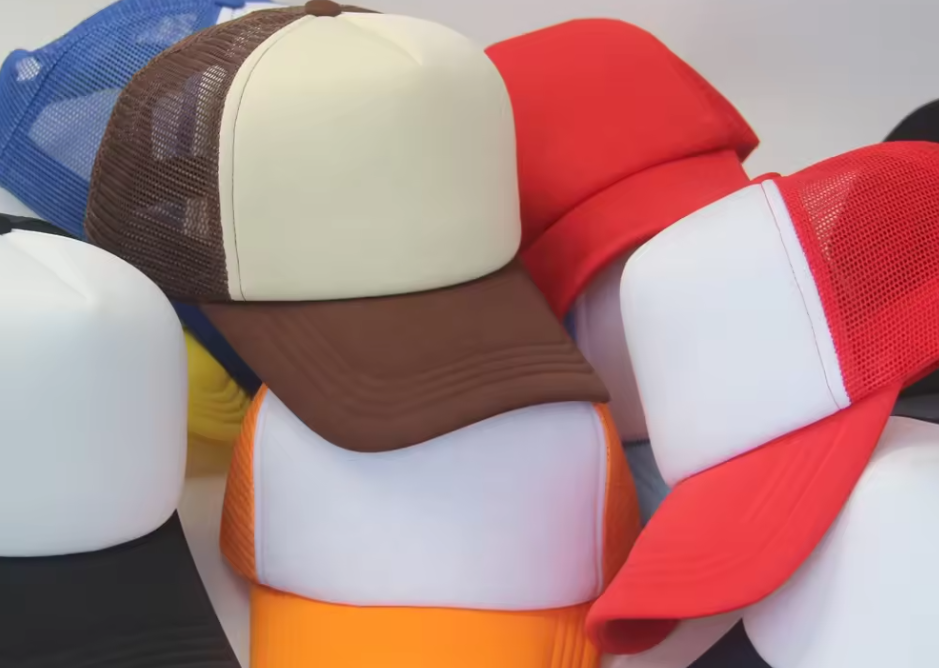
Do blank caps make a brand look generic?
Sometimes they do.
Not always. But often enough that brands should be honest about the trade-off.
A blank cap is not automatically bad. There are solid blanks in the market. Some work perfectly well for lower-risk programs or basic branded merchandise. But a blank cap usually puts a ceiling on how much of the final product can actually belong to your brand.
You did not build the silhouette from scratch.
You did not define the fit from the beginning.
You did not shape many of the small details that customers quietly notice.
And people do notice them.
They notice when the crown sits too high. They notice when the front panel feels stiff in the wrong way. They notice when the brim shape feels dated. They notice when the fabric does not quite match the price point. They notice when the closure feels lightweight in a bad way. They notice when a cap looks good online but somehow less convincing in person.
Most customers will not explain it in technical language. They will just think, “It’s fine,” and move on.
That is the real risk.
A blank cap can look decent. It just does not always give the brand enough room to feel distinct.
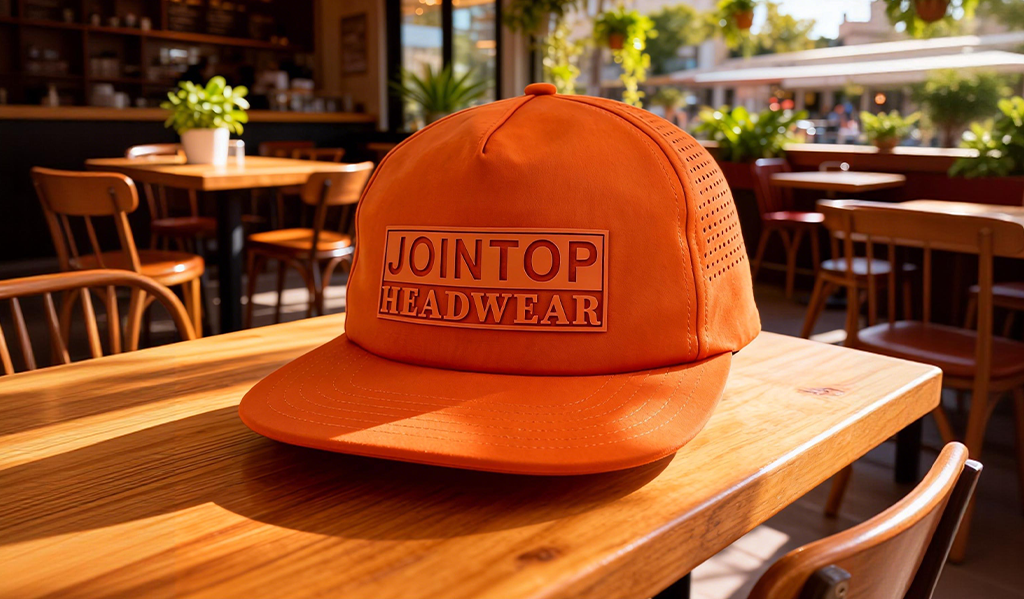
What do custom logo caps actually do better?
This is the part that matters.
Custom caps are not better simply because they cost more. They are better when the added control turns into a stronger product.
That usually shows up in a few key ways.
They let the product carry more of the brand
The best hat brands are not memorable because of the front logo alone. They are memorable because the entire product feels intentional. The crown shape works. The brim feels right. The trims make sense. The inside looks considered instead of forgotten.
That is much harder to pull off when you are working from a stock blank body that other brands can access too.
They support better perceived value
Customers do not need a speech about why a cap costs more. They just need the product to feel like the price makes sense. Better fit, stronger materials, cleaner finishing, and more thoughtful details all help with that.
This matters even more in premium lifestyle, golf, performance, and fashion-driven categories. Those customers are usually quick to tell the difference between a real product and a decorated blank, even if they do not say it out loud.
They help build a real line
One decent cap is not the goal. A consistent cap line is.
Custom development makes it easier to carry certain details across multiple styles, whether that is the crown profile, brim language, label system, closure choice, fabric direction, or interior branding. That consistency helps a brand feel more established.
It also makes the assortment look like it was built on purpose.
They create more pricing protection
When several brands are working from similar blank bodies, the products become easier to compare. That usually means more pressure on price. Custom caps create more distance. The less interchangeable the product feels, the easier it is to defend margin without sounding like you are asking customers to pay extra just because your logo is on it.
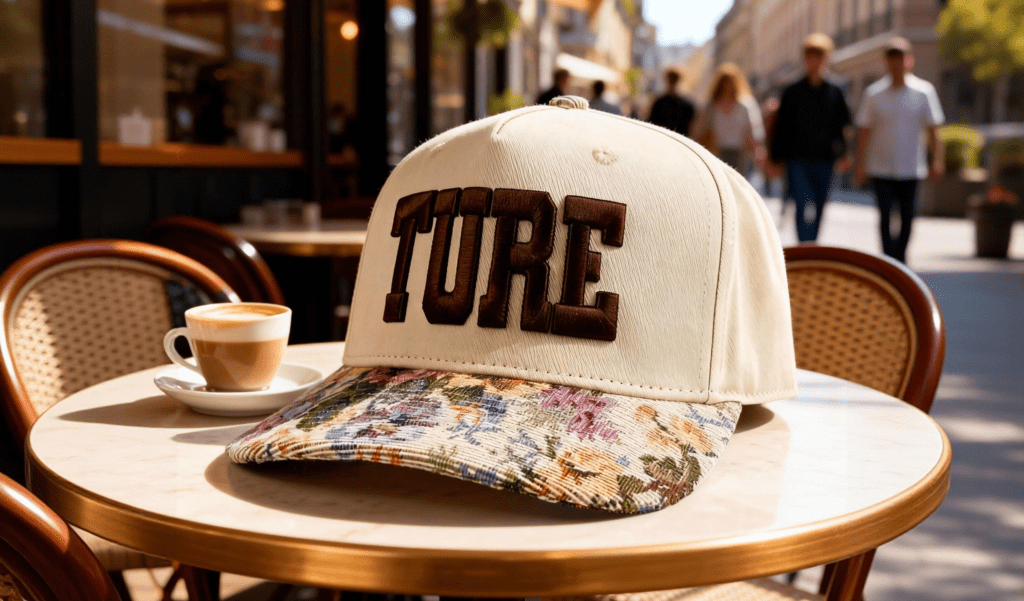
What actually drives the cost of a custom cap?
A lot of brands assume the extra cost is mostly about decoration.
It is not.
The bigger difference usually comes from how many parts of the cap are now being developed instead of accepted as-is.
Fabric is one part of it. Washed cotton, twill, nylon, performance polyester, wool blends, stretch materials, and textured fabrics all come with different costs and production behavior.
Construction matters too. A 5-panel rope cap is different from a structured 6-panel cap. A relaxed dad hat is different from a technical performance cap. Crown depth, buckram, panel shape, and visor build all affect how the hat looks, feels, and gets made.
Then there is decoration. Flat embroidery, 3D embroidery, woven patches, leather patches, TPU patches, appliqué work, and mixed-media treatments all change the labor profile.
And then you get to the details brands tend to underestimate the first time around: labels, seam tape, sweatbands, closures, hangtags, stickers, packaging, and all the finishing touches that quietly move a cap from basic to brand-specific.
So yes, custom costs more.
Usually for understandable reasons.

When do blank caps still make sense?
More often than people in the custom business sometimes admit.
Blank caps make plenty of sense when the goal is speed, lower risk, or simpler execution.
They are useful when:
- you are testing a new category
- you need quick-turn product
- the run is small
- the program is event-driven
- the budget is tight
- headwear is not the core category
There is nothing wrong with using blank caps when the role of the product is limited.
The mistake is asking them to do a job they are not built to do.
If the cap is there to support the brand, blank may be enough.
If the cap is supposed to help define the brand, blank usually starts to feel thin.
When should a brand move from blank caps to custom caps?
Usually when the brand starts expecting more from the product.
At the beginning, the question is often simple: how do we get our logo onto a cap?
Later, the question changes: how do we make the cap feel like us?
That is when things shift.
A brand should start thinking more seriously about custom when the logo already has some traction, when product fit and perceived quality begin to matter more, when price pressure increases, when the current hats feel too easy to copy, or when headwear becomes a meaningful growth category instead of just an extra item in the assortment.
That is often the point where decorated blanks stop being enough.
Not because they suddenly became bad.
Because the brand finally needs more.

What about MOQ?
MOQ matters, obviously.
It always comes up, and it should. But it is easy to get overly focused on it.
There is no single MOQ for custom caps because it depends on the style, materials, factory, trim package, decoration method, and how custom the program really is.
A simpler cap may support a more flexible minimum.
A more developed private label cap with custom materials, upgraded packaging, multiple branding details, and more involved construction usually comes with a more structured MOQ.
The bigger point is that low MOQ by itself is not a strategy.
A quote can look attractive until the sample is off, the fit is inconsistent, or the bulk order lands and the team suddenly has a lot of very calm-sounding questions.
The better question is not just, “What is your MOQ?”
It is, “What quality level can you consistently deliver at that MOQ?”
That is usually the more useful conversation.
Why does the manufacturer matter so much?
Because hats are detail-heavy products, and small mistakes show up fast.
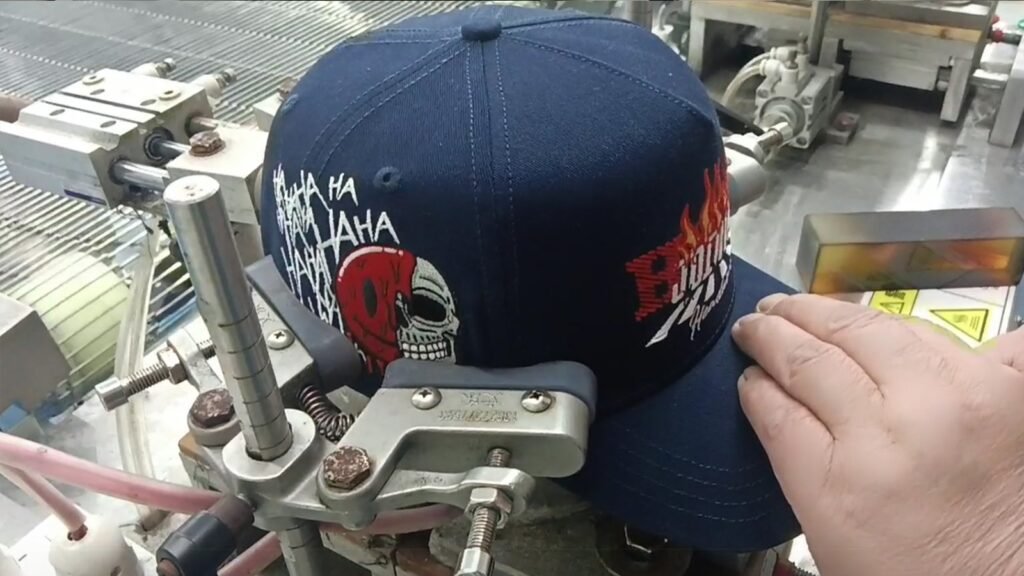
A cap can look perfect in a mockup and still disappoint in real production. The front panel can buckle. The embroidery can get too stiff. The brim can feel wrong. The shape can drift. The material can behave differently than expected from sample to bulk.
That is why the manufacturing partner matters so much. A good custom cap manufacturer does more than follow instructions. A good one helps catch problems before those problems become inventory.
That usually means helping with fit, materials, trims, construction logic, decoration methods, sample revisions, and bulk consistency.
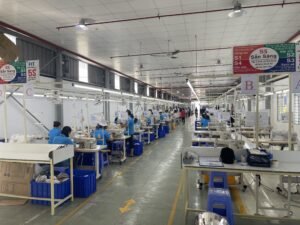
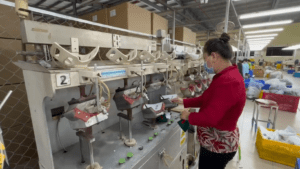
This is also where production structure can matter more than people think. JoinTop, for example, operates its own factories in China, Vietnam, and Bangladesh. For brands trying to balance cost, capacity, product level, and sourcing flexibility, that kind of setup can be useful. Not because multiple countries sound good in a company profile, but because different product programs often call for different production strategies.
That becomes more important once a brand moves past its first few orders and starts thinking longer term.
Final take
Choose blank caps when you need speed, lower upfront cost, faster testing, or a simpler launch.
Choose custom logo caps when you need better fit, stronger product identity, more pricing support, and a cap line that can actually grow with the brand.
For most companies, this is not a forever decision.
It is a stage decision.
Blank caps are often the right place to start.
Custom caps are often the right place to grow into.
That is the real answer.
Blank caps can get you to market.
Custom caps can help make the market remember you.
FAQ
Are custom logo caps worth the extra cost?
For many growing brands, yes. They usually offer more control over fit, stronger product identity, and better perceived value than decorated blank caps.
Is it cheaper to buy blank caps and add embroidery?
Usually, yes. Upfront cost is often lower. Long-term value is a different conversation.
What is the difference between blank caps and private label caps?
Blank caps are pre-made hats that you decorate. Private label caps are developed around your brand, including fit, materials, trims, and branding details.
What is the MOQ for custom caps?
It depends on the style, factory, materials, and how custom the program really is. More developed products usually come with more structured minimums.
Do custom caps help brands charge more?
Often they do, because stronger fit, better materials, and more distinctive product details usually support stronger perceived value.
How do I choose the right custom cap manufacturer?
Look at sample quality, fit consistency, communication, development ability, category experience, and production stability. A good factory should help improve the product, not just produce it.
Blank caps are easier to launch. They are faster, cheaper up front, and useful when the goal is testing or simple execution.
Custom logo caps take more work and usually cost more, but they also give brands more control over the parts customers actually notice: fit, shape, materials, finishing, and overall product feel.
So the better question is not just which option costs less.
It is which option helps the brand look more considered, more distinctive, and more worth buying.
Because in the cap business, that difference shows up quickly.


 Danish
  English
  German
  Spanish
  French
  Amharic
  Portuguese
  Italian
  Swedish
  Turkish
  Belarusian