
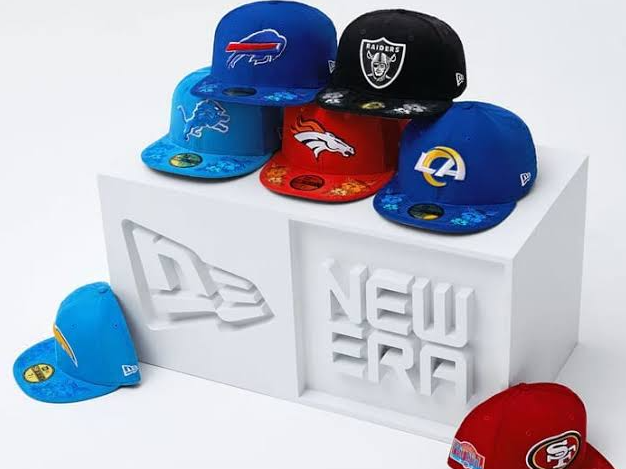
The 59FIFTY-style fitted cap has been in circulation since New Era introduced the fitted 59FIFTY style cap in 1954. That is over 70 years. It has outlasted bucket hats, beanies, trucker hat trends, and at least three different eras of dad hat revival. It is still here, still moving units, still showing up in streetwear drops and collector communities.
So when hat brands ask us why fitted caps remain one of the most requested styles in B2B sampling, the answer is not complicated.
The shape is right. The size is personal. And a well-structured front panel is still one of the best places on Earth to put a logo.
This guide breaks down what makes the 59FIFTY work, how it compares to other cap styles, and what brands actually need to know before developing a custom fitted hat program.
What Is a New Era 59FIFTY Hat?
A New Era 59FIFTY hat is a true fitted baseball cap. No snapback. No strapback. No buckle. You pick your size and that is the size you get.
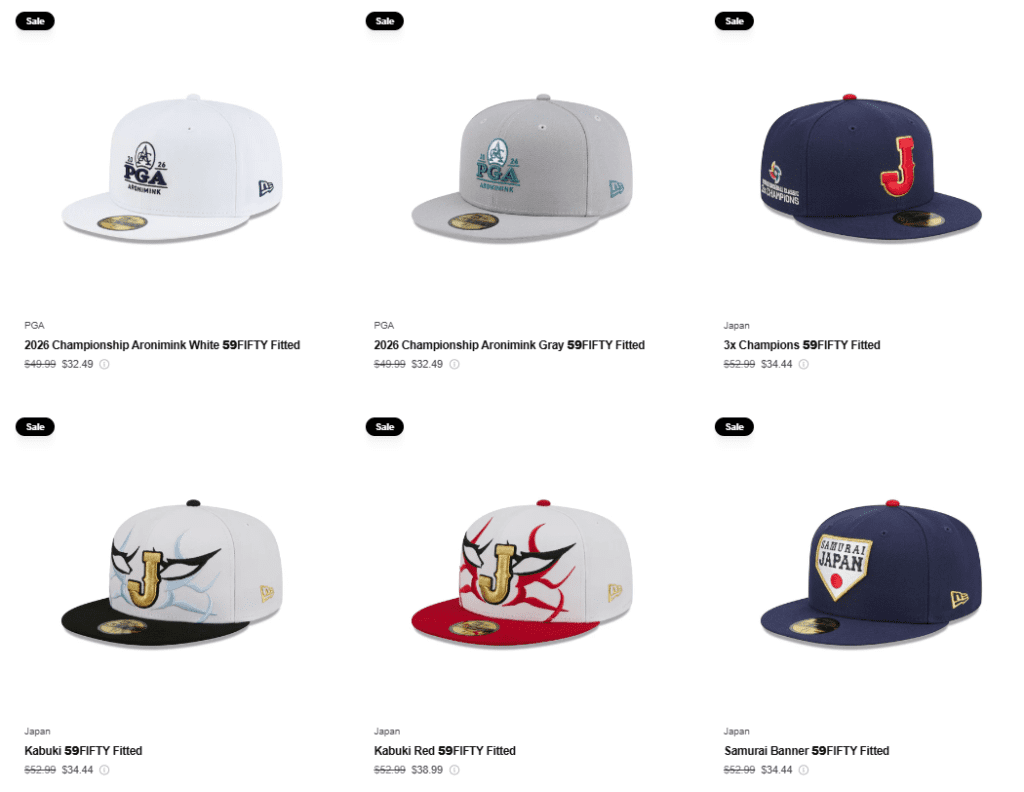
New Era introduced the style as part of its long baseball heritage, and the construction has stayed consistent: six-panel build, structured crown, flat brim, firm front panel, no adjustable closure. That combination creates the silhouette most people associate with fitted caps.
The key distinction from adjustable styles is the back. A fitted cap has a clean, closed back profile. There is no hardware, no visible plastic closure, nothing competing with the logo on the front. That clean back panel is part of why the cap photographs so well and why it tends to look more premium on retail shelves.
A typical 59FIFTY-style construction includes:
- True fitted sizing, with no adjustable closure
- Six-panel construction
- Structured crown
- High or full crown profile
- Flat brim
- Firm front panel for embroidery and logo display
Key Features and Why They Matter to Brands
True Fitted Sizing
Fitted sizing creates a different kind of buyer. Once a customer knows their size, such as a 7 3/8, they can reorder without hesitation. A new colorway, a limited team edition, a seasonal patch: the size decision is already made. That repeat-purchase mechanic is one reason well-executed fitted cap programs keep generating reorders.
For brands, this means the sampling investment pays off over time. Get the size grading right once, and the construction holds across multiple SKUs.
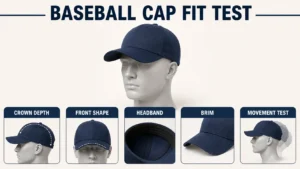
For consumers and product teams who need to understand sizing more clearly, New Era’s Find Your Fit guide is a useful reference because it separates fitted, adjustable, and stretch-fit cap styles.
Structured Crown
The structured crown holds its shape. That sounds obvious, but it matters at every stage: in the warehouse, on the shelf, in the product photo, and on someone’s head.
An unstructured cap can look great when it is fresh and terrible three weeks in. A structured fitted cap looks the same on day one and day 100. For brands selling at a premium price point, that consistency is not optional.
The internal buckram interfacing determines how the crown holds. Getting this right in sampling is worth more attention than most brands give it.
Flat Brim
The flat brim is culturally specific in a useful way. It reads streetwear. It reads collector. It signals that the person wearing it made a deliberate choice, not just grabbed whatever adjustable hat was nearby.
Some wearers keep it perfectly flat. Others curve it slightly. Either way, the flat brim is the visual marker that separates the fitted cap world from everything else.
High Crown Profile
A high crown gives the logo more space. This is especially useful for brands with detailed marks, wordmarks, or embroideries that need room to breathe. A low-profile fitted cap can look compressed; a high crown presents the design cleanly.
For sports teams, the taller silhouette also reads as more authoritative on the field and in photos.
Six-Panel Construction
Six panels give the cap its classic baseball cap shape. The seam that runs across the top of the crown creates the characteristic peak at the center. Panel shape and cut affect how the crown sits on the head, which is why two caps made from the same fabric can fit completely differently depending on the pattern.
Why 59FIFTY Hats Keep Selling
The Shape Does the Explanation for You
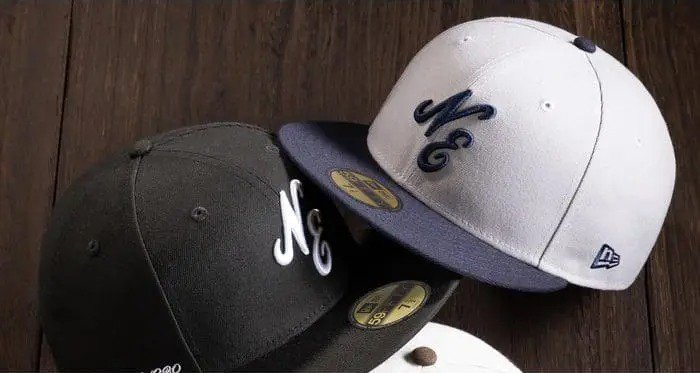
Some products need a story before buyers understand them. The 59FIFTY-style fitted cap does not. Anyone who grew up watching baseball or paying attention to streetwear already knows what it is. That recognition shortens the sales cycle for brands and reduces the need for product education at retail.
The silhouette is also forgiving in photography. A structured front panel and flat brim hold their geometry under studio lighting, in lifestyle shots, and in user-generated content. That consistency helps brands build a coherent visual identity across a product line.
Sizing Creates Loyalty
An adjustable hat fits everyone roughly. A fitted cap fits you specifically. That difference in relationship translates to buying behavior.
Customers who have found their size come back. They do not need to think hard about the next purchase. The brand just needs to give them a reason: a new color, a seasonal release, or a collaboration. Then the transaction is easy.
The Front Panel Is Built for Branding
Flat embroidery, 3D puff embroidery, woven patches, leather patches, and appliqué all work well on the structured front panel of a fitted cap. The surface is firm enough to support detailed embroidery without distortion, large enough to carry a meaningful design, and positioned in the center of the wearer’s field of view.
A weak front panel is one of the most common quality failures we see in fitted cap sampling. The embroidery looks fine in the tech pack and looks compressed or warped on the finished product because the panel buckram was too thin. That is a manufacturing issue, not a design issue.
It Works Across Categories
Streetwear. Sports. Golf lifestyle. City pride. Limited drops. Collector programs. The 59FIFTY-style fitted cap is one of the few headwear constructions that moves naturally across all of these without feeling out of place.
For brands building a headwear program with multiple SKUs, that range matters. The same cap construction can serve a flagship team cap, a seasonal colorway, a collaboration drop, and a premium private label line.
59FIFTY vs Snapback vs Dad Hat
These three styles dominate the structured cap market. They serve different buyers and different brand needs.
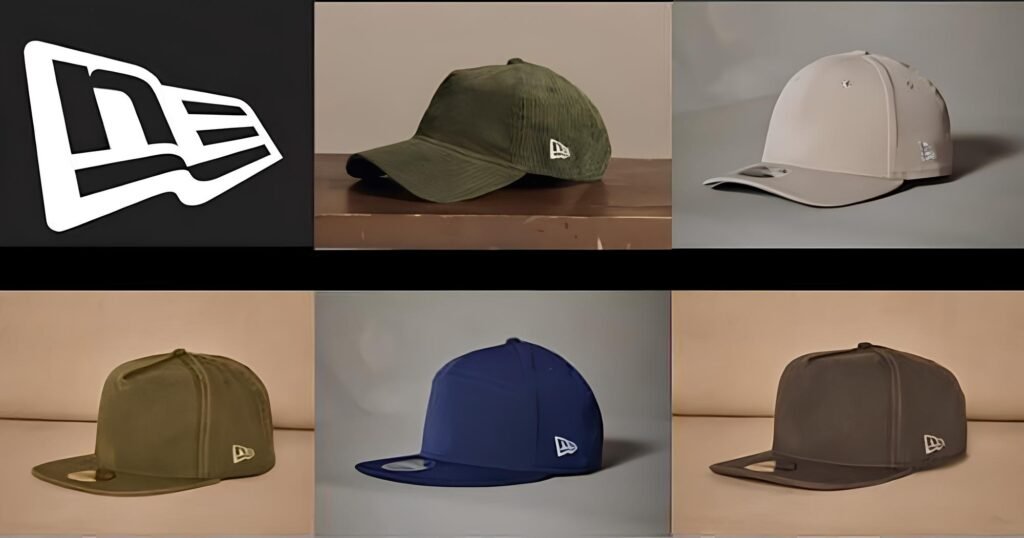
59FIFTY-style fitted cap: Exact sizing, structured crown, flat brim, no closure. The right choice for brands that want a sharper shape, stronger logo presence, and a product that reads collectible. Best for sports, streetwear, premium merch, and limited drops where size-specific purchasing is a feature, not a limitation.
Snapback, or 9FIFTY-style snapback: Structured crown, flat brim, plastic snap closure at the back. Size-adjustable, which simplifies inventory and makes the cap accessible to a wider buyer range. Good for event merch, youth markets, and casual streetwear programs where one-size coverage matters. The snap closure changes the back profile. It is visible, and it is part of the aesthetic.
Dad hat: Soft crown, curved brim, adjustable closure, usually brass buckle or Velcro. The opposite of the 59FIFTY in almost every way. Low profile, relaxed feel, easier to wear casually. Works well for minimalist branding, resort and lifestyle brands, and outdoor casual contexts where the structured cap silhouette feels too deliberate.
None of these is better by default. The right cap depends on the customer, the brand positioning, and the context the hat needs to live in.
Who Buys 59FIFTY-Style Fitted Caps?
Sports Fans
Sports fans built the market for fitted caps, and they still anchor it. Team identity, city pride, and game-day culture are not small motivators. Major League Baseball helped turn the fitted cap into a cultural object, and that heritage still gives fitted caps authenticity that other styles have to work harder to earn.
For readers who want to understand the sports side of the category, the official Major League Baseball website is the most relevant starting point.
Streetwear Buyers
Streetwear buyers care about silhouette before they care about logo. A high crown structured fitted cap works with hoodies, oversized tees, denim, varsity jackets, and technical outerwear. It adds intention to an outfit without overcomplicating it.
The flat brim signals in-group awareness. For brands building streetwear credibility, the fitted cap is one of the easier items to get right as long as the construction matches the price point. Brands planning this direction can also review JoinTop’s custom streetwear hats page for related logo methods, material choices, and placement options.
Hat Collectors
Collectors are a serious segment that brands often underestimate. Side patches, underbrim colors, anniversary logos, regional exclusives, limited colorways, and numbered editions all create reasons to buy a cap the collector technically does not need.
One fitted hat purchase can become five or ten if the brand executes drops strategically. The construction quality has to hold up, because collectors look closely and they talk about what they find.
Lifestyle and Fashion Buyers
The fitted cap has moved well beyond the stadium. Golf lifestyle brands, resort collections, outdoor casual labels, and fashion-forward brands all use structured fitted caps as part of their headwear programs.
Fashion media has also continued to treat basebollkepsar as a flexible styling accessory, which helps explain why the category keeps moving from sports into everyday outfits.
Merch Buyers
Creators, venues, events, and emerging apparel brands want merch that feels like something people would buy rather than something that gets buried in a closet. A well-made custom fitted cap clears that bar more reliably than a basic adjustable hat at the same price point.
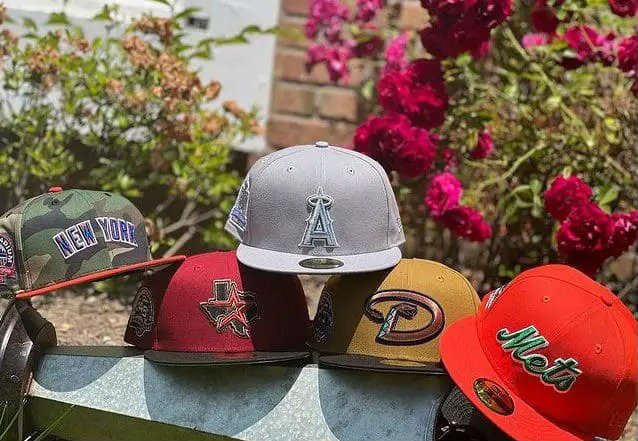
Why Fitted Hats Still Sell in the U.S. Market
The U.S. hat market does not need to be educated about fitted caps. The cultural infrastructure around sports, streetwear, and collecting keeps the category alive without brands having to explain the product.
What keeps fitted caps selling specifically:
- Sports seasons create recurring purchase windows
- Collector behavior drives limited-drop demand
- Streetwear culture keeps the silhouette current across generational shifts
- New colorways and patches refresh the same cap shape without requiring a new product development cycle
- Better materials, such as wool blends, technical fabrics, and premium meshes, let brands move fitted caps into higher price tiers
That last point is worth holding. A fitted cap that costs more to produce can justify a higher retail price if the fabric, embroidery quality, and packaging support that positioning. The construction itself does not change. The material stack and execution do.
What Brands Can Learn From the 59FIFTY
Do not try to replicate the 59FIFTY. New Era has decades of brand equity, MLB licensing, and distribution infrastructure. That is not the lesson.
The lesson is structural.
Consistency builds repurchase. The 59FIFTY sells because buyers know exactly what they are getting. Same crown shape. Same brim. Same back profile. That predictability is a feature. For brands developing a fitted cap program, standardizing the cap architecture, instead of chasing every silhouette trend, creates the same loyalty mechanic.
Sizing is a retention tool. Once a customer knows their fitted size with your brand, reordering is frictionless. That is a retention advantage that adjustable hats simply do not have.
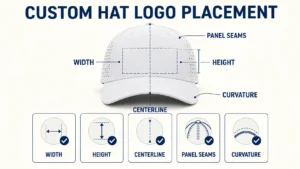
The front panel is the canvas. Invest in the buckram, the embroidery spec, and the quality control around logo placement. The front panel is what the buyer sees. If it looks off, nothing else about the cap recovers it.
Range is not complexity. The same cap construction can serve a sports fan, a streetwear buyer, a golf lifestyle customer, and a collector. The cap does not change. The logo, fabric, colorway, and story change. That is how brands build depth without rebuilding their supply chain.
How to Develop Custom Fitted Hats for Your Brand
The first question is not about decoration. It is about who the cap is for.
A streetwear fitted cap and a golf lifestyle fitted cap might look similar on a spec sheet but feel completely different in production. Crown height, brim stiffness, fabric weight, sweatband material, interior taping, and sizing range all shift depending on the end customer.
Once the customer profile is clear, a fitted cap spec typically covers:
- Crown height and shape
- Panel pattern
- Brim stiffness and width
- Fabric type and weight
- Underbrim color
- Sweatband material, either wicking or standard
- Interior taping and labeling
- Size range, typically 6 7/8 through 8, sometimes extended
- Front logo method, such as flat embroidery, 3D puff, or patch
- Side embroidery or patch placement
- Back label and woven label specs
- Förpackning
Fitted caps are less forgiving than adjustable caps. If the size grading is off, there is no closure to compensate. If the crown structure is too soft, the cap loses its retail appearance in shipping. If the embroidery tension is wrong, the front panel distorts.
This is why sampling matters more for fitted caps than for most other headwear styles. A strong sample confirms fit, fabric hand feel, crown shape, embroidery quality, and overall construction before bulk production begins. Skipping or rushing the sample stage is the most common reason fitted cap programs land short of what the brand expected.
For brands comparing different cap structures, JoinTop’s custom baseball caps page covers fitted caps, snapbacks, structured caps, trucker hats, and unstructured caps with construction and customization options for each.

What to Prepare Before Requesting a Fitted Cap Sample
A sample request does not need to be a finished brief. It needs to give the manufacturer enough information to recommend the right construction and avoid misaligned expectations.
Useful to send upfront:
- Logo file, vector preferred
- Reference cap photos, including what you like and what you do not
- Target customer and brand positioning
- Preferred crown height, such as low, mid, or high
- Preferred brim style and stiffness
- Fabric direction, such as wool, cotton, technical, or synthetic blend
- Decoration method preference
- Size range needed
- Estimated order quantity
- Target launch window
- Packaging and labeling requirements
- Target cost range
The more specific the brief, the faster the sample process moves. Vague requests produce generic samples that require multiple revision rounds. Specific requests, even if some details are still to be decided, get closer on the first attempt.
Brands testing a new fitted cap style can also look at JoinTop’s low MOQ custom hat manufacturing guide for information on how to reduce inventory risk before committing to a full production run.
How JoinTop Supports Custom Fitted Hat Manufacturing
JoinTop supports custom headwear production across fitted caps, snapbacks, structured caps, trucker hats, and unstructured styles, with factory capabilities in China, Vietnam, and Bangladesh.
For fitted cap development specifically, JoinTop can support:
- Fabric sourcing and selection
- Crown structure and buckram specification
- Size grading across the full fitted range
- Flat and 3D puff embroidery
- Woven, leather, and rubber patch production
- Sweatband sourcing, standard and moisture-wicking
- Interior taping, labels, and size stickers
- Sample development and revision
- Bulk production and QC
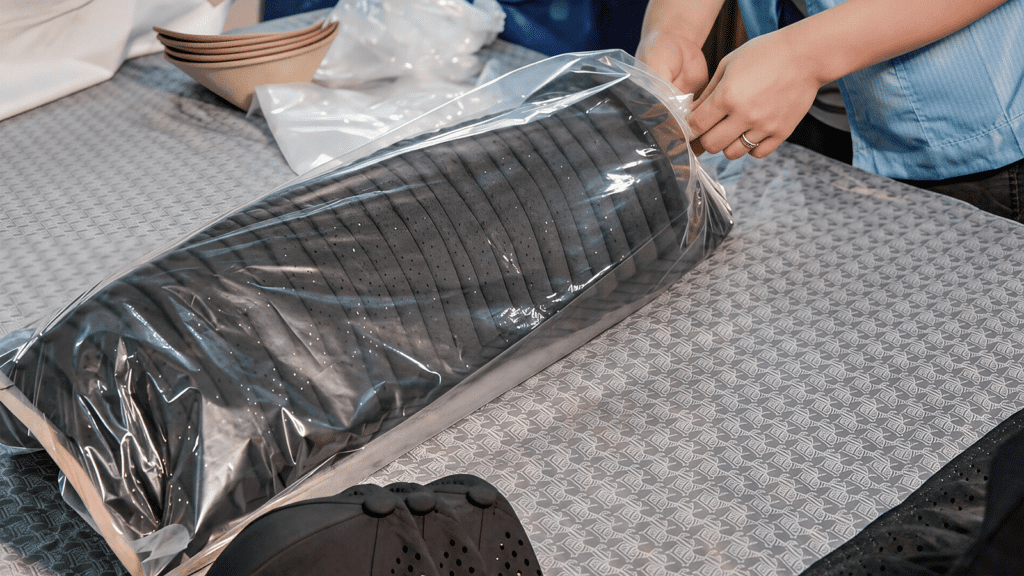
- Carton packing and shipping logistics
Brands working on premium fitted cap programs, including technical fabrics, breathable construction, and performance sweatbands, can also reference JoinTop’s custom performance hats guide, since many premium fitted cap projects now pull construction details from performance headwear.
For brands building broader private label cap programs, JoinTop’s custom hat manufacturer for brands page explains how private label development can support different product lines, order sizes, and branding requirements.
The factory mix across three countries gives brands flexibility when production timing, price targets, or material availability shift. Vietnam and Bangladesh are useful production options for many premium and scalable cap programs, while China is often suitable for complex development, intricate decoration work, and fast sampling needs.
If you have a logo, a reference cap, and a target market, that is enough to start. We can work through the construction, fabric, and decoration from there.
Contact JoinTop to start your fitted cap sample development.
Slutliga tankar
The 59FIFTY-style fitted cap has stayed relevant because it solves real problems: it holds a logo well, it fits specifically, it photographs cleanly, and it gives buyers across sports, streetwear, and collecting a reason to keep purchasing.
For brands, the takeaway is not to chase the 59FIFTY brand. It is to understand what makes the construction work and apply those principles to your own cap program.
Get the crown structure right. Spec the front panel correctly. Grade the sizes with care. Give buyers a shape they can return to with a new colorway, a new patch, or a new story.
That is how fitted caps become a real part of a brand’s product line rather than a one-time experiment.
VANLIGA FRÅGOR
What is a New Era 59FIFTY hat?
A New Era 59FIFTY is a true fitted baseball cap with a structured crown, flat brim, six-panel construction, and exact sizing. There is no adjustable closure, so the sizing is specific to the buyer.
Is the 59FIFTY hat adjustable?
No. The 59FIFTY uses true fitted sizing with no snapback, buckle, strapback, or adjustable closure. Buyers choose their size based on head measurement.
Why are 59FIFTY hats so popular?
The combination of a recognizable shape, personal fitted sizing, strong logo display surface, sports culture heritage, and collector appeal keeps demand consistent across decades. The cap is not tied to one trend or one customer type.
What is the difference between a fitted hat and a snapback?
A fitted hat uses exact sizing with a closed back and no adjustable closure. A snapback uses an adjustable plastic snap closure at the back, making it easier to fit a range of customers without size-specific inventory.
What is the difference between a fitted hat and a dad hat?
A fitted hat has a structured crown and bold profile. A dad hat is unstructured, lower profile, and softer, typically with a curved brim and adjustable closure. They serve very different customer aesthetics and brand positioning contexts.
What is a structured fitted cap?
A structured fitted cap uses internal buckram, or stiffening material, in the front panels to hold the crown shape. This keeps the cap looking clean and consistent in wear, in photos, and on shelves, unlike an unstructured cap, which softens over time.
Can brands make custom fitted hats with their own logo and construction?
Yes. Brands can develop fully custom fitted caps with their own fabric, crown structure, logo, embroidery, patches, sweatband, labels, and packaging. JoinTop’s custom hat manufacturer for brands page covers how private label fitted cap development works from sample through bulk production.
What should I send to request a fitted cap sample?
Send a logo file, reference photos, target customer profile, preferred crown height, fabric direction, decoration method, size range, estimated order quantity, target launch date, and packaging requirements. Specific briefs produce better first samples with fewer revision rounds.
Can JoinTop make private label fitted hats?
Yes. JoinTop handles private label fitted cap projects including fabric selection, embroidery, patch production, labels, size stickers, sweatbands, taping, sample development, bulk production, quality inspection, and export packing.
Is JoinTop affiliated with New Era?
No. New Era and 59FIFTY are trademarks of their respective owner. This article discusses the cap construction and design principles for educational and product development purposes. JoinTop is an independent custom hat manufacturer with no affiliation with New Era Cap Co.

 English
  German
  Spanish
  French
  Amharic
  Portuguese
  Italian
  Swedish
  Turkish
  Belarusian
  Danish