Hat printing is a production decision that affects the cap’s appearance, hand feel, durability, and repeatability. The same artwork can behave very differently on a smooth cotton front, a structured six-panel crown, or a lightweight five-panel Performance Cap. A buyer should therefore approve the decoration on the finished cap, not on a flat fabric swatch.
Start with the cap construction
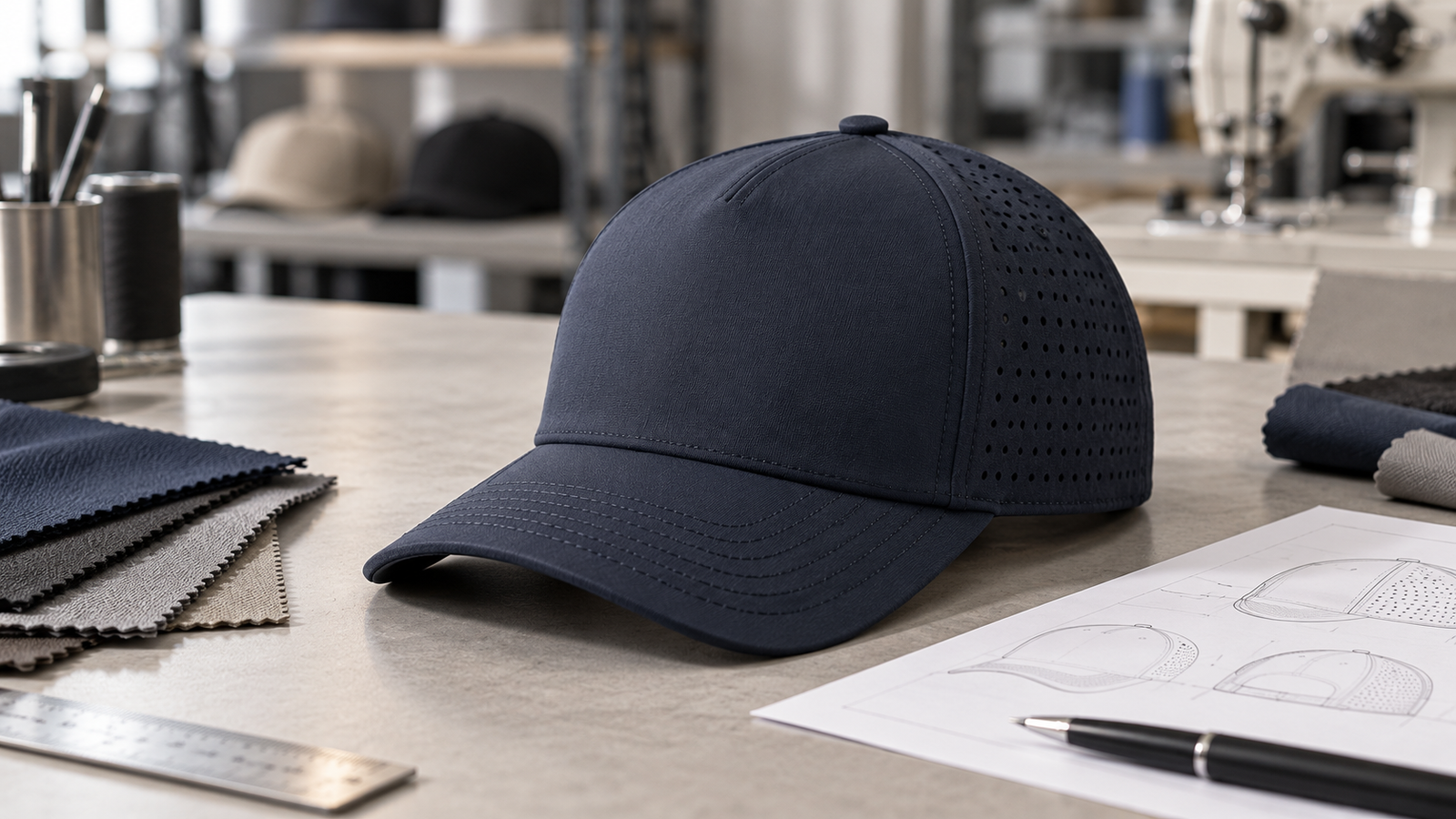
Confirm whether the product is a normal five-panel cap or a six-panel baseball cap, then mark the usable decoration area. On a five-panel cap, the front panel can be clean and uninterrupted, but the artwork still needs clearance from seams and topstitching. On a six-panel cap, the center seam and curved crown can change how a wide logo looks. If the cap uses laser-cut ventilation, keep the print zone and the perforated areas clearly separated.
Write down crown height, visor length and curve, closure type, sweatband, panel fabric, and the final logo width. This gives the printer a real surface to work with and gives the buyer a reference for the sample.
Compare the main printing routes
Screen printing is useful for bold, limited-color artwork when the ink, mesh, and curing process are controlled. It can suit selected cotton and blended fabrics, but the print must be checked after the crown is shaped.
Heat transfer can handle detailed artwork and smaller runs. Ask about transfer thickness, edge definition, pressure, temperature, and the expected hand feel. A transfer may look sharp on a flat panel yet show wrinkles if the crown is shaped without enough allowance.
Direct-to-film and other digital methods can reproduce more complex artwork, but the supplier should test adhesion and abrasion resistance on the actual fabric. Do not treat a digital preview as a durability test.
Prepare artwork that can be produced
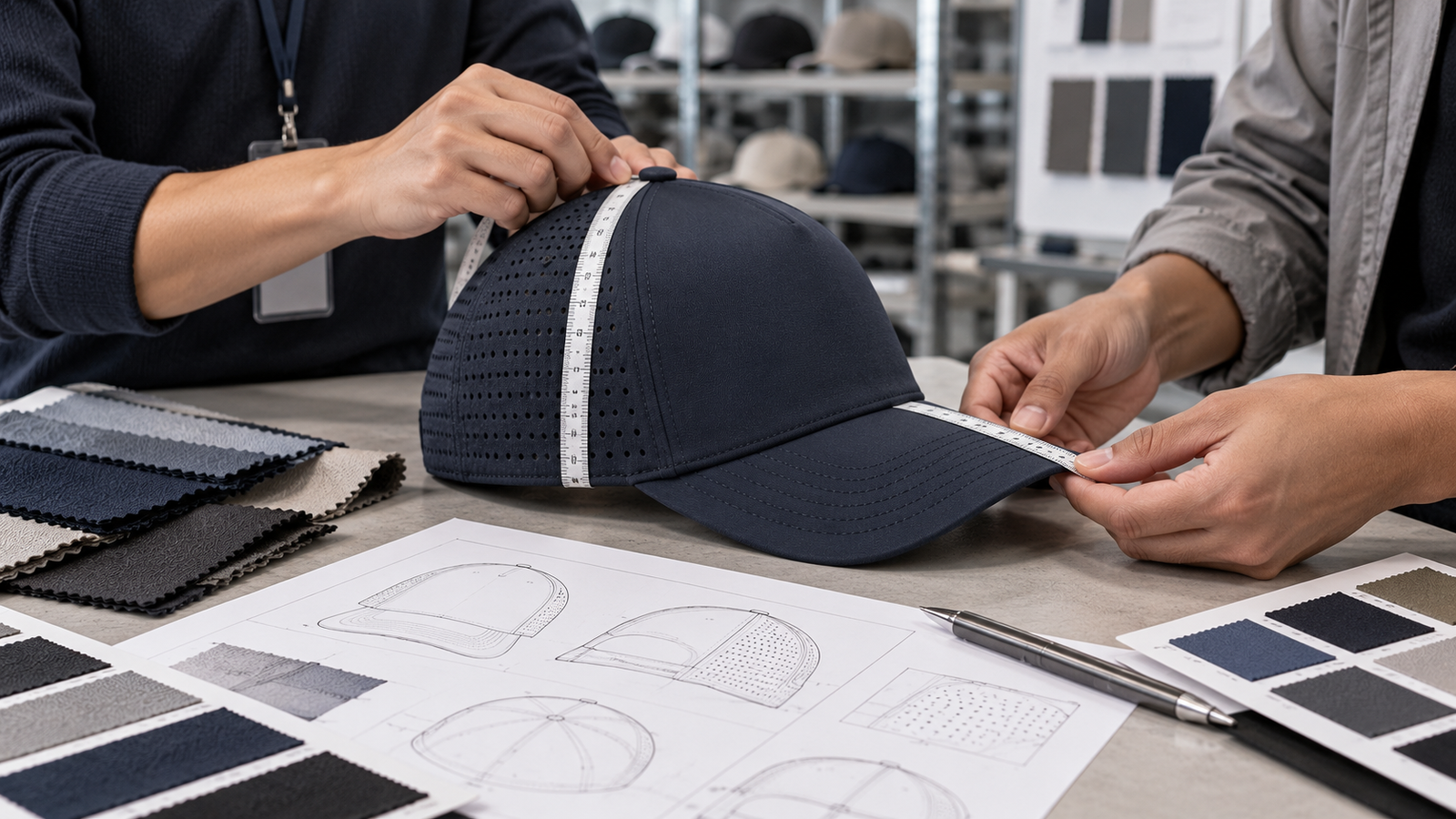
Send vector artwork and identify the intended width, height, colors, placement, and any minimum type size. Mark whether the logo is on the front, side, visor, or closure. Gradients, hairline strokes, tiny type, and large areas of dark ink may require a different process from a simple one-color mark.
If the logo is still changing, ask the factory to compare print, embroidery, woven patch, and molded badge options. The best method is the one that keeps the brand’s visual intent while working with the material and order plan.
Approve the printed sample with a written checklist
- The logo is centered and matches the approved width and height.
- Edges are clean without bleeding, cracking, pinholes, or unwanted gloss.
- The print does not cover ventilation holes, eyelets, seams, or the closure.
- The hand feel is acceptable for the intended retail position.
- The color reference is recorded under normal light.
- The same artwork can be positioned using a repeatable template.
Connect printing to cost and quantity
Setup, number of colors, print area, fabric, packaging, and order quantity all affect the unit cost. Ask the quotation to separate cap construction, decoration, sampling, packaging, and freight assumptions. That makes supplier comparisons more useful than comparing one combined number.
For a production-ready quotation, send the artwork, five-panel or six-panel preference, fabric reference, quantity by color, target market, and delivery date. JoinTop can then recommend a decoration route and prepare a sample that the brand can approve and reorder.
Questions buyers should settle before approval
What should be included in the first quote?
Send the company or website, target wearer, cap structure, material reference, artwork, decoration method, quantity by style and color, packaging needs, target market, and required delivery date. Those details let a factory separate product assumptions from freight and packaging assumptions.
Can JoinTop support a small first production run?
JoinTop accepts projects from 100 pieces per style and color, subject to the final specification. The exact quotation still depends on the cap construction, material, decoration, packaging, and quantity.
How should the approved sample be used?
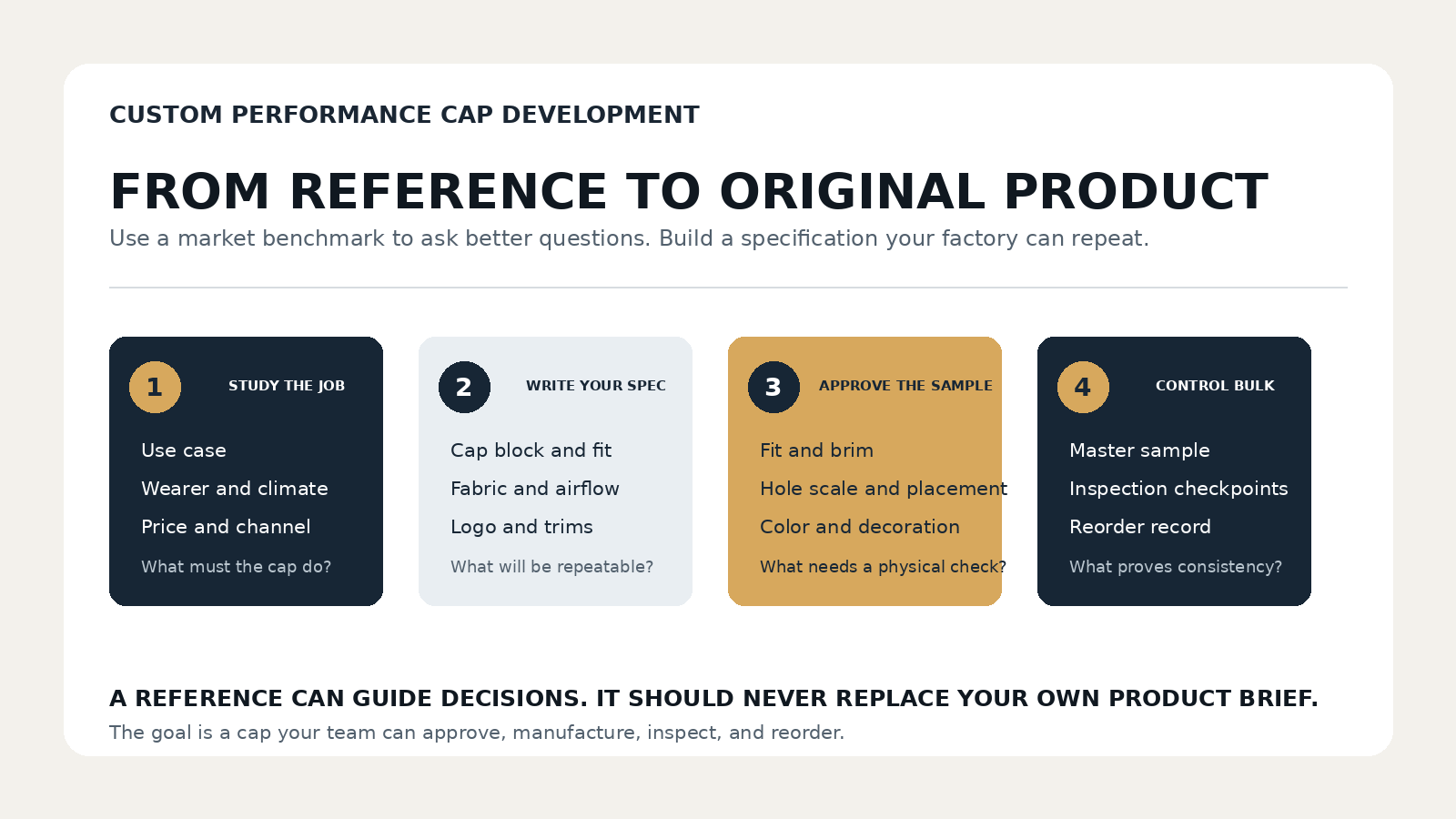
Keep the approved sample and its measurement notes as the reference for bulk inspection and future reorders. A photograph alone does not record crown balance, hand feel, or the exact logo position.
Send the complete brief before sampling so the production team can identify risks early and recommend a cap that is practical to repeat.


 English
 German
 Spanish
 French
 Amharic
 Portuguese
 Italian
 Swedish
 Turkish
 Belarusian
 Danish