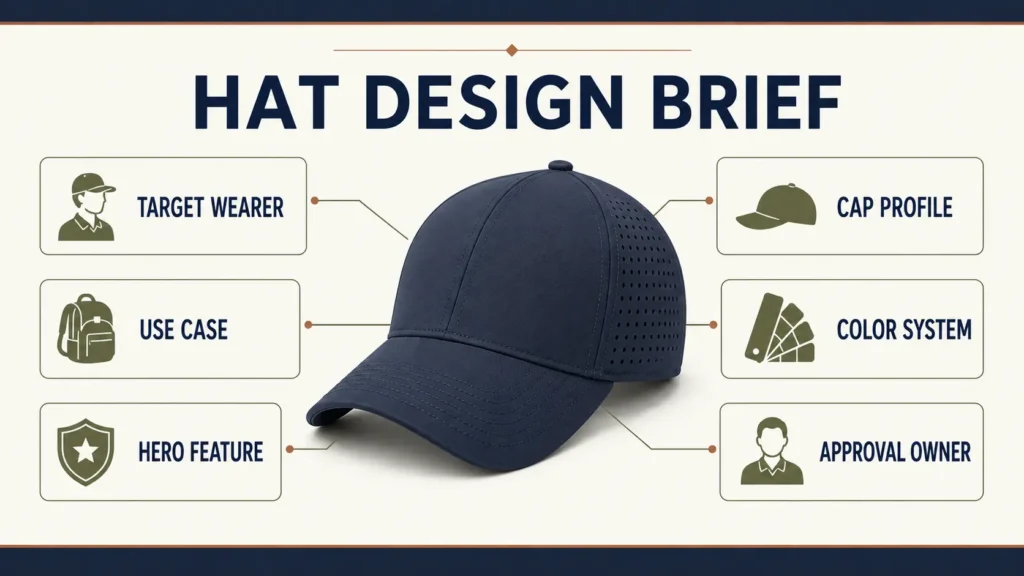
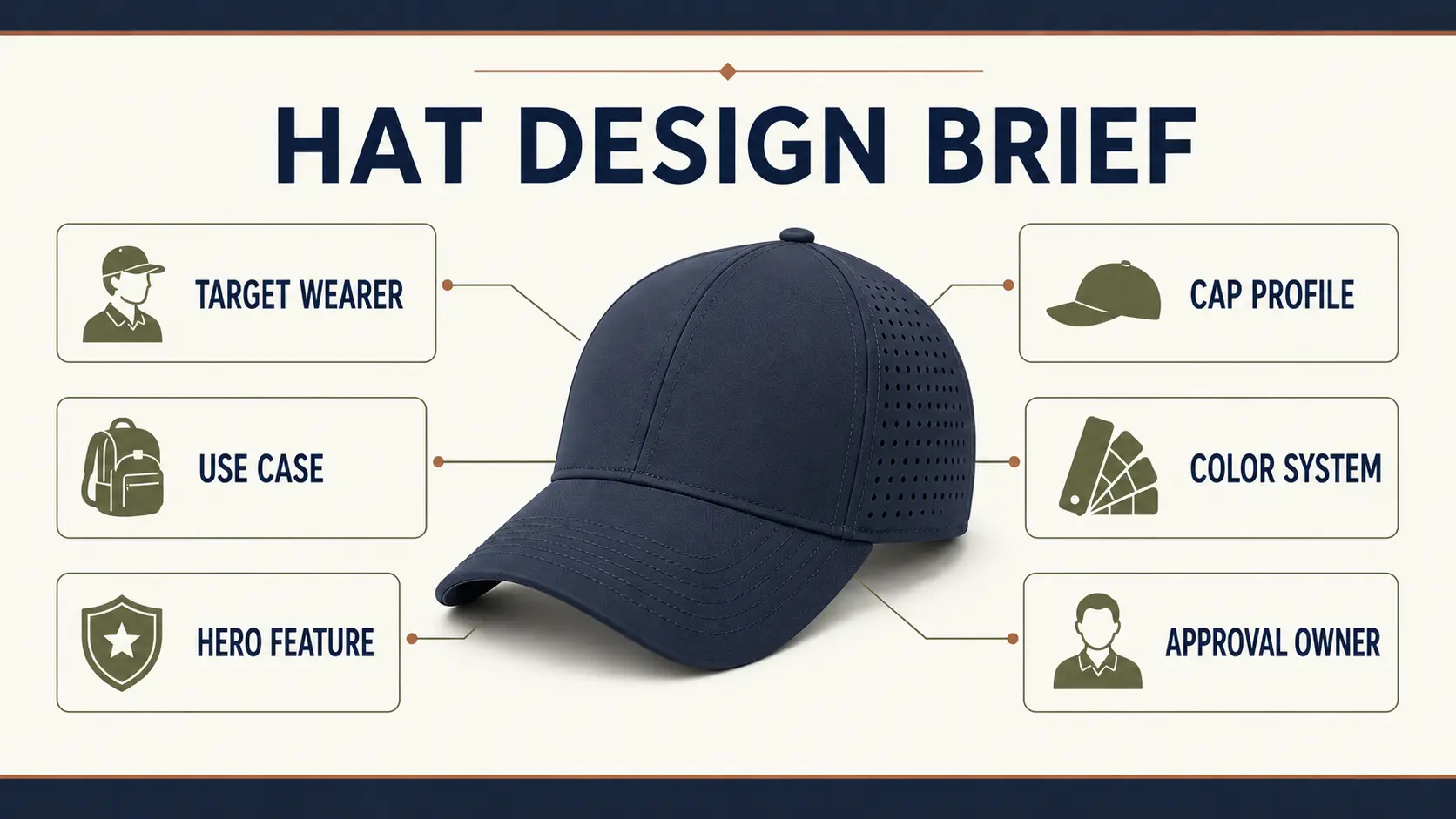
Short answer: A hat design brief aligns a brand team and its cap factory before sampling. It should settle the collection role, target wearer, use case, hero feature, cap profile, logo hierarchy, color system, SKU plan, cost guardrails, timing, and approval ownership. This guide is for established brands, wholesalers, importers, and sourcing teams managing commercial cap programs, not one-off personal orders.
Your designer has a logo, three colors, and a folder full of cap photos. That feels like a strong start. Then the sample request reaches the factory, and basic questions are still open. Who will wear the cap? Is it for golf, running, outdoor use, or daily retail? Which feature matters most? Who can approve a change?
When those answers live in different emails, a good idea becomes a slow project. A one-page hat design brief gives the brand team and factory one target before a detailed tech pack is built.
Broad searches for hat design often begin with shape, color, and logo ideas. Those choices matter, but a mature brand also needs the new cap to fill a clear role in the line, meet a target cost and launch window, share the right components, and remain controllable across several SKUs and reorders.
Start with the collection architecture, not one attractive cap
Before drawing details, state why this style exists. Is it the core cap that returns each season, a golf-performance upgrade, a limited tournament color, a price-point option, or a new fit block for a different wearer group? A clear role prevents two SKUs from competing for the same customer while adding supply-chain work.
Show the planned family on one page. Give every proposed style and colorway a code, channel, target market, launch window, expected quantity, forecast or reorder role, and hero feature. Mark which cap blocks, fabrics, trims, logo methods, labels, and packaging can be shared. Then highlight the exceptions that need separate development.
This line view helps the factory suggest a sensible sample plan. The team can prove the base crown and fit once, then focus additional samples on the combinations that truly change risk, such as a new material, large logo, custom color, special closure, or market-specific label.
| Collection decision | What the brief should show | Risk if it stays open |
|---|---|---|
| Role in the line | Core, performance, seasonal, event, or market variant | Overlapping products and unclear priorities |
| Shared platform | Cap block, material family, trims, and packaging | Unplanned complexity and inconsistent fit |
| SKU exceptions | Color, logo, feature, label, or market change | Hidden sample, cost, and approval work |
| Volume plan | Initial quantity, forecast, reorder pattern, delivery waves | Weak material and capacity planning |
| Decision owner | Who approves design, cost, quality, and timing | Late changes and conflicting feedback |
A Design Brief Is Not a Tech Pack
A design brief defines the product decision. A tech pack records the build details. The brief should explain the wearer, use, market position, main benefit, visual direction, and business limits. The tech pack then adds exact measurements, materials, artwork placement, stitch details, labels, packaging, and revision control.
Trying to use one document for both jobs often creates noise. If the team has not agreed on the product, more measurements will not solve the conflict. Once the brief is approved, use a structured custom hat tech pack to turn the direction into clear factory instructions.
| Document | Main question | Typical owner |
|---|---|---|
| Hat design brief | What should this cap do for the collection and customer? | Brand, product, or merchandising team |
| Tech pack | Exactly how should the approved cap be built and checked? | Product developer and factory |
The Six Product Decisions Your Hat Design Brief Needs
1. Name the target wearer
“Men and women, ages 18 to 45” is too broad. A weekend golfer who wants a clean club look needs different choices from a trail runner who values low weight and airflow.
Add the region and expected fit range. Head measurements should be handled with a consistent method; ISO 8559-5:2023 describes head and face measurements used in headwear development. You do not need to copy a standard into the brief, but your team should avoid loose terms such as “normal adult size.”
2. Describe one real use case
Write a short scene: “18 holes in warm weather,” “a 10K training run,” or “daily retail wear.” The use case explains why each choice matters and gives the team a real setting for sample review.
3. Pick one hero feature
A cap can have several useful features, but the design needs a lead idea. Choose one: a stable fit, a light feel, a bold raised logo, a clean low-profile shape, or another clear benefit. Supporting features should not fight the main one.
Be careful with claims such as “waterproof,” “UV protective,” or “sweat-proof.” A design goal is not test proof. State the required performance and test method separately before using a claim in sales copy.
4. Set the cap profile and structure
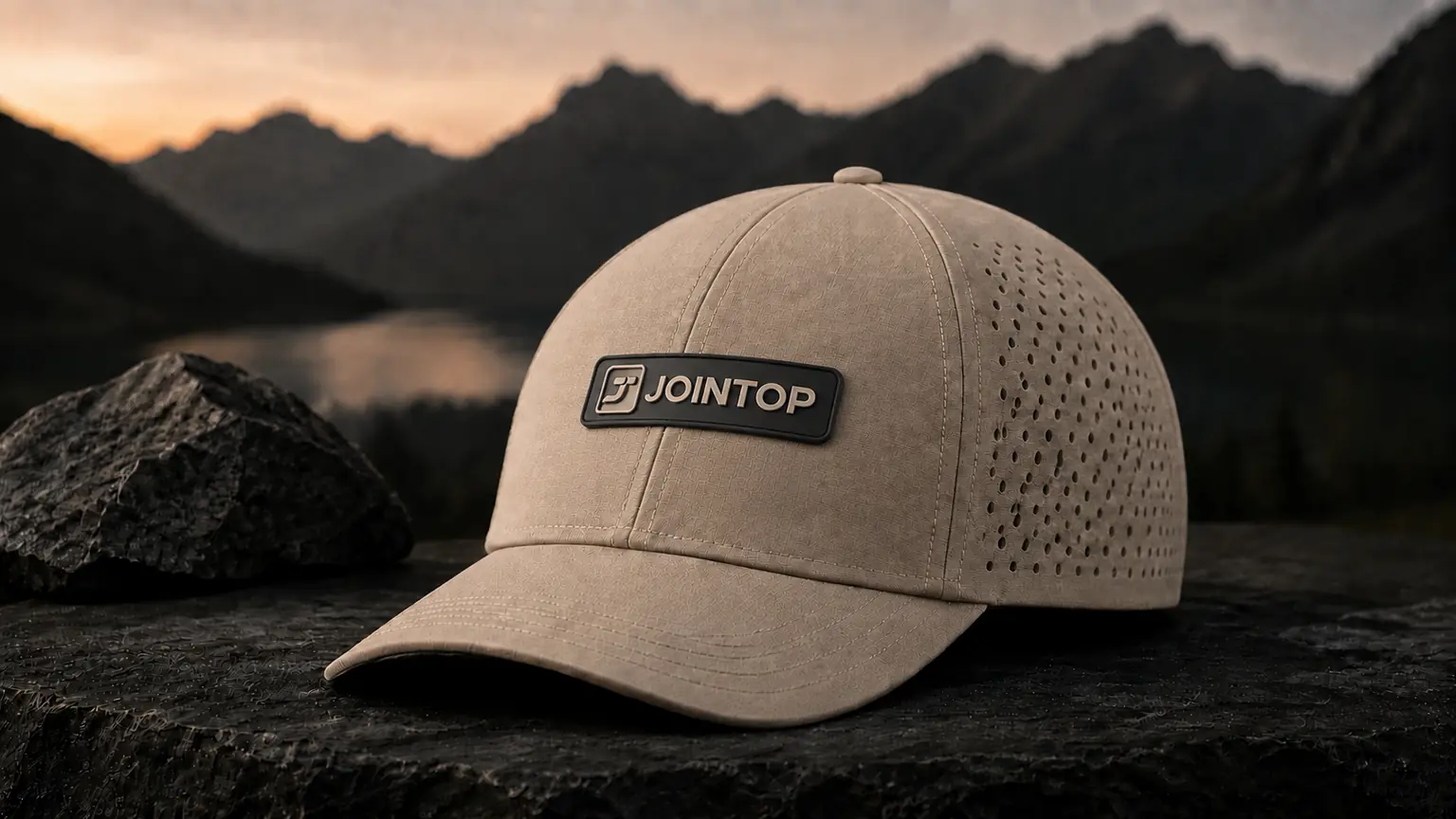
State the starting direction: five-panel, six-panel, or seven-panel; low, mid, or high crown; structured or soft; curved or flatter visor. If your team is unsure, mark the choice as “factory to advise” and explain the desired look and use.
Do not approve a shape from a front view alone. Side shape, crown depth, visor curve, closure, and how the cap sits above the ears all affect fit. The later custom hat sampling process should test the cap on people who match the target wearer.
5. Define the logo hierarchy
Decide what people should notice first. Is the front logo the hero? Does a side mark support it? Is the back text needed, or does it add clutter? Include rough size and location goals, but leave final dimensions for the tech pack.
Decoration also changes the design. Fine text, thick 3D embroidery, a woven patch, and a silicone badge have different limits and surface effects. Review the main custom cap logo techniques before locking artwork that may not match the chosen method.
Here is a common factory-level conflict: a wide 3D puff logo may cross the center seam of a six-panel cap. The seam can divide fine details and make the raised surface less even. A five-panel front, a narrower mark, or another logo method may give the brand a cleaner result. The brief should identify the visual priority before the artwork is finalized.
6. Build a color system, not a long wish list
Give each colorway a role: one core neutral, one brand color, and perhaps one seasonal accent. State which parts must match and where contrast is allowed.
Screen colors are not physical textile approvals. Name the color reference system your team will use and review a real material sample. Pantone provides a specific color system for textiles and soft goods; the selected reference still needs to be checked on the actual fabric and decoration material.
Add the Business Guardrails Before Sampling
The design team needs the same limits as the buyer. List the expected quantity by style and color, target delivery window, sales market, required labels, packaging needs, and the person who can approve cost or design changes.
JoinTop’s confirmed minimum is 100 pieces per style and color. A normal sample takes 7–14 days, and bulk production takes about 35–45 days after approval. Put these timing needs beside your launch date so the brief is tied to a real buying plan.
Those ranges exclude artwork changes, sample shipping, buyer approval, and final freight. Work backward from the in-market date and leave decision time for your team.
For a seasonal or multi-market program, add more than one date. Record the sample review window, testing or compliance gate, final artwork date, material approval, purchase-order target, bulk release, inspection window, and required warehouse date. Name the dependency that could move each step. A single “launch date” does not show where the team must make decisions.
Include a target cost basis, not only a target number. State the expected quantity, delivery term and place, packaging level, logo method, testing needs, and whether tooling is included. Otherwise, design may approve a feature while sourcing is comparing a price built on different assumptions.
Also mark the no-change items. A licensed logo, protected brand color, fit block, performance claim, required label, or key retail price may have less room to move than a seam detail. When the factory understands those priorities, it can offer alternatives without changing the reason the product exists.
Use Four Labels to Stop Decision Drift
Every open item should have one owner and one status. These four labels keep a brief honest:
| Label | What it means | Example |
|---|---|---|
| Approved | The team has made the decision. | Mid-profile six-panel crown |
| Must keep | This cannot change without approval. | Front wordmark stays one color |
| Open option | Two or three choices may be sampled. | Woven patch or flat embroidery |
| Factory to advise | The goal is clear, but the build choice is open. | Best light fabric for the use case |
Avoid words like “premium,” “better,” or “high quality” without a visible decision behind them. Replace “premium fit” with the crown profile, fit range, closure, and sample test you expect.
Give approvals an owner, deadline, and change path
Mature product teams often have several valid voices: design protects the look, sourcing controls cost and supplier scope, quality defines evidence, merchandising protects the assortment, and marketing owns the claim. The brief should show who gives input and who makes the final call for each decision.
Use one decision log. Every change should state the old direction, new direction, reason, affected SKUs, cost or timing impact if known, decision owner, date, and files that must be updated. Do not let an approval live only in a meeting or chat. A change is not complete until the brief, tech pack, artwork, sample comments, costing, and purchase order point to the same version.
Set a freeze point before bulk release. After that point, a change needs an impact review rather than a quick visual approval. The factory should explain affected material, tooling, sample, production, inspection, and delivery steps. The brand can then make a commercial decision with the tradeoff visible.
What to Send With the Brief
Your first factory handoff should be small but complete:
- the approved one-page hat design brief;
- front, side, and back reference views;
- vector logo artwork, plus a PDF preview;
- quantity by style and color;
- target sample and delivery dates;
- the approval owner and response deadline.
Do not hide conflicts. If two stakeholders prefer different crown shapes, show both as open options and name the person who will decide after sampling. Later, record each change with marked photos and measurements using a clear hat sample feedback process.
Use the same brief for supplier review and reorders
A design brief can help sourcing compare more than price. Ask each supplier to identify technical conflicts, open decisions, sample stages, risky material or logo combinations, and the information needed to confirm timing. A useful response should show that the supplier understands the product role, not simply agree to every request.
When the style becomes a reorder, update the brief with actual sales role, repeat quantity, known fit or quality feedback, approved changes, current materials, and delivery needs. Keep the original product intent visible. This prevents a cost-saving change from removing the feature customers recognize or a new colorway from reopening settled decisions without a reason.
For long-running programs, review the brief at the start of each season. Close items that are now standards, remove old options, and flag new market or supply risks. The document should become shorter and clearer as the product matures, even when the supporting tech pack and quality history grow.
Hat Design Brief Questions from Brand Teams
Can a factory help if our brand does not have a tech pack?
Yes, if the business direction is clear. Send the use case, reference views, vector logo, expected quantity by style and color, target market, and deadline. The factory can then identify the measurements, materials, construction, and decoration details that still need approval.
How early should a brand start custom cap development?
Start by working backward from your required delivery date. JoinTop’s normal sample range is 7–14 days and bulk production is about 35–45 days after approval. Add time for design decisions, revisions, sample shipping, testing, buyer approval, and freight. A launch with several colorways or special materials needs more decision time than a repeat order.
What should we send for an initial factory review?
Send your company or brand website, cap use case, preferred structure, logo artwork, estimated quantity per style and color, target market, and required date. These details help the factory judge whether the project is a fit and prepare a useful development response instead of a vague price.

 English
  German
  Spanish
  French
  Amharic
  Portuguese
  Italian
  Swedish
  Turkish
  Belarusian
  Danish