Choosing the wrong custom hat supplier can cost more than a bad sample.
It can delay your launch, hurt your brand image, create inventory you cannot sell, and turn a simple hat project into weeks of back-and-forth fixes.
This guide is written for brands, buyers, product teams, golf brands, outdoor brands, lifestyle labels, and DTC businesses planning bulk custom hats. It is not for one-off personal hat orders.
If you are trying to build hats that look retail-ready, fit well, and feel worth the price your customers pay, this guide will help you make better decisions before sampling.
You will learn how to choose the right hat style, fabric, logo method, MOQ, price structure, production timeline, and factory partner.
The Best Custom Hat Starts With the Right Product Decision
Many brands start with the logo first.
That sounds normal, but it is often the first mistake.
A logo that looks great on a structured snapback may look too large on a soft dad hat. A thin logo may fail with 3D puff embroidery. A wide front design may look strange on a 5-panel cap because of the center seam.
Before you ask for a quote, decide three things first:
- What type of customer will wear this hat?
- What retail price do you want to support?
- What product feeling should the hat create?
A hat for a golf brand should not be built the same way as a hat for a streetwear brand. A low-cost event cap should not use the same material plan as a premium performance cap.
The better your product direction is, the fewer sample revisions you will need.
Quick Answer: What Type of Custom Hat Should Your Brand Choose?
| Brand Type | Better Hat Direction | Why It Works |
|---|---|---|
| Golf brand | Rope hats, performance caps, structured lightweight caps | Clean look, sport-ready, strong retail value |
| Outdoor brand | Trucker hats, UPF caps, water-resistant caps | Breathable, durable, practical for sun and outdoor use |
| Lifestyle brand | Dad hats, washed cotton caps, 5-panel caps | Easy to wear, casual, strong daily-use appeal |
| Streetwear brand | Snapbacks, fitted caps, bold 5-panel caps | Strong shape, bold logo area, high visual impact |
| Corporate or event buyer | Baseball caps, trucker hats, blank caps with logo | Simple, cost-friendly, easy to reorder |
| Premium DTC brand | Custom cut-and-sew caps with private label details | Better brand control and stronger product identity |
If this is your first hat order, do not try to build everything at once. Start with one clear product direction, two or three colors, and one strong logo method.
Custom Baseball Caps: The Safest Starting Point
Custom baseball caps are the most flexible option for many brands.
They work for sports, lifestyle, golf, outdoor, corporate merch, and retail collections. A structured 6-panel baseball cap gives a clean front logo area and holds its shape well in photos and on shelves.
Choose a structured baseball cap if you want:
- A sharper retail look
- A clear front logo area
- Better shape retention
- A more premium first impression
Choose an unstructured baseball cap if you want:
- A softer feel
- A more casual look
- Easier daily wear
- A relaxed lifestyle style
For most brands, a baseball cap is the best starting point because it is familiar, easy to sell, and easy for customers to wear.

Custom Dad Hats: Best for Simple Lifestyle Collections
Dad hats are soft, low-profile, and easy to wear.
They are a good choice for lifestyle brands, coffee brands, universities, resort shops, outdoor communities, and casual DTC brands.
Dad hats usually work best with:
- Flat embroidery
- Small front logos
- Washed cotton fabric
- Vintage colors
- Strapback closures
The biggest weakness of dad hats is shelf shape. Because they are soft and unstructured, they may not look premium in flat product photos. Use a model, hat form, or lifestyle photo to show the fit better.
Choose dad hats if your brand wants a relaxed, everyday product instead of a sharp sports look.
Custom Snapback Hats: Best for Bold Logos
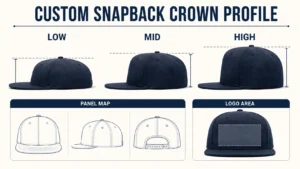
Snapbacks are structured, firm, and easy to notice.
They are popular for streetwear, sports teams, music brands, youth brands, and bold merch collections. The high crown and flat brim create a strong area for logos.
Snapbacks work well with:
- 3D puff embroidery
- Large front logos
- Team-style designs
- Flat brims
- Plastic snap closures
But snapbacks are not always the best choice for every audience. Some customers prefer lower-profile caps because they feel easier to wear every day.
Choose snapbacks when your brand wants a strong visual statement.

Custom Trucker Hats: Best for Outdoor and Casual Brands
Trucker hats are popular because they are breathable and practical.
The mesh back makes them lighter and cooler to wear. This makes them a strong choice for fishing brands, golf brands, breweries, outdoor brands, farm brands, camping brands, and summer collections.
Trucker hats work well with:
- Embroidered patches
- Leather patches
- PVC patches
- Rope details
- Bold front panels
The main thing to remember is that the mesh back limits decoration options. Most branding should stay on the front panel or side panel.
Choose trucker hats if your customers spend time outdoors or want a more relaxed American casual look.
Custom Rope Hats: Best for Golf, Resort, and Coastal Brands
Rope hats are one of the strongest choices for golf lifestyle brands.
The rope detail adds a vintage, sport-inspired look. It can make a simple cap feel more designed without making it too loud.
Rope hats work well for:
- Golf brands
- Resort brands
- Coastal brands
- Fishing brands
- Summer collections
- Premium lifestyle drops
But rope quality matters. The wrong rope color, thickness, or placement can make the hat look cheap.
A good rope hat should feel balanced. The rope should match the crown shape, brim style, and logo method.

Custom Bucket Hats: Best for Summer and Streetwear Drops
Bucket hats work well for fashion, outdoor, travel, festival, and summer product lines.
They are less formal than caps and often appeal to younger buyers or seasonal shoppers.
Bucket hats are a good choice if your brand wants:
- A summer product
- A festival product
- A streetwear accessory
- A travel or resort item
- A soft and easy-to-pack product
Because bucket hats may use different production processes from baseball caps, check MOQ and lead time before you plan your launch date.
Fabric Choice Decides Comfort, Cost, and Retail Value
Fabric is not just about appearance.
It affects how the hat feels, how the logo looks, how long the cap lasts, and what price your brand can charge.
Cotton Twill: Classic and Reliable
Cotton twill is one of the most common fabrics for custom baseball caps and dad hats.
It is soft, easy to wear, and works well with embroidery. It also gives a familiar retail look that most customers understand.
Use cotton twill for:
- Lifestyle hats
- Dad hats
- Promotional caps
- Casual baseball caps
- First test orders
Cotton twill is a safe choice when you want a clean product without overcomplicating the project.
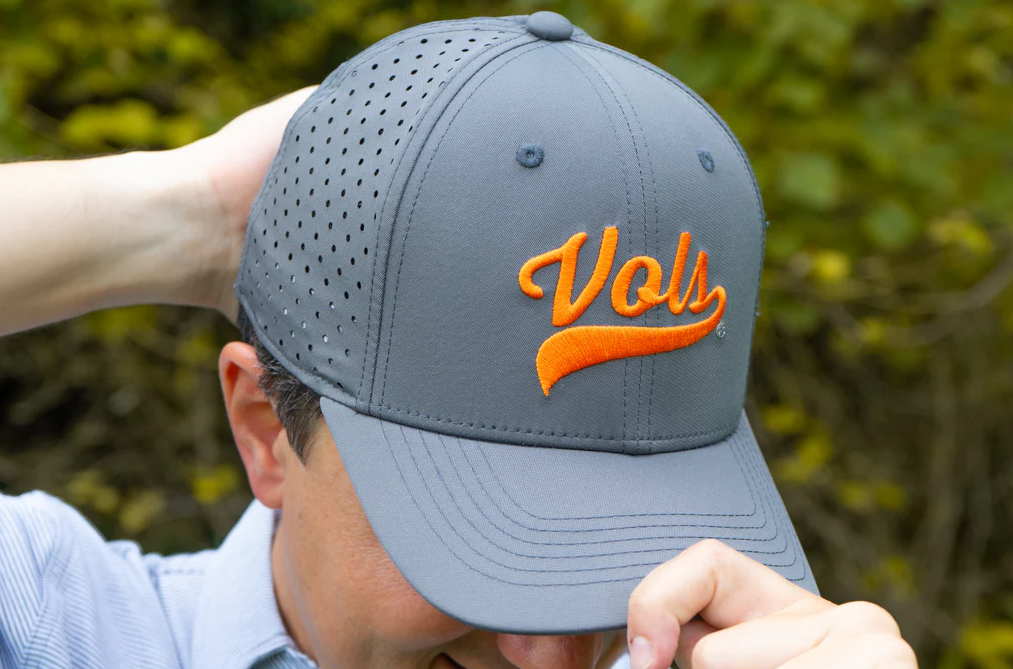
Performance Polyester: Best for Golf and Activewear
Performance polyester is better for brands that need function.
It can support moisture-wicking, quick-drying, lightweight, breathable, water-resistant, and UPF features.
Use performance polyester for:
- Golf hats
- Running hats
- Outdoor hats
- Training caps
- Fishing caps
- Premium sports headwear
This fabric usually costs more than cotton twill, but it can also support a higher retail price.
If your customers expect comfort in heat, sweat, sun, or light rain, performance fabric is worth considering.
Cotton-Poly Blends: A Balanced Option
Cotton-poly blends sit between classic cotton and technical polyester.
They can feel softer than pure polyester while offering better durability and shape control than pure cotton.
Use cotton-poly blends if you want:
- Good comfort
- Better durability
- Easier care
- A balanced cost
- A more stable cap shape
This is a practical choice for brands that want a better everyday cap without moving fully into performance fabric.
Corduroy and Washed Canvas: Best for Texture
Corduroy and washed canvas give hats a vintage and lifestyle feel.
They work well for fashion brands, outdoor lifestyle brands, coffee brands, campus merch, and seasonal drops.
But be careful with logo details. Thin lines and small text can disappear on textured fabric. If your logo is detailed, use a woven patch instead of direct embroidery.
Recycled and Organic Materials: Good for Sustainability Claims
Recycled polyester and organic cotton can support a stronger sustainability story.
But do not use these materials only because they sound good in marketing. If you plan to mention recycled or organic materials on your product page, hangtag, or packaging, ask your supplier for the right certifications.
Sustainability claims should be clear and provable.
Logo Methods: Choose Based on Artwork, Not Guesswork
Your logo method can make the hat look premium or cheap.
Before choosing, ask this simple question:
Will this logo still look clean from six feet away?
If the answer is no, simplify the design or change the logo method.
Flat Embroidery
Flat embroidery is the safest option for most custom hats.
It works well for clean logos, brand names, icons, and small side details.
Best for:
- Baseball caps
- Dad hats
- Golf caps
- Corporate hats
- Lifestyle caps
Avoid too much small text. Even flat embroidery has limits.
3D Puff Embroidery
3D puff embroidery creates a raised logo effect.
It works best on structured caps and snapbacks. It gives the logo a bold, sporty look.
Best for:
- Thick letters
- Simple shapes
- Streetwear caps
- Sports-style hats
- High-profile snapbacks
Avoid 3D puff if your logo has thin lines, small words, gradients, or detailed artwork.
Woven Patches
Woven patches are better for detailed logos.
They can show small text and multi-color artwork more clearly than embroidery.
Best for:
- Outdoor hats
- Trucker hats
- Resort hats
- Lifestyle caps
- Detailed brand logos
Woven patches are also useful when you want the same logo to be applied across different hat styles.
Leather and Faux Leather Patches
Leather patches give a premium, rugged, and heritage look.
They work well for outdoor brands, lifestyle brands, ranch brands, coffee brands, and casual retail caps.
Best for:
- Trucker hats
- Dad hats
- Outdoor caps
- Washed cotton caps
- Vintage-style hats
Leather patches are not the best option for every performance hat, especially if the product needs to stay very light or water-friendly.
PVC and Rubber Patches
PVC and rubber patches give a modern technical look.
They are durable and work well with performance fabrics.
Best for:
- Golf hats
- Fishing hats
- Outdoor hats
- Waterproof caps
- Performance caps
Use this method when your brand wants the hat to feel sporty, modern, and durable.
MOQ: How Many Custom Hats Should You Order?
MOQ depends on how custom the hat is.
A simple logo on an existing blank cap can usually start with a lower MOQ. A fully custom hat with custom fabric, custom panels, custom labels, and special packaging needs a higher MOQ.
| Brand Stage | Suggested Production Option | Why It Makes Sense |
|---|---|---|
| Testing a new idea | Stock blank hat with custom logo | Lower risk, faster sampling, easier launch |
| Growing DTC brand | Existing cap shape with custom fabric, color, and logo | Better brand feel without full development cost |
| Established brand | Full custom cut-and-sew production | Strongest product control and brand differentiation |
| Retail or wholesale program | Larger bulk order with private label details | Better pricing and more stable supply |
For many new brands, 100 to 300 pieces can be a good first test if using existing blank caps.
For more custom development, 500 pieces or more is usually more realistic.
For full cut-and-sew hats, the MOQ may be 1,000 pieces or higher depending on fabric, trims, and factory setup.
The best MOQ is not always the lowest MOQ. The best MOQ is the quantity that lets you test the market without killing your margin.
What Affects Custom Hat Pricing?
A custom hat quote depends on many details.
The main cost drivers are:
- Hat style
- Fabric type
- Crown structure
- Logo method
- Embroidery stitch count
- Patch material
- Number of colors
- Closure type
- Sweatband quality
- Private label details
- Förpackning
- Order quantity
- Shipping method
A simple cotton cap with flat embroidery will cost less than a performance hat with waterproof fabric, rubber patch, custom sweatband, printed taping, and retail packaging.
If you want a premium look without overspending, focus on the details customers actually notice:
- Better fabric hand feel
- Cleaner logo execution
- Comfortable sweatband
- Good crown shape
- Strong color matching
- Neat stitching
- Better product photos
You do not need every custom detail in the first order. You need the right details.
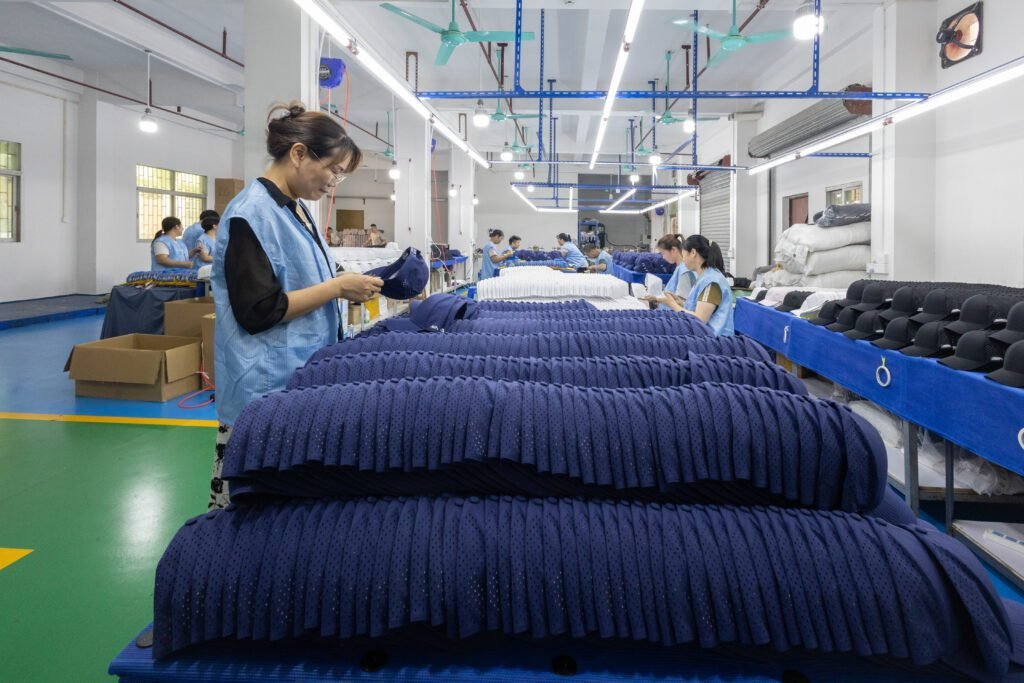
How to Keep Costs Under Control
Here are practical ways to control cost without making the hat look cheap:
- Start with fewer colors
Two or three colorways are enough for most first launches. Too many colors split your quantity and raise complexity.
- Use one strong logo method
Do not add front embroidery, side embroidery, back embroidery, inside printing, and custom packaging all at once unless your margin supports it.
- Keep artwork simple
Simple logos are easier to produce, easier to read, and often look more premium.
- Choose the right fabric level
Do not use performance fabric if your customer only needs a casual cotton hat. Do not use basic cotton if your brand promises premium activewear.
- Plan reorder colors early
If black, navy, or cream sells fastest, you want to reorder quickly. Make sure the fabric and thread colors can be repeated.
Production Timeline: What Brands Should Expect
Most custom hat projects take about 8 to 14 weeks from design confirmation to delivery.
A normal timeline looks like this:
| Step | Estimated Time |
|---|---|
| Design and tech pack confirmation | 3 to 7 days |
| Sample development | 10 to 18 days |
| Sample review and revision | 5 to 10 days |
| Bulk production | 20 to 35 days |
| Quality inspection | 2 to 3 days |
| Air shipping | 5 to 8 days |
| Ocean shipping | 18 to 30 days |
If your launch has a fixed date, do not wait until the last minute.
Sampling always takes longer when the artwork is unclear, the fabric is special, or the buyer changes direction after the first sample.
Pre-Production Checklist Before You Approve Bulk Order
Before approving production, check these points carefully.
1. Check the Physical Sample
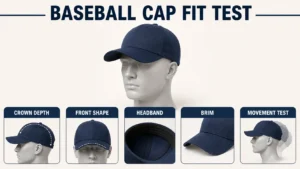
Do not approve bulk production from photos only.
Wear the hat. Check the fit, crown height, brim curve, logo placement, fabric feel, sweatband, and inside finishing.
2. Check Logo Placement
The logo should be centered and balanced with the hat shape.
Even a small placement mistake can make the product look low quality.
3. Check Logo Clarity
Look at the logo from a distance. If you cannot read it clearly, your customers may not notice it either.
4. Check the Sweatband
The sweatband touches the skin directly. If it feels rough, stiff, or cheap, customers will feel it.
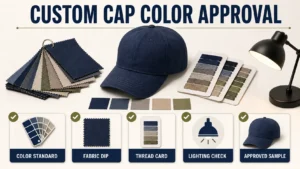
5. Confirm Colors Clearly
Use Pantone or approved fabric references. Do not rely only on words like “navy,” “cream,” or “dark green.”
6. Confirm Closure Type
Snapback, strapback, fitted, elastic, metal buckle, and hook-and-loop closures all create a different wearing experience.
7. Confirm Packaging
Decide early if you need polybags, hangtags, barcode labels, cartons, retail boxes, or custom packaging.
8. Confirm Inspection Standards
Your supplier should check logo alignment, stitching, fabric defects, shape, color, size, trims, and packaging before shipping.
9. Confirm Shipping Terms
FOB, DDP, air freight, and ocean freight all affect your final cost and timeline.
10. Prepare Your Product Launch
Do not wait until the goods arrive to prepare photos, product pages, ads, emails, and social posts.
A good hat can still fail if the launch is not ready.

Common Custom Hat Mistakes Brands Should Avoid
Mistake 1: Choosing a Logo Method Before Choosing the Hat
Logo method and hat structure should be decided together.
A good supplier should tell you when your logo is not suitable for a certain hat style.
Mistake 2: Ordering Too Many Colors in the First Run
Eight colors may look exciting, but they can create inventory risk.
Start with fewer colors, learn what sells, then reorder smarter.
Mistake 3: Approving Production Without Wearing the Sample
A hat is not only a visual product. Fit and comfort matter.
Always test the physical sample before bulk production.
Mistake 4: Picking the Cheapest Quote Without Checking Details
The lowest quote may use cheaper fabric, weaker sweatbands, poor stitching, or lower inspection standards.
Always compare what is included, not just the unit price.
Mistake 5: Using Small Text on Embroidery
Small text often looks messy on hats.
If your logo has fine details, consider a woven patch or simplify the artwork.
Mistake 6: Ignoring Reorder Planning
If your first drop sells well, can the factory repeat the same color, fit, and logo quality?
A good production partner should help you plan repeat orders.
What a Good Custom Hat Manufacturer Should Help With
A good custom hat manufacturer should do more than place your logo on a cap.
They should help you make better product decisions before production starts.
A reliable supplier should support:
- Hat style recommendation
- Fabric selection
- Logo method advice
- Sample development
- Cost control
- Production planning
- Quality inspection
- Packaging options
- Shipping support
- Reorder planning
This is especially important for brands that do not have a full in-house product development team.
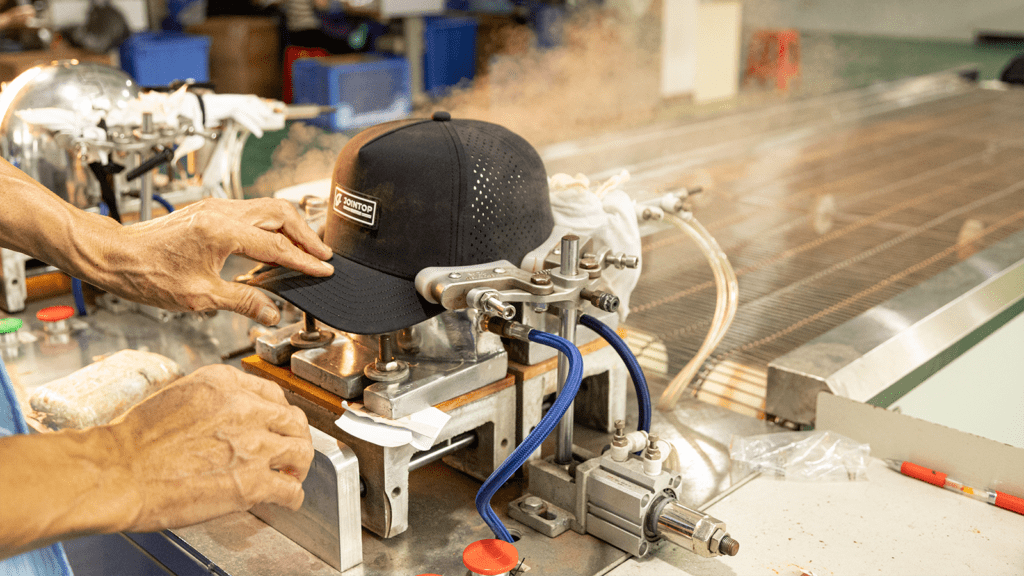
How JoinTop Supports Custom Hat Projects
JoinTop works with brands on custom baseball caps, golf hats, performance hats, dad hats, trucker hats, rope hats, bucket hats, and other custom headwear projects.
Our role is not only to make the hat. It is to help brands turn an idea, reference photo, or tech pack into a product that can be sampled, produced, inspected, shipped, and reordered.
JoinTop supports brand customers with:
- Product development support
- Custom fabric and logo options
- China, Vietnam, and Bangladesh production options
- OEM, ODM, and private label services
- Sampling and bulk production management
- Quality control and production follow-up
- Custom packaging and shipment support
If your brand is building a premium golf, outdoor, lifestyle, or performance hat line, working with an experienced factory can reduce sampling mistakes and make your production process easier to manage.
Custom Hat FAQ
What is the best custom hat style for a new brand?
For most new brands, a structured baseball cap, dad hat, or trucker hat is a safe starting point. These styles are easy to wear, easy to understand, and easier to sell than highly unusual shapes.
What is the best MOQ for custom hats?
If you use stock blank hats with custom logo decoration, a lower MOQ may be possible. If you need custom fabric, custom color, private label details, or full cut-and-sew production, expect a higher MOQ.
What logo method is best for custom hats?
Flat embroidery is best for simple logos. 3D puff embroidery is best for bold logos on structured hats. Woven patches are better for detailed logos. PVC patches are good for performance and outdoor hats.
How long does custom hat production take?
Most custom hat projects take 8 to 14 weeks, depending on sample revisions, material availability, order quantity, inspection, and shipping method.
Can I make premium custom hats with a low MOQ?
Yes, but you may need to use existing hat bodies and focus your customization on logo, color, label, or packaging. Full custom development usually needs a higher MOQ.
What should I send to get a better quote?
Send your logo file, reference photos, target quantity, hat style, fabric idea, color plan, logo method, packaging needs, target market, and delivery date.
The clearer your request is, the more accurate your quote will be.
Slutliga tankar
A good custom hat is not made by accident.
It comes from clear choices: the right hat style, the right fabric, the right logo method, the right MOQ, and the right production partner.
If you are launching your first hat collection, keep it focused. Choose one strong product direction. Start with two or three colors. Use a logo method that fits your artwork. Test the sample carefully. Then move into production with clear quality and shipping standards.
If you are not sure which hat style, fabric, or logo method fits your brand, you can send your logo, reference photos, and target quantity to JoinTop.
We can help you review the best custom hat option before sampling.
Contact JoinTop to start your custom hat project.

 English
  German
  Spanish
  French
  Amharic
  Portuguese
  Italian
  Swedish
  Turkish
  Belarusian
  Danish