
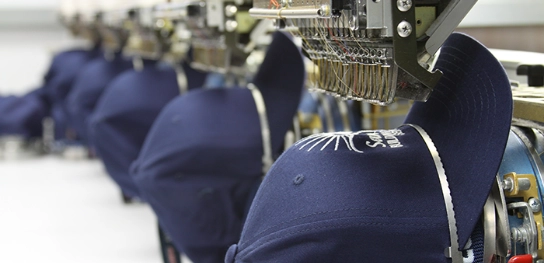
If you search “how are baseball caps made,” you’ll usually find a short, simplified explanation: cut the fabric, sew the panels, attach the brim, and you’re done.
In reality, the baseball cap manufacturing process is much more technical—especially when production scales from a few samples to thousands of units. For brands that care about consistency, fit, and long-term quality, every step matters.
Below is a practical, factory-level breakdown of how baseball caps are actually made.
Quick Overview:
The baseball cap manufacturing process includes product development, material sourcing, pattern engineering, precision cutting, embroidery or logo application, crown assembly, brim construction with PE board inserts, closure installation, quality control inspection, and bulk packing. In large-scale production, specialized machinery and structured inspection systems ensure consistent sizing, shape, and branding across every unit.
For a general historical overview of cap production, see the explanation at How Products Are Made – Baseball Cap.

Step 1: Product Development and Technical Specifications
Every custom baseball cap starts with a clear tech pack. This document defines:
- 5-panel or 6 panel cap construction
- Structured vs unstructured design
- Crown height and profile
- Stitch density
- Sweatband material
- Closure type
Most production issues can be traced back to unclear specifications. When details are defined early, scaling becomes much more predictable.
Manufacturers that specialize in large-scale headwear production, such as those featured at Jointopcap.com, typically review and refine tech packs before sampling begins to reduce downstream risk.
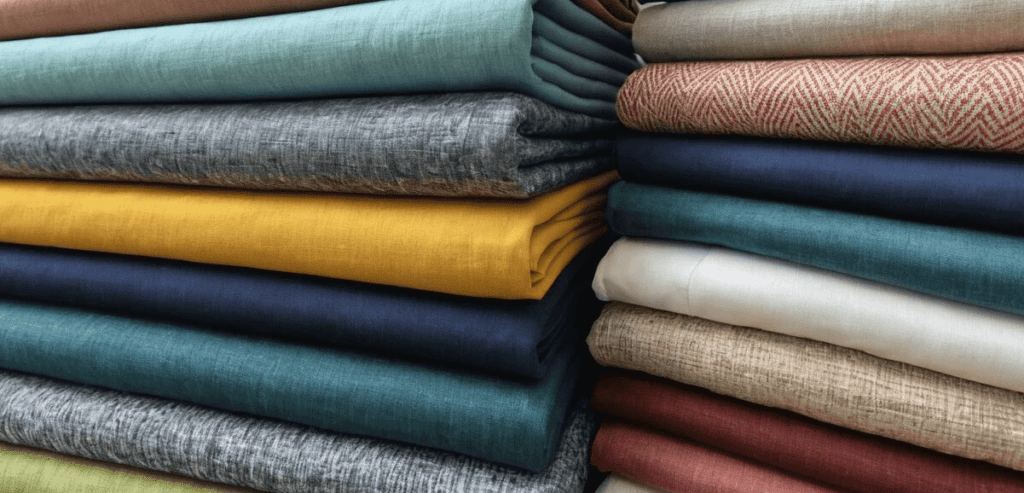
Step 2: Fabric and Component Sourcing
Material choice affects durability, comfort, cost, and brand positioning.
Common materials used in cap manufacturing include:
- Cotton twill
- Polyester mesh
- Nylon
- Wool blends
- Recycled performance fabrics
What Is the Brim of a Baseball Cap Made Of?
Most modern brims use PE board, typically made from polyethylene, a durable and moisture-resistant polymer. Lower-cost production may use paper board, which can lose shape over time, especially in humid environments.
Choosing the right brim material directly impacts long-term product performance.
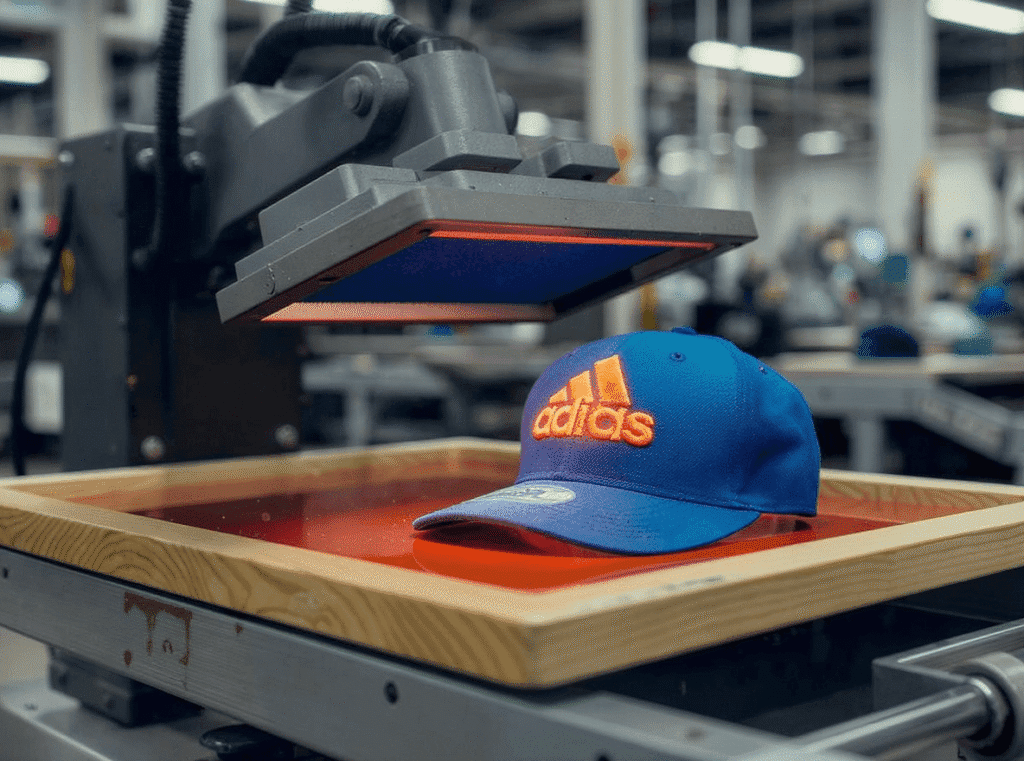
Step 3: Pattern Engineering and Sampling
Before bulk production begins, factories create digital patterns using CAD systems. Panels are measured, graded, and tested through sampling.
Even small pattern inaccuracies can lead to noticeable fit differences when producing thousands of caps. Sampling allows brands to correct sizing, crown shape, and structural balance before committing to large production runs.
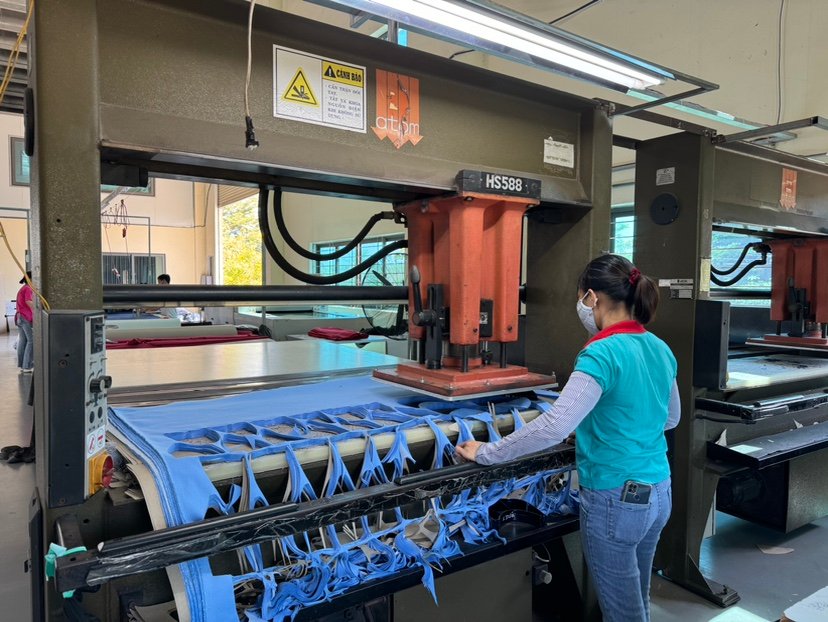
Step 4: Fabric Layering and Precision Cutting
In baseball cap mass production, fabric is layered and cut in stacks using industrial cutting machines.
This stage determines panel symmetry and sizing consistency. A small misalignment during cutting can result in uneven crowns or subtle fit variations across batches.
Precision cutting is one of the foundations of consistent bulk manufacturing.

Step 5: Embroidery and Logo Application
The logo is often the most visible feature of a cap. Common decoration methods include:
- Flat embroidery
- 3D puff embroidery
- Woven patches
- Silicone logos
- Heat transfer graphics
Professional embroidery departments use multi-head industrial machines to maintain consistent thread tension, density, and alignment across large orders. Poor embroidery control can lead to tilted logos, puckering, or inconsistent appearance.

Step 6: Crown Assembly
After decoration, panels move to sewing lines where they are assembled into the final crown.
For structured caps, buckram reinforcement is added behind the front panels to maintain shape. For unstructured caps, the crown remains soft and flexible.
Sweatbands are attached, eyelets are stitched for ventilation, and seams are reinforced. Consistent stitch tension and alignment ensure balanced structure.

Step 7: Brim Construction and Shaping
Brims are constructed separately before being attached to the crown. The process typically includes:
- Inserting the PE board between fabric layers
- Applying concentric stitching
- Heat molding to create curvature
Mold temperature and pressure control are critical. Inconsistent shaping can result in noticeable variation across a production batch.

Step 8: Closure Installation
Closures vary depending on the cap style:
- Snapback
- Strapback (metal buckle or Velcro)
- Utrustad
- Flexfit
Closure alignment affects balance and comfort. Even minor positioning errors can impact how the cap sits on the head.

Step 9: Quality Control and Inspection
Before packing, caps undergo inspection for:
- Logo placement accuracy
- Stitch consistency
- Brim symmetry
- Size tolerance
- Fabric defects
Many professional manufacturers follow AQL (Acceptable Quality Limit) standards to control defect rates in large production runs.
Structured inspection processes help ensure consistency from the first cap to the last.
Production Timeline and MOQ
Typical industry timelines include:
- Sampling: 7–14 days
- Bulk production: 20–35 days
- Ocean shipping: 20–30 days
International shipments are often handled under FOB (Free On Board) terms.
Minimum order quantities commonly range from 300 to 1,000 pieces per style, depending on complexity and materials.
Manufacturing at Scale
Producing a few hundred caps is relatively straightforward. Producing tens of thousands of identical units requires structured systems, including:
- Multi-line sewing operations
- Dedicated embroidery departments
- Stable material sourcing
- Coordinated production planning
- Multi-country capacity when necessary
Manufacturers operating across multiple production bases, such as those presented on Jointopcap.com, are often able to balance cost efficiency, lead time, and production flexibility.
A baseball cap may appear simple from the outside, but the baseball cap manufacturing process involves a chain of technical steps where small details determine final quality.
Understanding how caps are made helps brands evaluate suppliers more effectively, control product consistency, and scale production with greater confidence.
In competitive headwear markets, consistency is what builds long-term brand value.


 English
  German
  Spanish
  French
  Amharic
  Portuguese
  Italian
  Swedish
  Turkish
  Belarusian
  Danish