OEM cap manufacturing is a coordination problem as much as a sewing problem. The brand owns the product direction, while the factory converts the brief into a pattern, material package, decoration process, sample, and bulk standard. The program works when both sides use the same measurable reference.

What the factory needs from an OEM brief
Provide the target customer, intended use, preferred five-panel or six-panel structure, crown and visor reference, fabric preference, colors, closure, logo artwork, decoration method, packaging, quantity by style and color, target market, and delivery date. Add sketches or reference photographs for proportions, but identify which features are mandatory and which are open to recommendation.
If the cap is a Performance Cap, specify the ventilation area, sweatband intent, weight preference, and use case. Do not copy a competitor’s protected branding or assume a visual reference contains a complete production specification.
From concept to production-ready sample
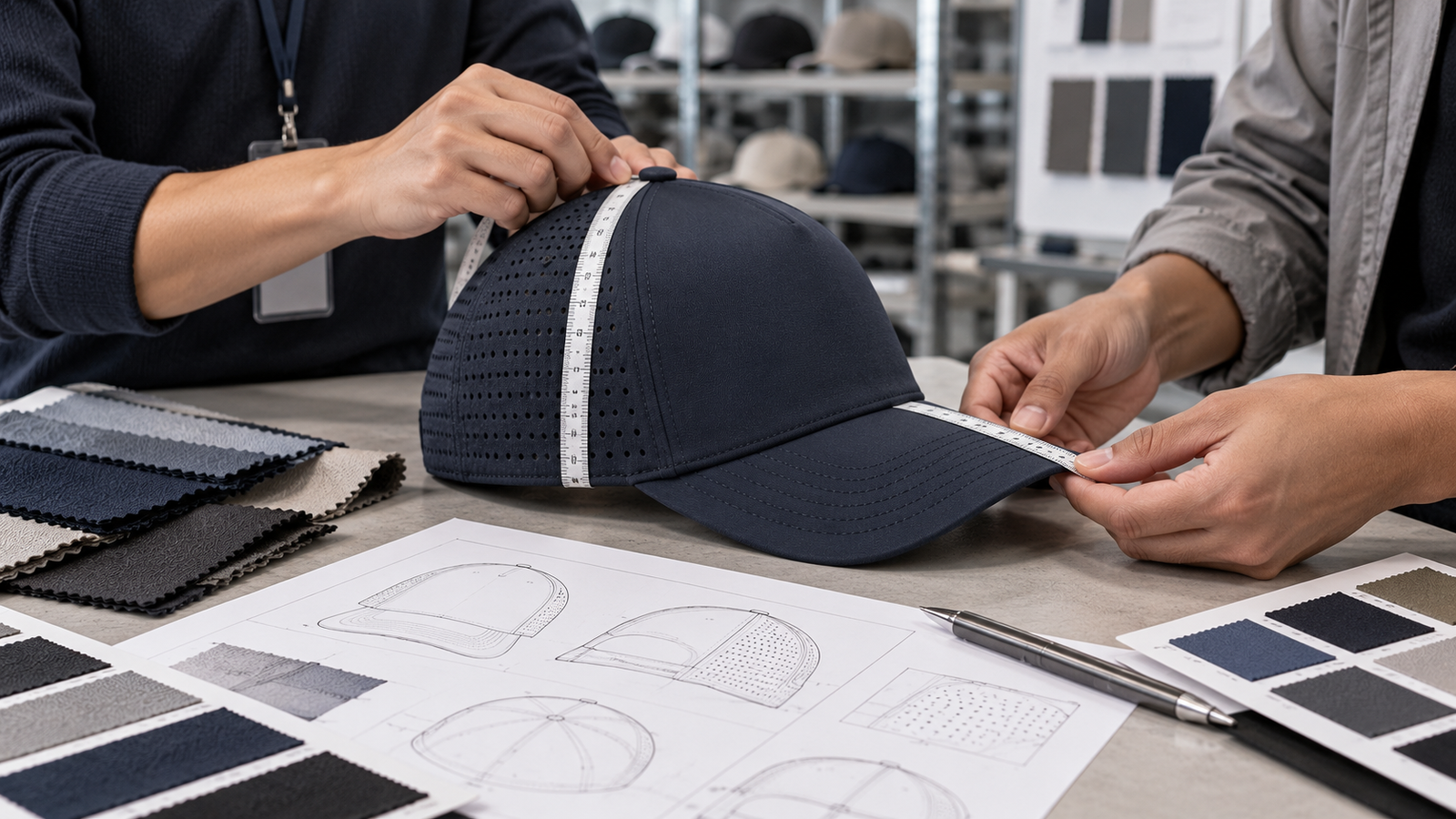
The usual sequence is brief review, material and construction recommendation, pattern or sample development, artwork approval, physical sample, revision, and bulk pre-production confirmation. Each stage answers a different question. A drawing tests the idea. A sample tests the product. A bulk approval tests whether the factory can repeat it.
Keep changes organized by version. If the logo changes after the cap shape is approved, record that as a decoration revision. If the visor or crown changes, update the construction reference as well. Mixing changes in one informal email is how old instructions reach the cutting room.
How to evaluate an OEM supplier
Ask how the supplier handles materials, sampling, artwork, quality control, packaging, and reorders. Request a clear quotation that separates cap construction, decoration, sample charges, packaging, and freight assumptions. Ask where the order will be produced and how the approved reference travels with the production file.
JoinTop has factories in China, Vietnam, and Bangladesh. A multi-location footprint is useful only when the product standard, artwork version, inspection points, and communication process remain controlled across the order.
Build the quality standard before bulk production
- Approved cap construction and measurement sheet
- Fabric, color, lining, sweatband, and closure references
- Logo artwork, placement, backing, and decoration tolerance
- Packaging, labeling, carton, and inspection requirements
- Sample approval record and any permitted deviations
- Reorder process and change-control contact
MOQ, sampling, and commercial planning
JoinTop accepts projects from 100 pieces per style and color, subject to the final specification. The quantity does not remove the need for a clear brief. A small order with unclear artwork can create more revisions than a larger order with a controlled specification.
Before approving the quote, confirm what is included in the sample, how revisions are handled, what packaging is assumed, and which delivery date is being discussed. Keep the target date tied to artwork and sample approval so the production team is working from a realistic starting point.
Using the OEM relationship for future collections
Save the pattern, material references, approved sample, logo files, and inspection record after the first order. The next cap can then share a proven sweatband, closure, or visor standard while changing only the elements that create a new product. This is how a brand builds a collection instead of restarting development every season.
OEM decisions that should be made in sequence
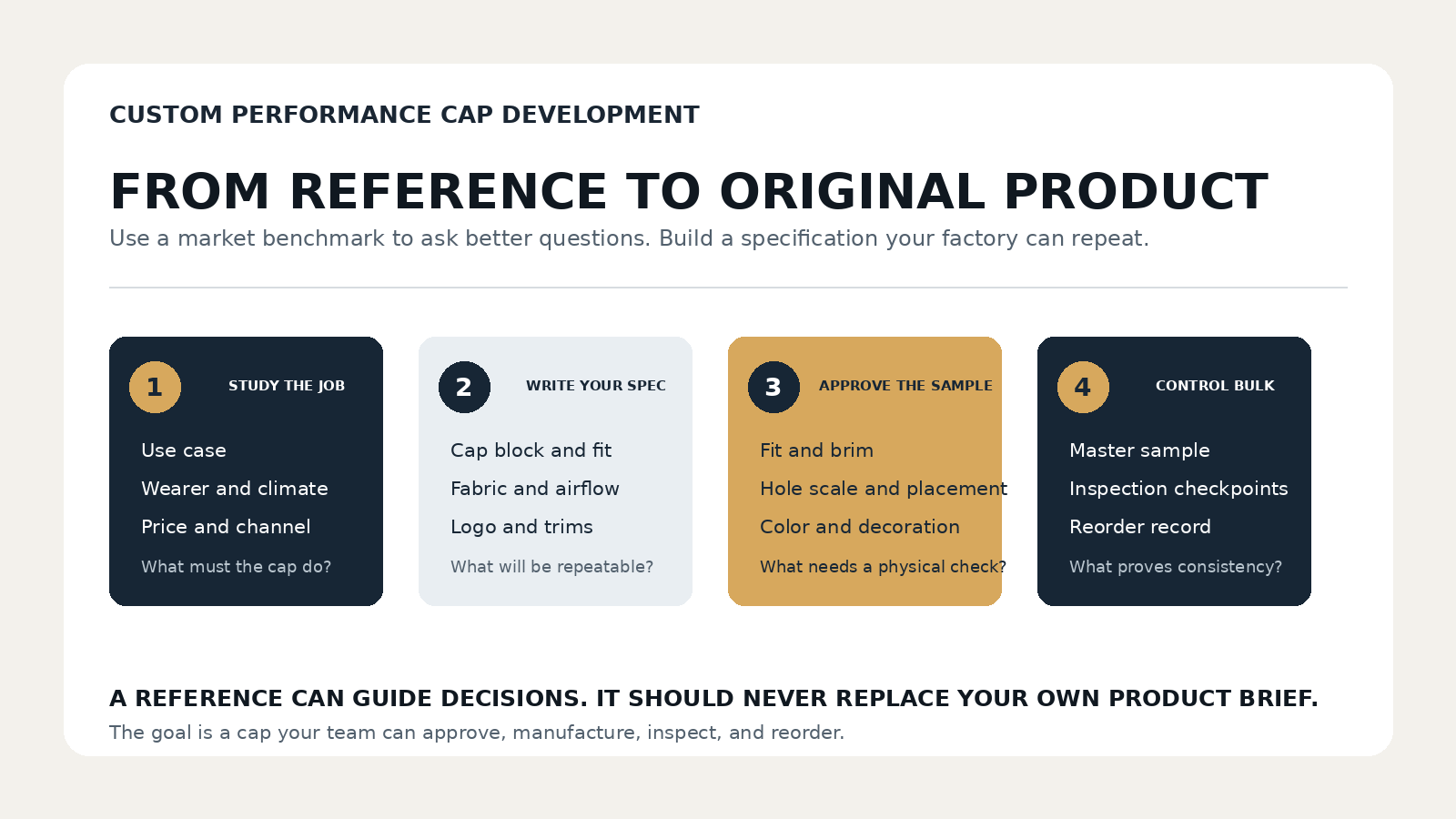
OEM development becomes faster when decisions are made in the order that affects the most downstream work. First confirm the product job and the five-panel or six-panel platform. Then select the material and fit block. Next approve the decoration and labels. Packaging and carton details can follow once the cap itself is stable.
Changing the crown after embroidery has been digitized can require a new logo test. Changing the fabric after the sample has been approved can alter the visor, color, and hand feel. A simple change log should record the date, file version, person approving it, and the effect on the quotation or delivery date.
How to review an OEM quotation
Ask for the quotation to identify cap construction, material assumptions, logo method, digitizing or setup, sample charges, packaging, freight basis, and quantity breaks. Confirm whether the quoted quantity is per style, per color, or total across a collection. A brand should know what will happen if one color falls below the stated minimum.
Ask where the order will be produced and how the approved sample is referenced by the production team. JoinTop has factories in China, Vietnam, and Bangladesh; the useful question is how the same technical standard, artwork version, and inspection record will be controlled wherever the order is made.
Build a change-control habit
Use one master specification and mark revisions clearly. Do not send a new logo file with the same filename as an old file. Do not describe a fit change only in a chat message. Replace the drawing, update the measurement table, and state which sample is now the approval reference.
This discipline matters when several people are involved: a brand designer, sourcing manager, factory merchandiser, sample room, and quality team. Each person should be able to identify the same approved cap without interpreting a different screenshot.
Reorder and collection planning
Save the pattern, fabric reference, color standard, logo files, approved sample, packaging mark, and inspection record after the first order. A new cap can then share a proven closure or sweatband while changing the visor or decoration. This shortens development and gives the brand a clearer reason for each new SKU.
JoinTop accepts projects from 100 pieces per style and color, subject to the final specification. Confirm the expected reorder window and any material availability risk before the first production is released.
OEM project scorecard
| Area | Question for the supplier | Proof to request |
|---|---|---|
| Development | Can the team turn the brief into a measurable sample? | Sample plan and revision record |
| Manufacturing | Which factory will make the order? | Production location and QC process |
| Decoration | How is artwork version controlled? | Approved file and placement proof |
| Reorder | Can the same standard be repeated? | Reference sample and inspection sheet |
What a mature OEM handoff includes
Before bulk production, the brand and factory should be able to open the same package of information: construction drawing, measurement sheet, material and color references, logo files, decoration instructions, packaging marks, approved sample photographs, and inspection points. If one of those documents exists only in a private chat, the process is vulnerable to staff changes and production pressure.
Ask the factory to confirm the handoff in writing. This is a small step, but it catches missing files before cutting and reduces the chance that an old sample or old logo becomes the production reference.
Cost, timing, and scope control
OEM projects become expensive when the scope changes without a decision. Keep a simple log of added colors, revised artwork, new materials, extra samples, packaging changes, and requested delivery adjustments. The log does not need to be complicated; it needs to show what changed and why the quote or timing changed with it.
A disciplined change log also helps the brand decide which improvements matter. A new visor shape may justify another sample. A minor packaging wording change may be handled without reopening the cap construction. The sourcing team can spend attention where it affects the finished product.
Keeping the approval record usable
The approval record should be short enough for a production team to use and detailed enough for a buyer to defend. Include the product name, sample date, fabric or construction reference, artwork version, measurements, approved color, packaging instruction, and the person who approved the sample. Attach marked photographs for details that are difficult to describe in words.
When a change is requested, update the record instead of adding an untracked message. State what changed, why it changed, and whether the change affects cost, delivery, or the next sample. This gives the brand a clear trail from the first idea to the product that enters bulk production.
What a serious supplier conversation sounds like
A capable supplier should ask questions about use, fit, material, logo, quantity, and timing. It should identify a risk when a requested detail conflicts with the construction. That conversation is part of product development. The goal is a cap that the factory can make consistently and the brand can explain confidently to its own customers.
Send the complete brief before requesting the final quotation. JoinTop can then review the product as a complete program, recommend practical options, and prepare a sample against a specification rather than a loose reference image.
Questions buyers should settle before approval
Is OEM the same as choosing a blank cap?
No. OEM can include custom construction, material selection, branding, packaging, and a repeatable production standard.
What is the most common source of delay?
Unclear artwork, changing specifications, and approvals that are given without a physical sample or measurement record are common causes.
What should be sent for a quotation?
Send the complete brief, artwork, quantity by color, target market, packaging needs, and delivery date. JoinTop can then identify what is confirmed and what still needs a sample decision.
A well-controlled OEM brief gives the brand a cap it can evaluate, order, and improve without losing the original product intent.

 English
 German
 Spanish
 French
 Amharic
 Portuguese
 Italian
 Swedish
 Turkish
 Belarusian
 Danish