

Moisture wicking baseball caps work as systems. The shell, sweatband, ventilation, seams, support materials, visor, logo, and fit all influence how sweat moves, spreads, evaporates, and appears on the finished product. A “quick-dry fabric” label by itself does not tell a brand whether the cap will remain comfortable, resist visible salt marks, hold its shape, or dry consistently after use.
For a B2B buyer, the right brief defines the activity, climate, sweat level, moisture pathway, drying target, appearance requirement, care method, fit, and test evidence. This guide shows how sports, golf, running, outdoor, workwear, and lifestyle brands can turn those needs into a five-panel or six-panel cap specification.

What should moisture wicking mean in a cap specification?
Wicking describes movement of liquid through or along a material, generally through capillary action. Absorbency describes how much liquid a material takes up. Drying describes how quickly moisture leaves under defined conditions. These properties can support one another, but they are not the same. A sweatband may absorb a large amount and then dry slowly. A shell may dry quickly yet transfer visible moisture to the front panel. A useful specification separates each requirement.
| Performance term | Practical question | Possible evaluation | Common sourcing error |
|---|---|---|---|
| Wicking | Where does liquid move after it contacts the sweatband or shell? | Agreed vertical, horizontal, or multidirectional moisture test. | Assuming any polyester fabric automatically wicks well. |
| Absorption | How much sweat can the component hold before it feels saturated? | Component uptake under controlled specimen and liquid conditions. | Choosing a thick band without considering retained water. |
| Drying | How quickly does the component or cap return toward a dry state? | Named drying-rate method or documented finished-cap procedure. | Using a shell result to describe the complete cap. |
| Air permeability | How readily can air pass through a defined fabric area? | Specified pressure differential and test method. | Treating air permeability as the same as wearer cooling. |
| Stain appearance | Are sweat edges, salt marks, dye transfer, or water rings visible? | Repeatable sweat exposure on production colors and visual grading. | Approving only a black sample for a multi-color range. |
To build a performance-cap brief, send JoinTop your activity, climate, reference hat, shell colors, sweatband preference, logo, quantity, and target delivery through the moisture-wicking cap inquiry form. We can identify which details need to be sampled and measured before bulk pricing is locked.
Design the shell and sweatband as one moisture pathway
The sweatband is the first contact point for most perspiration, but it cannot be developed in isolation. It may pull liquid away from the skin and distribute it along the inside edge. The shell then affects whether that moisture spreads outward, evaporates, accumulates at seams, or becomes visible. Support layers behind the front panel can interrupt the pathway and create different behavior from the side and rear panels.
Light polyester and nylon woven fabrics are common for active headwear. Mechanical stretch or elastane can improve movement and fit. Knit or mesh structures can increase openness. Finishes may change surface energy, transfer, drying, odor behavior, and hand feel. Approve the exact fabric construction, weight, stretch, color, and finish rather than relying on fiber composition or a trade name.

- Define sweatband fiber, width, thickness, construction, stretch, and seam position.
- State whether the target is rapid spreading, high uptake, quick drying, soft skin feel, or a measured combination.
- Review front-panel support, seam tape, labels, and internal branding that can block transfer.
- Test shell and sweatband together in light, medium, and dark production colors.
- Check whether dye or finish transfers to skin, labels, thread, or adjacent panels when wet.
- Record care instructions and confirm performance after the selected care cycles.
Le custom hat fabric guide explains how stretch, weight, finish, color availability, and decoration influence the final cap. When a collection contains several fabrics, use a consistent test and visual review so the buyer can compare candidates on the same basis.
Use ventilation without losing crown shape
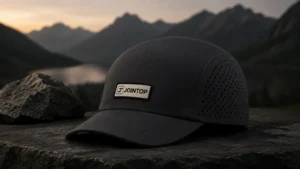
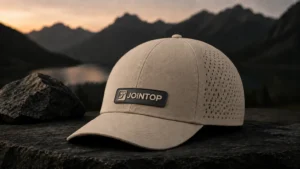
Ventilation can support heat and vapor exchange, but the result depends on hole area, fabric permeability, panel location, fit, hair coverage, wind, and activity. Laser perforation creates a controlled visual pattern. Mesh provides a more open zone. Embroidered eyelets provide small openings but may add thread and reinforcement. None of these options replaces a moisture-management sweatband.
| Ventilation option | Design advantage | Approval points | Risk to control |
|---|---|---|---|
| Laser perforation | Precise pattern and modern performance appearance | Hole size, pitch, edge quality, stretch, placement, and total open area | Holes can distort near seams or crack on unsuitable coated fabric. |
| Mesh panels | High openness and visible airflow story | Mesh weight, recovery, transparency, snagging, seam strength, and color | Crown profile and logo support may differ from woven panels. |
| Embroidered eyelets | Classic baseball-cap detail with controlled location | Thread, hole opening, backing, stitch density, and alignment | Dense stitching can add stiffness while the opening remains small. |
| Permeable woven shell | Clean surface without visible openings | Air-permeability target, opacity, durability, and support layers | A fused or backed panel may behave differently from the bare fabric. |
Keep ventilation clear of seam allowances, logo edges, closure reinforcement, and high-stress fold lines. Approve the digital hole layout and a physical panel. For a performance range, the golf cap ventilation guide offers a useful framework for mapping airflow while preserving crown shape.
Control fit, structure, and visor behavior when wet
A cap that shifts or presses against the forehead can feel uncomfortable even when the fabric performs well. Specify crown depth, finished circumference, closure range, visor length, visor width, front slope, and sweatband stretch. Test the cap dry, damp, and after care. Some materials relax when wet; others feel tighter because the band or internal layers hold moisture.
The visor package deserves separate attention. An absorbent insert or thick edge can remain wet after the crown appears dry. A plastic insert may recover better but still trap moisture between shell layers. Approve insert material, thickness, curve, stitch rows, edge construction, and recovery. If the cap is intended for packing, add a fold-and-recovery check without weakening the visor-to-crown seam.
Five-panel caps give a broad front surface and can place ventilation at the side and rear. Six-panel caps use more crown seams and may follow a familiar athletic silhouette. Neither is automatically more moisture wicking. The panel fabric, support, seam construction, band, and openings determine the system. Keep separate measurement sheets when both shapes are included.
Choose logo methods that suit a light performance shell
Direct embroidery can add needle penetrations, thread weight, backing, and local stiffness. A woven patch can preserve small details but adds edge stitching and another layer. Silicone or TPU transfers can keep a technical look, although adhesion, color migration, flexing, and care durability must be tested on the selected finish. Reflective transfers need an agreed visibility and durability requirement.
Place dense logos away from the most active moisture-release zones. Check whether the decoration creates a darker wet outline or prevents the shell from drying evenly. Record logo size, position from seams, backing, thread or material colors, surface finish, and approval photo. The custom logo placement guide helps organize front, side, and rear decisions.
If your current sample feels heavy, shows sweat rings, or dries unevenly, share the sample photos and specification with JoinTop’s headwear development team. We can review whether the issue begins with the shell, sweatband, support, ventilation, visor, or decoration.

Use named tests and clear pass criteria
A test plan should match the product question. AATCC TM195 measures liquid moisture-management properties in textile fabrics. AATCC TM201 addresses fabric drying rate using a heated plate. ASTM D737 covers air permeability of textile fabrics. These methods evaluate defined specimens under controlled conditions; they do not replace a wearer trial or finished-cap review.
| Buyer question | Evidence option | Specimen | Important limitation |
|---|---|---|---|
| How does liquid spread and transfer? | AATCC TM195 or another agreed moisture method | Shell and sweatband candidates | Flat fabric results do not include cap seams or support. |
| How quickly does the material dry? | AATCC TM201 or a documented comparative method | Each relevant component | The complete cap may dry more slowly than its shell. |
| How readily does air pass through? | ASTM D737 or an agreed air-permeability method | Unbacked and backed panels as needed | Airflow through fabric is one part of wearer comfort. |
| What happens after care? | Selected washing and drying procedure, such as an agreed ISO 6330 cycle | Production-intent component and complete cap | Choose the procedure and number of cycles before testing. |
| Will sweat marks remain acceptable? | Documented artificial-perspiration or internal appearance protocol | Finished cap in every key color | Visual grading needs fixed light, dose, location, and acceptance. |
Define specimen conditioning, wetting liquid, dose, location, temperature, humidity, timing, number of specimens, result calculation, and pass value. If a laboratory report supports marketing language, confirm that the report identifies the exact production-intent fabric and finish. Repeat key checks after care when the product claim is expected to remain through washing.
Approve the sample and retain a golden standard
The confirmation sample should use production-intent shell, sweatband, support, visor, thread, closure, logo, and labels. If a feature is substituted, keep it open. Measure the dry cap, run the agreed moisture exposure, observe the wet appearance and comfort, allow it to dry under defined conditions, then remeasure and inspect shape. Use multiple colors when sweat visibility is commercially important.
- Photograph front, sides, rear, top, interior, visor, closure, sweatband, and ventilation.
- Record dry weight and defined measurements before moisture exposure.
- Apply the agreed liquid dose to specified band and shell locations.
- Observe spread, strike-through, dripping, darkening, transfer, odor, and wearer feel.
- Record time-based weight or appearance changes under fixed drying conditions.
- Repeat measurements, inspect shape and adhesion, and note salt or water rings.
- Seal the approved sample with specification version, test records, and color standards.
Feedback should be measurable and located. “Improve wicking” is not enough. State which zone failed, the current behavior, the required behavior, and the verification method. The custom hat sample feedback guide provides a format for corrections that a factory can reproduce.
Inspect bulk production for consistency
Bulk inspection cannot prove every performance claim on every cap, but it can control the construction associated with the approved result. Verify incoming fabric and sweatband identity, lot and shade, panel direction, support materials, hole layout, seam allowance, stitch tension, logo method, measurements, labels, and packaging. Add periodic component or finished-cap tests when the program risk requires them.
- Separate shell and sweatband lots and trace them to purchase and test records.
- Check that perforations and mesh match the approved location and open area.
- Measure crown, circumference, closure range, visor, and sweatband width.
- Inspect seam puckering, skipped stitches, exposed backing, stains, and shade variation.
- Verify logo size, location, adhesion or stitching, and wet color-transfer risk.
- Confirm care labels, fiber claims, performance wording, barcodes, hangtags, and packing shape.
- Use agreed critical, major, and minor defect definitions in the inspection plan.
Le custom cap quality-control checklist can be tailored to the approved cap. Keep test reports, sample approval, bulk inspection, and shipment release as linked but separate records.

Plan MOQ and reorders around material control
MOQ can be driven by stocked fabric, custom dyeing, finishing, mesh color, elastic or sweatband minimums, laser setup, logo tooling, and color count. Ask which minimum belongs to the hat and which belongs to a material or process. Using a common approved shell and sweatband across several colorways can reduce redevelopment and improve repeat-order consistency.
For reorders, retain material codes, physical standards, color approvals, finish, weight, stretch, test reports, pattern version, hole file, measurements, logo standard, and golden sample. If a supplier proposes a “similar” fabric, compare it under the original methods before approval. Small differences in yarn, finish, or support can change moisture movement and drying.
Frequently asked sourcing questions
Are polyester caps always moisture wicking?
No. Fiber content is only one variable. Yarn, structure, finish, weight, surface, support, and cap construction determine how liquid moves and dries. Test the intended component and complete cap.
Should the shell or sweatband dry faster?
Both matter, but the required balance depends on use. The band manages skin contact and initial sweat, while the shell and openings affect distribution and evaporation. A complete-cap procedure reveals which component becomes the bottleneck.
Can a factory guarantee no sweat marks?
Absolute guarantees are risky because sweat chemistry, amount, weather, care, and colors vary. A brand can define a repeatable exposure and appearance standard, test key colors, improve the system, and communicate realistic care expectations.
Moisture-wicking baseball cap sourcing checklist
- Activity, climate, wearer, sweat level, retail claim, and key appearance risks
- Five-panel or six-panel shape, measurements, fit range, visor, and closure
- Shell, support, sweatband, mesh, finish, stretch, weight, and production colors
- Ventilation type, hole map, panel location, open area, and crown-shape requirement
- Logo technique, position, backing, adhesion, color migration, and wet appearance
- Named wicking, drying, air-permeability, care, and sweat-appearance procedures
- Prototype, confirmation sample, wearer trial, PPS, golden sample, and bulk QC
- MOQ by color, material minimums, test lead time, packaging, delivery, and reorder controls
Successful moisture wicking baseball caps connect material science with practical cap construction. To develop or improve a program, send your reference sample, tech pack, target colors, quantity, delivery market, logo, and performance priorities to JoinTop for a custom performance-cap review. We can convert the brief into material options, sample checkpoints, test questions, and a repeatable bulk plan.



 English
 German
 Spanish
 French
 Amharic
 Portuguese
 Italian
 Swedish
 Turkish
 Belarusian
 Danish