
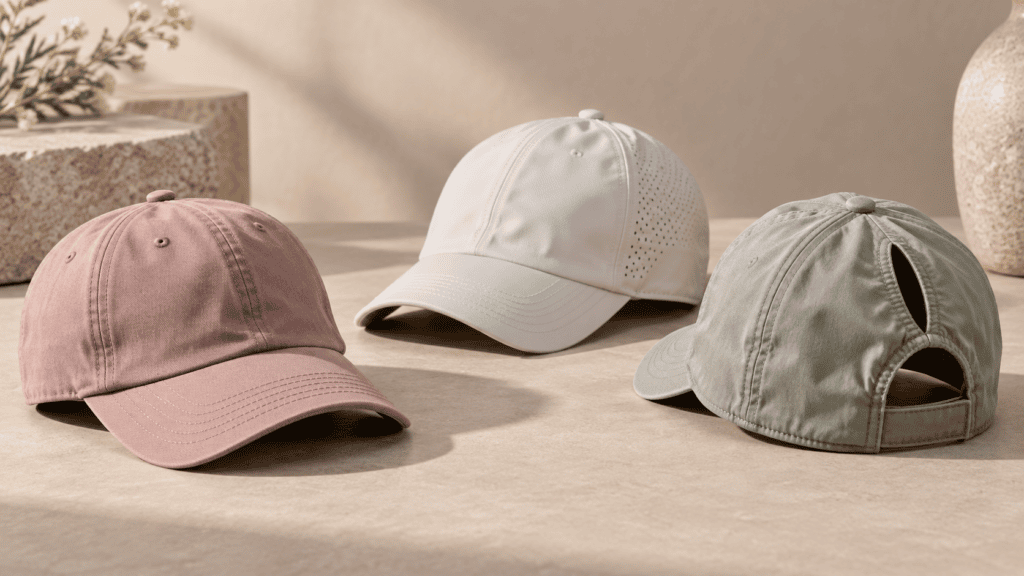
Short answer: A good custom ladies hat program starts with the target wearer and market, not an assumption about a “women’s” shape. Define the fit range, crown and brim proportions, hair and closure needs, material performance, logo scale, and approval measurements. Test the finished cap on the intended wearer range, then preserve the approved block and records for every colorway and reorder.
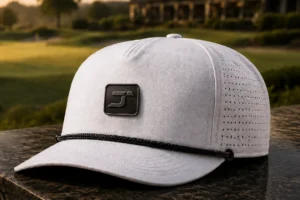
“Ladies hat” is a useful merchandising label, but it is not a complete manufacturing specification. A fashion-led lifestyle cap, a ponytail-friendly running cap, and a sun-focused golf cap may all be sold to women while needing different crowns, brims, closures, fabrics, and decoration limits. For women’s golf, running, outdoor, and active-lifestyle collections, JoinTop’s Performance Cap route is the primary product direction: a defined build with targeted laser-perforated ventilation, a stable front panel, and a curved visor, adapted to the target wearer through fit and size approval.
This guide is for brands, product teams, wholesalers, importers, and sourcing managers developing custom ladies hats in commercial quantities. It turns a broad market label into a measurable brief that a factory, quality team, and merchandising team can use together—not a consumer shopping list.
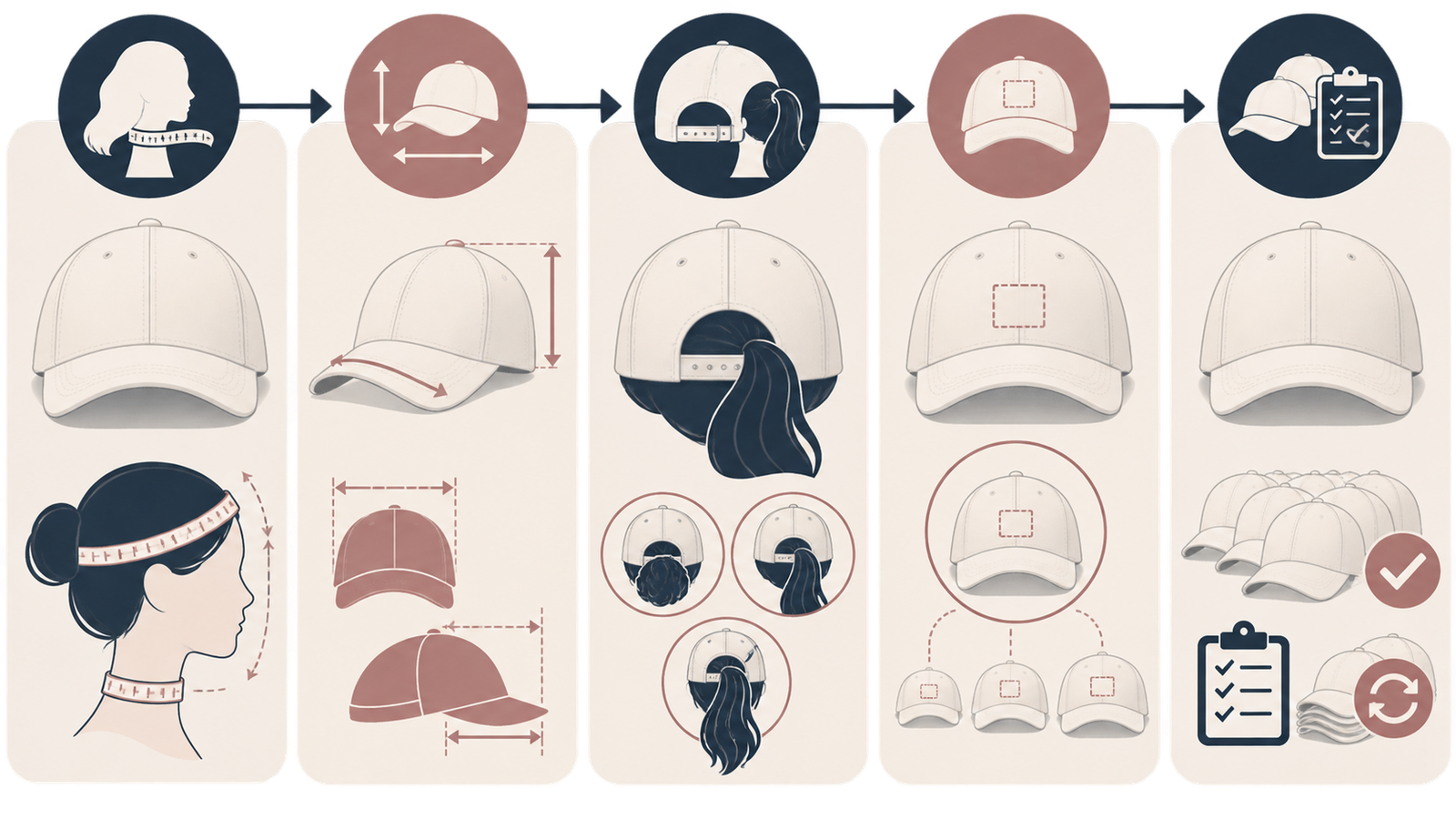
What should “ladies” mean on a purchase order?
Define the customer promise in measurements and use cases. A purchase order should not rely on a style label alone. State who the cap is for, where it will be sold, how it will be worn, and which fit range the product page or label will promise.
| Buyer decision | What the factory needs | Why it matters |
|---|---|---|
| Target wearer | Market, use case, head-size data, and fit expectation | A broad label does not define crown depth or circumference |
| Product role | Lifestyle, golf, running, outdoor, travel, team, or another defined role | Use changes the right fabric, sweatband, visor, and ventilation plan |
| Hair and styling needs | Adjustable opening, ponytail route, closure position, or no special feature | A feature should solve a real use case without weakening the cap |
| Sales promise | Stated size range, adjustment range, and market-specific labeling owner | Marketing, sample, and bulk goods need to describe the same fit |
Use actual wearer or customer data where it is available. If data is limited, label assumptions as assumptions and make the first sample a learning step. Do not turn a visual reference into a fixed size claim until the cap has been measured and worn.
Why Performance Cap is the primary route for active ladies’ collections
The audience lens and the product platform are separate decisions. “Ladies” describes who the brand is serving; Performance Cap describes the construction being developed for movement, airflow, and repeatable branding. Start with the performance platform when the collection is intended for golf, running, training, travel, or outdoor use, then validate the fit range, hair accommodation, and visual proportion for the target wearer.
| Collection need | Performance Cap decision | Evidence to approve |
|---|---|---|
| Heat and movement | Laser-perforated side/back zones balanced with fabric and sweatband | Worn sample, ventilation layout, and material record |
| Logo visibility | Stable front decoration area with a logo method suited to the fabric | Finished size, placement, and physical sew-out or decoration sample |
| Fit range | Curved visor, crown, closure, and size block adapted to the target wearer | Measurement sheet plus small, middle, and large fit checks where applicable |
| Reorder control | One approved performance block with documented color, component, and revision rules | Approved sample, photos, inspection points, and change log |
See JoinTop’s custom Performance Cap manufacturing page and Performance Cap options for the broader product route. The final perforation pattern, fabric, fit, and decoration are confirmed during sampling; do not turn a general performance claim into an unsupported guarantee.
How should a brand build the fit block?
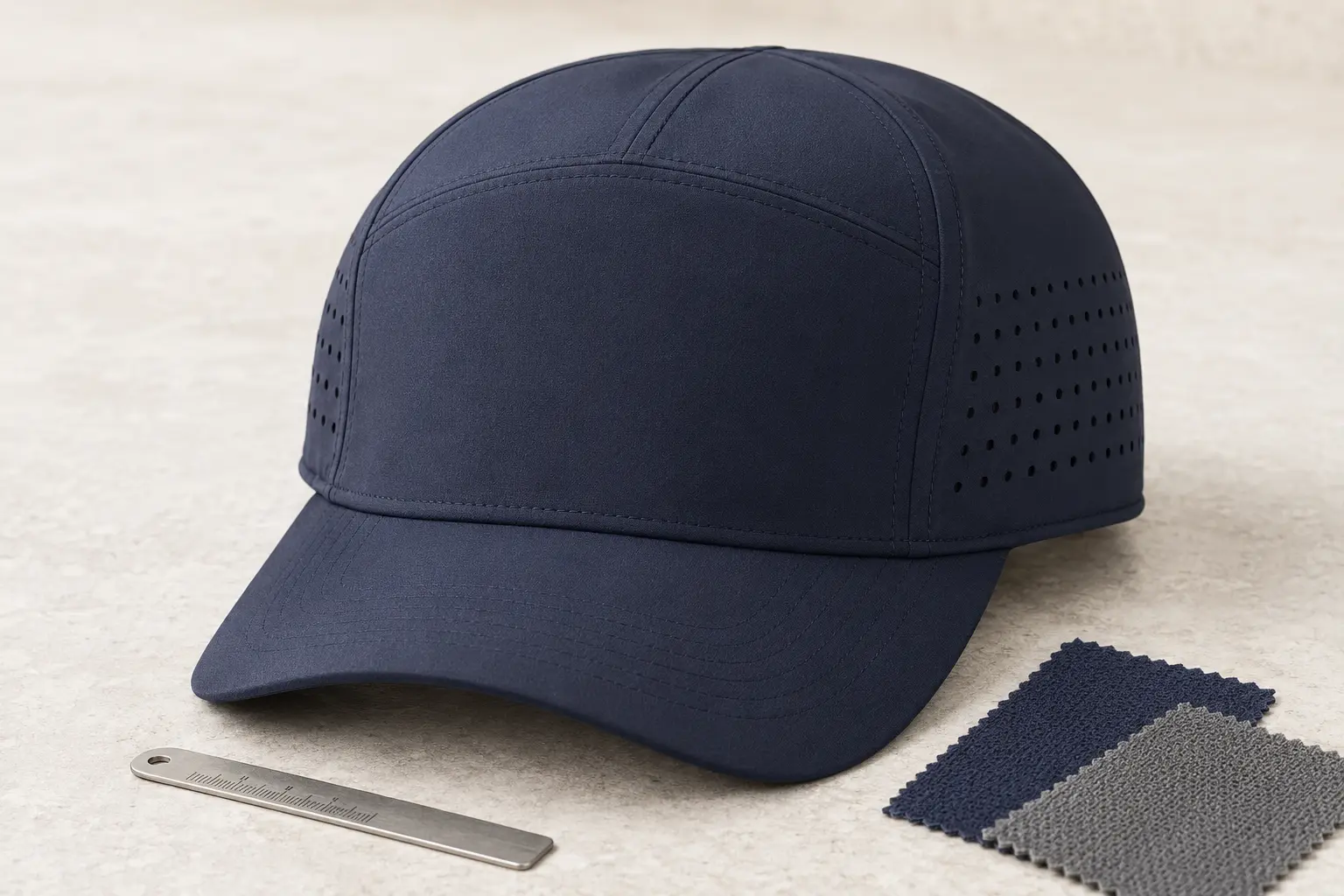
Fit is more than head circumference. Record the circumference method, crown depth, front-panel height, visor length and width, opening or adjustment range, sweatband construction, and how the cap sits above the ears and brow. The custom cap fit validation guide provides a useful test structure; adapt the wearer panel and measurements to the target collection.
- Position: does the cap sit where the customer expects without pressing the brow or covering the ears?
- Pressure: are there tight points at the temples, forehead, or back of the head?
- Stability: does it stay in place during walking, sport, travel, or the intended activity?
- Proportion: do the crown and visor look balanced on the intended wearer range?
- Adjustment: does the closure provide useful range without leaving an untidy tail or exposed gap?
Avoid designing around a single model or a single photograph. Test the smallest, middle, and largest intended settings where possible, and convert comments such as “too small” into a specific change: opening, crown depth, visor angle, sweatband pressure, or closure range.
Which crown and brim proportions work for the collection?
Proportion should follow the use case and the brand’s visual language. A low-profile lifestyle cap may need a softer front and shorter crown, while an active cap may need a stable sweatband, lighter fabric, and a visor that protects the eyes without obstructing movement. These are product decisions, not universal rules about the wearer.
Before sampling, document:
- panel count and front seam position;
- structured, unstructured, or lightly supported front;
- crown height and depth at the center and side;
- visor shape, width, length, edge finish, and underside color;
- closure type and the usable adjustment range;
- sweatband, lining, ventilation, and comfort-sensitive components.
For a collection using multiple silhouettes, assign a block or style code to each one. The hat design brief can hold the collection architecture; this article adds the fit and wearability evidence needed before a women-oriented SKU is released.
How should hair accommodation be specified?
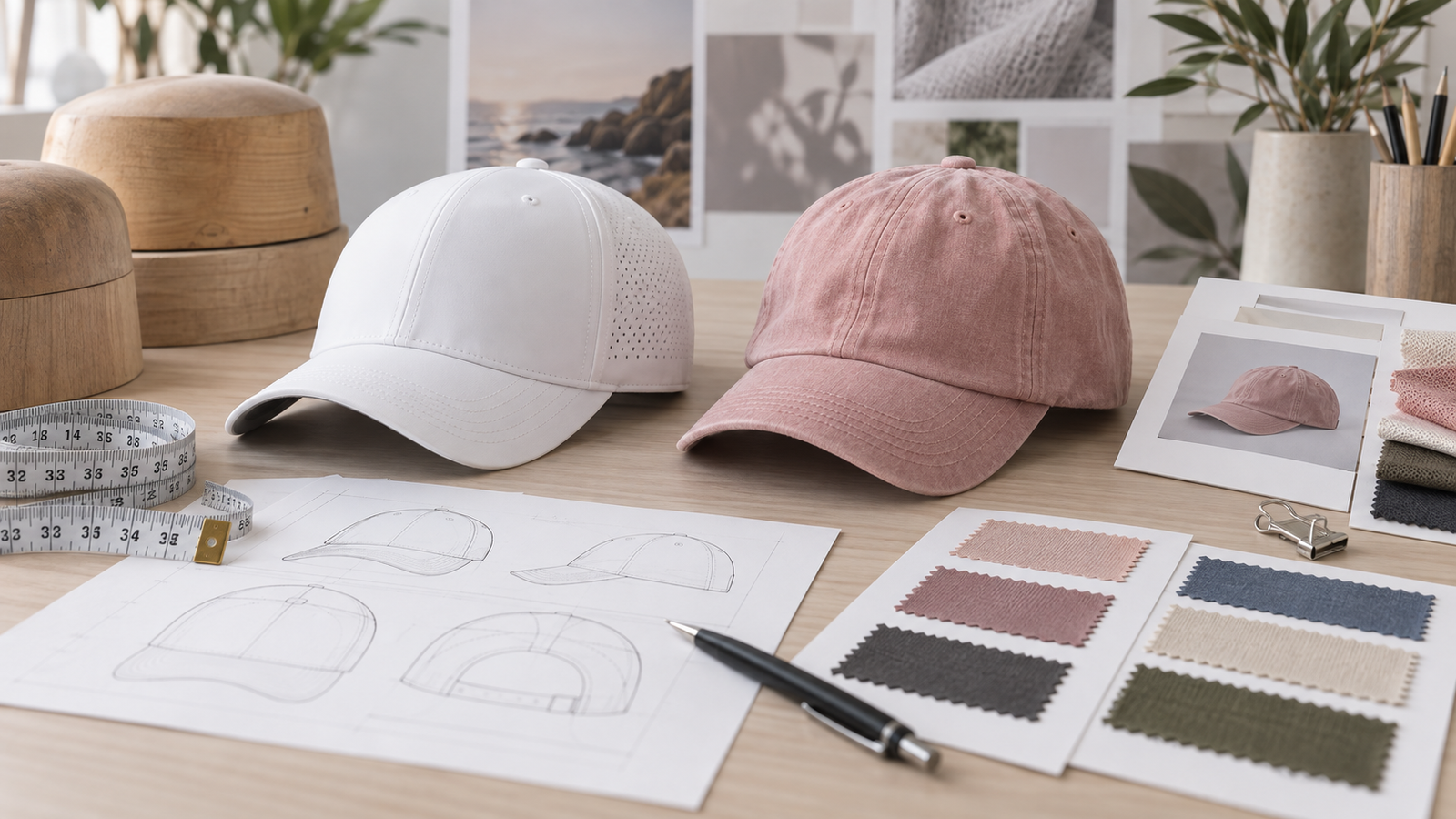
Hair accommodation should solve a stated customer need without becoming a vague styling promise. If the cap includes a ponytail opening or a particular back construction, define its location, finished size, reinforcement, edge finish, and compatibility with the closure. Test it with the intended hairstyle range and with the cap adjusted at more than one setting.
Also check what the feature does to the rest of the product:
- Does the opening weaken the back panel or create a catch point?
- Does the closure still hold the approved fit range?
- Does the feature change the worn position or crown tension?
- Can the factory inspect it consistently across colors and lots?
- Is the customer-facing description precise enough to avoid an unsupported promise?
Keep the feature in the tech pack and sample photos. A later fabric or closure change can alter the usable opening even when the pattern line appears unchanged.
How should materials and function be chosen?
Choose fabric and components from the actual use case. Lightweight woven fabrics, moisture-management finishes, cotton twill, washed canvas, recycled fibers, and other options can each make sense when the brand can explain the intended performance and care expectation. Avoid calling a fabric “cooling,” “UV protective,” or “quick drying” unless the project has the appropriate evidence and market wording.
Ask for physical references and record:
- fabric composition and weight or a comparable physical swatch;
- color reference and how it will be checked across lots;
- sweatband and lining construction;
- visor support and recovery after handling;
- decoration compatibility, especially on stretch or fine fabrics;
- care, packaging, and any destination-market documentation.
Use the cap color approval process for physical color control instead of relying on a screen value. The same discipline applies to fabric hand feel and logo contrast.
How should a logo be scaled for custom ladies hats?
Logo scale should follow the finished front panel and the visual hierarchy of the collection. A mark that is readable on a structured six-panel front may feel oversized on a low-profile cap or a smaller fit block. Define the finished width, placement points, color references, and decoration method on the actual cap.
Approve both measured and optical centering, especially when the front seam, crown curve, or a hair-accommodation feature changes the visible balance. The logo placement guide explains how to create a repeatable approval page for multiple crown blocks and colorways.
What should sample approval prove?
Approve a complete cap in the intended material and decoration, not a mockup alone. Keep these items in the same product record:
- Fit evidence: measurement sheet, wearer notes, closure settings, and front/side/back photos.
- Construction evidence: crown, visor, sweatband, closure, labels, and hair-accommodation details.
- Decoration evidence: finished logo size, placement, color, sew-out or patch, and any size-block variation.
- Color and material evidence: physical swatches, approved references, and lot-check instructions.
- Decision record: approved, revise, or reject; owner; date; and the next controlled revision.
Feedback such as “make it more feminine” is not a production instruction. Translate it into a measurable change—crown depth, visor proportion, color, trim, opening, or logo scale—then confirm that the change does not damage fit or durability.
How do brands control quality and reorders?
Inspect the parts customers will notice and the parts that protect repeatability:
- fit range, crown depth, visor shape, and closure function;
- panel alignment, seam tension, sweatband attachment, and loose threads;
- logo size, placement, legibility, and decoration surface quality;
- fabric, trims, labels, and color consistency across lots;
- hair-accommodation feature, if specified, including edge finish and strength;
- packing version, carton identification, and the approved sample used for comparison.
When a reorder changes a fabric, closure, factory, logo file, or size claim, reopen the relevant fit and appearance checks. The custom hat reorder checklist helps preserve the approved cap instead of relying on memory or a single old photograph.
What affects cost, MOQ, and lead time?
Cost changes with the cap block, fabric, visor and closure, decoration method, number of colorways, labels, packaging, testing, quantity, and delivery basis. Ask every supplier to quote the same specification so a lower price is not simply a different fit block or incomplete scope.
JoinTop’s standard MOQ is 100 pieces per style and color. Typical sampling takes 7–14 days, and typical bulk production takes 35–45 days after sample approval. Those ranges exclude design revisions, buyer approval, sample shipping, and international logistics unless the project schedule confirms them. Work backward from the required warehouse date and complete fit approval before releasing all colorways.
What should you send for a useful quote?
- company or brand website and sales channel;
- target wearer, use case, destination market, and fit promise;
- head-size data or a reference block, plus crown, visor, and closure requirements;
- hair-accommodation details, if any, with a reference image or measurement;
- fabric, color, trim, label, and packaging references;
- vector logo, finished size, placement, and decoration method;
- quantity per style and color, SKU count, forecast, and reorder expectation;
- sample, testing, inspection, and approval requirements;
- target cost basis, approval owner, and required delivery date.
Keep the request in one controlled brief. The custom hat RFQ checklist can organize the commercial handoff, while the fit record protects the product promise after the first order.
FAQ: custom ladies hats for brand programs
Are custom ladies hats a smaller version of a standard cap?
Not automatically. The right block depends on the target wearer, market, use case, and fit evidence. A brand should define the measurements and test the finished cap rather than scale an adult pattern by assumption.
How can a brand support ponytails without weakening the cap?
Specify the opening or back feature, reinforcement, edge finish, position, and closure relationship. Test it with the intended hairstyles and adjustment settings, then inspect it as a repeatable construction detail in bulk.
Why start with Performance Cap for an active ladies’ collection?
Performance Cap gives the project a defined platform for ventilation, a stable branding area, and a repeatable fit-and-reorder process. The target wearer still determines the size block, crown, closure, hair accommodation, and final sample approval.
What information does a factory need before quoting?
Send the company or website, target wearer and market, use case, fit range, cap block, fabric and color references, logo file and placement, quantity per style and color, any hair or closure requirement, and the required delivery date.

 English
  German
  Spanish
  French
  Amharic
  Portuguese
  Italian
  Swedish
  Turkish
  Belarusian
  Danish