
A custom golf visor has a narrow job: keep the sun out of the eyes, stay secure while the wearer moves, and carry the brand without becoming uncomfortable around the forehead. Buyers should treat the visor as a measured product with a sweatband, visor board, closure, fabric, and logo system, rather than as a simplified cap.
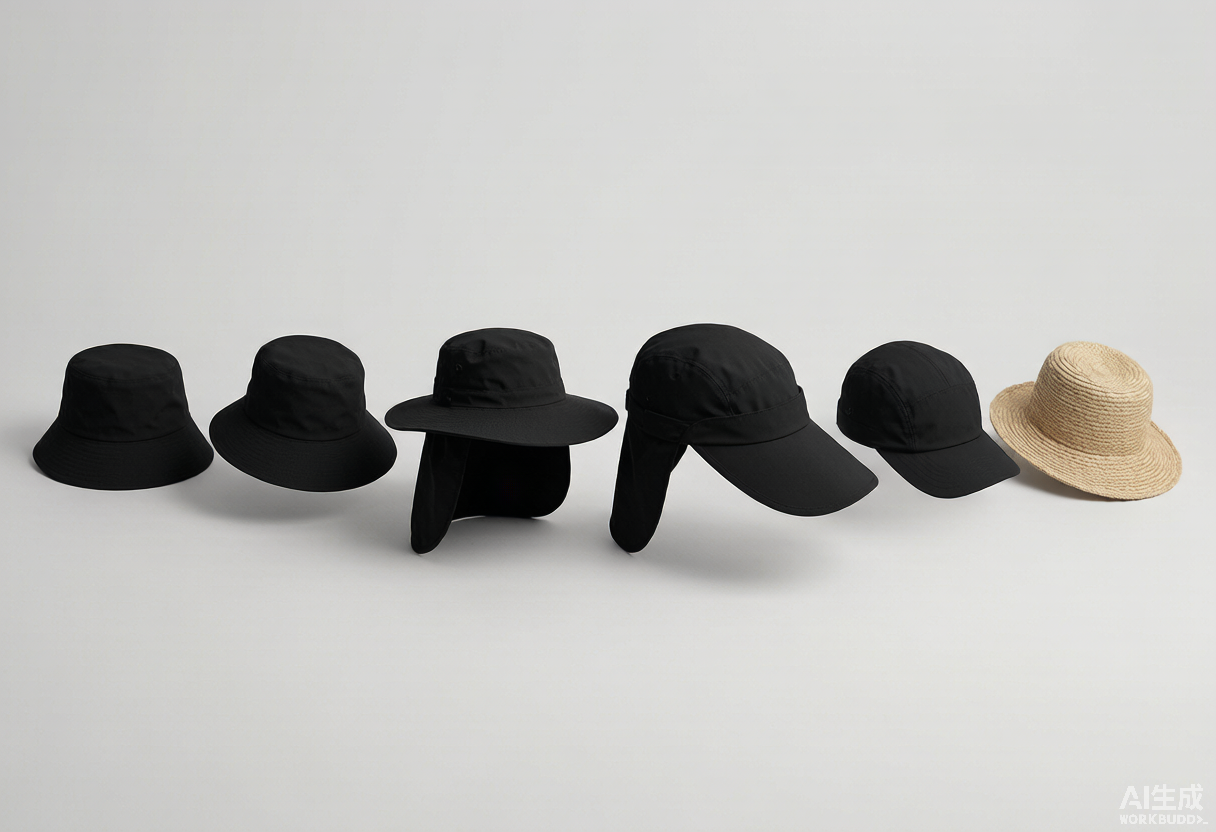
Define the use case before choosing the visor
A golf visor for warm-weather play may need a lightweight crown, absorbent sweatband, stable visor, and adjustable closure. A lifestyle visor may prioritize a softer hand and a fashion color. A tournament or promotional program may place more weight on logo area and packaging. These choices affect the fabric, internal construction, and decoration method.
Compare the visor with a normal five-panel or six-panel Performance Cap in the same collection. The visor exposes more of the head, while the cap provides crown coverage and can support a different ventilation strategy. The two products can share a logo family without sharing the same fit block.
Fabric and sweatband decisions
Ask for the fabric weight, surface, stretch, color reference, and recovery after wear. The sweatband deserves its own specification: width, material, absorbency expectation, attachment, and position. A visor that feels fine for five minutes may become irritating after a round if the band rolls or the seam sits in the wrong place.
Do not turn a fabric description into a performance claim without testing. If the brand wants to communicate moisture management or sun protection, define what will be tested and how the finished product will be labeled in the target market.
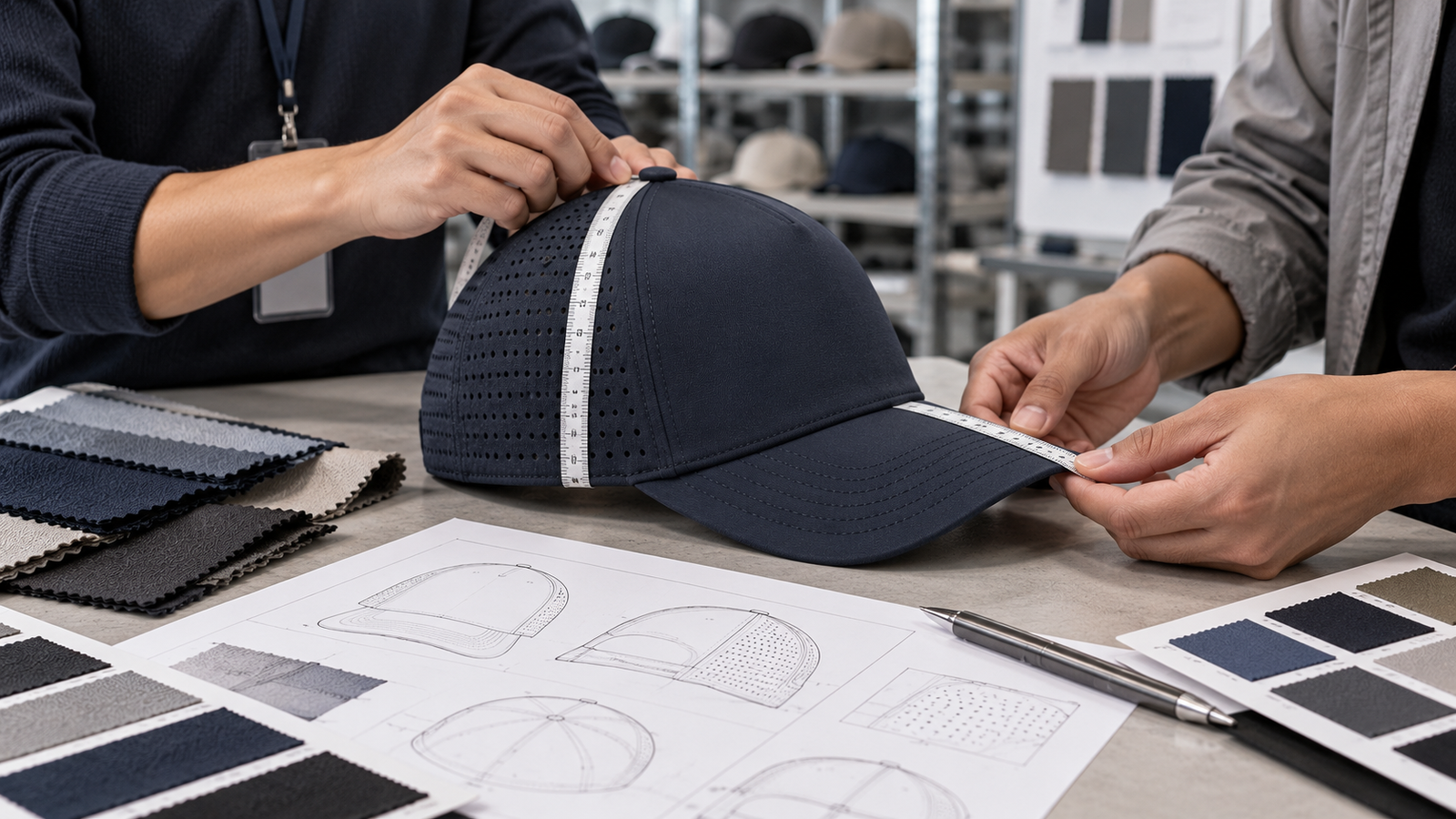
Build the fit around movement
Check the closure range on several head sizes and confirm that the adjustment does not press into the back of the head. Review the visor from front and side views for symmetry, edge finishing, and the approved curve. A slight difference between left and right can change the way the product sits on a golfer’s face.
Wear-test the visor while walking, bending, and turning the head. Record whether the visor shifts, whether the sweatband stays in place, and whether the closure remains comfortable. The wear test should be part of sample approval, not an informal comment after bulk production.
Logo placement and decoration
The front crown is often the main branding area, but its available height is limited. Measure the logo from the lower edge and centerline. Embroidery can add texture but may create a ridge against the forehead if the backing and density are not controlled. Printing or a woven label may give a flatter result on a lightweight visor. The correct method depends on fabric, logo size, and the intended retail position.
Golf-visor QC checklist
- Visor length, curve, and left-right symmetry match the approved sample.
- Sweatband width, seam, and attachment are comfortable and consistent.
- Closure adjusts across the intended head-size range.
- Logo position and decoration match the artwork proof.
- Fabric color and surface are consistent across the production lot.
- Brim edge and internal finishing have no loose threads or sharp points.
Planning a visor collection
Keep the base construction stable when adding colors. Approve the first sample, then compare each color for contrast, thread or ink behavior, and fabric shade. If a visor is paired with a five-panel or six-panel Performance Cap, record which details are shared and which are intentionally different.
For a quotation, send the artwork, visor reference, fabric preference, sweatband requirements, quantity by color, packaging, target market, and delivery date. JoinTop accepts projects from 100 pieces per style and color, subject to the final specification.
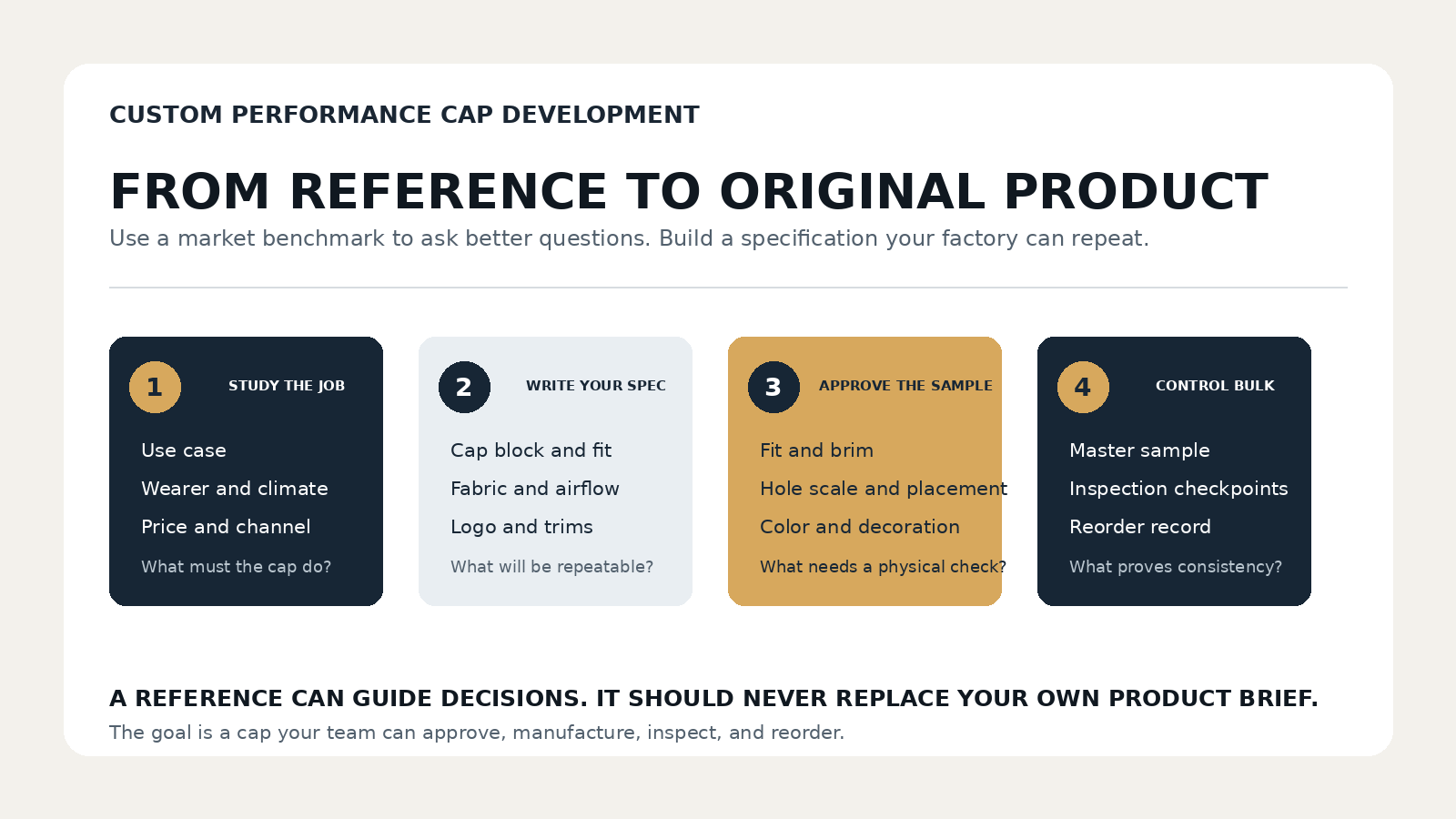
How to compare visor suppliers
Ask each supplier to quote the same visor length, crown fabric, sweatband, closure, logo size, packaging, and quantity. A quote for a basic promotional visor cannot be compared with a technical golf visor that uses a different sweatband and visor board. Write the assumptions next to the price.
Confirm whether the visor board is flexible or structured, how the edge is finished, and whether the curve is formed during sewing or later. These choices affect the profile and the risk of left-right variation. Ask how the factory checks the curve during inspection.
Wear testing before approval
A useful visor test includes walking, bending, turning the head, and wearing the product for a realistic period. Check whether the closure slips, whether the sweatband rolls, whether the visor blocks the intended field of view, and whether any seam creates pressure. Record the head-size range used in the test.
If the visor is part of a golf collection, compare it with the brand’s five-panel or six-panel Performance Cap. The visor should feel like the same brand, but it should not be forced to share a crown construction that it does not have. Use shared colors, logo rules, and packaging standards while allowing the fit block to remain product-specific.
Commercial planning for a visor launch
Decide whether the first order should test one color or several. More colorways increase the number of fabric and logo approvals. A focused first run can reveal whether the visor curve, sweatband, and closure are right before the brand invests in a larger range.
JoinTop accepts projects from 100 pieces per style and color, subject to the final specification. Ask the quotation to separate sample, visor construction, decoration, packaging, and freight assumptions. Confirm when the production clock starts: the date of artwork approval, sample approval, or order confirmation.
Production controls that protect the fit
During bulk inspection, measure visor length and curve on samples from multiple cartons. Check the sweatband attachment, closure range, logo centerline, and fabric shade. Keep a reference sample with the production file. If a fabric substitute is needed, approve the new sample before bulk cutting because the substitute may change the curve or hand feel.
Visor specification matrix
| Component | Specify before sampling | Check on the sample |
|---|---|---|
| Visor | Length, curve, board, edge finish | Symmetry and stability |
| Sweatband | Width, material, attachment | Comfort and roll resistance |
| Fermeture | Type, adjustment range, hardware | Fit on representative head sizes |
| Logo | Method, size, centerline | Readability and clean edges |
Why sample comments must be measurable
Comments such as “make the visor stronger” or “move the logo slightly” are difficult to execute. Replace them with a target curve, a logo distance from the lower edge, or a marked photograph. Measurable comments reduce the number of revisions and give the bulk team something to inspect.
Keep the old and new sample records together. When a brand approves a change, state which version replaces the earlier sample. This is especially important when a buyer has a designer, merchandiser, and factory contact all providing feedback.
Planning for seasonal reorders
Golf programs often return with new colors or tournament dates. Save the visor board, sweatband, closure, fabric, logo, packaging, and inspection reference after the first order. If a supplier proposes a substitute material, compare it against the approved sample before committing. A substitute can change the curve, sweatband comfort, or logo appearance even when the product photograph looks similar.
Use the reorder record to decide which elements can change safely and which must remain fixed. This gives the brand room to refresh the color story without losing the fit that customers already know.
Keeping the approval record usable
The approval record should be short enough for a production team to use and detailed enough for a buyer to defend. Include the product name, sample date, fabric or construction reference, artwork version, measurements, approved color, packaging instruction, and the person who approved the sample. Attach marked photographs for details that are difficult to describe in words.
When a change is requested, update the record instead of adding an untracked message. State what changed, why it changed, and whether the change affects cost, delivery, or the next sample. This gives the brand a clear trail from the first idea to the product that enters bulk production.
What a serious supplier conversation sounds like
A capable supplier should ask questions about use, fit, material, logo, quantity, and timing. It should identify a risk when a requested detail conflicts with the construction. That conversation is part of product development. The goal is a cap that the factory can make consistently and the brand can explain confidently to its own customers.
Send the complete brief before requesting the final quotation. JoinTop can then review the product as a complete program, recommend practical options, and prepare a sample against a specification rather than a loose reference image.
Questions buyers should settle before approval
Is a golf visor the same as a cap without a crown?
No. The sweatband, visor board, closure, fit range, and decoration area need their own specification.
Can the visor use the same logo as a Performance Cap?
Usually, but the physical size and decoration method may need adjustment for the smaller front area.
What should be checked before bulk production?
Wear the sample, measure the visor and sweatband, check logo placement, and document the approved curve and closure range.
Send those details before sampling so the factory can quote a visor that works on the course and in the brand’s wider headwear range.




 English
 German
 Spanish
 French
 Amharic
 Portuguese
 Italian
 Swedish
 Turkish
 Belarusian
 Danish