Developing custom hats for a brand involves much more than choosing a cap shape, adding a logo, and placing a production order. The real challenge is translating a design concept into a product that can be manufactured consistently, meet the intended performance requirements, and remain commercially viable at the target order quantity.
For brand owners, golf apparel companies, running brands, and private-label businesses, the most important decisions often happen before bulk production begins. Fabric selection, crown construction, logo placement, sample approval, and minimum order quantity (MOQ) all influence the final product.
A well-prepared custom hat project gives the manufacturer clear instructions and gives the buyer a reliable way to evaluate the finished product against the original requirements.
This guide explains how to develop custom hats with a logo, prepare a production-ready specification, understand MOQ and pricing, approve samples, and control quality before a bulk order ships. It also covers specific considerations for custom performance hats and golf caps, where comfort, ventilation, fit, and material performance matter as much as appearance.
1. Start With the Intended Use of the Hat
Before selecting materials or decoration methods, define where, how, and by whom the hat will be worn.
Two caps may look similar in a product photograph but require very different construction methods. A structured promotional baseball cap, for example, does not necessarily need the same fabric, sweatband, ventilation, or weight as a lightweight running cap.
Custom performance hats for running and outdoor activities
Performance caps are designed around functional requirements as well as appearance. Depending on the intended use, buyers may need to consider:
- Fabric weight and flexibility: The material should suit the intended fit, structure, and wearing conditions.
- Moisture management: Specify whether the fabric and sweatband need particular moisture-wicking or quick-drying performance.
- Ventilation: Determine whether the design requires mesh panels, laser perforations, or another ventilation solution.
- Fit and adjustment: Select an appropriate closure, crown shape, and adjustment range.
- Brim construction: Define the desired curvature, stiffness, shape retention, and overall profile.
- Visibility details: Reflective elements may be appropriate for certain running or outdoor products.
- Decoration compatibility: Logo placement and backing materials should work with the selected fabric and construction.
These features should be specified rather than assumed. A fabric described as lightweight, for example, does not automatically guarantee fast drying or effective moisture management.
For brands developing custom performance hats, it is useful to prioritize functional requirements before finalizing decorative details. This helps avoid selecting a material or construction that looks right but does not suit the intended use.
Custom golf caps
Golf caps often combine performance requirements with a more structured appearance. Buyers may prioritize a clean front panel, a comfortable sweatband, a stable brim, a suitable fit, and embroidery that maintains its appearance.
For a golf collection, consider how the cap will coordinate with the brand’s apparel, how the logo will appear from different angles, and whether the material and construction are appropriate for extended outdoor wear.
If the product requires specific sun-protection, water-repellent, or moisture-management claims, identify those requirements at the development stage and confirm what testing or supporting evidence is needed.
Custom baseball hats for lifestyle and retail collections
Lifestyle caps may place greater emphasis on silhouette, fabric texture, color, logo presentation, and the overall look of the finished product.
Decide whether the design calls for a structured or unstructured crown, a particular panel construction, a flat or curved brim, and a snapback, strapback, or other closure.
The objective is to define the product before production begins, rather than relying on a general reference photograph to communicate every detail.
2. Prepare a Production-Ready Hat Tech Pack
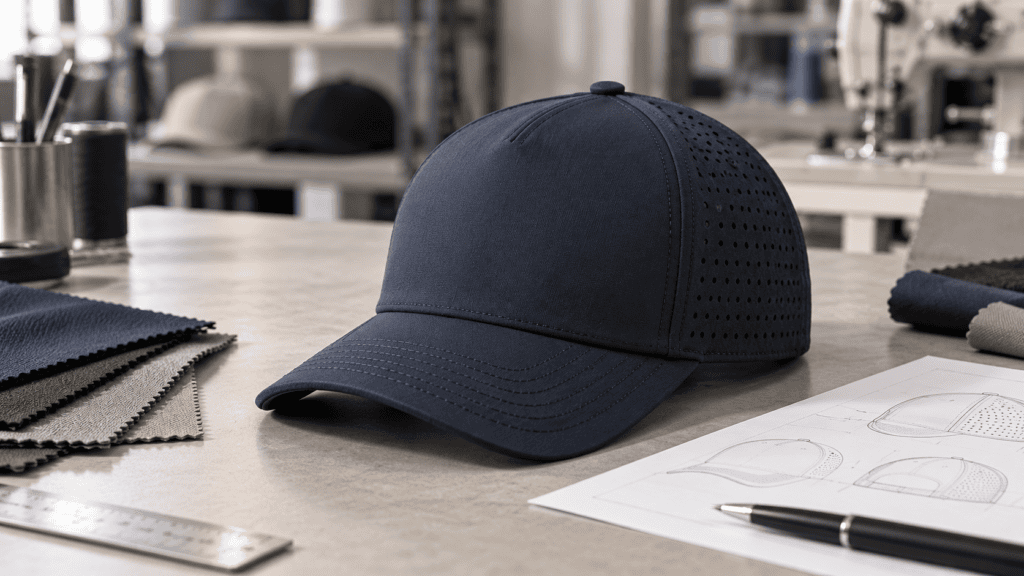
A hat tech pack is a technical specification document that communicates how the product should be made. It helps the brand and manufacturer work from the same requirements during sampling and bulk production.
A reference image is a useful starting point, but it rarely communicates all the information needed for accurate manufacturing.
For a custom hat manufacturer, the most useful tech pack contains the following information.
| Specification | What to include |
|---|---|
| Product overview | Hat category, intended use, style name, and reference images |
| Construction | Panel configuration, crown structure, brim shape, and closure |
| Measurements | Crown height, head circumference range, brim dimensions, and other agreed measurement points |
| Materials | Fabric composition, weight where relevant, color, finish, lining, and sweatband |
| Decoration | Logo artwork, dimensions, placement, technique, and color references |
| Sewing details | Stitching requirements, seam construction, reinforcement, and finishing |
| Accessories | Labels, adjusters, eyelets, trims, and other components |
| Emballage | Individual packaging, hangtags, carton requirements, and packing instructions |
| Quality requirements | Measurement tolerances, visual standards, approved samples, and inspection criteria |
Not every project needs a lengthy technical document. However, any specification that could change the product’s appearance, fit, function, or cost should be documented.
Measurements and fit specifications
Measurements deserve particular attention because small differences can affect how a hat looks and feels.
For example, a brand may have a specific crown height and brim curve that distinguish its product from other caps in the same category. A manufacturer needs measurable references for these details, not simply the instruction to make the cap look similar to a photograph.
Where possible, provide a measurement chart with clearly defined measurement points. Specify the acceptable tolerances for critical dimensions and agree on how those measurements will be checked.
For an existing product, a physical reference sample can help clarify construction and fit. For a new design, annotated drawings and agreed specifications provide a foundation for the first sample.
Logo artwork and placement
For custom hats with a logo, provide the original artwork in a suitable format, preferably a vector file such as AI, EPS, or SVG when available.
The specification should identify the logo’s dimensions, location, colors, and decoration method. If the design includes multiple logo placements, define each one separately.
This is especially important when the logo sits near a seam, a ventilation panel, or a curved section of the crown. The usable decoration area may be smaller than the flat artwork suggests.
A complete tech pack reduces avoidable questions, but it does not replace sample approval. The first physical sample remains an important opportunity to confirm how the design works in practice.

3. Select Materials for Appearance and Performance
Fabric selection affects the finished cap’s appearance, comfort, structure, durability, decoration options, and cost.
The right material depends on the product’s intended use. There is no single fabric that is automatically best for every custom hat.
| Material category | Potential advantages | Points to evaluate |
|---|---|---|
| Polyester and polyester blends | Commonly used for performance-oriented products; suitable options are available in different weights and finishes | Moisture management, hand feel, ventilation, color, and finish |
| Nylon and nylon blends | Can suit lightweight outdoor and performance applications | Fabric structure, flexibility, abrasion requirements, and finish |
| Cotton and cotton blends | Often selected for a familiar hand feel and lifestyle appearance | Weight, shrinkage, color consistency, and the desired crown structure |
| Mesh and open constructions | Can support ventilation when appropriately designed | Openness, comfort, stability, appearance, and placement |
| Recycled-content fabrics | May help brands meet defined material-sourcing objectives | Verified recycled content, documentation, availability, and cost |
These are general material categories, not guarantees of product performance. Actual results depend on the specific fabric, finish, construction, and manufacturing process.
For brands evaluating recycled materials, Textile Exchange’s Materials Market Report provides broader information on fiber production and recycled inputs. A material’s name alone, however, is not proof of its recycled content or environmental performance. Ask suppliers for documentation that supports any claims the brand intends to make.
Evaluate the fabric before committing to bulk production
When comparing fabric options, request swatches or samples and assess the properties relevant to your product:
- Weight and thickness
- Surface texture and hand feel
- Flexibility and recovery
- Color and finish
- Compatibility with embroidery, printing, or other decoration
- Suitability for the intended wearing conditions
- Availability for the planned order quantity
For performance caps, evaluate the complete construction rather than the outer fabric alone. The sweatband, lining, ventilation, and crown structure can all affect the wearing experience.
If the product will be marketed with technical claims, such as a specified level of UV protection or water repellency, establish the applicable test requirements before approving the material.
4. Choose the Right Logo Decoration Method
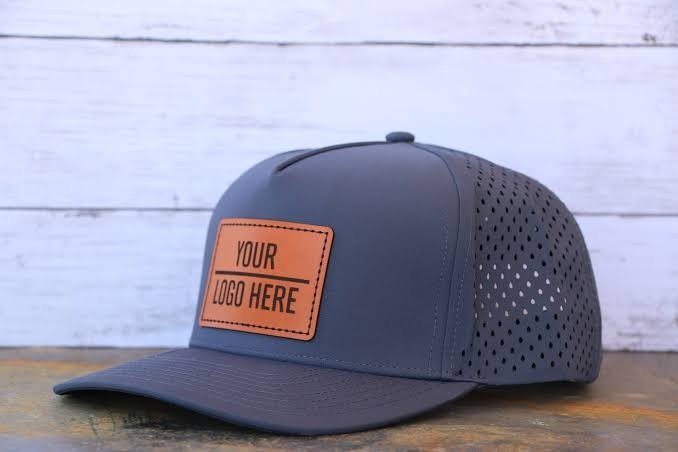
Logo decoration is one of the most visible parts of a custom hat. It also affects manufacturing complexity, cost, and the suitability of the selected fabric.
Embroidery
Embroidery is widely used for brand logos on baseball caps and golf caps. It can create a textured, dimensional finish, but the result depends on the artwork, stitch density, thread selection, fabric, and backing.
Very small lettering or intricate details may not reproduce exactly as they appear on a digital design. Review the embroidery size and detail level before approving the sample.
3D embroidery
Raised embroidery can create a more pronounced logo effect. It is often considered for structured front panels, but the panel construction, logo size, and artwork need to be compatible with the technique.
Not every logo is suitable for raised embroidery. Thin lines, very small elements, and complex details may require adjustments.
Woven patches and printed designs
Woven patches can accommodate certain detailed graphics, while printing or heat-transfer methods may suit specific artwork and material combinations.
The correct choice depends on the design, fabric, expected appearance, quantity, and required durability. Ask the manufacturer to confirm feasibility for the actual cap construction.
Decoration considerations for performance caps
Lightweight fabrics and ventilation features can create additional constraints. Logo backing, stitching, and placement should not be selected independently of the material.
For laser-perforated performance caps, define the logo’s location in relation to the perforated areas. Confirm the actual hole size, spacing, and pattern on a physical sample. A digital mockup may not accurately communicate the appearance of small perforations or how they interact with the fabric.
The goal is to make the logo look intentional while preserving the product’s required construction and function.

5. Understand Custom Hat MOQ and Pricing
Minimum order quantity is one of the first questions brands ask when sourcing custom hats. It also needs to be understood in the context of the specific product.
JoinTop’s stated starting MOQ is 100 pieces. The applicable MOQ for an individual project should be confirmed after the style, materials, colors, decoration, and custom components have been defined.
MOQ is not a universal figure across the hat manufacturing industry. It can vary according to the factory, production method, material availability, and degree of customization.
Why does MOQ vary between projects?
Several factors can affect the minimum order quantity:
Fabric sourcing. A readily available material may be easier to source in a small quantity than a specially developed fabric or a custom color.
Color assortment. Splitting an order across several colors may change the material requirements and production arrangements. Ask whether the quoted MOQ applies to the total order, each style, or each color.
Logo and decoration. Different decoration methods may involve different setup requirements and production considerations.
Custom components. Special closures, woven labels, trims, or other components may have their own minimum order requirements.
Construction complexity. A standard cap construction and a highly customized performance cap may involve different sourcing and production arrangements.
Before comparing quotations, confirm exactly how MOQ is calculated. Two suppliers quoting the same number of pieces may be quoting different product specifications or different assumptions about color splits and components.
What determines the unit price?
Order quantity matters, but it is not the only factor.
The main cost drivers may include:
- Fabric type, weight, finish, and sourcing requirements
- Cap construction and number of components
- Logo technique, dimensions, and number of placements
- Custom labels, trims, and closures
- Individual packaging and special packing requirements
- Sampling and development work
- Inspection, testing, and other agreed quality requirements
- Freight, duties, and other landed-cost considerations
When requesting a quotation, provide as much information as possible about the product and order. If some details are not finalized, identify them as open decisions so the manufacturer can explain which assumptions affect the price.
A useful quotation should make the product specification and commercial assumptions clear. Otherwise, a lower unit price may simply reflect a different material, decoration method, or level of customization.

6. Follow a Structured Custom Hat Sampling Process
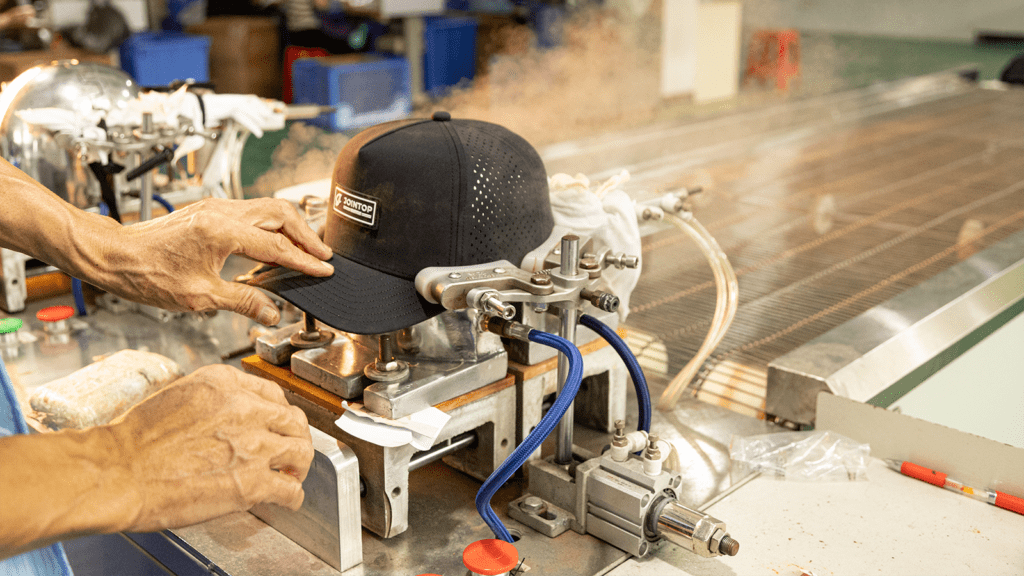
Sampling is where the brand and manufacturer check whether the proposed construction can deliver the intended product.
A sample should not be treated as a formality before bulk production. It is an opportunity to identify problems while changes are still manageable.
Step 1: Review the design and specifications
The brand supplies its artwork, reference images, preferred materials, measurements, quantity, and other available requirements.
The manufacturer reviews the information, identifies missing details, and confirms which aspects require further discussion.
If the brand does not have a complete tech pack, it should still provide enough information to establish the intended product. Design-development support can help clarify the remaining requirements.
Step 2: Develop the first sample
The first sample is used to evaluate the proposed construction, shape, fit, materials, and decoration.
For a performance cap, the review may also include ventilation placement, sweatband construction, adjustment range, and the appearance of the finished fabric.
The first sample may reveal that a particular detail needs adjustment. This is a normal part of product development, not a reason to approve the design without further review.
Step 3: Record changes clearly
When reviewing the sample, provide specific feedback rather than general comments such as “make the crown better” or “adjust the logo.”
Useful feedback identifies the affected component, the observed issue, and the required change.
For example, a buyer might specify that the front logo needs to move a defined distance from a seam, subject to the agreed measurement reference. This is easier to implement and verify than a subjective instruction.
Record the approved changes in the specification document so the latest version is clear to everyone involved.
Step 4: Approve the production reference
Before bulk production, confirm the sample and the accompanying specifications that will govern the order.
This may include the approved material, color, logo artwork, construction, measurements, labels, and packaging.
If a change is requested after approval, clarify whether it affects cost, sourcing, sample requirements, or the production schedule.
A clearly approved reference reduces the risk of the bulk order being made to an outdated version of the design.
For more information on product development, see JoinTop’s custom hat development process.
7. Establish Quality Control Before Bulk Production
Quality control is most effective when requirements are defined before manufacturing begins.
If the buyer and manufacturer only discuss quality after the goods are finished, they may disagree about whether a variation is acceptable.
A practical inspection plan should identify critical product features, measurement requirements, visual standards, and how defects will be recorded and handled.
Check materials and components
Before production, confirm that the materials and components match the approved specifications.
Depending on the project, this may include fabric type and color, closures, labels, trims, sweatbands, and logo materials.
Substitutions should be reviewed and approved rather than introduced without the buyer’s agreement.
Check construction during production
Relevant checks may include:
- Crown shape and symmetry
- Brim shape and consistency
- Stitching quality and seam construction
- Logo position, dimensions, and appearance
- Closure function and adjustment
- Label placement and finishing
- Perforation consistency on laser-perforated designs
- Measurements against the approved specification
The precise checks should reflect the product’s construction and the brand’s requirements. A simple lifestyle cap and a technical performance cap may need different inspection priorities.
Agree on final inspection criteria
A final inspection should use criteria agreed upon before the order is produced.
For suitable projects, the buyer and supplier may agree to use a sampling plan based on an applicable standard, such as ISO 2859-1:2026, which covers acceptance sampling procedures for inspection by attributes.
The appropriate sampling plan, inspection level, acceptance criteria, and defect classifications should be agreed for the order. Referring to a standard alone does not mean a factory or product is certified, and sampling inspection does not guarantee that every individual item is defect-free.
For performance-related claims, distinguish visual inspection from technical testing. A cap may look well made without having demonstrated a specified level of moisture management, UV protection, or water repellency. Where such claims matter, identify the relevant testing requirements and evidence before production.

8. Prepare for Bulk Production and Delivery
Once the sample and specifications are approved, the next task is to ensure that the production plan matches the commercial order.
Before confirming the order, review the following:
- Final style and color breakdown
- Approved fabric and component specifications
- Logo artwork and decoration requirements
- Quantity and MOQ basis
- Approved sample and specification version
- Packaging and labeling instructions
- Quality inspection criteria
- Required delivery date and agreed production schedule
- Shipping arrangements and relevant documentation
For imported products, buyers should also verify the applicable customs, origin-marking, labeling, and product-claim requirements for the exact product and destination market.
In the United States, for example, the Federal Trade Commission’s Textile Products Identification Act contains a specific exemption for headwear from its definition of covered textile fiber products. This is not a blanket exemption from all other applicable requirements, so brands should confirm the rules relevant to their product and sales channel.
Manufacturing location and production planning
Manufacturing location can influence sourcing, logistics, lead-time planning, and landed cost. However, the country of production alone does not determine whether a supplier is suitable for a particular project.
JoinTop operates factories in China, Vietnam, and Bangladesh. For brands evaluating production options, the appropriate arrangement should be discussed against the actual product specification, material availability, production capacity, delivery requirements, and sourcing considerations.
Confirm project-specific availability and the agreed production location rather than assuming that every style or component can be produced identically at every facility.

9. Common Mistakes to Avoid When Ordering Custom Hats
Even a promising design can encounter avoidable problems if key decisions are left unresolved.
Starting with the logo instead of the product requirements. A logo is important, but the intended use, construction, fabric, and fit should be established first.
Providing only a reference photograph. Images communicate appearance but rarely provide all the measurements, material details, and construction information needed for manufacturing.
Assuming MOQ means the same thing at every factory. Always clarify whether the minimum applies to the total order, each style, each color, or another defined unit.
Approving a sample without documenting changes. Verbal feedback can be interpreted differently. Record the agreed modifications and keep the latest specification version accessible.
Changing materials after sample approval. A fabric substitution can affect appearance, fit, decoration, and performance. Review the change before authorizing production.
Making technical claims without supporting evidence. Terms such as waterproof, UV-protective, or moisture-wicking should reflect the product’s actual properties and the evidence available to support the claim.
Waiting until final inspection to define quality. Establish measurable requirements and defect criteria before bulk production begins.
The common thread is straightforward: clear specifications and documented decisions make custom hat production easier to manage.
10. How to Choose a Custom Hat Manufacturer
A suitable manufacturing partner should do more than provide a quotation. The supplier should be able to understand the product, identify technical questions, communicate manufacturing constraints, and work toward a repeatable result.
When evaluating a custom hat manufacturer, ask:
- Can the manufacturer explain the construction and material options relevant to the product?
- Can it review artwork, measurements, and other technical requirements before sampling?
- Is the MOQ basis clear for the proposed style, colors, and components?
- Can the sample be reviewed against documented specifications?
- Are quality checks and acceptance criteria agreed before bulk production?
- Can the manufacturer explain the production schedule and communicate potential risks?
- Can it provide appropriate documentation for materials and any technical claims?
- Can it support the brand’s intended production and sourcing requirements as the program develops?
For brands looking for a manufacturing partner, JoinTop supports custom hat development and production for business customers. Its facilities in China, Vietnam, and Bangladesh provide options to discuss when planning a project, subject to the specific product and production requirements.
You can also review JoinTop’s custom hats for brands, including design, sampling, and production.
Frequently Asked Questions About Custom Hat Production
What is the MOQ for custom hats?
JoinTop’s stated starting MOQ is 100 pieces. The applicable MOQ for a specific project depends on the style, materials, color assortment, decoration, and custom components. Confirm whether the quantity applies to each style, color, or design before placing an order.
What information should I provide to a custom hat manufacturer?
Provide your reference images or design artwork, hat type, intended use, material preferences, logo requirements, target quantity, color assortment, and delivery requirements. A tech pack with measurements and construction details is particularly helpful.
Can I order custom performance hats with my own logo?
Yes. Logo placement and decoration can be developed around the selected cap construction. Embroidery, raised embroidery, patches, and other methods may be suitable depending on the artwork, fabric, and design. Confirm the final appearance and compatibility during sampling.
Do I need a tech pack before requesting a quotation?
A complete tech pack is helpful but not always necessary for an initial discussion. If your design is still being developed, provide clear references and the requirements you already know. The remaining specifications can be clarified before the quotation and sample are finalized.
How can I reduce differences between the approved sample and bulk production?
Approve the production reference and document the critical specifications before manufacturing begins. Keep the approved artwork, materials, measurements, construction details, and inspection criteria aligned. Any proposed substitutions or changes should be reviewed before implementation.
How long does custom hat production take?
The schedule depends on the product specification, material availability, sampling and approval process, order quantity, and production arrangements. Request separate estimates for sampling and bulk production, and confirm the delivery plan after the project scope is defined.
Ready to Develop Your Custom Hat Project?
A successful custom hat program begins with clear requirements, realistic MOQ planning, a properly reviewed sample, and agreed quality standards.
Whether you are developing custom baseball hats, golf caps, or performance caps for your brand, the next step is to define the product and identify the details that must be confirmed before bulk production.
JoinTop works with business customers on custom hat development and manufacturing.
Contact JoinTop with your hat design or reference images, target order quantity, and key product requirements to discuss the next steps for your project.

 English
 German
 Spanish
 French
 Amharic
 Portuguese
 Italian
 Swedish
 Turkish
 Belarusian
 Danish