
Premium custom hats are built through controlled details. A higher price does not automatically create a premium product; buyers notice whether the cap feels balanced, whether the logo is clean, whether the internal finishing is tidy, and whether the same standard can be produced in more than one color.
Define the premium brief before selecting materials
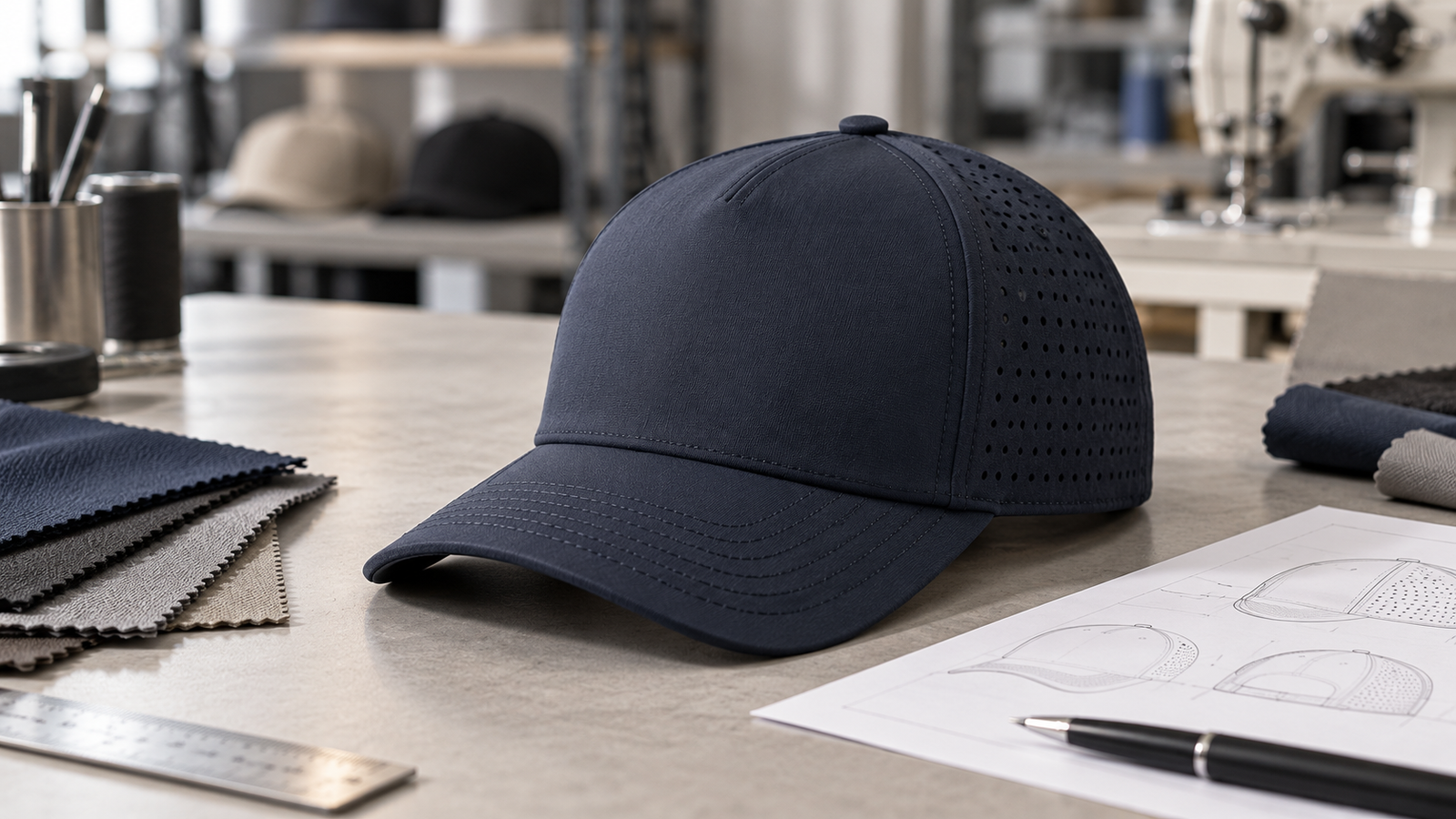
Write down the target wearer, use case, fit, crown height, visor profile, sweatband, closure, logo treatment, and acceptable tolerances. A premium Performance Cap may prioritize light weight, airflow, and a technical hand feel. A lifestyle cap may need a softer surface and a more relaxed profile. These are different premium positions and should not share an undefined specification.
Choose fabric by performance and appearance
Fabric affects shape retention, color, hand feel, breathability, and the way decoration sits on the crown. Cotton, canvas, nylon, and blended fabrics each create different results. Ask to see the material on the actual five-panel or six-panel cap because a swatch cannot show seam behavior or crown balance.
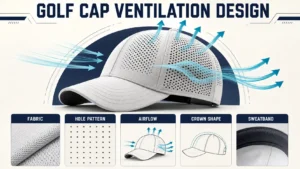
When the program includes laser-perforated panels, confirm the location and density of the perforation before approving the logo area. The decoration should support the fabric rather than hide or distort the product’s intended construction.
Control the details visible at retail
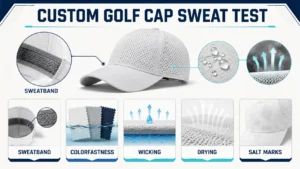
Inspect front panel symmetry, seam alignment, visor edge, eyelet finish, sweatband stitching, closure attachment, internal labels, and loose-thread control. These details are easy for a buyer to overlook during a quick review and easy for a customer to notice in hand.
Make the logo standard measurable
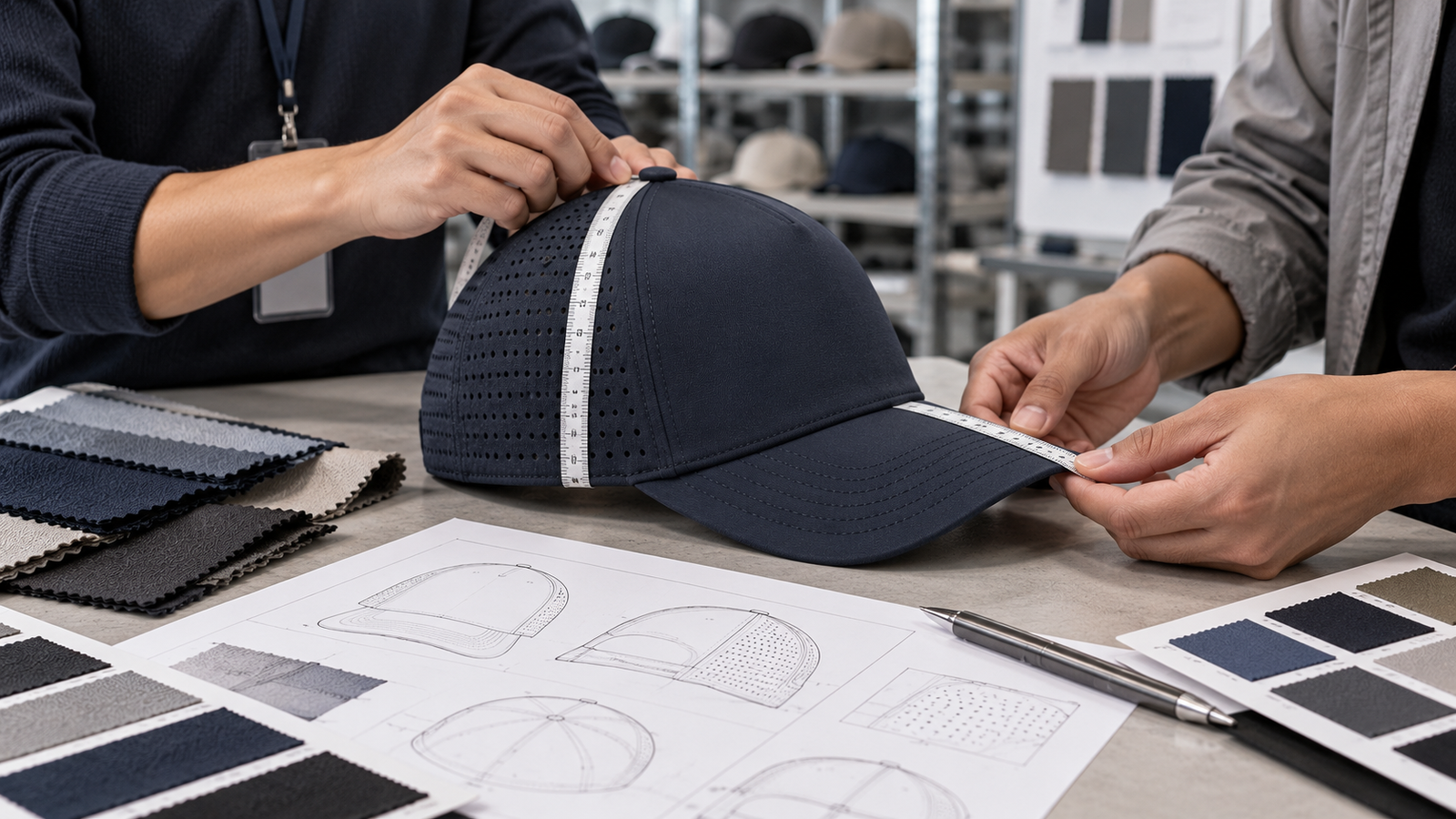
Record logo width, height, placement from the seam or visor, thread or ink references, backing, and acceptable tolerance. For a five-panel cap, keep important artwork clear of the front seam area. For a six-panel cap, check the center seam and crown curvature before approving the final size.
Sample approval protects the premium position
Compare the sample against the artwork and technical notes under normal light. Wear-test the fit, check the hand feel, and examine the inside as carefully as the front. If changes are needed, describe them with a measurement or a marked photograph rather than a general request to “make it more premium.”
Make repeatability part of the premium promise
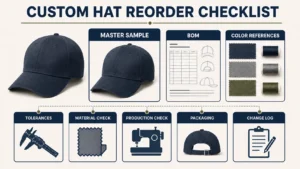
Keep one approved sample and a written specification for every colorway. When a reorder or new color is developed, compare the new sample against that reference. A premium collection becomes easier to protect when quality is defined in observable terms.
Share the intended market, structure, artwork, quantity by color, packaging, and delivery date with JoinTop. The factory can then recommend a material and decoration route that is attractive, manufacturable, and repeatable.
Questions buyers should settle before approval
What should be included in the first quote?
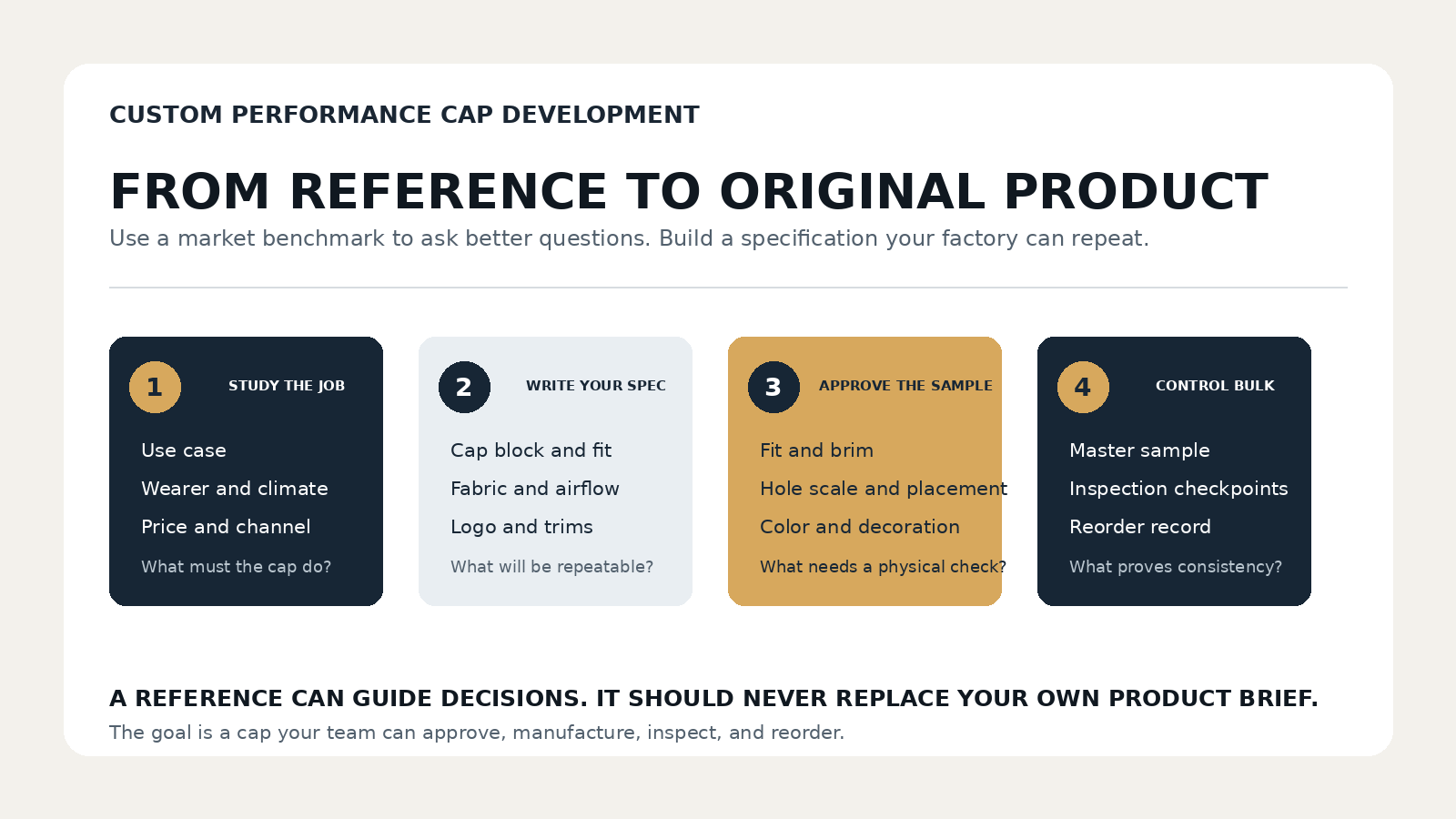
Send the company or website, target wearer, cap structure, material reference, artwork, decoration method, quantity by style and color, packaging needs, target market, and required delivery date. Those details let a factory separate product assumptions from freight and packaging assumptions.
Can JoinTop support a small first production run?
JoinTop accepts projects from 100 pieces per style and color, subject to the final specification. The exact quotation still depends on the cap construction, material, decoration, packaging, and quantity.
How should the approved sample be used?
Keep the approved sample and its measurement notes as the reference for bulk inspection and future reorders. A photograph alone does not record crown balance, hand feel, or the exact logo position.
Send the complete brief before sampling so the production team can identify risks early and recommend a cap that is practical to repeat.


 English
 German
 Spanish
 French
 Amharic
 Portuguese
 Italian
 Swedish
 Turkish
 Belarusian
 Danish