Quick answer: Embroidery is best for durable, professional logos with clean lines. Patches work best when you need detail, texture, or special materials like leather or rubber. Printing is best for colorful graphics, gradients, and tight budgets. The right choice depends on your artwork, hat style, and how the hats will be used.
A great hat can sit on a retail shelf for months. The wrong logo method can make it sit there forever. The right one? It often sells before the customer finishes their coffee.
If you are comparing embroidery vs patch vs printing on hats, you already know the decoration method is not a small detail. It changes how the hat feels, how long the logo lasts, and how people perceive your brand. This guide is for brand owners, product managers, and sourcing teams who want a clear, practical way to choose a custom hat decoration method.
Here is what we will cover:
- The three main custom hat logo methods
- How each method looks, lasts, and costs
- Which hat styles work best with each method
- A side-by-side comparison table
- A simple three-step decision process
Direct Embroidery: The Durable Classic
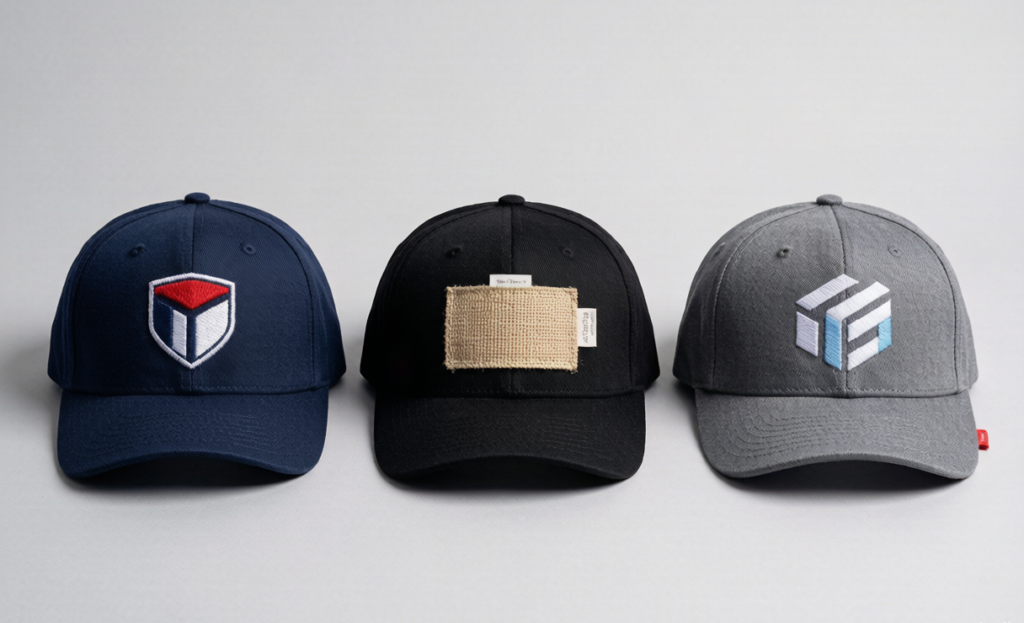
Embroidery is the most common way to put a logo on a hat, and brands keep coming back to it for good reason. Thread is stitched directly into the fabric, so the logo becomes part of the hat. It does not peel, crack, or fade the way some printed designs can.
Flat Embroidery
Flat embroidery sits close to the fabric surface. It works well for detailed logos, small text, and side placements. If your artwork has clean lines and a few solid colors, this is usually the safest and most cost-effective embroidery choice.
3D Puff Embroidery
3D puff embroidery uses a foam underlay to lift the stitches off the hat. It creates a bold, raised look that works great for simple logos, large initials, or athletic styles like snapbacks and trucker hats.
Where Embroidery Falls Short
Embroidery does not handle gradients or very fine details well. Thread is thick, so letters smaller than 4–5 mm can lose definition. It also costs more than basic printing because your artwork must be digitized into a stitch file before production starts.
For brands that want a premium, durable, professional look, embroidery is usually the starting point.
Patches: Texture, Detail, and Flexibility
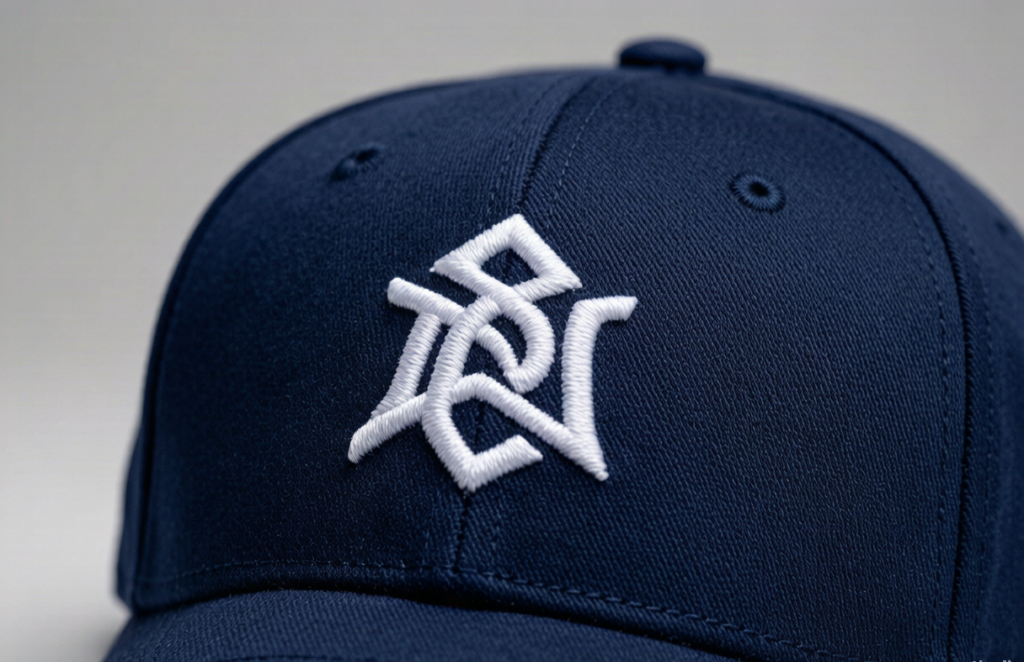
Patches add texture and depth that direct embroidery cannot match. They are made separately and then sewn, heat-sealed, or stitched onto the hat. That separation gives you more flexibility with materials and detail.
Woven Patches
Woven patches use thin threads woven together on a loom. They can hold tiny text, fine lines, and complex artwork without the bulk of embroidery. They have a smooth, retro look that works well for sportswear and lifestyle brands.
Leather Patch Hats
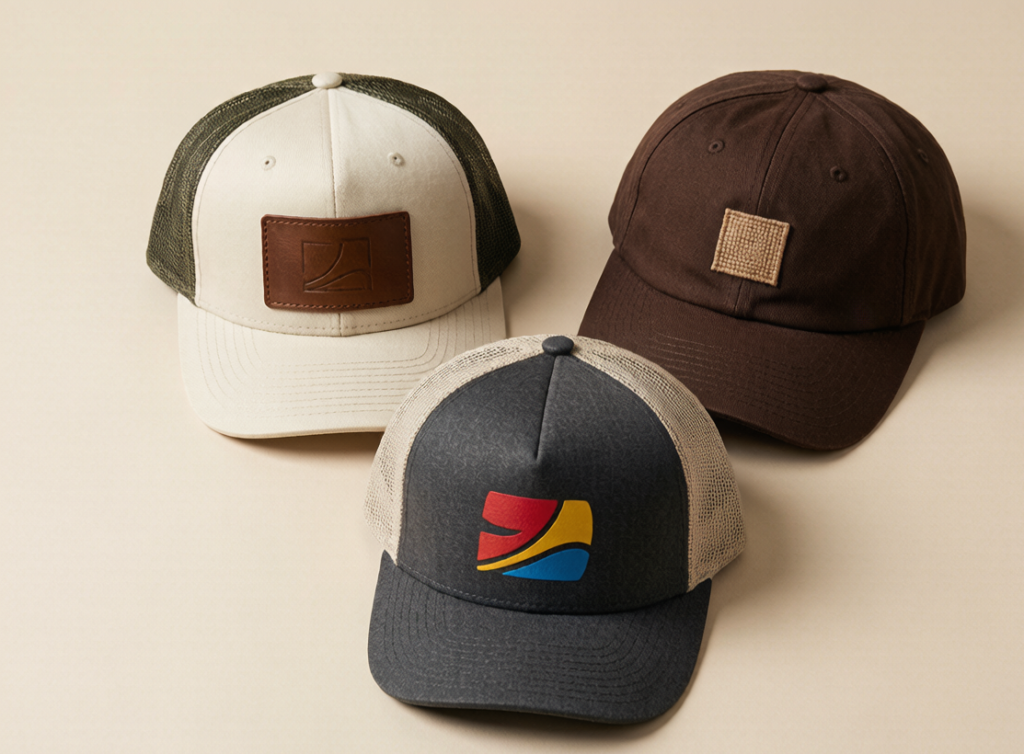
Leather patch hats use genuine or faux leather for a rugged, heritage feel. They pair beautifully with canvas, denim, or outdoor styles. The logo is usually laser-etched or debossed into the surface.
PVC Patches
PVC patches, also called rubber patches, are waterproof, flexible, and nearly indestructible. They are popular with tactical, fishing, and action-sports brands because they handle mud, sun, and salt without complaint.
Patches can also be moved between different hat styles, which is helpful if you want one logo to work across a whole product line. The trade-off is that patches add a step in production, so they can raise unit cost and lead time slightly.
Printing: Color, Detail, and Speed
Sometimes thread is the wrong tool. If your logo has gradients, photographs, or many colors, printing is often the better choice.
Screen Printing
Screen printing pushes ink through a mesh screen onto the hat. It is cost-effective for large orders and bold, simple designs. It works best on structured hats with flat front panels, like foam-front trucker hats.
DTF Hat Printing
DTF hat printing, also called heat transfer, prints the design onto a film and then presses it onto the hat with heat. This method handles complex artwork, full color, and small runs without the setup cost of screens.
Screen printed hats and DTF hats give you freedom with color and detail, but they can feel less premium than embroidery. Prints can also wear faster over time, especially on hats that are washed often or flexed repeatedly.
Match the Method to the Hat Style
Your hat style limits which decoration methods will look good.
Structured hats with firm front panels handle embroidery, patches, and printing well. The stable surface keeps the design clean. Unstructured hats, like soft dad hats, are better suited to flat embroidery or small patches because the fabric moves during production.
Panel count matters too. Six-panel caps have a seam down the center of the front, which can interrupt a printed design. For those, embroidery or patches are usually the safer choice. Five-panel hats, especially trucker styles, offer one large smooth panel that is ideal for printing or larger patches.
You can read more about how hat construction affects quality in our guide to premium quality cap construction details. If durability is your top concern, our breakdown of the best durable materials for custom hats will help too.
Embroidery Vs Patch Vs Printing: Side-by-Side Comparison
| Method | Lo mejor para | Look & Feel | Durabilidad | Cost |
|---|---|---|---|---|
| Flat embroidery | Clean logos, small text, classic brands | Textured, professional | Excellent | Medio |
| 3D puff embroidery | Bold logos, athletic styles, snapbacks | Raised, tactile | Excellent | Medium-high |
| Woven patches | Fine detail, retro artwork, small text | Smooth, badge-like | Very good | Medium-high |
| Leather patches | Outdoor, heritage, lifestyle brands | Rugged, premium | Very good | Higher |
| PVC/rubber patches | Tactical, sport, waterproof needs | Modern, technical | Excellent | Medium-high |
| Screen printing | Bold graphics, large orders, trucker hats | Flat, vibrant | Good | Lower |
| Heat transfer/DTF | Full color, gradients, small runs | Soft, detailed | Good | Medio |
How to Choose the Right Logo Method in Three Steps
- Look at your artwork. Does it have small text, gradients, or many colors? If yes, lean toward patches or printing. Is it simple, bold, and logo-focused? Embroidery is probably the answer.
- Match the method to the hat. A soft dad hat and a foam-front trucker hat do not need the same decoration. Consider structure, panels, and fabric.
- Think about use and lifespan. A hat worn daily on a job site needs a tougher method than a one-time event giveaway.
What to Send Your Factory
Once you have picked a direction, send your supplier these items to avoid delays:
- Vector artwork in AI, EPS, or PDF format
- Pantone thread or ink colors, or a physical color reference
- The exact placement and maximum logo size
- A sample hat or a photo of the target style
- The expected order quantity and timeline
Groups like Textile Exchange track material and process transparency across the supply chain. Picking the right decoration method is one more way to keep your product story consistent.
At JoinTop, we help brands work through this exact decision every week. With factories in China, Vietnam, and Bangladesh, we can sample embroidery, woven patches, leather patches, PVC patches, and screen printing side by side so you can compare the real look and feel before placing a full order. Seeing a physical sample beats staring at a computer screen every time.
Preguntas frecuentes
Is embroidery or printing better for custom hats? Embroidery is better for durability and a premium look. Printing is better for colorful, detailed, or graphic designs. The best choice depends on your artwork and how the hats will be used.
Can you print on beanies or knit hats? Printing on knit fabric is tricky because the surface is textured and stretchy. For beanies, embroidery or woven patches usually give a cleaner result.
What is the most durable logo method for hats? Direct embroidery and PVC or rubber patches are usually the most durable. They hold up well to washing, sunlight, and rough use.
Which method is best for small text? Woven patches are often the best choice for very small text because they can hold finer detail than direct embroidery.
Are patches better than direct embroidery? Not always. Patches are more flexible for detail and special materials. Direct embroidery is faster, simpler, and often more cost-effective for clean logos.
Final Thought
The best logo method is not the trendiest one. It is the method that makes your artwork look right, fits your hat style, and survives the way your customers will wear it. Match the method to the message, and your hats will do the selling for you.

 English
  German
  Spanish
  French
  Amharic
  Portuguese
  Italian
  Swedish
  Turkish
  Belarusian
  Danish