Most brands think a “performance hat” is just better fabric and a logo.
It’s not.
If the hat traps heat, loses structure, or feels stiff after one round of golf, customers won’t complain. They just won’t reorder.
That’s why serious brands don’t just look for a supplier.
They look for a performance hat manufacturer who understands product engineering.
Quick Answer
Start with the end use (golf, training, lifestyle). Choose breathable, moisture-wicking performance fabrics. Decide on structured or stretch construction. Test decoration durability. Build a detailed tech pack. Sample more than once. Then scale with a performance hat manufacturer who controls fabric sourcing, quality standards, and multi-country production capacity.
That’s the short version.
Now let’s break down what actually separates average caps from premium performance headwear.
1. Start With Function — Not the Logo
Too many brands design from the logo down.
Better brands design from performance up.
Ask yourself:
- Is this built for golf in 95°F heat?
- Does it need stretch recovery?
- Should the crown stay structured after heavy sweat?
- Is this positioned as premium athletic or lifestyle casual?
The U.S. athletic accessories market continues to grow, as shown in Statista’s sports apparel market analysis. Performance expectations are higher than ever.
Performance hats are functional gear. Decoration comes second.
Brands exploring structured OEM development can review how experienced factories like JoinTop’s custom hat manufacturing services approach product engineering and scalable production.

2. Fabric Is the Foundation
In today’s U.S. market, “performance fabric” actually means something.
Consumers expect:
- Moisture wicking
- Fast drying
- Lightweight comfort
- Breathability
- Shape retention
Most premium custom performance hats rely on polyester–spandex blends and engineered synthetics.
According to Textile Exchange, synthetic performance fibers dominate modern sportswear due to durability and stretch recovery advantages.
Common materials include:
- Polyester–spandex blends
- Laser cut ventilation panels
- Bonded mesh
- UV-treated technical fabrics
Cotton works for lifestyle caps. It rarely works for heat and sweat.
Experienced performance hat manufacturers carefully manage fabric sourcing to maintain stretch consistency and color stability at scale.

3. Structure Is Why Premium Hats Feel Different
Pick up a high-end custom golf hat and squeeze the crown.
It holds.
That’s engineering.
Golf participation growth reported by the National Golf Foundation continues to drive demand for structured performance headwear in the U.S. market.
Premium structured performance hats typically include:
- Reinforced brim core
- Structured front panels
- Tight stitch density
- Balanced visor curvature
- Elastic sweatband recovery
As brands scale from 1,000 to 20,000 units, these details either stay consistent — or they don’t.
Many global manufacturers operate across China, Vietnam, and Bangladesh to balance capacity flexibility, technical specialization, and centralized quality control. Manufacturers such as ÚneteTop follow this multi-country production model to support growing brands without compromising consistency.
Infrastructure matters when you grow.

4. Decoration Has to Survive Sweat
Performance headwear lives in heat.
Decoration must handle stress.
Premium options include:
- 3D embroidery
- Silicone heat transfers
- TPU patches
- Reflective athletic detailing
- Laser-etched logos
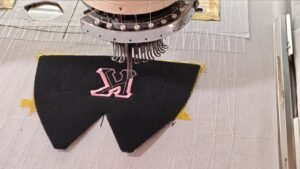
Stretch fabric and embroidery don’t always cooperate. If production tension isn’t calibrated correctly, puckering appears.
For brands new to OEM production, understanding the manufacturing model can help clarify expectations. A simple explanation of OEM production is available via Investopedia’s OEM overview.
A capable OEM hat manufacturer solves decoration issues during sampling — not after bulk production.

5. Let’s Talk About Cost
Hat manufacturing cost depends on:
- Fabric complexity
- Decoration type
- MOQ
- Sampling rounds
- Production region
Industry-level cost structures are outlined in IBISWorld’s apparel manufacturing overview.
For scaling brands, the key question isn’t “What’s the cheapest option?”
It’s:
“Who can produce this consistently at 10,000 units without quality drift?”
That’s when working with a structured performance hat factory becomes a strategic decision.
Brands researching long-term manufacturing partners can explore additional industry insights on the JoinTop blog or connect directly through the official contact page to discuss development timelines and MOQ strategy.
6. What’s Selling in the U.S. Right Now?
The strongest categories include:
- Structured custom golf hats
- Stretch-fit performance caps
- Breathable performance caps with laser ventilation
- Minimalist private label performance hats
The market trend is clear: clean design combined with technical performance.
Engineered product outperforms decorative merchandise.
Performance hats aren’t merch.
They’re engineered product.
Brands that treat them that way — from fabric selection to manufacturing partner — build stronger margins, stronger customer loyalty, and fewer production surprises.
The right performance hat manufacturer doesn’t just make hats.
They help brands scale with control.




 Spanish
  English
  German
  French
  Amharic
  Portuguese
  Italian
  Swedish
  Turkish
  Belarusian
  Danish