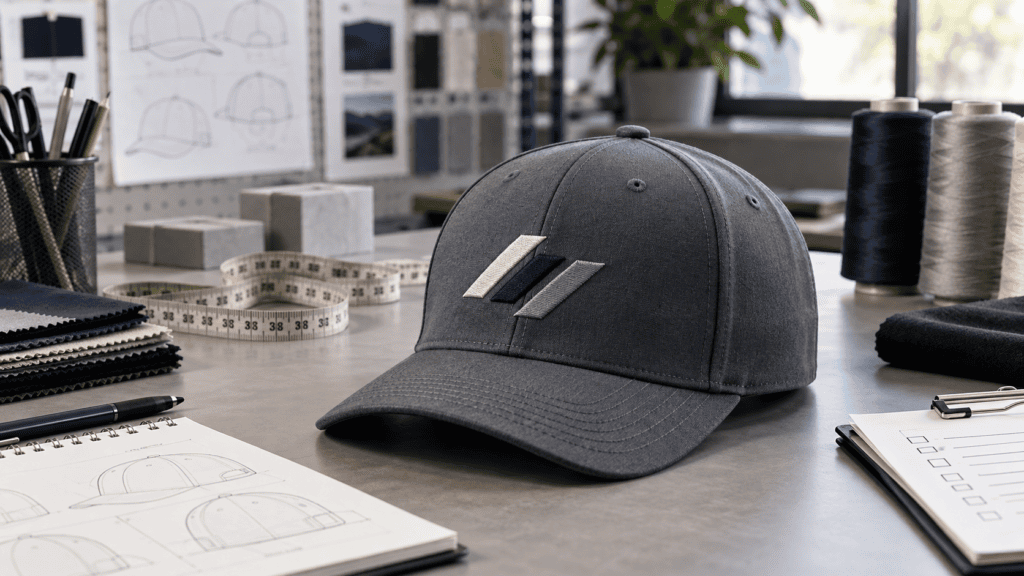
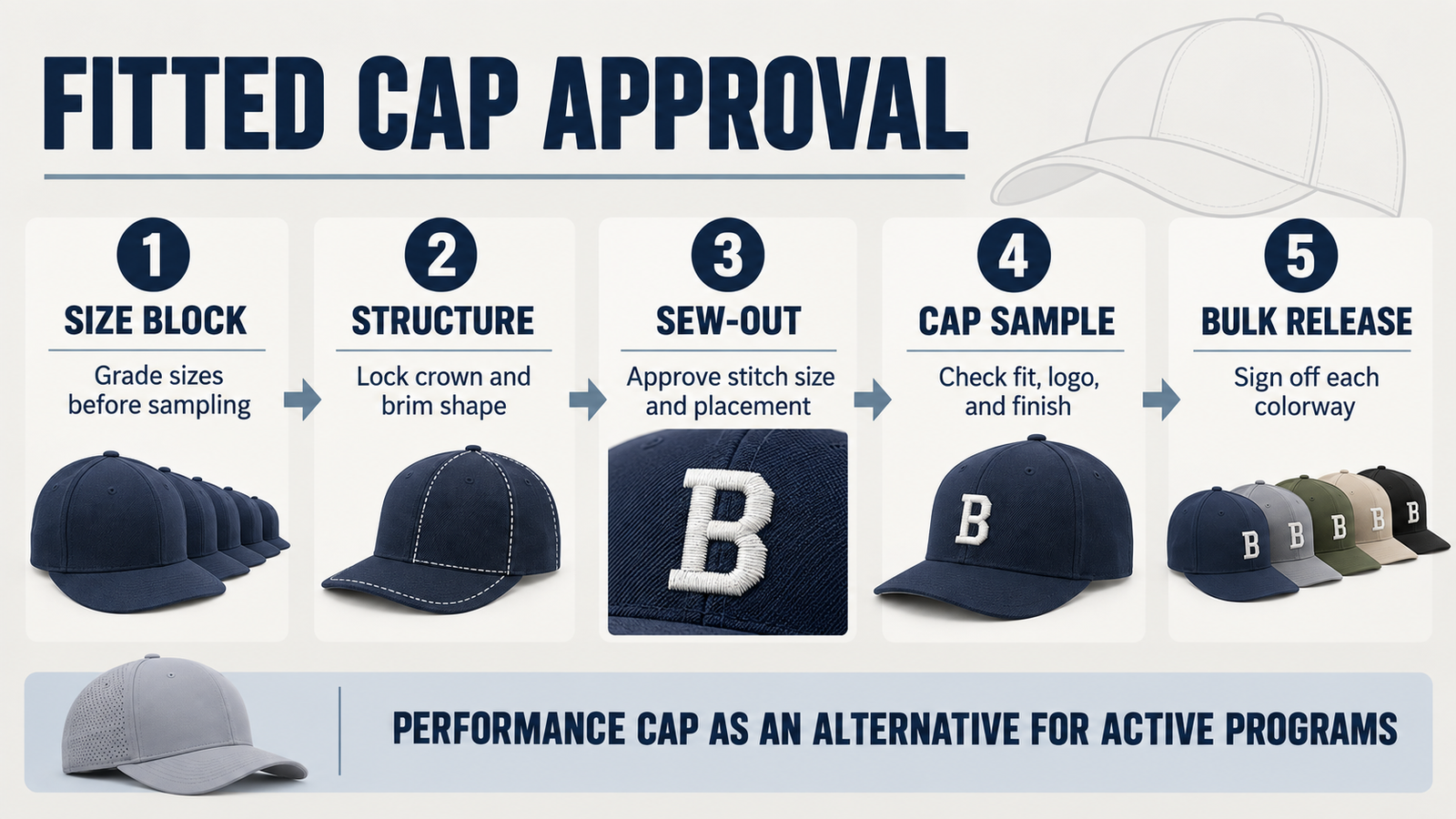
Custom fitted baseball caps work when the size block, crown shape, brim, and embroidery are approved as one product system. A brand should lock the size range and graded pattern first, then review the structure, logo placement, sew-out, and complete cap sample before releasing each colorway. This guide explains the buying decisions behind a fitted-cap program and when a Performance Cap should be developed alongside it.
For a brand, a fitted cap is not simply an adjustable cap with the closure removed. Each size has to sit correctly, the crown has to keep its intended shape, and the front panel has to give the embroidery a stable area. A good-looking sample in one size is not proof that the full size run is ready for production.
That is why the practical question is not only “Can a factory make custom fitted baseball caps?” It is “What evidence should a factory and a buyer approve before the order is released?” The answer includes a size block, a construction brief, a logo file, a sew-out, a finished cap sample, and a colorway-by-colorway approval record.
1. Decide whether a fitted cap solves the buyer problem
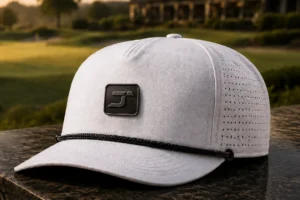
Start with the use case, not the decoration method. A fitted cap can make sense for a structured collection that needs a closed back and size-specific fit. An adjustable cap may be easier when a program needs a wider fit range with fewer size SKUs. A laser-perforated Performance Cap is a useful direction to evaluate when the collection is built around active, golf, running, or outdoor use and the brief calls for light materials and airflow details.
| Program choice | Useful when | Procurement watch-out | Performance Cap relationship |
|---|---|---|---|
| Fitted baseball cap | The silhouette and closed-back fit are central to the collection | More size blocks, size ratios, and fit approvals to manage | Keep it as the style-specific option; do not describe it as a performance model without evidence |
| Adjustable cap | The buyer needs one style to cover a wider fit range | Closure, rear-panel appearance, and adjustment comfort become key checks | Can sit beside a Performance Cap for lifestyle or team programs |
| Tapa de rendimiento | The brief prioritizes active-use styling, airflow details, light materials, or a sport-led range | Confirm the exact fabric, perforation layout, logo area, and claims before sampling | JoinTop’s Performance Caps page is the correct starting point for a separate product review |
If the buyer is building a mixed collection, developing both products can be sensible. Keep the specifications separate: a fitted cap needs size grading and a closed-back approval; a Performance Cap needs its own panel, perforation, fabric, and logo review. Combining the two descriptions too early creates a product brief that is difficult to sample and harder to reorder.
2. Build a size block and graded specification
The size block is the foundation of a fitted-cap program. It should come from the brand’s target market, existing approved headwear, or a clearly documented measurement plan—not from a guess based on a single sample. Ask the factory to confirm how the pattern changes between sizes and which measurements remain constant.
Use a specification matrix like this before requesting a sample:
| Specification | Buyer input | Sample check | Release evidence |
|---|---|---|---|
| Size range and labels | Target sizes, market, and label format | Measure the sweatband and check the label against the brief | Approved size chart and label artwork |
| Crown profile | Reference image or approved cap block | Check crown depth, front-panel angle, and side balance | Signed profile reference or annotated sample |
| Brim | Curved or another defined shape, with reference | Check symmetry, curve, stitching, and edge finish | Approved brim view and sample photos |
| Front-panel support | Desired firmness and hand feel | Confirm the logo area does not collapse or pucker | Material and construction note |
| Back construction | Closed fitted back and seam finish | Inspect the rear seam and internal finishing | Back-view approval photos |
| Logo safe zone | Artwork, size, placement, and thread colors | Check distance from seams and visual centering | Sew-out plus finished-cap approval |
| Colorways | Fabric, thread, and trim colors by SKU | Compare each colorway under consistent light | Colorway approval record |
The exact measurements should be confirmed for the project. Do not publish a universal size chart as if it applies to every factory or market. A buyer may use inches, centimeters, or an existing brand block; the important control is that the same unit, reference point, and tolerance are used throughout sampling and bulk review.
For a multi-SKU range, keep a versioned file for each size block. If the crown depth, front support, or brim changes after the first sample, record the change before the logo file is finalized. Otherwise, the embroidery team may approve artwork on a construction that no longer exists.
3. Match structure and embroidery before sampling
Embroidery is a construction decision as much as a decoration decision. A small mark, a dense fill, and a raised stitch method place different demands on the front panel. The right method depends on the artwork, panel support, stitch density, thread colors, and the finished size of the logo.
Before sampling, ask the supplier to confirm:
- the logo’s finished width and height on the cap, not only its size on screen;
- the distance from the center seam, top seam, and brim seam;
- whether the front panel needs backing or another support layer;
- the proposed stitch method and thread-color references;
- whether a separate sew-out is required before the cap sample;
- how the logo will be checked across sizes and colorways.
Do not approve embroidery from a flat fabric swatch alone. A sew-out can show stitch density and thread color, but the finished cap sample shows whether the design follows the crown curve, stays clear of seams, and remains legible at the approved size. If the logo has small lettering or tight corners, ask for a practical review at the actual production scale rather than relying on a large presentation mockup.
For a broader logo-method comparison, see JoinTop’s logo techniques for custom hats. For artwork preparation, the hat embroidery digitizing checklist covers the files and approval questions a brand should settle before the first cap sample.
A useful mid-project action
Send a fitted-cap brief for a manufacturability review before asking for a final quote. Include the size range, crown and brim references, logo file or reference image, planned colorways, target quantity per style and color, target market, and required delivery date. JoinTop’s current standard MOQ is 100 pieces per style and color; the project team should confirm the applicable quantity for the actual construction and color plan.
4. Review the sew-out and the complete cap sample
The sample review should answer three separate questions: does the cap fit as planned, does the structure look right, and does the logo work on the real product? Keep those decisions separate in the approval record so a strong logo does not hide a weak fit—or the other way around.
Use this checklist with the sample team:
- Fit and size grading: Review every planned size, or a documented sample plan that explains how the remaining sizes will be checked. Record pressure points, crown position, and whether the cap shifts during normal movement.
- Shape and construction: Check panel balance, crown depth, brim curve, seam appearance, sweatband attachment, and the closed-back finish. Compare the cap with the approved reference, not memory.
- Logo execution: Compare the sew-out with the finished cap. Check placement, stitch coverage, thread color, edge definition, and any interaction with seams or stiffeners.
- Colorway control: Review every fabric and thread combination that could change the visual result. A placement that works on a light front panel may need a separate approval on a dark panel.
- Change record: Mark each correction with a version, date, owner, and next action. Keep the approved sample identifiable before bulk cutting begins.
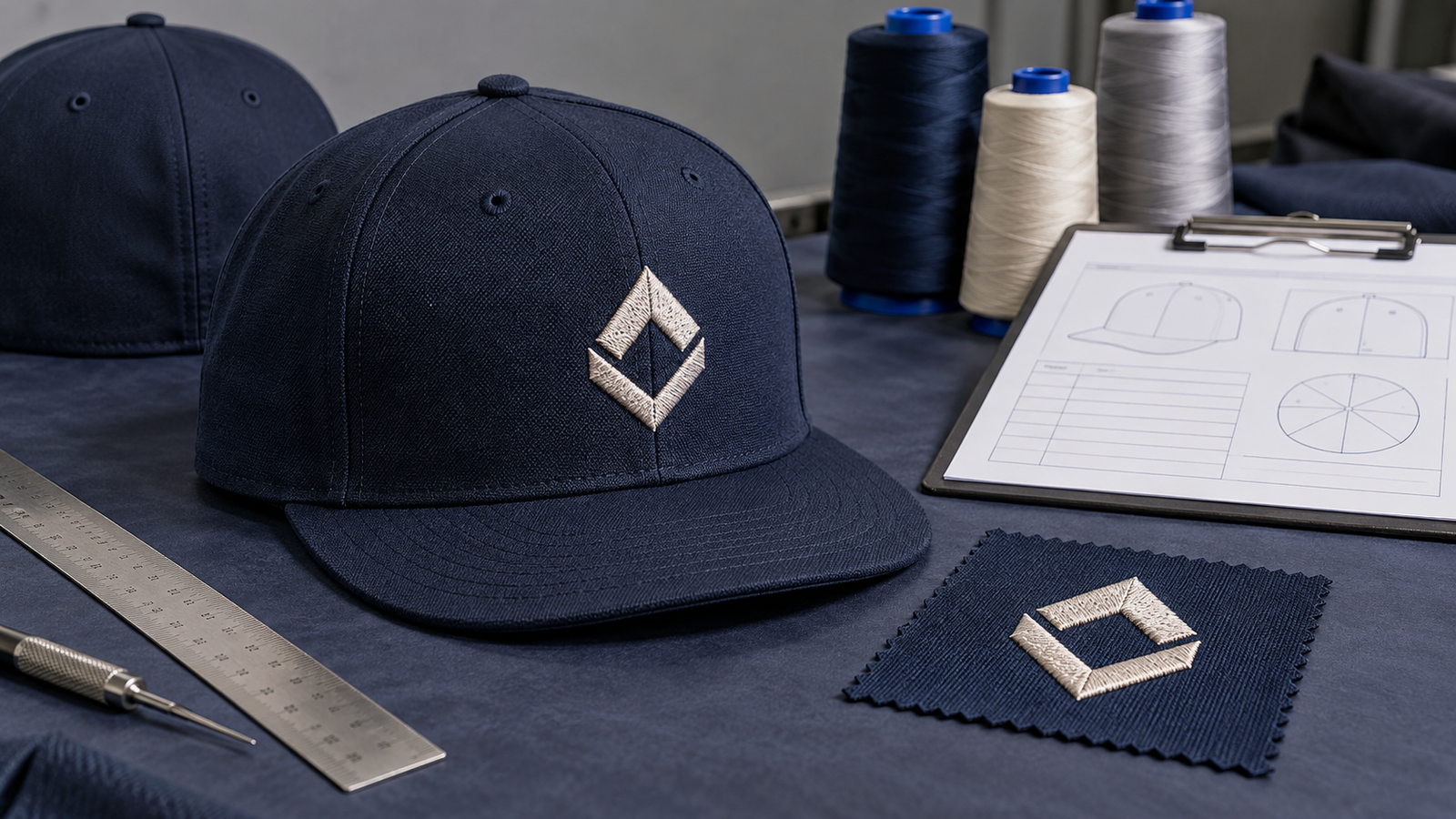
JoinTop’s custom hat sampling process is the relevant process page for turning a brief into a reviewable sample. If the project is intended for active use, also compare the brief with the Performance Caps product page rather than assuming that a fitted construction provides the same product direction.
5. Release bulk by size, colorway, and approved version
Bulk release is where a fitted-cap program either becomes repeatable or starts to drift. The purchase order should point to an approved sample, a size chart, a logo file, a colorway record, and any agreed inspection points. If one of those references is missing, the factory and the buyer may be working from different versions.
At minimum, the release pack should define:
- the approved crown, brim, and closed-back construction;
- the size range and planned ratio by SKU;
- the logo file, sew-out, placement, and thread references;
- fabric and trim references for each colorway;
- label, packaging, and destination-market requirements;
- the person responsible for approving any change;
- the inspection points for shape, seams, logo execution, labels, and color consistency.
JoinTop’s current internal planning reference is usually 7–14 days for sampling and 35–45 days for bulk after sample confirmation. Those are planning ranges, not unconditional promises; design changes, buyer approval, sample shipping, and international logistics can change the calendar. Put the required delivery date in the brief so the team can assess the real sequence.
For an active collection, a fitted cap and a Performance Cap can share a brand language without sharing one specification. Keep the Performance Cap’s fabric, perforation layout, panel construction, and logo safe zone in its own approval sheet. This makes the two products easier to compare at the assortment level and safer to reorder at the SKU level.
6. Fitted cap approval checklist for buyers
Before release, the buyer should be able to answer “yes” to each line below:
| Question | Evidence to keep |
|---|---|
| Is the size block defined for the target market? | Graded size chart with units and reference points |
| Does the closed-back cap match the approved profile? | Front, side, and back sample views |
| Is the brim shape consistent across the reviewed sizes? | Annotated sample photos or inspection notes |
| Was the embroidery reviewed on the actual cap? | Sew-out and finished-cap approval |
| Are logo placement and seam clearances recorded? | Artwork file with placement notes |
| Are thread, fabric, and trim colors approved per colorway? | Colorway board or signed comparison record |
| Can a future buyer identify the exact approved version? | Sample ID, revision date, and change log |
| Are quantity, market, packaging, and delivery requirements clear? | Complete RFQ or purchase brief |
This checklist is also useful when comparing suppliers. Ask each supplier to respond to the same inputs; a lower initial quote is difficult to evaluate if one supplier has priced a different size range, support layer, logo method, or color plan.
PREGUNTAS FRECUENTES
Can brands make custom fitted baseball caps with embroidery?
Yes. The program needs a defined size block, crown and brim construction, logo artwork, placement rules, and approval of both the sew-out and the finished cap sample. The logo should be judged on the actual curved panel, not only on a digital mockup.
What should I send a factory before requesting a fitted-cap sample?
Send the company or brand website, target cap type and use case, size range, reference images or an existing cap block, logo file or reference image, colorways, quantity per style and color, target market, packaging needs, and required delivery date. If the brief is incomplete, ask for a manufacturability review before final pricing.
Is a fitted cap better than a Performance Cap?
Neither is universally better. A fitted cap suits a size-specific, closed-back silhouette. A Performance Cap is worth comparing when active use, lighter materials, or airflow details are central to the range. Choose from the buyer’s use case and evidence plan, then keep separate specifications for each product.
What MOQ should I plan for?
JoinTop’s current standard is 100 pieces per style and color. Confirm the final MOQ, size ratio, color plan, and sampling requirements with the project team because construction and order scope can affect the quotation.
Conclusion: make the fitted cap repeatable
Custom fitted baseball caps become easier to buy when the size block, structure, embroidery, and release evidence are treated as one system. Lock the graded sizes first, review the crown and brim on real samples, approve the sew-out on the finished cap, and keep a versioned record for every colorway. If the collection also serves golf, running, outdoor, or other active use cases, compare a separate Performance Cap route rather than stretching the fitted-cap specification to cover two different products.
To request a project review, send the company name or website, cap type and use case, quantity per style and color, logo file or reference image, target market, and required delivery date. Include the existing sample or size block if one is available; that gives the factory a clearer starting point for a sample plan and quote.
For the publishing and page-quality principles used in this guide, see Google Search Central’s helpful, reliable, people-first content guidance and its introduction to structured data.

 English
  German
  Spanish
  French
  Amharic
  Portuguese
  Italian
  Swedish
  Turkish
  Belarusian
  Danish