Buyer’s quick answer
Start with the wearer and target fit, define the panel construction, fabric and logo, then record quantity per color and sample approval criteria. Review the finished cap before bulk production and retain its specification for reorders.
Customizing hats for a brand connects product design with repeatable production. The crown profile, five-panel or six-panel construction, fabric, visor, sweatband, closure, decoration, packaging and order quantity affect fit, cost and development time. A clear brief gives a custom hat manufacturer a practical starting point for the sample.
This guide explains how buyers can plan custom hats, custom caps, and custom baseball hats from the first idea through sample approval and bulk production. It is written for brand owners, importers, wholesalers, promotional distributors, and product teams building private-label or OEM headwear programs.
What “customizing hats” means in a real brand program
Buyers use “custom hats” to describe several different sourcing models. A decorated blank cap starts with an existing factory pattern and adds a logo. A private-label hat may use a stock block with a custom sweatband, label, packaging, or decoration. A fully custom, cut-and-sew cap changes the pattern, material, trims, fit, and branding details. OEM and ODM programs sit across this range: OEM follows the buyer’s specification, while ODM starts from a factory platform that is adapted for the brand.
These sourcing models have different costs and development risks. A decorated blank can be quicker to sample, but it may limit crown shape, panel construction and ventilation. A fully custom baseball cap gives the brand more control over those decisions and requires a more detailed approval process. Define the scope before asking suppliers for comparable quotations.
Build the product specification
1. Write a buyer brief before choosing materials
A manufacturer can only quote what the brief defines. Put these fields in the first RFQ (request for quotation):
| Brief field | What to specify | Why it affects production |
|---|---|---|
| Use case | Running, golf, outdoor, lifestyle, team, or promotion | Guides fabric, airflow, sweatband, visor, and durability decisions |
| Cap platform | Five-panel, six-panel, trucker, rope, visor, or another structure | Changes the pattern, logo area, seam layout, and fit |
| Fit | Head-size range, crown height, structured/unstructured, closure | Determines grading, comfort, and size consistency |
| Material | Fiber, weight, stretch, finish, color reference, recycled claim | Affects hand feel, shrinkage, decoration, and testing |
| Decoration | Embroidery, print, patch, woven label, silicone, or reflective detail | Sets mock up limits, backing, setup, and inspection points |
| Quantity | Total units by style and color | Changes material purchasing, setup cost, and MOQ |
| Embalaje | Individual bag, hangtag, carton marks, retail or bulk packing | Changes packing labor, carton size, and shipping assumptions |
| Market | United States, Europe, or another destination | Determines labeling, claim, and documentation checks |
Sending these details together is one of the simplest ways to receive a useful quote. “I need premium hats” is a starting idea; “five-panel, lightweight polyester, small laser-perforated zones, embroidered front logo, 600 pieces in three colors, individual bags, U.S. market” is a production brief.
2. Choose the right five-panel or six-panel hat platform
A custom five-panel cap with a single front panel can provide an uninterrupted logo area. A conventional six-panel cap usually has a front center seam. Either construction can support a running, golf or lifestyle program, depending on its pattern, reinforcement, material and fit. Record the exact layout: panel count alone does not determine crown depth or silhouette.
| Platform | Strengths | Checks before approval |
|---|---|---|
| Five-panel | Clean front panel, modern profile, efficient space for a front print or patch | Front-panel width, seam balance, crown height, visor angle, closure position |
| Six-panel | Recognizable baseball-cap shape, flexible panel construction, familiar retail fit | Center seam alignment, embroidery clearance, crown symmetry, grading across sizes |
| Performance five/six-panel | Can combine lightweight fabric, moisture management, ventilation, and a stable visor | Perforation pattern, sweatband recovery, snag resistance, wash and wear behavior |
Do not copy a competitor’s pattern by eye. Use the target fit, a measurement map, and the approved sample as the reference. JoinTop’s five-panel and six-panel platform guide explains the buyer decisions that change the finished shape.
3. Select fabric by performance requirement, not by name
“Polyester,” “nylon,” and “cotton” are broad material families, not complete specifications. Two fabrics with the same fiber label can differ in weight, weave, stretch, finish, color stability, and recovery. For a custom cap, record the material reference and test the fabric after it has been cut and shaped.
| Material direction | Common B2B use | Production questions |
|---|---|---|
| Lightweight polyester | Running, golf, and other Performance Cap programs | Does it recover after wear? Does the surface support embroidery or print? How does the sweatband interact with it? |
| Nylon or nylon blend | Outdoor, wind-resistant, smooth technical caps | Will heat, needle marks, or laser perforation change the surface? Is the finish stable after handling? |
| Cotton or cotton twill | Lifestyle, heritage, team, and promotional caps | What shrinkage and shade tolerance apply? Does the washed effect need to be controlled across lots? |
| Recycled polyester or other preferred fiber | Sustainability-led headwear collections | What chain-of-custody or certification evidence is required for the claim? |
For a recycled-material claim, ask for the exact standard and documentation rather than relying on the phrase “eco-friendly.” The Textile Exchange GRS certification information is a useful reference for buyers checking what a certification is intended to verify.
JoinTop’s custom hat fabric comparison covers the practical trade-offs between polyester and nylon in Performance Caps. The correct fabric is the one that supports the product promise and remains repeatable in bulk.
4. Build a Performance Cap around the wearer
Custom performance hats are often purchased by running, golf, fishing, and outdoor brands because the buyer needs more than a logo. Start with the conditions the wearer will face: heat, sweat, sun, movement, rain, or repeated washing. Then convert those conditions into features that can be specified and checked.
- Airflow: define the location and size of laser-perforated or mesh zones. Small, controlled holes can improve ventilation while preserving panel stability; the pattern should be shown in the mock up or tech pack.
- Moisture management: identify the sweatband construction and the fabric behavior required after use. Avoid promising “quick dry” or “moisture wicking” until the material and test basis are confirmed.
- Sun protection: if the brand plans a UPF claim, specify the test method and the exact finished material. The AATCC TM183 UV-transmission test reference explains the method used to evaluate UV transmission through fabric; it does not by itself create a marketing claim.
- Fit stability: check crown recovery, sweatband stretch, closure adjustment, and visor behavior during movement, not only on a table.
- Decoration placement: keep embroidery, patches, and transfers away from perforations and high-stretch areas where the logo could distort.
5. Choose the logo method that fits the mock up and fabric
For custom hats with a logo, the decoration must work on a curved, sewn product. Choose the method after reviewing the logo file, fabric, panel shape and expected wear. Custom embroidered hats suit different graphics and surfaces from lightweight printed caps; neither process is the right choice for every design.
| Method | Works well for | Risk to control |
|---|---|---|
| Flat embroidery | Bold marks, simple lettering, traditional brand logos | Thread density, puckering, small text, and placement on curved panels |
| 3D puff embroidery | Short bold lettering and raised sport branding | Fine detail, tight curves, edge compression, and crown distortion |
| Woven or embroidered patch | Detailed logos and badges; confirm edge attachment and panel curvature | Patch edge security, size, weight, and the way it sits on the panel |
| Screen or transfer print | Flat graphics; some transfer methods also support gradients and fine detail | Registration, wash durability, ink hand feel, and fabric compatibility |
| Silicone, rubber, or reflective mark | Technical and outdoor collections needing a different tactile finish | Adhesion, edge lift, weight, and visibility after wear |
Send vector mock up with dimensions, color references, placement measurements, and the intended decoration method. Ask for a sew-out or print proof on the final fabric. JoinTop’s logo technique guide for custom hats can help a brand compare decoration options before sampling.
6. Use the tech pack as the agreed production reference
A tech pack is not just a sketch. It is the document that lets the buyer and factory agree on what will be measured, approved, and inspected. For a custom cap, include a front, side, back, and top view; a measurement map; bill of materials; color references; mock up files; stitch or print instructions; trims; packaging; and tolerances.
Useful measurement points include crown height at the front and side, head opening, visor length and width, visor curve, eyelet position, sweatband width, closure position, and logo height from the visor seam. The exact points depend on the cap platform, but the principle is the same: measure the features that change fit or appearance, and do not leave them as “match the photo.”
Use version control. When the visor curve, fabric, or logo changes, update the revision number and send the revised file to the factory. A bulk inspection cannot be fair if the buyer and supplier are using different versions of the sample.
Move from approved sample to repeatable bulk production
7. Plan the sample gates before you discuss bulk
A professional sampling process answers decisions in stages:
- Concept review: confirm the cap platform, use case, mock up, material direction, and open questions.
- Construction sample: verify fit, crown balance, visor, closure, and the basic material behavior.
- Decoration approval: approve the sew-out, print, patch, reflective detail, or silicone mark on the intended fabric.
- Pre-production sample: confirm the final materials, trims, colors, packaging, and measurement tolerances before bulk cutting.
- Bulk inspection: compare the lot with the signed reference and agreed defect limits.
A photograph is not a substitute for a physical sample. It does not show hand feel, stretch recovery, crown pressure, visor flexibility, or the way a logo sits on a curved surface. Keep the signed sample and measurement notes with the purchase record so a reorder can be checked against the same reference.
See JoinTop’s custom hat sampling process for the approval logic buyers should use before bulk production.
8. Understand MOQ, cost, and lead time together
MOQ is not a universal number printed on every custom hat. It can be defined per style, color, material, or decoration setup. A supplier may accept 100 pieces for one style and color while requiring a larger quantity when a buyer splits the same project into many small colorways.
JoinTop supports projects from 100 pieces per style and color, subject to the final specification. The quotation still depends on fabric, construction, decoration, packaging, quantity, and delivery requirements. A smaller first order can reduce inventory exposure, but too many low-volume options can increase setup and material waste. Ask the supplier to show which assumptions drive the quote.
Lead time should be discussed as a sequence rather than one unexplained number: brief review, mock up preparation, material confirmation, sampling, approval, bulk material preparation, sewing, finishing, inspection, and packing. If a brand changes the fabric or logo after approval, the critical path changes too. Send the quantity by style and color, mock up, packaging, and target date before requesting a firm production plan.
| Cost driver | Buyer decision | What to clarify in the quote |
|---|---|---|
| Pattern and construction | Stock platform or fully custom cut-and-sew | Pattern/setup assumptions and sample scope |
| Material | Fiber, weight, finish, recycled or technical claim | Material reference, color standard, testing, and wastage |
| Decoration | Embroidery, patch, print, silicone, reflective | Setup, proof, backing, number of locations, and durability check |
| Quantity mix | Units per style and color | MOQ definition and price breaks |
| Embalaje | Retail-ready or bulk packing | Bag, hangtag, carton, labeling, and freight dimensions |
9. Put quality control in the brief
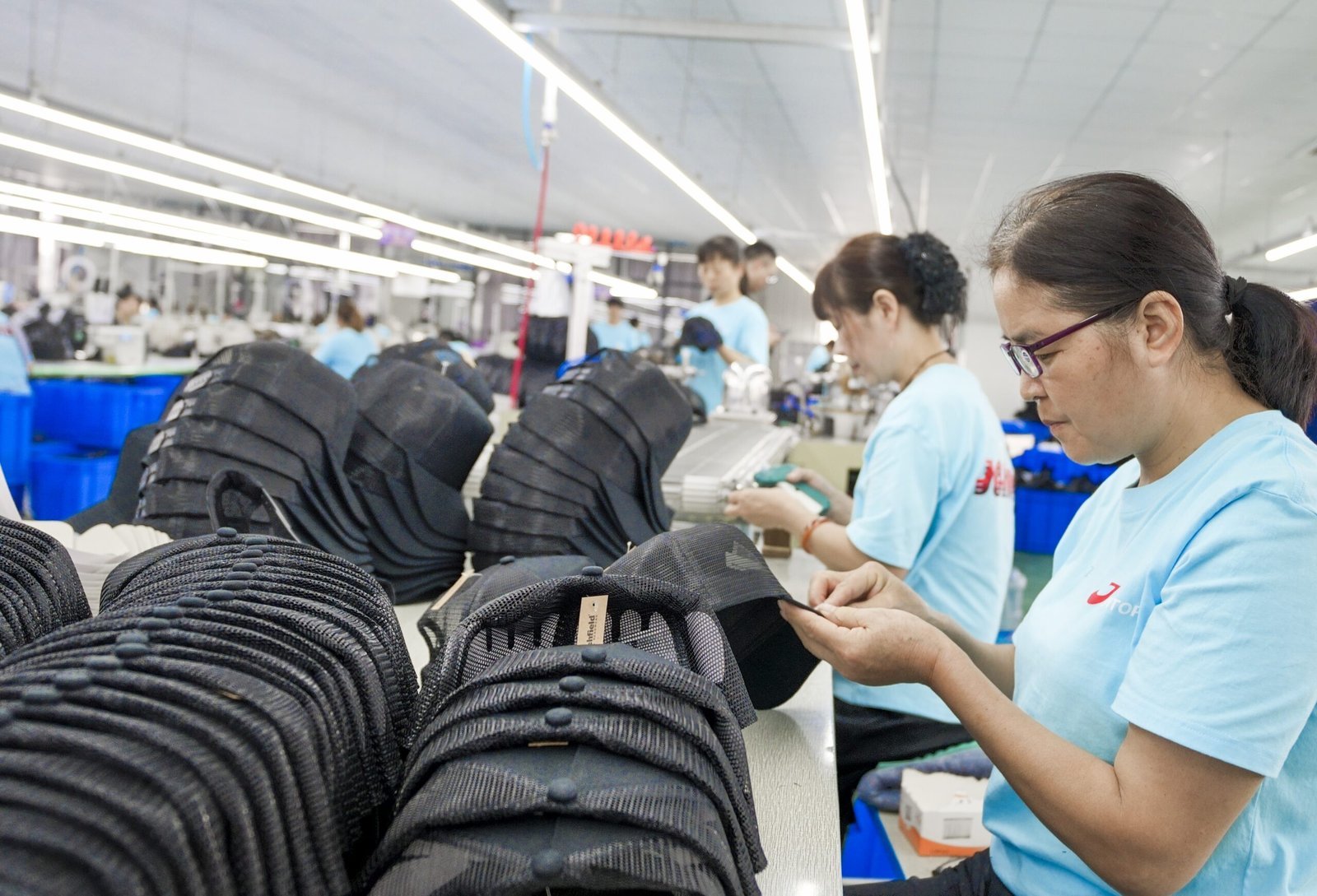
Quality control should cover incoming material, cutting, decoration, sewing, finishing, packing, and pre-shipment inspection. For custom baseball hats, check crown symmetry, seam security, visor curve, closure position, sweatband attachment, loose threads, shade consistency, and logo placement. For a Performance Cap, add checks for perforation location, hole consistency, fabric recovery, sweatband comfort, and any approved claim or test document.
Define critical, major, and minor defects before production. If the buyer uses an AQL plan, name the standard and acceptance criteria in the purchase specification. ISO 2859-1 describes acceptance-sampling systems for inspection by attributes and explains how AQL-based plans are used to determine sample sizes and accept/reject thresholds. AQL is a sampling framework; it does not replace a clear approved sample or make an unsuitable product acceptable.
For U.S. programs, also review the FTC clothing and textile guidance with the importer or compliance team. Labeling and claim requirements depend on the product and market. Do not add a fiber, recycled, UPF, waterproof, or performance claim simply because it sounds commercially attractive; connect the claim to the material record and the required evidence.
JoinTop’s hat quality-control process and the related custom hat inspection checklist provide a practical starting point for the inspection conversation.
10. Select a custom hat manufacturer for repeatability
A supplier should be able to explain how it handles the brief, sample revisions, approved materials, mock up files, production checks, rework, and reorders. Ask who owns the measurement reference, where the approved sample is stored, how a shade or logo-placement issue is recorded, and how changes are communicated between sampling and bulk.
For a growing brand, manufacturing location is one part of the decision. Technical communication, material access, quality checks and the ability to repeat an approved style also matter. Discuss the available production route with JoinTop against the specification, quantity, destination and delivery plan.
Common mistakes that make custom hats expensive
- Choosing a fabric from a photo without checking the actual production material.
- Approving a logo on a flat mock up instead of on the finished curved cap.
- Using “premium,” “breathable,” or “waterproof” without defining a measurable requirement.
- Changing the visor, fabric, or mock up after the pre-production sample and still expecting the original delivery plan.
- Comparing quotations that use different MOQ, packaging, freight, or decoration assumptions.
- Inspecting only the appearance while ignoring fit, recovery, comfort, and closure function.
- Creating many colors or SKUs before the first construction has been proven repeatable.
FAQ for brands customizing hats
What is the difference between custom hats and private-label hats?
Custom hats can involve a new pattern, material, fit, and decoration. Private-label hats may start from an existing platform and add the brand’s logo, labels, packaging, or selected details. Ask the factory which parts are genuinely custom so the development scope is clear.
What is the MOQ for a custom hat order?
MOQ depends on the supplier and the specification. JoinTop supports projects from 100 pieces per style and color, subject to the final design, material, decoration, packaging, and quantity mix.
Should a running brand choose a five-panel or six-panel Performance Cap?
Choose the platform that gives the required fit, logo area, ventilation and visor behavior. A five-panel layout may offer a single front panel; a conventional six-panel layout includes a front center seam. Confirm the actual pattern and test the sample during movement.
Can a factory help with hat design?
Yes, a factory can often review mock up, suggest construction and decoration options, and identify production risks. Send the logo, target wearer, quantity, and reference style. Design support should still be documented in an approved specification before bulk production.
What should I send for a custom hat quotation?
Send the brand or company information, cap structure, material direction, mock up, quantity by style and color, decoration locations, packaging, target market, and delivery date. The more complete the brief, the more useful the quotation and sample plan will be.
How do I protect consistency on a reorder?
Keep the signed pre-production sample, measurement map, material reference, mock up revision, approved tolerances, and inspection photos. Use them as the reference for the next fabric lot, colorway, and bulk inspection.
Start a custom hat project with a production-ready brief
Whether you are sourcing custom hats with logo, custom embroidered hats, custom golf caps, or custom performance hats, the strongest first step is a clear brief. Tell the factory what the cap must do, who will wear it, how many units you need, and what the brand must see before approval.
Ready to develop a custom hat collection? Send your design mock up, target quantity, cap structure, material idea, and delivery date to JoinTop. Request a custom hat quotation and let the production team review the specification with you.
Send your project details
Use the inquiry form below. Include: Cap reference; intended activity; panel construction; target fit; fabric; logo file; quantity by color; packaging; destination and required date.
JoinTop’s usual MOQ for standard woven caps is 100 pieces per style and color. Special materials, trims and packaging may have separate minimums. Confirm the full specification in your quotation.
Visit our contact page to discuss the project or share supporting files.


 English
 German
 Spanish
 French
 Amharic
 Portuguese
 Italian
 Swedish
 Turkish
 Belarusian
 Danish