Buyer’s quick answer
Choose a hat-printing method from the logo, fabric finish and cap construction together. A print that works on cotton may not suit a coated nylon or stretch performance cap. Approve the decoration on the actual fabric and color, then check the finished five-panel or six-panel crown before bulk production.
Custom printed hats can carry fine detail or a low-profile graphic, but the process needs a usable surface and a compatible material system. For brand buyers, the key question is whether the design can be reproduced consistently on the intended cap—not whether it looks sharp in a digital mock up.
Compare the main hat-printing methods
| Method | Useful for | Checks on performance caps |
|---|---|---|
| Screen printing | Defined spot-color graphics, subject to ink and production setup | Fabric and ink compatibility, curing, coverage, panel support and color count |
| Heat-transfer vinyl or printed transfer | A selected graphic or detailed image using an appropriate transfer system | Adhesive compatibility, application conditions, surface feel and edge adhesion |
| Direct-to-film transfer, or DTF | Multicolor designs where a compatible transfer has been validated | Heat sensitivity, dye migration, flexibility, adhesion and an appropriate cap platen |
| Dye sublimation | Compatible light-colored polyester substrates, often decorated before assembly | Material compatibility, base color, panel alignment and heat effects |
DTF is a type of transfer process, not a universal solution for every fabric. Sublimation also cannot be treated as a general replacement for printing on any finished hat. Ask the factory which route suits the actual material and at which stage the cap will be decorated.
Printing on five-panel vs six-panel caps
A five-panel performance cap with a single front panel offers a continuous front area. On a conventional six-panel cap, the center seam can affect pressure and logo appearance. In both cases, the usable print area is constrained by curvature, reinforcement, the visor join and the decoration equipment.
Mark the logo boundary on the mock up, including clearance from seams, eyelets and perforations. A wide flat graphic may need a smaller size, another position or decoration before assembly. Do not use one generic maximum logo width for every cap.
Check polyester, nylon and surface finishes
For polyester caps, evaluate whether the chosen color or print can migrate into a heat-applied graphic. For nylon caps, identify coatings or repellency finishes that may affect adhesion. Stretch fabrics add another question: can the decoration move with the material without an unacceptable change in appearance?
The material categories in STAHLS’ heat-transfer selection guide distinguish properties such as nylon application, dye blocking, stretch and low-temperature application. That is a useful reminder to select a compatible transfer. Follow the chosen product’s instructions and validate the actual cap; there is no single safe temperature-and-pressure recipe for all performance fabrics.
Use the performance cap fabric guide to settle the material before approving a transfer or ink system. A change to the color, finish or supplier may require another decoration check.
Printing vs embroidery for a performance cap
Printing and transfers can suit fine detail and flatter visual effects. Embroidery creates a stitched texture and can be effective for a compact brand mark, but its density, backing and weight must suit the crown. Woven patches and molded badges provide additional routes when the design needs a distinct edge or raised surface.
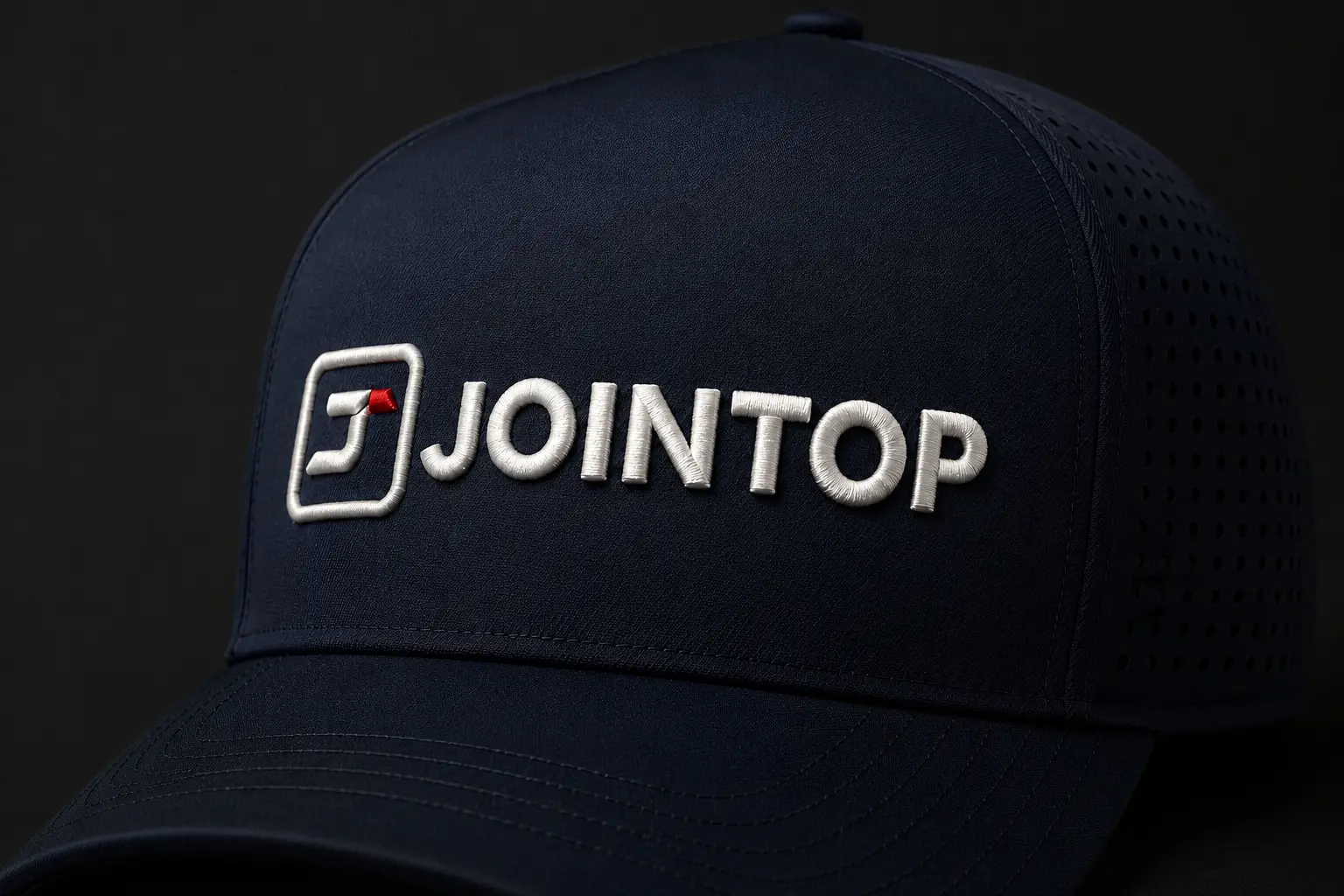
Compare the options on the same cap fabric and with a similar logo size. Ask how each affects hand feel, panel flexibility, ventilation and unit cost. Explore JoinTop’s logo techniques for custom hats when the design is still open.
Approve the decorated sample with a specific checklist
- Compare logo dimensions, position and colors with the approved file and mock up.
- Check edges, fill, surface gloss and any unwanted print marks.
- Review the decoration across the crown’s curve and seam area.
- Check that ventilation openings and adjustment components remain usable.
- Evaluate attachment, flexibility and the intended care conditions with an agreed test plan.
- Confirm whether any protective carrier or film must be removed before packing.
Different questions need different checks. For example, AATCC TM8 addresses color transfer under rubbing; it does not replace an adhesion or attachment evaluation. Ask the laboratory and factory to define appropriate procedures and acceptance criteria for the proposed decoration.
What changes the cost of custom printed hats?
Cap construction, logo area, color count, preparation, decoration positions and production quantity all matter. Compare quotes using the same fabric, logo file, process, packaging and delivery assumptions. Ask which setup charges are separate and which can be reused for a reorder.
For a useful quote, provide the original logo file, required dimensions, colors, placement, material reference and quantity per style and color. Add target use, destination and arrival date. Keep the final approved files with the sample so later production does not use an earlier revision.
Use the cap specification checklist for the construction details and the quality control process for production approval. Standard JoinTop woven-cap programs usually start at 100 pieces per style and color, with special materials and trims confirmed separately.
Questions brand buyers ask
Can you use DTF printing on performance hats?
It can be an option when the transfer system is compatible with the fabric and finish. Confirm heat tolerance, adhesion, flexibility and dye-migration behavior on the actual color and completed cap.
Can you print across a six-panel cap’s center seam?
Sometimes, depending on the graphic, seam, crown and equipment. Do not assume the result will match a flat preview. Request a finished-cap sample, or revise the placement or process.
Is sublimation suitable for every custom hat?
No. It needs a compatible substrate and color base. Discuss whether the intended polyester panels can be decorated before assembly and how seams will affect the design.
What files should I send for a logo quote?
Send the original vector logo when available, plus a visual reference, required dimensions, colors and placement. If only a raster file is available, provide the highest-resolution original and ask whether it is suitable at the required size.
Send your project details
Use the inquiry form below for a quotation or sample discussion. Include: Logo file; logo size and position; cap fabric or reference; panel construction; colors; quantity per color; destination and delivery date.
JoinTop’s usual MOQ for standard woven caps is 100 pieces per style and color. Special materials, trims and packaging are confirmed with the project.
Prefer to share files separately? Visit our contact page.


 English
 German
 Spanish
 French
 Amharic
 Portuguese
 Italian
 Swedish
 Turkish
 Belarusian
 Danish