Designing custom hats looks easy on a screen. Pick a shape, drop in a logo, choose a color, and the mockup looks great.
Then the real work starts.
The sample may not fit the way you expected. The fabric may change the MOQ. The logo method may affect cost and timing. Suddenly, that “simple hat project” has a lot more moving parts than expected.
What Are Custom Hats?
Custom hats are hats made with brand-specific details such as crown shape, fabric, color, logo, embroidery, patches, labels, closures, and packaging. For brands, the process usually moves from product direction to design development, sample making, MOQ planning, bulk production, quality control, packing, and shipping. A reliable custom hat manufacturer helps turn a design idea into a production-ready product.
For hat brands, a custom hat is not just a product with a logo on it. It is something your customer may wear every week, pack for a trip, take to the golf course, or throw on before leaving the house.
That is why the details matter.
In a market shaped by brands like Melin, New Era, ’47, and Sunday Swagger, U.S. customers now expect better fit, cleaner finishing, stronger comfort, and a clear product identity from headwear.
Your brand does not need to copy anyone else’s style. But your product does need to feel intentional.
Start With the Product, Not Just the Logo
A lot of custom hat projects start with one question:
“Where should the logo go?”
That question matters, but it should not be the first one.
A better place to start is:
Who is going to wear this hat, and why would they choose it?
That one question can save a lot of trouble later.
A golf hat may need lightweight fabric, breathability, sweat control, and a clean performance look. A streetwear cap may need a sharper crown shape, stronger logo placement, and a more visual identity. An outdoor hat may need durability, comfort, and sun protection. A resort or lifestyle hat may need soft colors, an easy fit, and strong retail appeal.
Different customers expect different things from a hat. So before moving into sampling, it helps to define the basics.
Before Sampling, Clarify These Details
Brands should prepare:
- Who the hat is for
- Where it will be worn
- What price point it needs to support
- What fit or profile feels right
- What fabric direction makes sense
- What logo style fits the brand
- How many colors to start with
- What launch timeline the brand is working toward
These details do not need to be perfect on day one. They just need to be clear enough to guide the project.
The clearer the product direction is, the easier it becomes to make smart choices about shape, fabric, decoration, MOQ, sampling, and production.
Design the Hat With Production in Mind
A good-looking mockup is useful, but it is not the final product.
The real question is whether the design can be sampled accurately, produced consistently, and inspected clearly before shipment.
That is where many brands run into trouble. The design looks good, but the production details were not fully thought through.
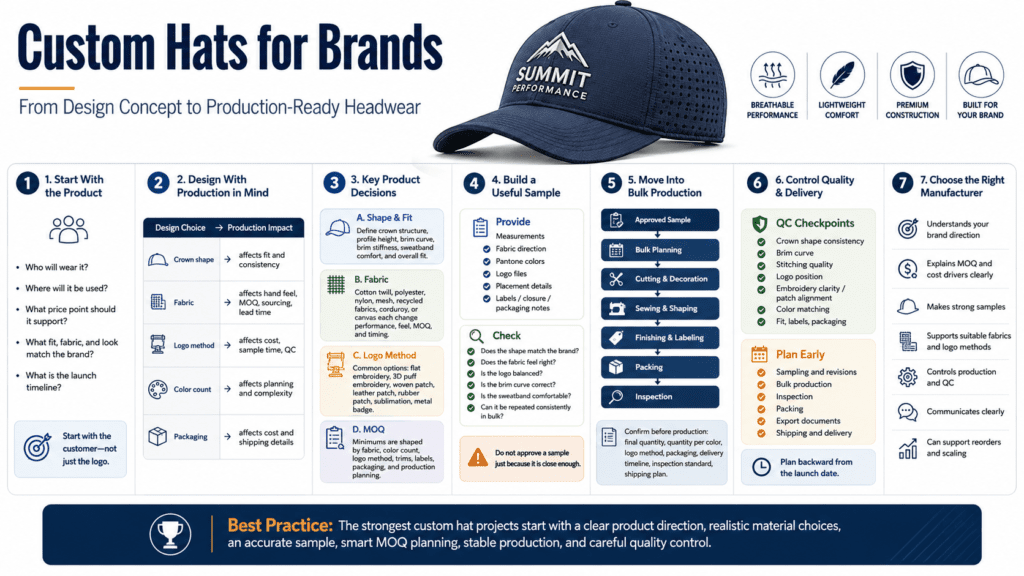
Every design choice has a production result:
| Design Choice | Production Impact |
| Crown shape | Affects sampling, fit, and bulk consistency |
| Fabric | Affects hand feel, MOQ, sourcing, and lead time |
| Logo method | Affects cost, sample time, and QC standards |
| Color count | Affects material planning and order complexity |
| Embalaje | Affects cost, preparation time, and shipping details |
Instead of treating design and production as two separate steps, it is better to connect them from the start.
Shape and Fit Set the Standard
Customers may not know why a hat feels wrong. They just know they do not want to wear it again.
Maybe the crown sits too high. Maybe the brim is too stiff. Maybe the sweatband feels cheap. Maybe the front panel does not hold the shape the way it should.
Small things can make a big difference.
For custom hats, shape and fit are not just design preferences. They become the standard for the sample and the bulk order.
Important shape and fit details include crown structure, profile height, brim curve, brim stiffness, sweatband comfort, and overall fit consistency.
A structured crown gives a cleaner, more stable look, while an unstructured crown feels softer and more relaxed. A low-profile hat sits closer to the head, while a mid-profile or high-profile hat creates more front-panel presence. A curved brim feels classic and easy to wear. A flat brim gives a bolder look.
None of these options is automatically better. The right choice depends on your customer and your brand.
The key is to define what “right” means before production starts. If the crown height, brim curve, or fit expectation is vague, the sample may look close but still feel off.
And “close” is not always good enough when you are trying to build a product people will actually wear.

Fabric Choices Affect More Than Feel
Fabric can completely change the personality of a hat.
Cotton twill feels classic. Polyester and nylon can support performance or outdoor use. Mesh adds breathability. Recycled fabrics can support sustainability goals. Corduroy or canvas can make the hat feel more lifestyle-driven.
But fabric is not just about look and hand feel. It also affects sourcing, MOQ, sample timing, and production planning.
Stock fabrics are usually easier for first orders because they are already available. Custom-dyed fabrics, special performance materials, recycled yarns, custom mesh, or unusual trims may require higher minimums and longer development time.
That does not mean custom materials are a bad idea. It just means they should be planned early.
For a first run, many brands do better with one strong silhouette, two or three core colors, and one clear fabric direction. This keeps the project easier to manage and makes customer feedback easier to read.
In custom hats, more options do not always make a stronger collection. Sometimes the best move is to make one or two hats really well.
Choose a Logo Method That Matches the Brand
The decoration method affects how the hat looks, how it feels, how much it costs, how long sampling takes, and how quality is checked during production.
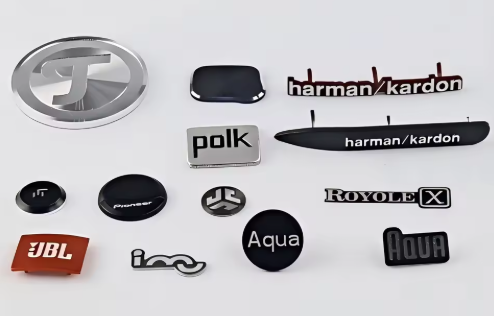
Common custom hat logo methods include flat embroidery, 3D puff embroidery, woven patches, leather patches, rubber patches, printed patches, heat transfer, sublimation, metal badges, and custom woven labels.
Flat embroidery is clean and flexible. 3D puff embroidery works well for bold lettering. Woven patches are good for detail. Rubber patches feel modern and sporty. Leather patches fit lifestyle, outdoor, and heritage-style products. Sublimation can work well for performance hats or all-over print designs.
Each method has its own production logic.
Standard embroidery is usually easier to manage. Custom rubber patches, metal badges, or special woven patches may need molds, separate sampling, or material minimums.
That does not mean they are a bad idea. It just means they should be reviewed early.
A good manufacturer should look at logo size, stitch count, patch material, placement, and production method before sampling begins.
That helps avoid a very common problem:
The mockup looked great, but the real hat did not get the memo.
Make MOQ Part of the Design Plan
MOQ should not feel like a surprise at the end of the project.
For custom hats, MOQ is usually shaped by the design itself. Fabric choice, color count, logo method, trims, labels, packaging, and production planning can all affect minimums.
A focused design with available fabric and one main decoration method is usually easier to plan. A design with custom fabric, several colors, special patches, custom labels, and retail packaging may require higher minimums or more development time.
The goal is not always to chase the lowest possible MOQ. The better goal is to build an order plan that fits your budget, quality expectations, launch timing, and future reorder potential.
This is where early review helps.
If your brand already has a hat concept, logo artwork, or reference sample, a manufacturer like ÚneteTop can review the design direction, material options, MOQ planning, sample feasibility, and production requirements before the project moves too far into development.
That kind of early review helps avoid designing a hat that looks great on screen but becomes difficult to produce at the quantity, cost, or timeline you need.
Turn the Design Into a Production-Ready Sample
The sample is where the idea becomes real.
This is also where you catch problems before they turn into bulk production problems. A sample is not a delay. It is a small insurance policy against a much bigger headache.
To create a useful sample, the manufacturer needs enough detail to work from. That usually includes measurements, fabric direction, Pantone colors, logo files, decoration placement, label details, closure type, packaging notes, and quality expectations.
What to Check When the Sample Arrives
When the sample arrives, do not only ask, “Does it look good?”
Ask better questions:
- Does the shape match the brand?
- Does the fabric feel right?
- Is the logo size balanced?
- Is the brim curve correct?
- Is the sweatband comfortable?
- Does the hat feel like something customers would wear often?
- Can this sample be repeated consistently in bulk production?
Most samples need some adjustment. That is normal.
The crown may need to come down a little. The brim may need a softer curve. The logo may be too large. The patch may need to move slightly. The fabric may feel too soft or too stiff.
Those changes are part of the process.
What you do not want is to approve a sample just because it is “close enough.” Small issues in sampling often become bigger issues in bulk production.
The approved sample should become the production standard, not just a nice reference photo.

Move From Approved Sample to Bulk Production
Once the sample is approved, the project moves into bulk production planning.
This is not the best time to keep changing the fabric, logo size, color plan, or packaging. Production works best when the target is stable.
Before Production Begins, Confirm These Details
The brand and manufacturer should confirm:
- Final quantity
- Quantity per color
- Logo method
- Packaging requirements
- Delivery timeline
- Inspection standard
- Shipping plan
At this stage, MOQ becomes tied to real production details. More colors can affect planning. Custom packaging can add packaging minimums. Changing from embroidery to a rubber patch can affect timing and order requirements.
Clear confirmation now prevents confusion later.
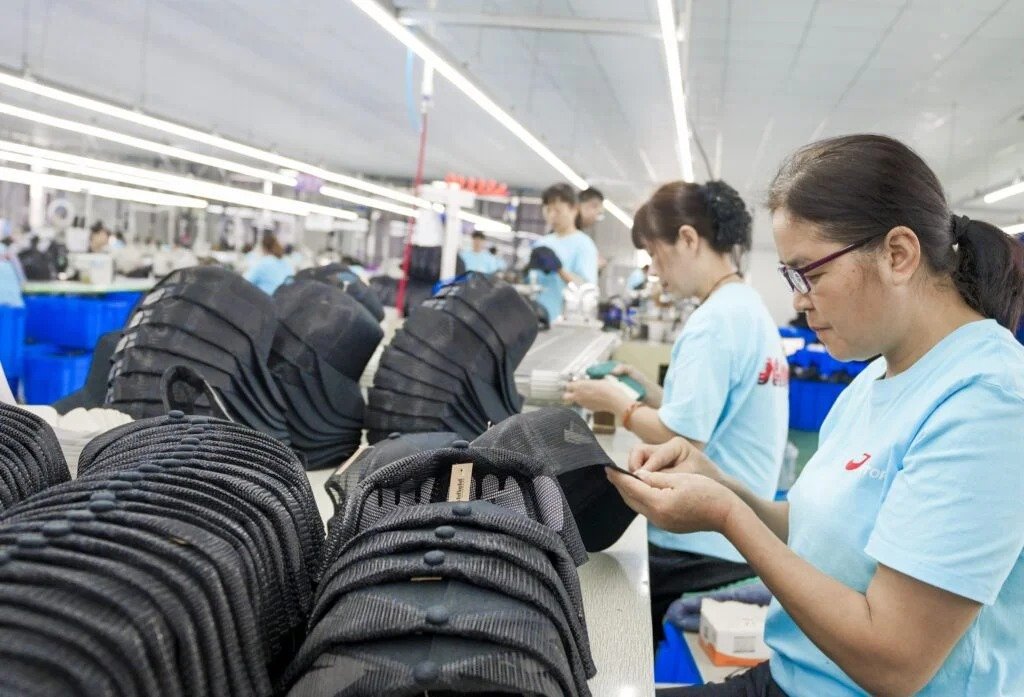
Bulk production may include cutting, embroidery or patch production, sewing, shaping, finishing, labeling, packing, and inspection.
The challenge is not making one good hat. The challenge is making hundreds or thousands of hats that match the approved sample.
This is where factory control matters.
For brands managing seasonal launches, repeat orders, or multiple product lines, JoinTop’s owned factories in China, Vietnam, and Bangladesh can help keep sampling, production planning, and quality control connected across different order needs.
The value is not just having factories in different countries. The value is keeping sampling, production, and quality control connected so the approved sample and the final bulk shipment stay aligned.
Control Quality Before Shipment
Quality control should not only check whether the hat looks fine from a distance.
For brand-level custom hats, the details matter.
Inspection should review:
- Crown shape consistency
- Brim curve
- Stitching quality
- Logo position
- Embroidery clarity
- Patch alignment
- Color matching
- Fit
- Label accuracy
- Packaging accuracy
A small issue may not seem like much on one hat. But across a bulk order, small issues can become a brand problem.
That is why the approved sample should be used as the production standard. The factory should not be guessing what “good” means. Everyone should be comparing the bulk order against the same approved reference.
A custom hat that looks good, feels comfortable, and stays consistent across production has a much better chance of becoming a repeat product instead of a one-time experiment.
Plan Packing, Shipping, and Launch Timing Early
A great hat that arrives late can still create a business problem.
Packing and shipping should be planned before production is finished, not after the cartons are ready.
Packing may include individual bags, custom packaging, hangtags, barcode labels, carton labels, or retail-ready instructions. Shipping may involve air freight, sea freight, express delivery, or a mixed plan depending on your launch date and budget.
The safest approach is to plan backward from your launch date.
Allow time for:
- Sampling
- Revisions
- Bulk production
- Inspection
- Packing
- Export documents
- Delivery
It is tempting to build a timeline around the best-case scenario. That is also how brands end up refreshing tracking pages with unnecessary stress.
A realistic production plan is usually the better plan.
Choose a Manufacturer That Connects Design, Sampling, and Production
A custom hat manufacturer should do more than take an order.
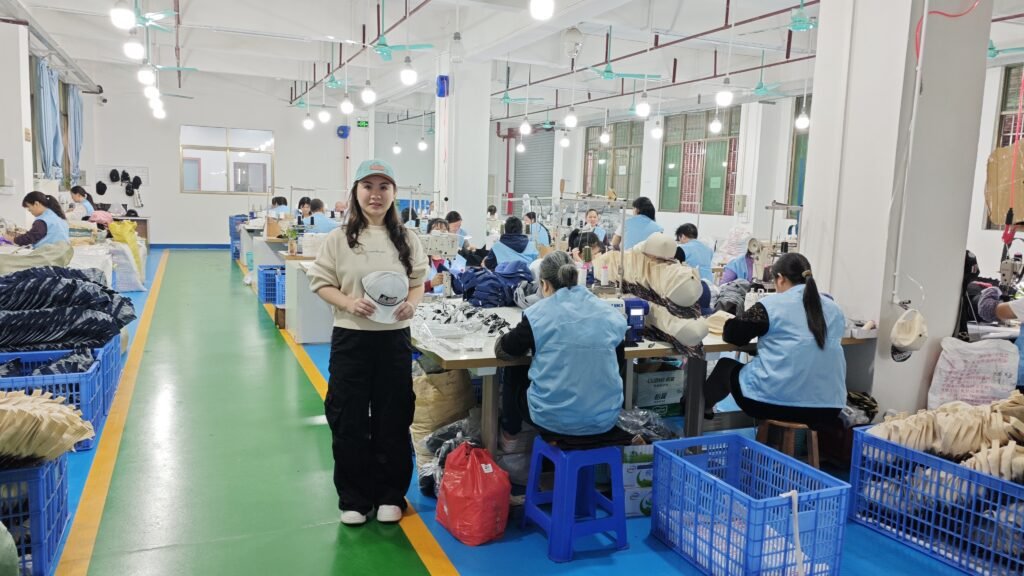
The right partner should help you connect design, sampling, MOQ planning, bulk production, and quality control. That means reviewing design feasibility, explaining production factors clearly, developing accurate samples, controlling bulk manufacturing, and communicating when something needs adjustment.
Questions to Ask Before Choosing a Manufacturer
Before choosing a manufacturer, ask:
- Does the manufacturer understand your brand direction?
- Can they explain what affects MOQ and cost?
- Can they make strong samples?
- Can they support the right fabrics and decoration methods?
- Do they control production?
- Do they have a real QC process?
- Can they support repeat orders and scaling?
- Do they communicate clearly?
For U.S. hat brands building premium custom headwear, JoinTop is built around this kind of end-to-end manufacturing support.
With owned factories in China, Vietnam, and Bangladesh, JoinTop can help brands move from design review to sample development, bulk production, and quality control with stronger consistency.
The best manufacturer does not make every project more complicated. In many cases, the strongest custom hats are simple. They just have the right shape, fabric, logo execution, and production control behind them.
That kind of simplicity takes experience.
FAQ About Custom Hats
What should brands prepare before developing custom hats?
Brands should prepare the target customer, use case, preferred shape, fabric direction, logo artwork, estimated quantity, target price, packaging needs, and launch timeline.
These details help the manufacturer review feasibility and recommend better production options.
What affects MOQ for custom hats?
MOQ is affected by fabric choice, color count, decoration method, trims, labels, packaging, and production planning.
Stock fabrics and standard embroidery are usually easier to manage, while custom fabrics, special patches, and custom packaging may require higher minimums.
How long does custom hat production take?
The timeline depends on design complexity, material sourcing, sample revisions, order quantity, quality inspection, and shipping method.
Custom fabrics, special logo methods, multiple colorways, and retail packaging usually add more time. Brands should avoid planning around the fastest possible schedule. A realistic timeline should include room for sample adjustments and final quality checks.
What is the best logo method for custom hats?
There is no single best method.
Flat embroidery is clean and flexible. 3D puff embroidery is bold. Woven patches show detail. Rubber patches feel modern. Leather patches work well for lifestyle and outdoor designs.
The best choice depends on brand style, budget, and production plan.
Custom hats work best when they are designed with production in mind.
A strong project starts with clear product direction, realistic material choices, accurate samples, smart MOQ planning, stable bulk production, and careful quality control.
Before starting your next custom hat project, prepare your design direction, target quantity, fabric ideas, logo artwork, and launch timeline.
When those details are ready, share them with ÚneteTop for a practical project review. The team can help review sample feasibility, MOQ planning, material options, production timing, and quality expectations before the project moves into development.


 English
  German
  Spanish
  French
  Amharic
  Portuguese
  Italian
  Swedish
  Turkish
  Belarusian
  Danish