

For a hat brand, quality control is the difference between a sample that looks good on a table and a product customers are happy to wear, wash, reorder, and recommend. A custom cap can have the right color and logo yet still fail because the crown is uneven, the visor is twisted, the sweatband is uncomfortable, or the laser perforations do not match the approved specification.
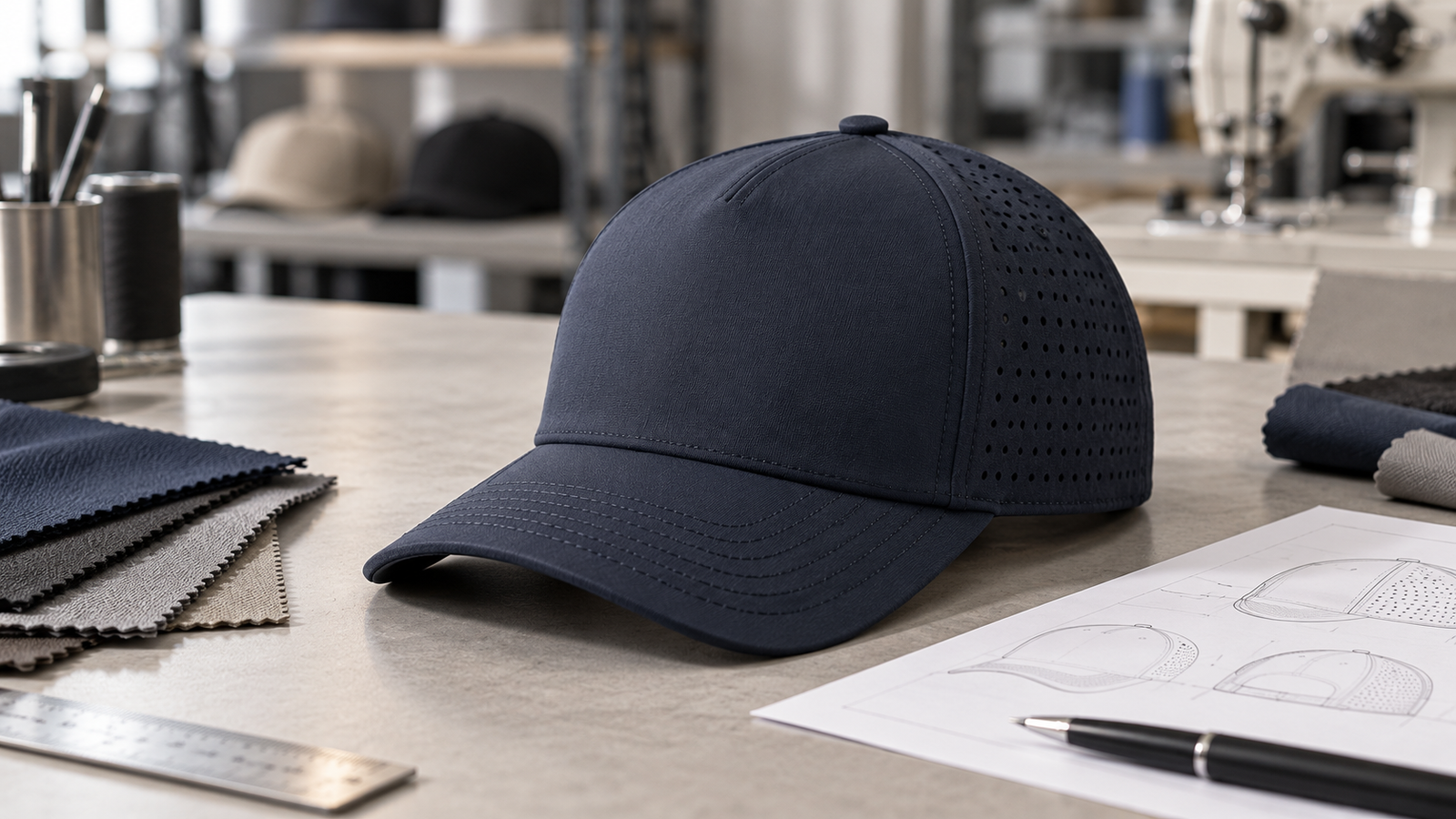
This guide explains how brand owners, importers, and wholesale buyers can build a practical inspection system for custom hats. It covers the checkpoints that matter on normal five-panel and six-panel caps, how to classify defects, when an AQL plan is useful, and what information a factory needs before bulk production.
Why quality control starts before sewing
Many production problems are specification problems in disguise. If a tech pack does not define the crown height, visor curve, fabric, closure, logo size, or tolerance, different people will make different assumptions. A strong quality process therefore begins with a production-ready brief rather than the final inspection.
For a Performance Cap, the brief should identify the intended activity, climate, ventilation requirement, sweatband construction, fabric weight, stretch or recovery, reflective details, and the size of any laser-perforated areas. Laser holes should be consistent and controlled; they are functional ventilation details, not an invitation to make the panel look like a fishing net. For lifestyle caps, the brief may focus more heavily on hand feel, wash appearance, embroidery quality, and crown shape.
The five control points every custom hat buyer should use
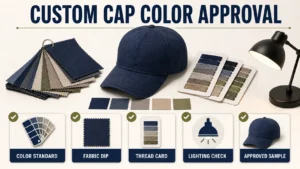
1. Material and color approval
Check the actual production fabric, not only a digital color chip. Compare shade under neutral light and record the approved reference. Review surface texture, weight, stretch, shrinkage, water-repellent finish where specified, and colorfastness requirements for the target market.
Performance fabrics can look similar on a swatch while behaving very differently after cutting and fusing. A lightweight polyester that recovers well may suit a running cap, while a firm woven fabric may provide better structure for a golf cap. The correct choice depends on the use case and the construction that will hold it.
2. Pattern, panel, and shape control
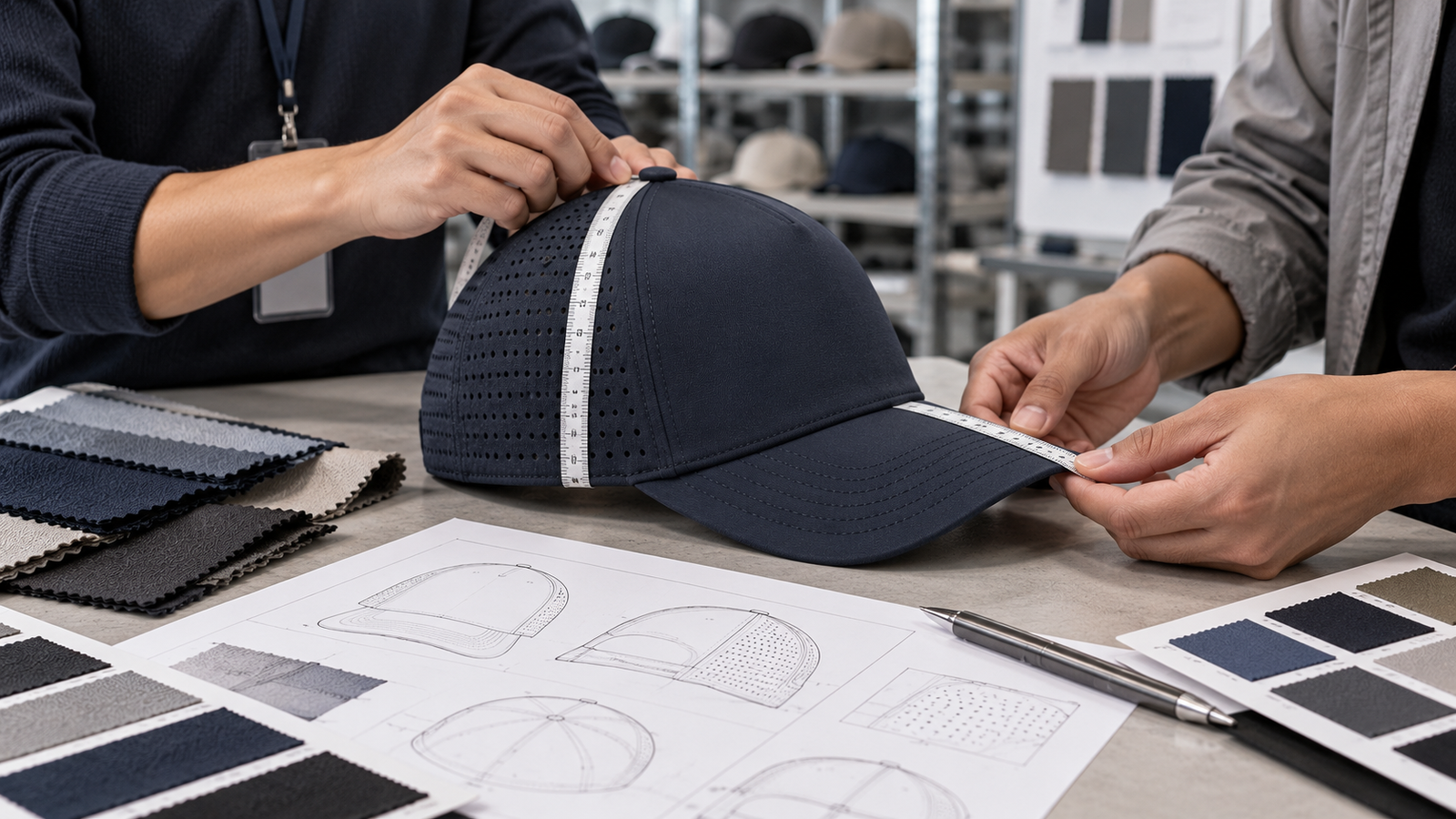
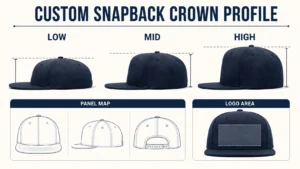
Measure the finished crown at the agreed points: front height, side height, back height, head opening, and seam positions. Check that the five-panel or six-panel pattern is balanced from left to right. The cap should sit level when worn, with no visible twist from the crown into the visor.
Inspect the visor for length, width, curve, edge binding, and recovery after bending. A soft Performance Cap may use a flexible visor, but flexible does not mean random. The production reference should show the approved curve and the acceptable tolerance.
3. Sewing and construction
Look for straight seams, even stitch density, secure thread ends, clean seam allowances, and correct panel matching. Pay attention to stress points: visor attachment, sweatband ends, closure tabs, eyelets, and the junction between the crown and brim.
Common defects include skipped stitches, open seams, puckering, loose threads, exposed seam allowance, uneven topstitching, and a closure that is not centered. These may seem small during a quick visual check, but they affect durability and the buyer’s perception of the brand.
4. Logo and decoration
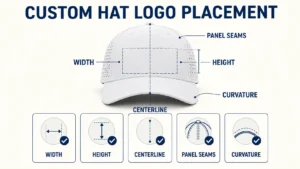
Approve embroidery, printing, patches, woven labels, and heat transfers on the final fabric and finished cap. Confirm logo size, placement, thread or ink color, registration, backing, and the appearance of fine details. A logo can be technically correct on a flat panel and still look too high, too low, or distorted once the crown is shaped.
For laser-perforated Performance Caps, keep decoration away from areas where holes or mesh could distort the mark. If reflective trims are included, inspect continuity, edge security, and visibility from the intended viewing angle.
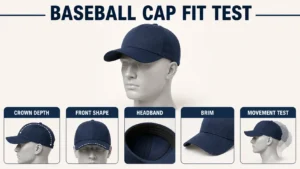
5. Wearer comfort and function
Have a reviewer wear the cap and check pressure points, sweatband feel, adjustability, crown balance, visor comfort, and ventilation. For golf and running products, test the cap during movement rather than only on a mannequin. The cap should stay stable without feeling tight, and the closure should adjust smoothly.
How to classify defects
A simple defect matrix helps a buyer and factory make consistent decisions. A critical defect may create a safety or legal concern, such as a sharp exposed component, contamination, or a failed required test. A major defect affects function, fit, durability, or saleability, such as a badly twisted visor, open seam, incorrect size, or a visibly wrong logo. A minor defect does not materially affect use but falls outside the approved appearance, such as a short loose thread or small shade variation within an otherwise consistent lot.
Set the allowed quantity for each class before inspection. Do not change the rules after seeing the shipment. If a buyer wants a stricter standard for a premium collection, define it in the purchase specification and share the reference samples with the factory.
Using AQL for a practical shipment inspection
AQL, or Acceptable Quality Limit, is a sampling method used to decide whether a lot can be accepted based on a defined sample size and defect thresholds. It is useful when inspecting a large shipment because checking every cap may be impractical. AQL is not a substitute for clear specifications, and it does not make a poor sample acceptable.
A typical plan defines the lot size, inspection level, sample quantity, critical defect limit, major defect limit, and minor defect limit. The buyer and factory should agree which standard or table will be used before production. For a new supplier, a first bulk order, or a high-risk technical cap, the buyer may choose a tighter inspection plan or add a 100% check for specific features such as logo placement, closure type, or perforation consistency.
What to record on an inspection checklist
- Order number, style number, color, quantity, and inspection date.
- Approved sample and version of the tech pack.
- Fabric, color reference, trims, closure, and packaging requirements.
- Measurements for crown, opening, visor, and logo placement.
- Construction checks for seams, stitching, eyelets, sweatband, and closure.
- Decoration checks for artwork, size, position, color, and finish.
- Functional checks for fit, adjustability, ventilation, and comfort.
- Defect photos, defect classification, sample count, and final disposition.
How brands can reduce defects before bulk production
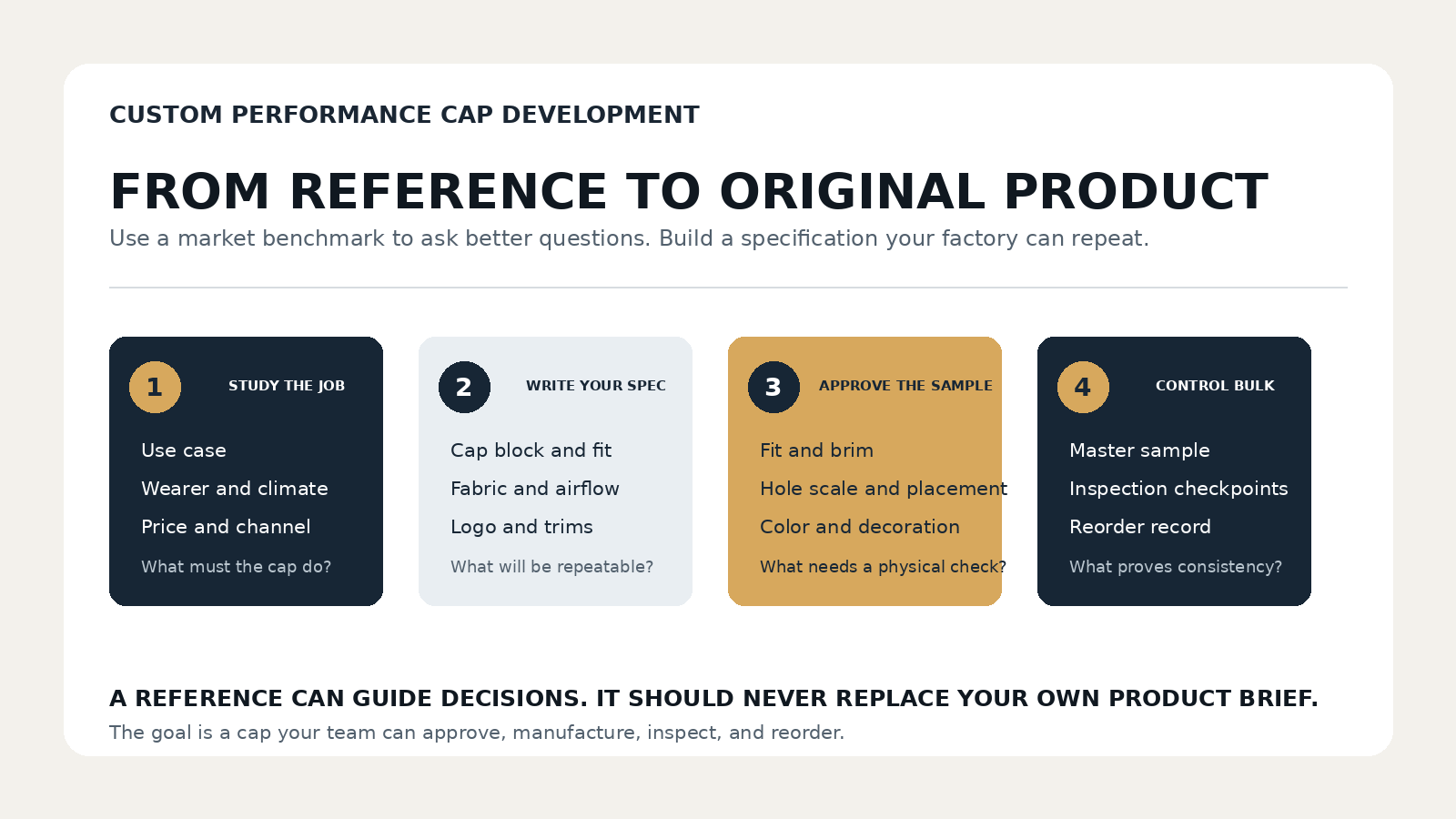
First, send complete artwork and quantity details with the initial brief. Artwork should show dimensions, colors, placement, and any embroidery or patch limitations. Second, approve a physical sample made with the intended material and decoration. Third, record measurable tolerances instead of relying on phrases such as “similar to the sample.” Fourth, confirm packaging and carton requirements before cutting begins, because packing pressure and moisture can affect the finished presentation.
It is also useful to separate a design change from a quality issue. If a brand changes the visor curve, fabric, or logo after the sample is approved, the factory should issue a revised reference. Otherwise, inspectors may compare production against an outdated sample and create confusion for both sides.
Working with a factory on quality control
A reliable factory should be able to explain where quality is checked: incoming material inspection, cutting, embroidery or printing, sewing, finishing, packing, and pre-shipment inspection. Ask how rejected pieces are separated, how rework is recorded, and how the approved sample is protected from accidental changes.
JoinTop supports custom baseball caps and Performance Caps for brands, importers, and wholesalers. With production teams and factories in China, Vietnam, and Bangladesh, JoinTop can match the production location to the product requirements, quantity, and delivery plan. Projects can start from 100 pieces per style and color, subject to the final specification. The practical starting point is a complete brief: cap structure, material reference, artwork, target use, quantity, packaging, and delivery date.
Buyer checklist before approving shipment
Before release, confirm that the inspected lot matches the correct style and color, the measurements remain within tolerance, the decoration matches the approved artwork, major defects are within the agreed limit, packaging protects the caps, and all required test or labeling documents are available. Keep inspection photos and the signed report with the purchase records so the next reorder has a clear reference.
Good quality control is not about searching for a reason to reject a shipment. It is about giving everyone the same definition of a good cap. When the specification, sample, inspection plan, and communication are aligned, a brand can move from a promising design to a repeatable product with fewer surprises.
Planning a custom Performance Cap or five-panel/six-panel baseball cap? Send your artwork, target quantity, material idea, and delivery date to JoinTop. We can review the construction, recommend practical options, and prepare a production plan. Request a quote from JoinTop.

 English
 German
 Spanish
 French
 Amharic
 Portuguese
 Italian
 Swedish
 Turkish
 Belarusian
 Danish