Quick Answer: What Is Hat SPF Protection?
Hat “SPF protection” is mostly a marketing mix-up. SPF (Sun Protection Factor) measures how well sunscreen blocks UVB rays on skin. Hats and clothing use UPF (Ultraviolet Protection Factor), which measures how much UVA and UVB radiation a fabric blocks. A hat labeled UPF 50+ blocks at least 98% of UV rays. For brands, the real question is not “Does this hat have SPF?” but “Is it tested, certified, and shaped to shade the face, ears, and neck?”
Here is a small fact that could save your next collection from a returns headache: hats do not have SPF. SPF is for sunscreen. Hats have UPF. If a supplier hands you a hangtag that says “SPF 50 hat,” that is either a typo or a sign they do not understand sun-protective textiles. Neither option is ideal.
For outdoor, golf, resort, and lifestyle brands, sun protection is no longer a niche feature. It is quickly becoming a baseline expectation. Shoppers now look for hats that do more than look good. They want proof the fabric actually blocks UV rays. They also want coverage that does not leave their ears and neck baking while their forehead stays cool.
This guide clears up the SPF vs UPF confusion, explains what makes a hat truly sun-protective, and shows what brand buyers should ask for when sourcing custom UPF hats.
Hat SPF Protection vs UPF: Two Letters, Very Different Jobs
Think of SPF and UPF as cousins who work in the same industry but have different job titles.
- SPF (Sun Protection Factor) only measures how well a sunscreen protects skin from UVB rays — the kind that cause sunburn. It does not apply to fabric.
- UPF (Ultraviolet Protection Factor) measures how much UVA and UVB radiation a fabric blocks from reaching the skin. This is the number that belongs on hats, shirts, and swimwear.
A UPF 50 fabric lets through about 1/50th of UV radiation, or roughly 2%. That means it blocks about 98%. A standard cotton baseball cap, by contrast, might only block 50–70% of UV because the weave is looser and the brim is narrow.
| UPF Rating | UV Blocked | Best Use Case |
|---|---|---|
| UPF 15–24 | about 93–96% | light casual wear |
| UPF 25–39 | about 96–97% | daily errands |
| UPF 40–50 | about 97.5–98% | extended outdoor use |
| UPF 50+ | 98% or more | hiking, golf, fishing, workwear |
For any brand targeting outdoor or active customers, UPF 50+ is the safe benchmark. It is also the rating most retailers and consumers recognize as “serious” sun protection.
What Actually Makes a Hat Sun-Protective?
A high UPF number is great, but it is not the whole story. The shape and construction of the hat matter just as much.
1. Brim width. A 3-inch brim all the way around shades the face, ears, and back of the neck. A standard 2.5-inch baseball brim mostly protects the forehead and leaves everything else exposed.
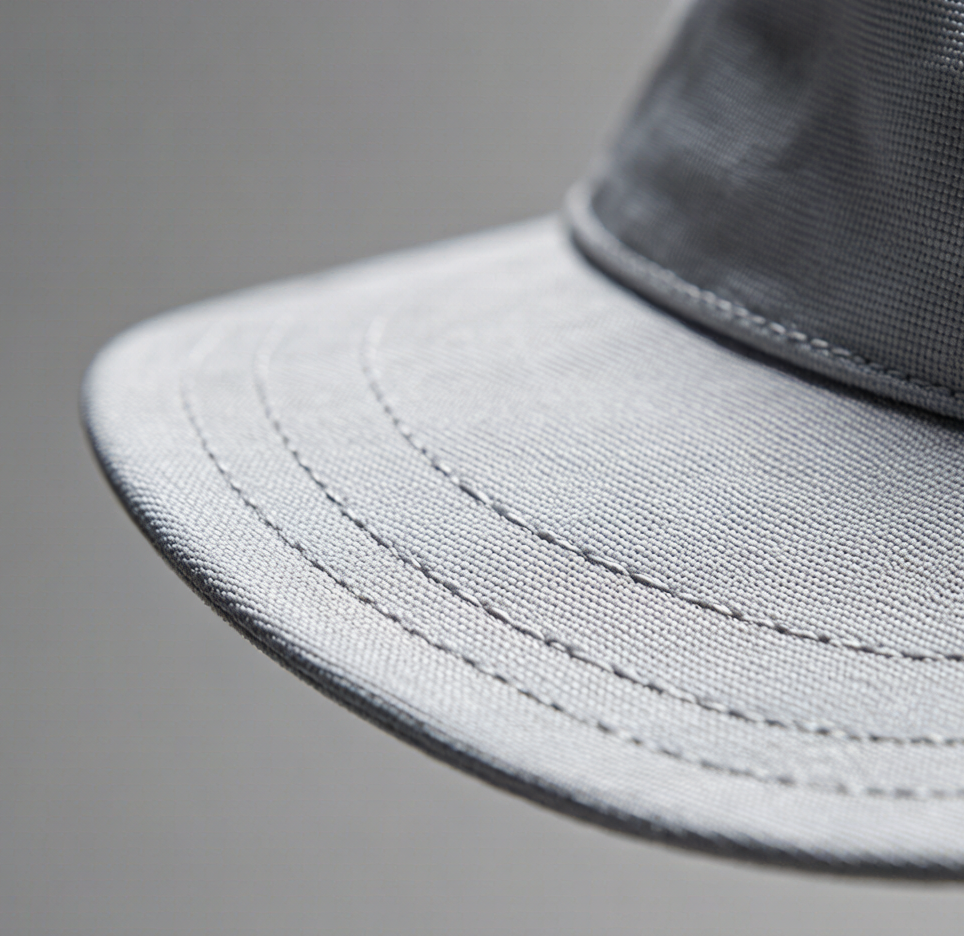
2. Fabric density and weave. Tightly woven fabrics block more UV. Synthetic weaves like nylon and polyester usually score higher than loose natural weaves. Hold a hat up to the light — if you can see through it easily, the UV can see through it too.
3. Color. Darker and brighter colors absorb more UV than light pastels. A navy or black UPF fabric typically outperforms a white version of the same weave.
4. Coverage geometry. Neck flaps, ear drapes, and bucket shapes reduce exposure to the spots where skin cancer shows up most often.
5. Wash and wear durability. Wet, stretched, or worn-out fabric often loses UPF performance. This is why quality control and testing matter for bulk orders.
Die Skin Cancer Foundation recommends a minimum 3-inch brim and UPF 30+ for effective protection. Most outdoor brands now aim for UPF 50+ to stay ahead of customer expectations.
Best Hat Styles for Sun Protection in 2026
Not every silhouette is cut out for real UV defense. Here are the styles that deliver both protection and commercial appeal.
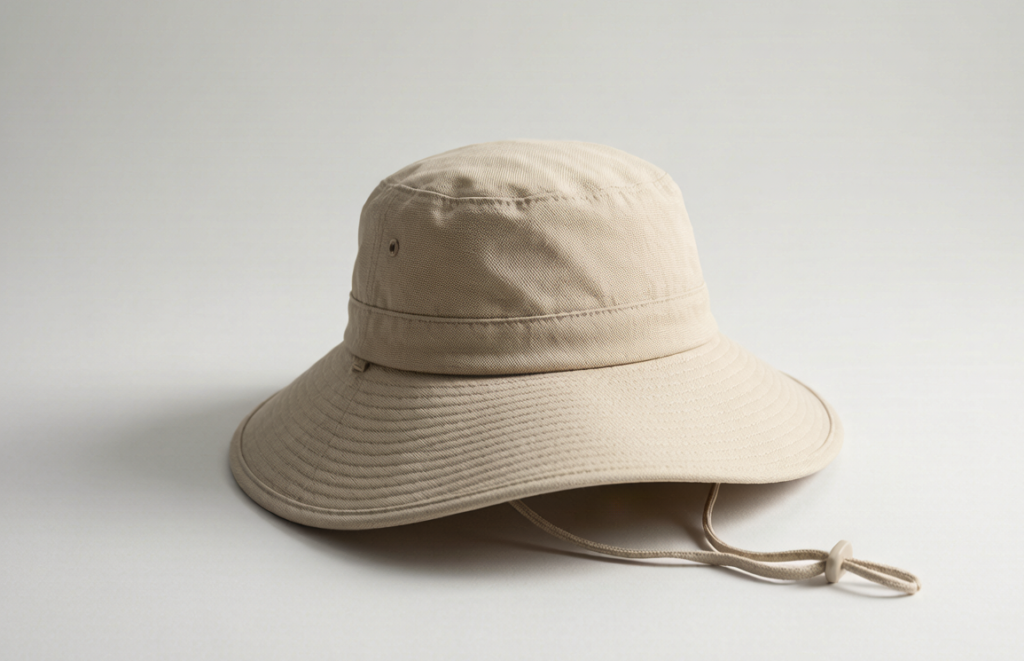
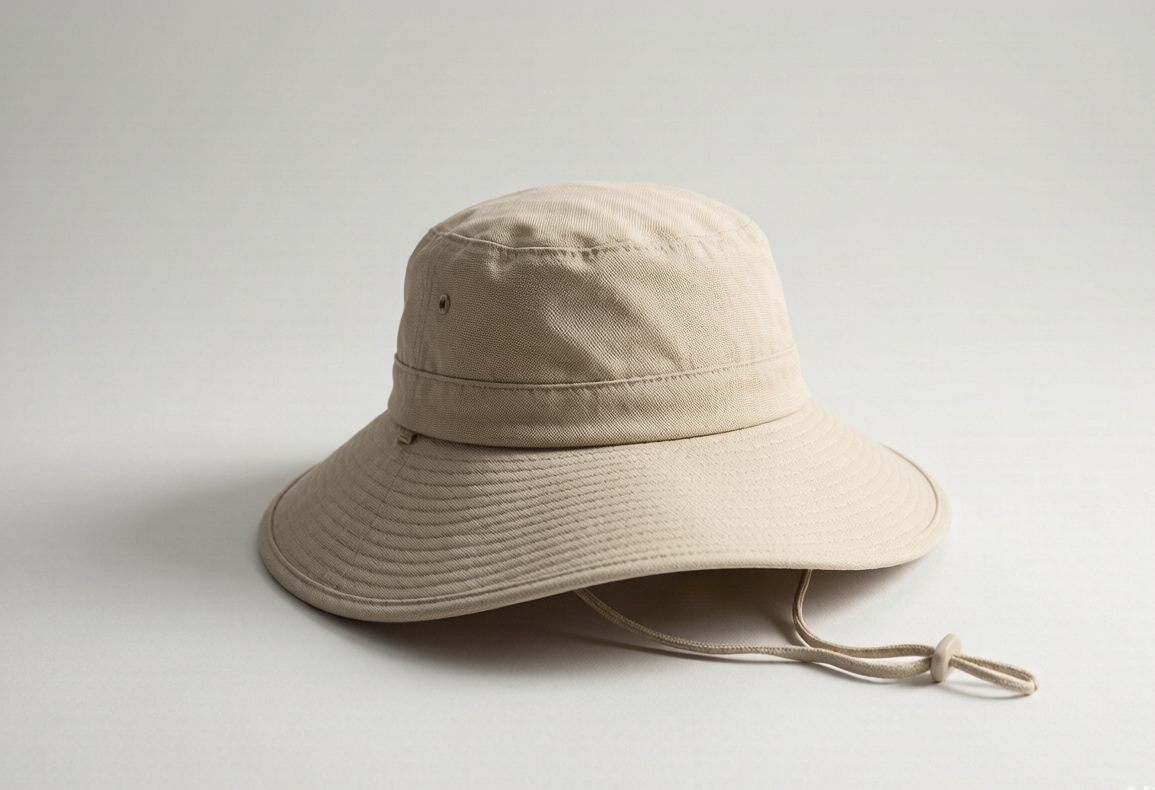
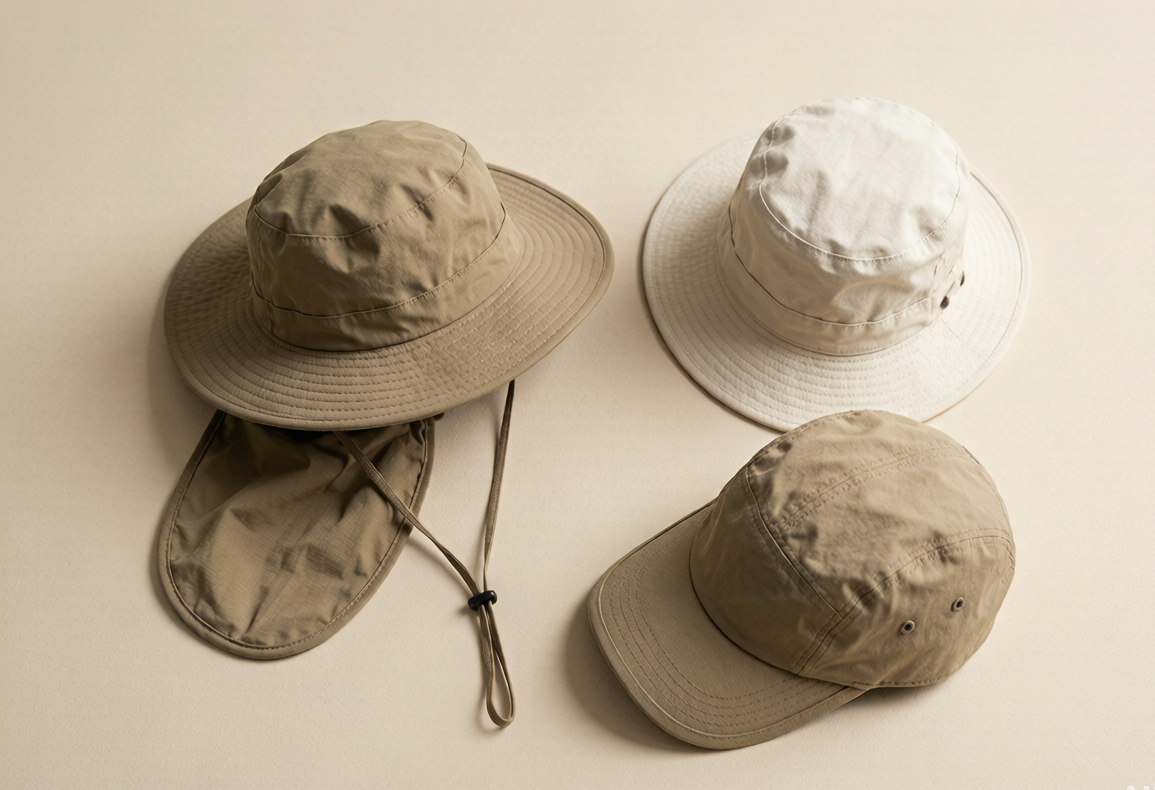
UPF bucket hats. The bucket hat has quietly become the hero of hat SPF protection. A structured bucket with a 7–10 cm brim covers the forehead, ears, and neck without looking like a costume piece. It works for streetwear, outdoor, and resort collections.
Safari and outdoor hats with neck flaps. These are the go-to for fishing, hiking, and outdoor work. The neck flap is the feature that separates fashion from function.
Performance caps with extended brims. For golf, running, and tennis, a lightweight cap with a longer curved brim and UPF-rated panels keeps athletes cool and covered. Add laser perforations and moisture-wicking sweatbands, and the hat becomes wearable all day.
Oversized visors. Popular in golf and tennis, visors keep the top of the head ventilated while shading the face. The trade-off is no scalp coverage, so they work best as part of a broader UV protection hats line.
If your brand already sells custom performance hats or golf headwear, adding a UPF 50+ option is one of the easiest ways to expand the line without reinventing the wheel.
UPF Certifications and Testing: What Brands Should Demand
A UPF claim without a lab report is just a claim. For wholesale orders, ask your supplier for third-party test results from labs like SGS, Intertek, or Bureau Veritas. The report should cover:
- UVA and UVB blocking percentage
- UPF rating
- fabric density and composition
- wash durability, if applicable
Common testing standards include AATCC 183, ASTM D6603, AS/NZS 4399, and EN 13758-1. Different markets care about different standards. U.S. retailers often accept AATCC or ASTM. Australian and European buyers may ask for AS/NZS or EN results.
Hangtags and care labels should clearly state the UPF rating and the testing standard. Vague phrases like “UV protection” or “sun safe” do not build trust. A hangtag that says “UPF 50+ — Tested to AATCC 183” does.
Match the Hat to the Activity
Different activities need different levels of coverage. Use this table to match the right style to your target customer.
| Activity | Best Hat Style | Key Features |
|---|---|---|
| Golf | performance cap or visor | UPF 50+ panels, sweatband, structured brim |
| Hiking | safari hat or bucket hat | wide brim, neck flap, chin cord |
| Fishing | boonie or safari hat | neck flap, water-resistant fabric, floatable brim |
| Beach / resort | wide-brim bucket hat | packable crown, UPF 50+, breathable lining |
| Outdoor work | hat with neck drape | durable fabric, high brim, venting |
| Running / tennis | performance cap | lightweight, moisture-wicking, curved brim |
This is the kind of detail that helps buyers move from “we want a sun hat” to “we need this exact sun hat for this exact customer.”
Sourcing Wholesale UPF Hats: What to Look For
At JoinTop, we see UPF hats as a product, not an afterthought. Our design and QC teams check three things before any sun-protection style goes into sampling: fabric lab reports, brim geometry, and how the hat performs after repeated wear and washing.
We run production across factories in China, Vietnam, and Bangladesh, which lets brands choose the right balance of speed, cost, and compliance for their market. Whether you need a 100-piece test run of UPF 50+ bucket hats or a larger rollout of performance safari hats, the process starts with the same question: “Does the fabric actually pass the test?”
We also help brands add the right details: moisture-wicking sweatbands, adjustable chin cords, packable crowns, and removable neck flaps. These small touches are what turn a generic sun hat into a product people reach for every weekend.
Common Mistakes Brands Make with UPF Hats
1. Trusting the label without asking for test reports. A tag that says “UPF 50” is easy to print. A lab report is harder to fake.
2. Ignoring brim shape. A UPF 50+ crown with a 2-inch brim still leaves the neck and ears in the sun. Coverage geometry matters as much as fabric rating.
3. Forgetting about wear and wash. Some UV treatments fade after a few washes. Ask for wash-durability data if your customers plan to wear the hat heavily.
4. Mixing up SPF and UPF on marketing copy. Calling a hat “SPF 50” is technically wrong and can confuse customers or retailers. Use UPF for fabric. Use SPF for sunscreen.
What This Guide Skips
We are not going to tell you that a baseball cap alone is enough for a day on the water. It is not. We are also not going to pretend that color is the only thing that matters. Weave, certification, and brim shape all play a role. If you want a simple takeaway: UPF 50+ fabric plus a 3-inch brim plus a lab report equals a real sun-protection hat.
FAQ: Hat SPF Protection and UPF Ratings
Can a hat have SPF? Not really. SPF is a sunscreen rating. Hats use UPF, which measures how much UV radiation a fabric blocks.
What UPF rating should a sun hat have? UPF 50+ is the gold standard for extended outdoor use. UPF 30+ works for daily casual wear.
Does a darker hat protect better than a lighter one? Usually yes. Darker, more saturated colors absorb more UV than pale pastels, assuming the fabric weave is the same.
Do mesh panels reduce UPF protection? They can. Open mesh lets more UV through. High-quality performance hats solve this with dual-layer construction or UV-treated mesh.
Can you put a UPF rating on any fabric? Only if it is tested. A supplier cannot legally or ethically claim a UPF rating without lab certification.
Are bucket hats better for sun protection than baseball caps? Generally yes. A bucket hat’s wider brim and all-around coverage shade the ears and neck, while a baseball cap mostly shades the forehead.
The Bottom Line
Hat SPF protection is a phrase that gets thrown around, but the real metric is UPF. Brands that understand the difference — and build or source hats with certified UPF 50+ fabric, smart brim geometry, and reliable testing — will stand out in a market full of vague “sun safe” claims.
Start with the fabric. Add the right shape. Ask for the lab report. And make sure your customers actually want to wear the hat, not just hang it on a wall.
For more on materials, read our guide to the best durable materials for custom hats. If you are planning a full collection, our latest fashion hats trends breakdown will keep you ahead of the curve. You can also learn how construction details affect quality in our guide to premium quality cap construction.


 English
  German
  Spanish
  French
  Amharic
  Portuguese
  Italian
  Swedish
  Turkish
  Belarusian
  Danish