
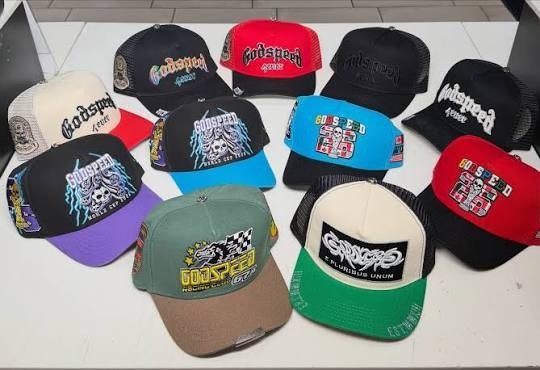
Custom trucker hats are not defined by “mesh” alone. For a brand, the five-panel or six-panel construction determines the front branding area, seam layout, foam or fabric support, mesh placement, brim profile, and the way embroidery or a patch should be approved. Fix the cap platform first, then decide how the mesh, front material, and decoration work together.
This guide is for brand owners, product teams, and sourcing managers planning a custom trucker program. It treats a five-panel trucker as the active example and compares a six-panel option where the front center seam changes the approval work. The goal is a repeatable reference for sampling and bulk, not a generic list of decoration methods.

Lock the five-panel or six-panel trucker construction first
The term “trucker” usually communicates a front branding area plus mesh ventilation, but it does not fully specify the pattern. A five-panel trucker can provide one uninterrupted front panel with mesh side and rear panels. A six-panel trucker splits the front into two panels and adds a center seam that affects logo clearance.
| Platform | Useful when | Inputs to lock | Common failure when unspecified |
|---|---|---|---|
| Five-panel trucker | The brand wants a broad front panel and a clean badge or embroidery zone |
Front material and support, mesh zones, crown height, brim curve, closure, seam map, and logo safe zone |
The factory changes the front shape or moves decoration toward a side seam |
| Six-panel trucker | The brand wants a traditional baseball-cap profile with segmented front panels |
Center seam, front-panel symmetry, mesh placement, crown profile, brim attachment, and logo clearance |
The logo crosses the center seam or the two front panels look uneven |
Separate the front material from the mesh decision
Foam, cotton, polyester, technical fabric, and other front materials each behave differently under embroidery, patch attachment, and heat. Mesh also has its own variables: hole size, hand feel, edge stability, color, and the way it joins the front panels. The brief should identify what is fixed and what the factory may recommend.
Record these inputs before sampling:
- five-panel or six-panel layout and front seam map;
- front material, thickness or hand requirement, support layer, and lining;
- mesh material, color, hole pattern, and the panels where it is allowed;
- crown height, brim shape, closure, sweatband, and interior finishing;
- logo method, artwork version, size, placement, and clear space;
- fabric, thread, patch, trim, and closure colors by style and colorway;
- quantity by style and color, target market, packaging, and delivery date.
If foam is part of the concept, approve its actual height and recovery on the finished panel. A screen mock-up cannot show how a dense sew-out, patch edge, or heat process will sit on foam.
Keep the front branding zone clear of seams and mesh
For a five-panel trucker, the uninterrupted front panel can make a centered mark easier to position, but the crown seam and brim attachment still need clearance. For a six-panel trucker, the center seam is a hard reference: the logo can be centered across it only when the artwork and decoration method are designed for that construction. Most programs should define a safe zone that stays clear of the seam.
Use a placement map that shows:
- The front-panel boundaries and centerline.
- The distance from the crown seam and brim seam.
- The maximum width and height of the embroidery, patch, or print.
- The mesh edge and any support or backing under the front.
- The approved orientation and location for every colorway.
This map prevents a factory from treating a flat artwork file as the only instruction. It also gives the buyer something measurable to compare when the sample or bulk lot is reviewed.
Choose embroidery, patch, or print after the surface is known
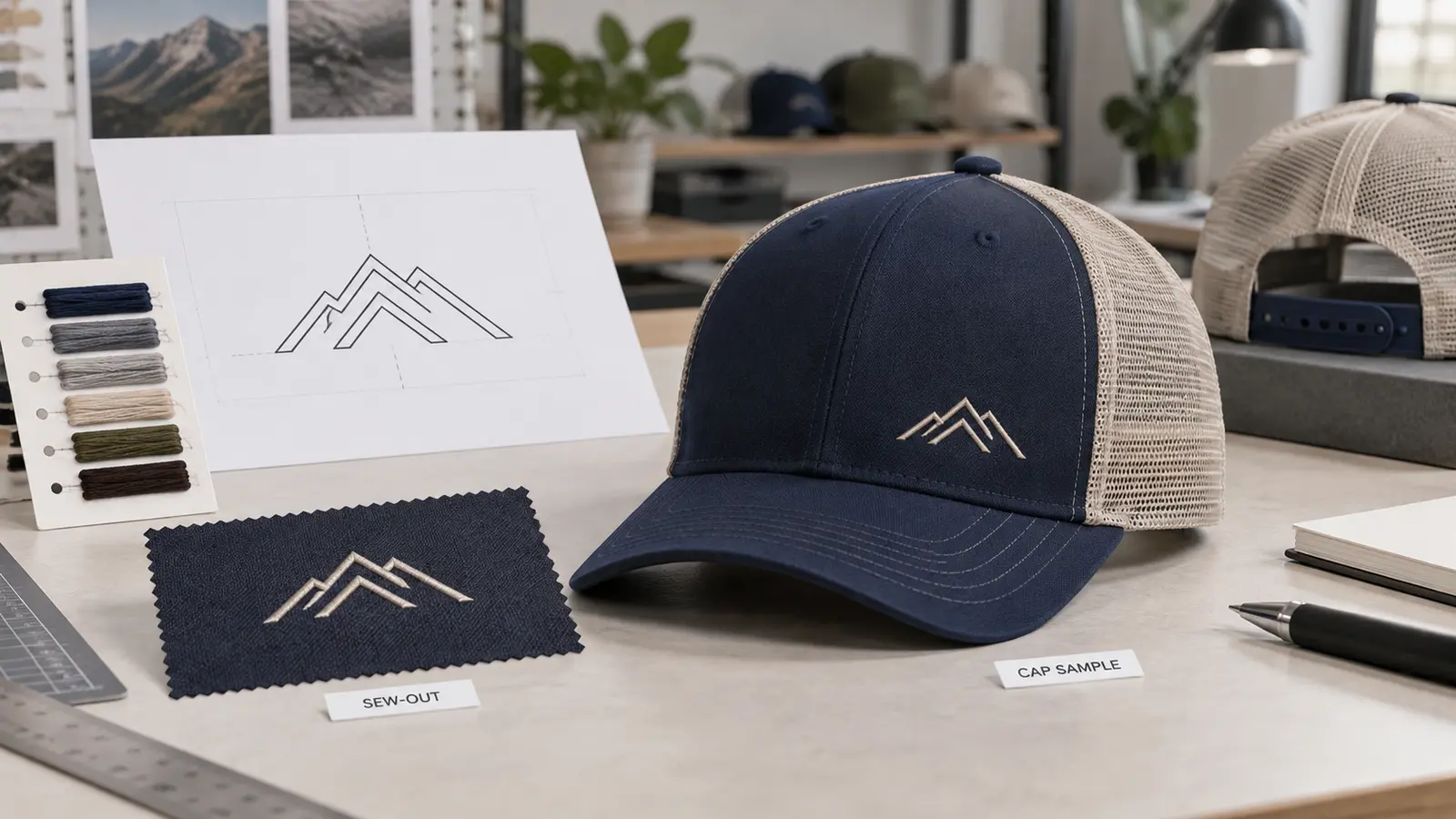
Decoration should follow the front material and panel geometry. Embroidery may need a stabilizer and enough support to avoid puckering. A woven or rubber patch changes the weight and edge profile.
Heat-applied decoration depends on the surface, temperature, pressure, and the way the front panel recovers. Screen or transfer printing may require a specific surface finish and color-control reference.
Before approving the method, ask the factory for a physical sample on the intended front material. Check:
- edge definition and registration;
- thread, ink, or patch color against the actual fabric;
- stitch density, backing, and underside finish;
- foam compression or distortion around the decoration;
- distance from the seam, brim, and mesh edge;
- appearance after the cap is shaped, not only while flat.
For a six-panel trucker, inspect the two front panels separately and confirm the center seam is not pulling the decoration off line. For a five-panel trucker, confirm that the single front panel remains smooth and that the top seam is not mistaken for a center split.
A trucker sample review that buyers can repeat
Use the same order for every colorway and revision.
1. Verify construction
Count the panels, confirm the front material and mesh zones, inspect the crown and brim, and compare the closure and sweatband with the brief.
2. Verify fit and silhouette
Check the crown height, brim curve, adjustment range, rear profile, and interior finish on a consistent head form or wearer.
3. Verify decoration
Compare the physical sew-out, patch, or print with the approved artwork. Check scale, placement, color, edge quality, backing, and interaction with seams or foam.
4. Verify colorways
Review each front material, mesh, thread, trim, and closure combination under consistent lighting. Keep a colorway matrix rather than relying on a single sample.
5. Freeze the reference
Record the sample number, panel map, artwork version, materials, measurements, inspection points, and change history before bulk production.
After the construction is clear, request a custom trucker hat manufacturing review. Send the five-panel or six-panel preference, front and mesh references, logo file, decoration method, quantities by style and color, target market, and delivery date.
Bulk controls for mesh, foam, and decoration
The bulk inspection record should compare the lot with the approved construction and decoration reference. Check panel symmetry, front-panel
support, mesh attachment, crown and brim shape, closure function, logo or patch placement, thread or patch color, backing, measurements, labels, and packaging.
If the order has multiple mesh or front-material combinations, list each as a separate colorway. A dark mesh can make the same thread appear
different from a light mesh; foam can also change how an edge reads after shaping. Keep the approved reference with the purchase order and reorder file.
JoinTop’s current working guidance is 100 pieces per style and color. Sampling is usually 7–14 days, and bulk production is commonly 35–45 days after sample confirmation, excluding design changes, approval delays, sample transportation, and international logistics. These are planning ranges; the confirmed schedule depends on the final construction, material availability, and approvals.
For the decoration handoff, the custom embroidered trucker hats production-control guide provides a related route. The trucker hat vs napback comparison can help explain the broader style choice, while this article stays focused on five-panel and six-panel production controls.
What to send in a qualified trucker inquiry
Include:
- Company name or website and intended customer or market.
- Five-panel or six-panel preference, front material, mesh zones, crown, and brim references.
- Logo artwork, preferred decoration, finished size, placement, and clear-space rules.
- Quantity by style and color, mesh and front-material colorways, packaging or label needs, and target delivery date.
- Existing sample, tech pack, or reference cap if the project is based on an approved shape.
If the trucker is still a concept, identify which elements can change. That allows the factory to recommend a surface and decoration
route without silently changing the cap platform.
FAQ
Are five-panel trucker hats better than six-panel trucker hats?
Neither is automatically better. A five-panel trucker offers one uninterrupted front panel, while a six-panel trucker has a center seam and a traditional segmented front. Choose the platform that fits the logo, silhouette, mesh plan, and target wearer.
Can a six-panel trucker use a front patch?
Yes, when the patch size, center-seam clearance, support, and attachment method are approved on the actual six-panel sample. The patch should not be positioned from a flat drawing alone.
Does foam make a trucker hat easier to decorate?
Not automatically. Foam changes the support, surface, and recovery of the front panel. The buyer should approve the decoration on the intended foam or front material and check the shaped cap for distortion.
What should be approved before a trucker bulk order?
Approve panel count, front and mesh materials, crown and brim, closure, decoration sample, placement map, colorway matrix,
measurements, inspection points, and a version-controlled reference.




 English
 German
 Spanish
 French
 Amharic
 Portuguese
 Italian
 Swedish
 Turkish
 Belarusian
 Danish