
Premium custom baseball caps are built through controlled decisions, not a higher price tag placed on a standard blank. For a brand, importer, wholesaler, or retail buying team, a premium cap should have a repeatable crown profile, a stable visor, an intentional fabric hand, a decoration method that suits the surface, and an approval record that can be used again at bulk production and reorder. The right development path starts by deciding whether the product needs a normal five-panel or six-panel structure, then connecting the fabric, performance brief, logo treatment, fit, quality controls, packaging, and supplier terms.
Working definition for buyers. A premium custom baseball cap is a cap whose construction, material, decoration, fit, and inspection evidence are controlled tightly enough that the finished product can support a brand promise and remain consistent across colorways and repeat orders.
The fastest way to create an expensive problem is to approve “premium” from a computer mockup. A buyer should approve a measurable specification, a physical fabric and logo sample, a complete cap sample, and a written bulk inspection plan. The sections below are organized around the decisions that affect cost, risk, and reorder confidence.
Choose the structure before you choose the finish
Premium baseball caps normally begin with a five-panel or six-panel block. The two constructions can share a brand mood, but they do not create the same fit, logo canvas, seam map, or production behavior.
| Decision area | Five-panel cap | Six-panel cap | Buyer implication |
|---|---|---|---|
| Front appearance | Often provides a broad, clean front area | Usually carries a traditional center seam and two front panels | Choose five panels when a wide technical or modern logo canvas matters. Choose six panels when customers expect a familiar baseball-cap silhouette. |
| Crown character | Can read more contemporary, outdoor, or performance-led | Can be tuned toward classic sports, golf, lifestyle, or structured retail | Use the cap block that matches the collection rather than adding expensive trims to the wrong shape. |
| Decoration risk | Large embroidery can still pull a light front panel | Center seams and front-panel tension can affect logo placement | Approve the logo on the finished curved cap, not only on a flat artwork file. |
| Ventilation options | Perforation or mesh can be concentrated in side and rear zones | Ventilation can follow several panel sections and seam lines | Write a ventilation map if the product is positioned as a Performance Cap. |
| Collection planning | Works well as a technical or fashion-forward hero shape | Works well as a core baseball or golf platform | Keep separate specifications when a collection uses both structures. |
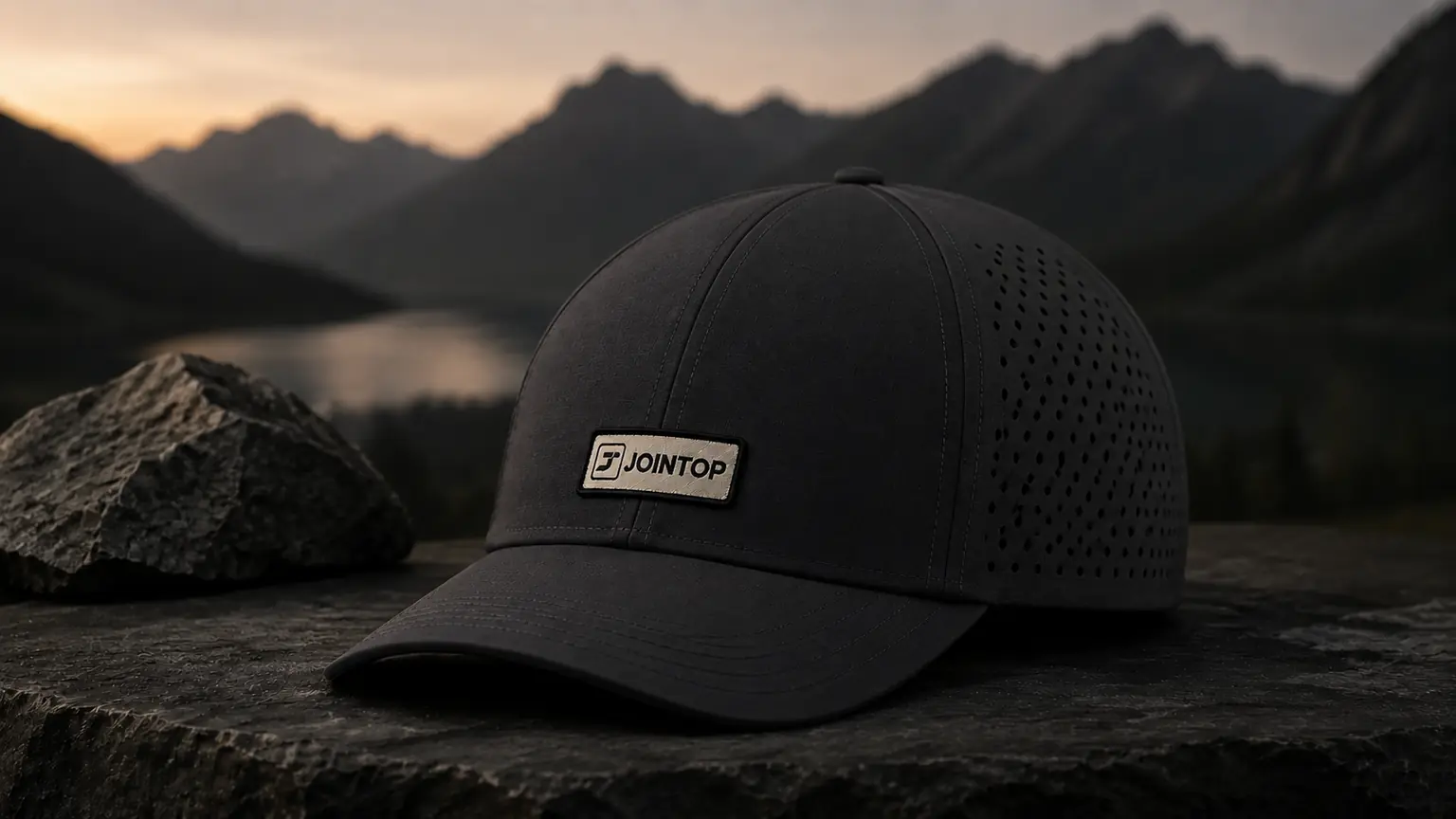
A five-panel cap is a useful starting point when the brand wants a clean front, light construction, or a visible Performance Cap direction. A six-panel cap is usually easier to position when the customer already buys traditional baseball caps and expects a familiar curve and seam layout. Neither structure is automatically more premium. The evidence is in the fit, construction, materials, and control record.
Translate “premium” into a specification
Premium is often used as a visual word, while a factory needs measurable instructions. Before requesting a final quote, turn the product idea into a specification that a product developer, inspector, and buyer can read in the same way.
| Specification area | Record in the brief | Approval evidence | Risk when left vague |
|---|---|---|---|
| Crown | Five-panel or six-panel block, crown height, front slope, structure, and seam finish | Technical drawing, measured sample, and front and side photographs | A cap can look correct from the front and still sit too shallow, too high, or unevenly on the head. |
| Visor | Length, curve, stiffness, edge finish, and material reference | Side profile, symmetry check, and wear test | A soft visor can change the silhouette and a stiff visor can make the cap uncomfortable. |
| Shell | Fiber, woven or knit construction, weight target, stretch, finish, and color reference | Swatch beside the sewn cap under consistent light | The same fiber name can hide a different hand feel, surface, or shade between lots. |
| Sweatband | Width, softness, seam position, color, and expected moisture behavior | Wear test after movement and close-up inspection | A premium shell can still feel low value if the band rolls, scratches, or stays damp. |
| Decoration | Logo method, size, placement, thread or ink colors, backing, and minimum line width | Sew-out, patch sample, transfer sample, or molded-badge sample on the actual cap | Fine lines may close, dense embroidery may pucker, and a patch may add more weight than expected. |
| Closure | Fitted size range or adjustment range, hardware, strap length, and attachment | Fit check on multiple wearers and repeated opening and closing | A closure can look attractive in a photo but fail to hold its setting or feel sharp at the neck. |
| Color system | Shell, thread, visor, sweatband, trim, and label references by SKU | Physical colorway board and light check | Color names such as stone, navy, or olive are not enough for repeat production. |
Do not write a performance promise before the product evidence exists. “Breathable,” “quick-drying,” “water resistant,” and “UPF-rated” can describe different test methods and different finished products. If the cap is promoted for running, golf, or outdoor use, state what the cap is designed to support and what evidence the brand will retain. Use careful product language until the relevant test or certification is complete.
Build the fabric and performance brief around the use case
Premium fabric selection is a decision about the wearer’s day, the cap’s construction, and the retail position. Polyester, nylon, cotton, blends, mesh, and technical woven fabrics can all be useful in different programs. The fiber label alone does not determine comfort or performance. Weight, weave, finish, stretch, perforation, lining, sweatband, and visor construction all affect the finished result.
For running and active programs
A running or training cap usually needs a controlled balance of weight, airflow, sweatband comfort, secure fit, and decoration load. A laser-perforated or mesh panel may support airflow, but hole size and placement still need to match the fabric and the visual direction. A dense front logo can add stiffness or pull a lightweight panel. The correct approval is a complete cap worn during movement, not a fabric swatch viewed on a table.
For golf and outdoor programs
Golf and outdoor buyers often care about stable visor shape, forehead comfort, visibility, sun coverage, and a cap that keeps its identity after repeated wear. A six-panel cap can provide a familiar golf silhouette, while a five-panel Performance Cap can create a lighter, more technical position. Confirm the visor curve, sweatband, closure, and claims before the cap is described as performance headwear.
For lifestyle and premium casual programs
Cotton twill, brushed cotton, canvas, and blended fabrics can create a softer or more heritage-led feel. If the cap is washed or garment-dyed, approve the expected shade variation and measure the cap after the same treatment planned for bulk. Washing can change dimensions, panel appearance, embroidery, patch edges, and visor shape. A pre-wash sample is not a reliable final retail reference.

JoinTop’s custom hat fabric guide can support the initial polyester versus nylon discussion. For a Performance Cap program, keep a separate record for shell, ventilation, sweatband, visor, and decoration. A buyer should be able to explain which component creates the intended experience and which component is being checked for consistency.
Choose logo and decoration methods by surface and scale
Logo treatment is where premium appearance and production risk often collide. The method should follow the artwork, the panel, the cap block, the fabric, and the intended price position. A clean embroidered wordmark may need a controlled stitch count. A woven patch can give a woven texture and stabilize the front, but it adds thickness. A silicone badge can create a raised technical look, but its weight and attachment must be checked on a curved crown. A transfer can deliver fine detail on a compatible surface, but curing and wash resistance need a defined check.
| Logo method | Best fit | Approval test | Common risk |
|---|---|---|---|
| Flat embroidery | Wordmarks, symbols, and repeatable core branding | Physical sew-out at final size on the actual fabric | Thread pull, closed counters, heavy backing, or uneven density |
| 3D puff embroidery | Bold short marks on a supported front | Check edge definition, height, and side view on the curved cap | Small text becomes unreadable or the panel loses its shape |
| Woven patch | Detailed marks, heritage branding, or a patch-led collection | Check edge finish, attachment, thickness, and placement | Patch lift, excess weight, or a border that sits too close to a seam |
| Silicone or molded badge | Technical or modern Performance Cap branding | Check badge weight, bond or stitch attachment, and surface curvature | Badge edges lift or the front panel feels unbalanced |
| Transfer or print | Fine graphics or artwork that does not suit stitching | Check adhesion, hand feel, stretch, and care behavior | Cracking, gloss mismatch, or poor adhesion on the chosen shell |
Use the logo safe zone to keep the mark away from seams, the visor edge, and crown curvature that distorts the artwork. Record the width, height, centerline, bottom clearance, thread or ink color, backing, and minimum line width. Approve the decoration on the finished cap. A flat artwork file cannot show how the logo behaves when the crown is stretched over a head.
Review samples in a fixed order
Sampling should reduce uncertainty in stages. Do not ask the factory to solve fit, fabric, logo, packaging, and color changes in one unstructured feedback email. A staged review gives each decision an owner and makes the next sample easier to judge.
- Brief and quote review. Confirm the cap structure, use case, quantity by color, decoration, target market, and required delivery date. Ask the factory to list assumptions in the quote.
- Material review. Approve shell, sweatband, visor material, mesh or perforation direction, trim, and color references. Keep the swatches with the product file.
- Blank cap review. Check crown height, panel balance, visor curve, closure, sweatband, and on-head fit before the decoration is treated as final.
- Decoration review. Approve the sew-out, patch, badge, or transfer at production scale and on the real curved surface.
- Complete sample review. Wear the cap, photograph front, side, rear, inside, and logo close-ups, then record changes by version.
- Bulk release. Release only the dated sample and written specification. Define what constitutes a major, minor, or unacceptable defect.
JoinTop’s custom hat sampling process and hat quality control process pages provide useful internal links for a buyer who is building a complete development record.
Release premium caps with a bulk control plan
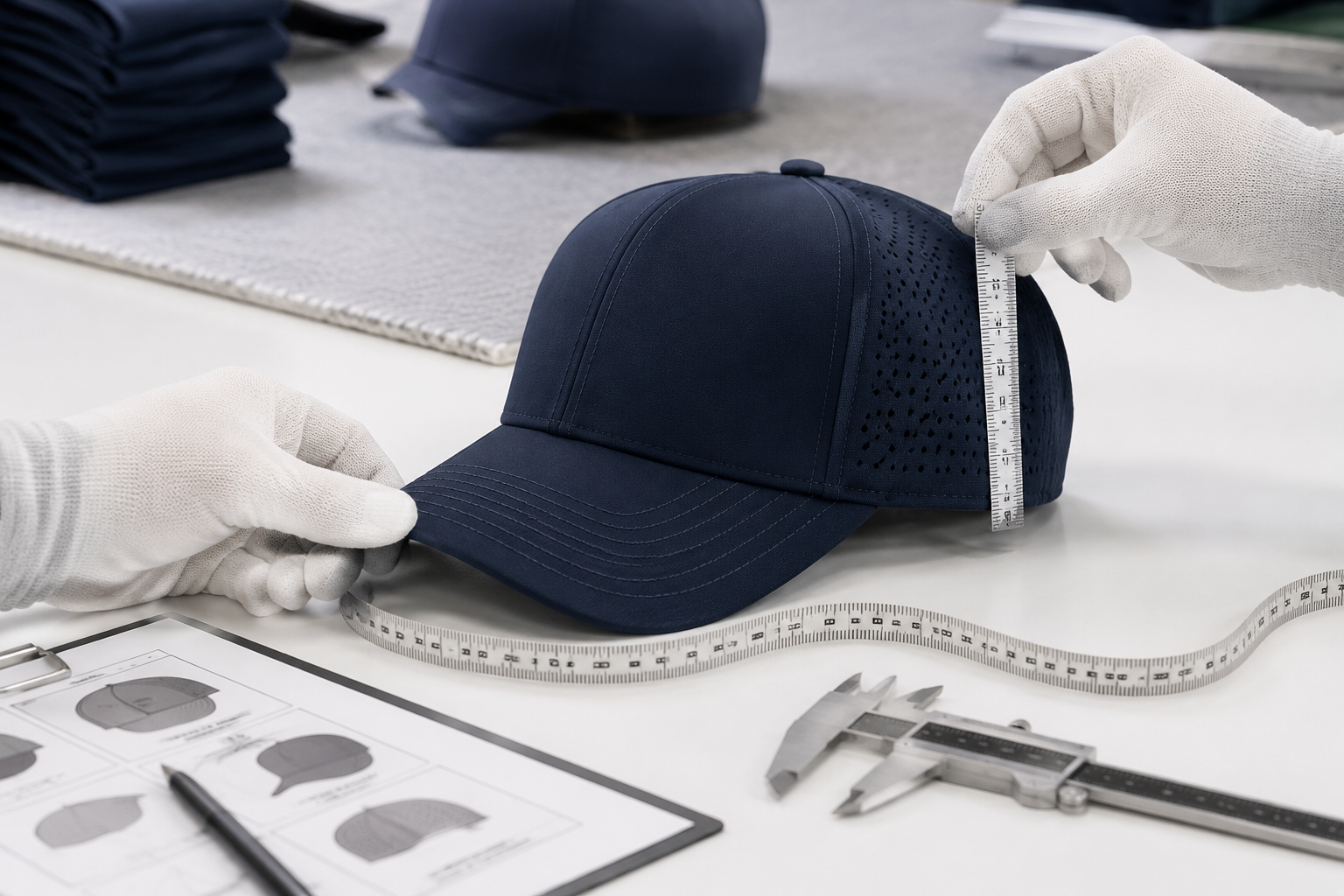
A premium sample does not guarantee a premium shipment. Bulk control should compare production against the approved sample, the measurement sheet, the decoration record, and the packaging instruction. The inspection plan should be agreed before production, because a buyer cannot fairly change the acceptance standard after goods are already packed.
Construction and measurement checks
Check crown profile, panel seams, front support, visor length and curve, sweatband width, closure attachment, and finished circumference. A simple measurement sheet should identify the reference point and tolerance. For a Performance Cap, check the ventilation layout and whether perforation or mesh is even across the approved zones.
Appearance and decoration checks
Inspect shade consistency, loose threads, stains, seam puckering, visor distortion, logo placement, thread color, patch edges, badge attachment, and backing. Compare the production logo with the approved sew-out and the finished sample. Inspectors should photograph recurring defects so the supplier and buyer are using the same visual reference.
Packaging and shipment checks
Confirm individual bags, labels, barcodes, cartons, carton marks, folding or shaping instructions, and destination requirements. A good cap can arrive with a damaged visor or compressed crown if the packing method was not approved. The packing instruction belongs in the purchase file, not in a last-minute message to the shipping team.
Compare suppliers by evidence, not by the first unit price
Supplier comparison becomes more useful when every factory receives the same brief. Ask each supplier to quote the same cap structure, shell, color plan, logo method, quantity, packaging, and shipping term. Then compare what is included and what is assumed.
| Supplier comparison point | Question to ask | Evidence to request |
|---|---|---|
| Development | Who reviews the brief and manufacturability before sampling? | Annotated specification, sample plan, and named approval steps |
| Material control | How are fabric, thread, trim, and color references retained? | Swatches, color cards, or a repeat-order record |
| Decoration | How are artwork, digitizing, sew-outs, and placement approved? | Sew-out, placement drawing, and finished-cap photograph |
| Quality | Which defects are checked before packing? | Inspection checklist, defect photos, and agreed sampling plan |
| Capacity and location | Which factory will make the order and how are changes controlled? | Confirmed production location and responsible contact |
| Reorders | How is the approved sample and bill of materials retained? | Sample ID, revision record, and repeat-order process |
| Commercial terms | What does MOQ include and which charges are separate? | Itemized quote for development, bulk, packaging, and delivery |
JoinTop has production resources in China, Vietnam, and Bangladesh. The correct factory location depends on the style, quantity, material, and project requirements. A buyer should confirm the actual production site and control plan for the order instead of treating a multi-location footprint as a substitute for project evidence.
Plan the timeline without inventing a guarantee
The timeline should begin with a complete brief and end with a confirmed inspection and packing plan. The number of revisions, sample shipping, artwork changes, special materials, and international logistics can all change the calendar. Put the launch date, required in-warehouse date, target quantity, and approval owner in the same document.
For a suitable program, JoinTop can discuss a 100-piece MOQ. Confirm whether that minimum applies per style, color, size group, or order scope. If the product uses custom fabric, molded trims, special packaging, or a fitted size range, the commercial minimum may need a separate review. A written answer is safer than assuming that every premium cap shares one MOQ or one timeline.
Premium custom baseball cap release checklist
- Cap structure and intended use are written clearly.
- Five-panel or six-panel block is selected before final artwork approval.
- Crown, visor, sweatband, closure, and finished measurements are recorded.
- Shell fabric, ventilation, performance language, and care requirements are defined.
- Logo artwork, safe zone, decoration method, colors, backing, and size are approved.
- Physical material swatches and a finished decorated sample are retained.
- Each colorway has a documented approval record.
- Bulk defects, tolerances, inspection method, and packing requirements are written before production.
- Quantity, MOQ basis, delivery date, production location, and responsible approver are confirmed.
- Reorder files identify the exact approved sample and revision.
A premium baseball cap should make the buyer’s next decision easier. If the specification cannot tell a new inspector what to measure, or if the reorder file cannot tell the factory which sample is approved, the product is still dependent on memory. That is the point where a high-looking cap becomes a high-risk cap.
Request a development review
To start a custom baseball cap project with JoinTop, send the company or brand website, preferred five-panel or six-panel direction, intended use, logo file or reference, quantity by color, target market, packaging needs, and required delivery date. If you are developing an active line, include whether the cap is for running, golf, outdoor, or daily wear. JoinTop can then review the specification, suggest a practical sample path, and confirm the applicable MOQ and quotation assumptions.
Request a custom cap review. Send your design file, target quantity, preferred five-panel or six-panel structure, intended use, and delivery market through the JoinTop contact page. The team can confirm the applicable MOQ, sample path, and quotation assumptions for the actual project.
For U.S. textile labeling considerations, review the FTC textile labeling guidance before finalizing fiber claims and labels. Keep all claims, product pages, packaging, and factory specifications aligned with the evidence available for the finished cap.




 English
 German
 Spanish
 French
 Amharic
 Portuguese
 Italian
 Swedish
 Turkish
 Belarusian
 Danish