Choosing fabric for custom hats is a product decision, not a finishing detail. Material changes the cap’s hand feel, shape retention, breathability, logo performance, cost, and suitability for a particular customer or climate. The right fabric is the one that supports the use case and remains stable through sampling and bulk production.
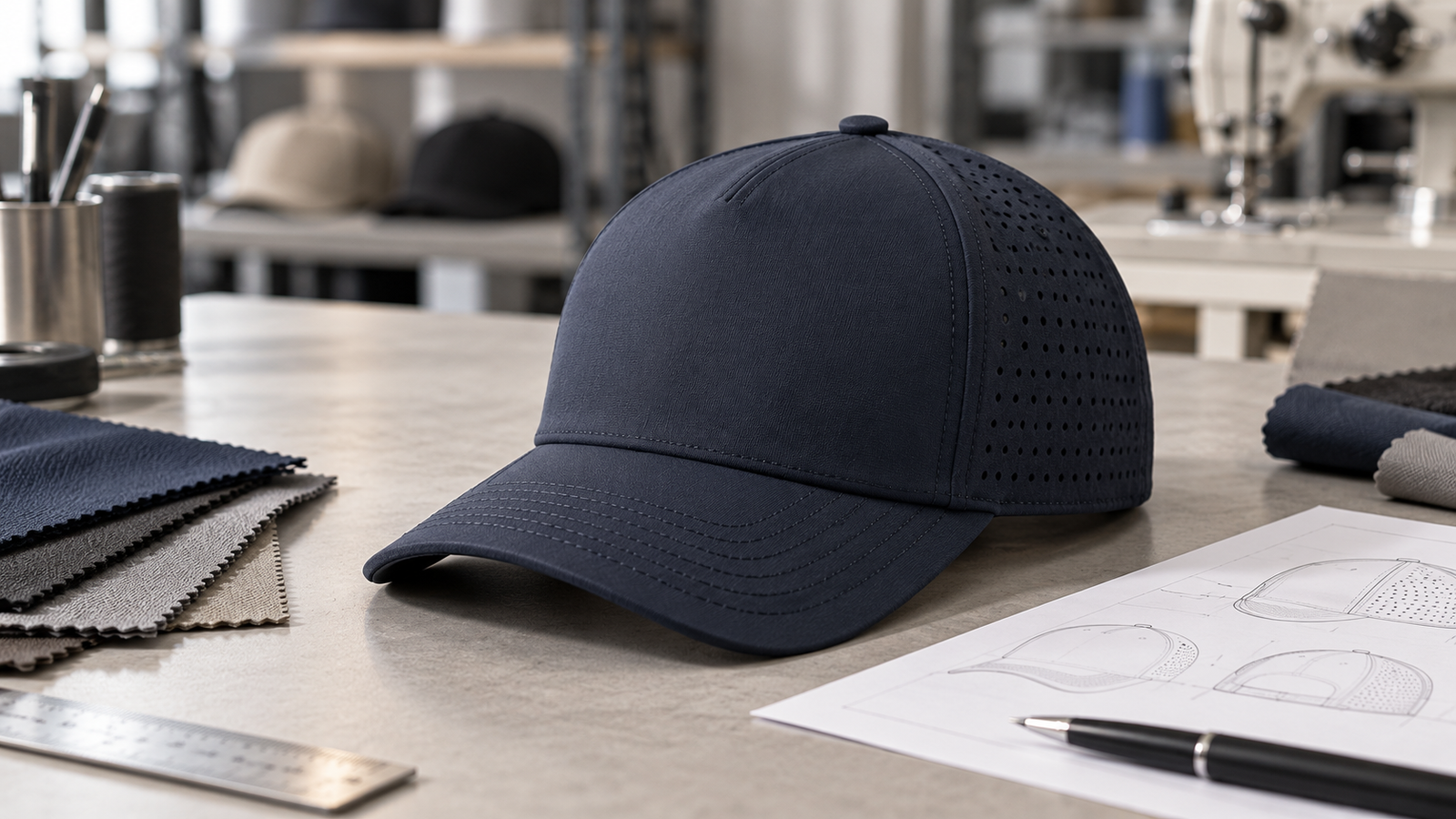
Start with the wearer and use case
Running and golf brands may need a lightweight Performance Cap fabric with useful airflow and a comfortable sweatband. Lifestyle collections may prefer cotton or canvas for a softer, familiar feel. Outdoor programs may need a tighter construction or a finish suited to the expected weather, subject to the required testing and labeling.
Compare the properties that affect production
Ask about weight, surface texture, stretch, color consistency, shrinkage, and recovery after handling. A smooth surface may suit printing, while a stable woven surface can support embroidery or a patch. Very open or perforated areas require careful logo placement so the decoration does not distort the panel.
Check the material on a real cap
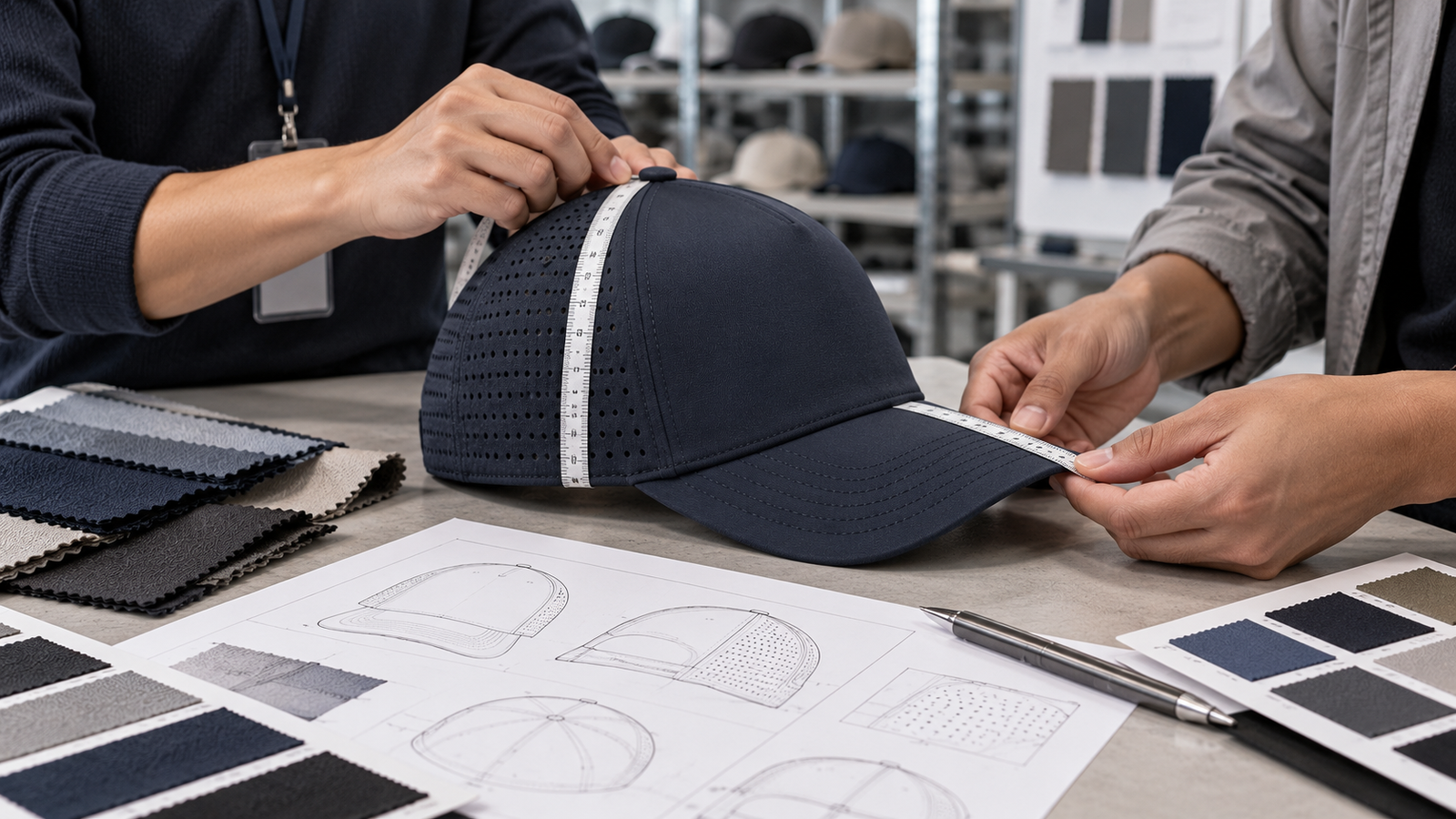
Fabric behavior changes when it is cut, fused, sewn, and shaped. Review crown profile, visor curve, seam appearance, sweatband feel, and closure attachment on the actual five-panel or six-panel cap. A flat swatch cannot show whether the finished front panel will sit correctly.
Connect fabric choice to the decoration plan
Send the artwork and identify whether the logo will be printed, embroidered, woven, or molded. Fine detail and gradients may require a different route from a bold one-color mark. Approve the decoration on the final fabric rather than on a substitute sample.
Include material details in the quotation
Request the agreed material description, color references, weight where relevant, decoration assumptions, packaging, and quantity by style and color. Separate these assumptions from freight so two supplier quotes can be compared fairly.
Protect consistency across colors and reorders
Keep a material swatch and approved cap sample for each important colorway. Record any approved tolerance for shade, texture, and logo position. When the next order is placed, compare the new fabric and sample against those records before bulk cutting begins.
JoinTop supports projects from 100 pieces per style and color, subject to the final specification. Send the material brief, cap structure, logo, target use, and delivery date so the factory can recommend a fabric that supports both the brand story and reliable production.
Questions buyers should settle before approval
What should be included in the first quote?
Send the company or website, target wearer, cap structure, material reference, artwork, decoration method, quantity by style and color, packaging needs, target market, and required delivery date. Those details let a factory separate product assumptions from freight and packaging assumptions.
Can JoinTop support a small first production run?
JoinTop accepts projects from 100 pieces per style and color, subject to the final specification. The exact quotation still depends on the cap construction, material, decoration, packaging, and quantity.
How should the approved sample be used?
Keep the approved sample and its measurement notes as the reference for bulk inspection and future reorders. A photograph alone does not record crown balance, hand feel, or the exact logo position.
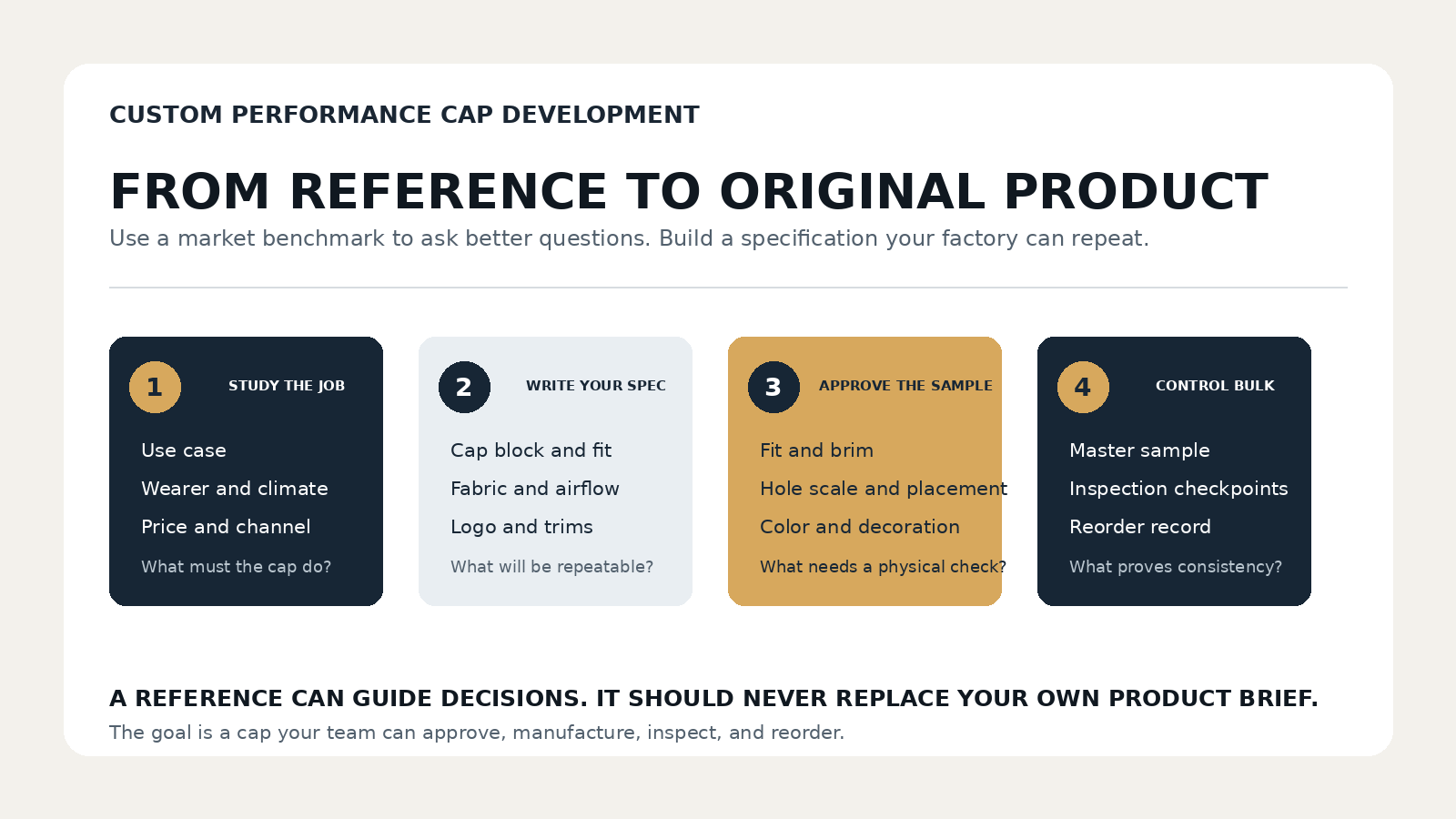
Send the complete brief before sampling so the production team can identify risks early and recommend a cap that is practical to repeat.

 English
 German
 Spanish
 French
 Amharic
 Portuguese
 Italian
 Swedish
 Turkish
 Belarusian
 Danish