Custom baseball caps become commercially valuable when a brand can repeat the product with predictable fit, appearance and quality. The first sample may look good, but a scalable cap program also needs a clear construction, approved materials, controlled decoration and an inspection reference.
For performance-focused brands, this means combining a recognizable baseball-cap profile with the practical requirements of golf, running, training or outdoor use.
Create a cap architecture before creating colorways
A collection is easier to manage when the base architecture is defined first. Decide the panel count, crown profile, visor shape, closure, sweatband and ventilation approach before adding multiple colors or logos. A stable base makes later colorways and reorders easier to compare.
- Base pattern and crown height
- Visor length, curve and edge finish
- Closure and adjustment range
- Fabric and reinforcement areas
- Primary and secondary branding locations
Use performance requirements to guide construction
Performance cap development should begin with the activity and wearer. A golf cap may need a clean front and stable brim. A running cap may prioritize lower weight and ventilation. An outdoor collection may need a different fabric hand feel and coverage. These are product decisions that should be written into the brief.
Ventilation must be specified realistically
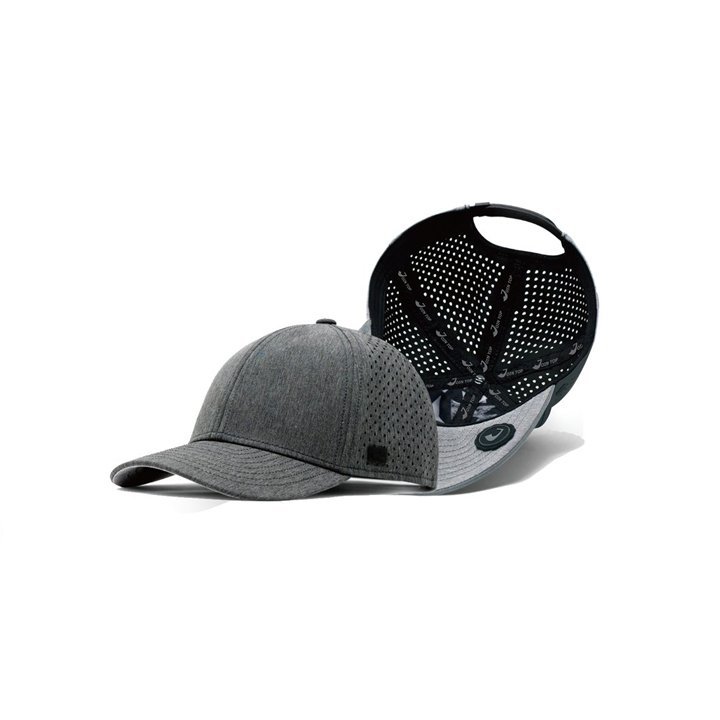
Laser-perforated panels can be considered for selected performance constructions, but the hole size, spacing and position must follow the approved physical sample. Product images should show the real construction and should never exaggerate openings for visual effect.
Logo systems for a cap collection
A brand may use embroidery on one cap, a woven patch on another and a molded badge on a premium style. That can work if the logo proportions, color references and placement rules remain coherent. Create a logo guide that records finished dimensions and the relationship to seams and visor.
Sampling for multiple styles
When a collection includes several cap shapes, approve each base shape separately. Do not assume that a logo approved on a five-panel cap will look identical on a six-panel cap. Keep the first approved sample for each construction and mark any style-specific tolerance.
Cost and MOQ planning
JoinTop’s MOQ is 100 pieces for custom cap projects. Cost is affected by fabric, construction, decoration, trims, packing and quantity. Brands should provide a quantity by style and color, because a total collection quantity does not always describe the workload of each individual style.
Bulk inspection that protects the brand
- Compare crown and visor measurements with the approved specification.
- Check left-right symmetry and panel alignment.
- Inspect logo placement, stitch quality and attachment.
- Review fabric color and visible surface defects.
- Test closures and check loose threads or unfinished edges.
- Confirm packing protects the cap shape during transport.
Reorder records are part of product development
Keep the approved sample, measurement chart, artwork, fabric reference, trim details and packing instructions in one project record. When the next order arrives, compare new materials and samples with that record. This turns a one-time purchase into a repeatable product program.
JoinTop for custom baseball cap production
JoinTop supports brand owners, wholesalers and distributors with custom cap development and production resources in China, Vietnam and Bangladesh. The process can include design review, material selection, sample approval and production coordination for repeat orders.
Send your cap reference, artwork, target quantity and use case to start a quotation. MOQ starts at 100 pieces.
Website: jointopcap.com
Email: sales01@jointopcap.com
WhatsApp: +86 17750282625



 English
 German
 Spanish
 French
 Amharic
 Portuguese
 Italian
 Swedish
 Turkish
 Belarusian
 Danish