

Waterproof bucket hats are becoming an interesting product category for brands developing outdoor, fishing, golf, travel, and lifestyle headwear collections. However, creating a reliable waterproof bucket hat involves more than choosing a fabric with a water-resistant finish. Material performance, seam construction, brim structure, logo decoration, and finished-product testing all influence how the hat performs in real conditions.
For brands sourcing custom waterproof bucket hats, the key is to define the required level of water protection before selecting materials or approving a sample. A water-repellent bucket hat designed for light rain has different construction requirements from a hat intended for prolonged exposure to wet weather.
This guide explains how to select waterproof bucket hat fabrics, evaluate construction details, choose suitable custom logo options, and establish quality-control requirements before bulk production. It is written for headwear brands, product developers, sourcing managers, and wholesale buyers planning a custom bucket hat collection.
Quick Answer: What Makes a Bucket Hat Waterproof?
A waterproof bucket hat combines suitable water-resistant or waterproof materials with construction details that help prevent water from entering through seams, stitching, ventilation openings, and other connection points.
The most important development considerations include:
- Fabric: Coated polyester, coated nylon, laminated materials, or suitable water-repellent fabrics.
- Construction: Crown seams, brim attachment, stitching, ventilation, and internal finishing.
- Decoration: Logo methods that are compatible with the selected fabric and its performance requirements.
- Testing: Appropriate fabric tests and finished-product evaluations based on the intended use.
A fabric labeled waterproof does not automatically make the entire hat waterproof. Brands should evaluate the finished product under clearly defined testing conditions before making waterproof performance claims.
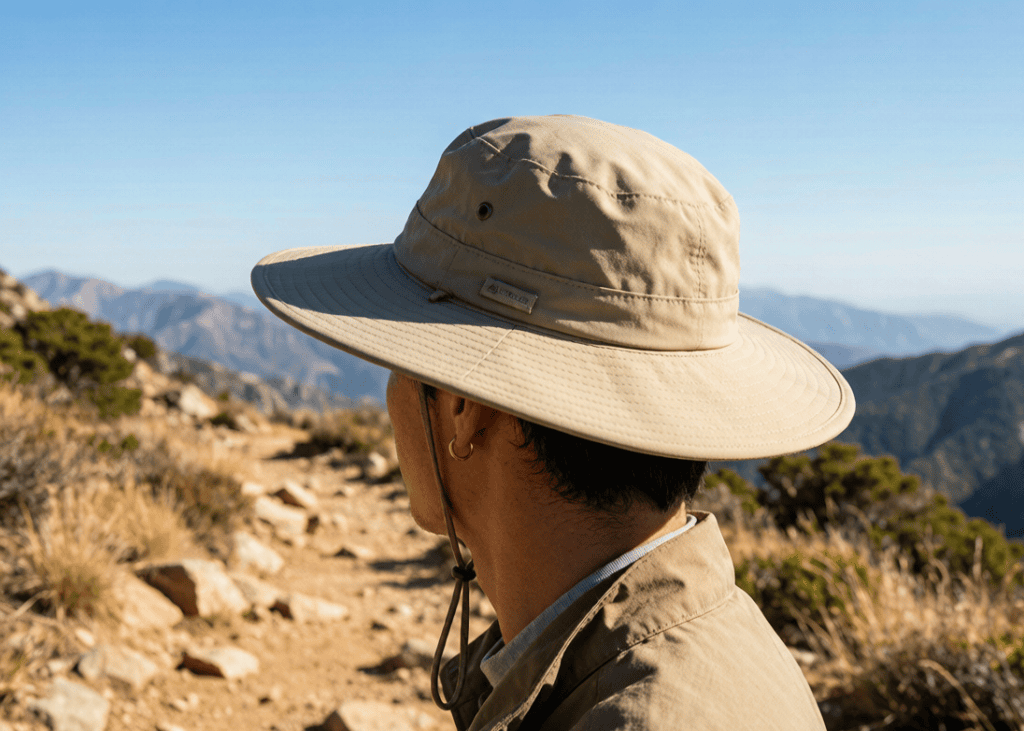
1. Waterproof vs. Water-Resistant vs. Water-Repellent Bucket Hats
Before sourcing a waterproof bucket hat manufacturer, it is important to understand three terms that are often used interchangeably in product descriptions.
They describe different levels or mechanisms of protection.
| Material Description | How It Works | Typical Application |
|---|---|---|
| Water-repellent | A surface treatment helps water form droplets and roll off the fabric | Light rain and everyday outdoor use |
| Water-resistant | Fabric construction or a coating provides resistance to water penetration under specified conditions | Outdoor and recreational headwear |
| À prova de água | A barrier is designed to prevent water penetration under defined test conditions | Products requiring higher levels of water protection |
Water-Repellent Bucket Hats
Water-repellent fabrics commonly use a Durable Water Repellent (DWR) finish.
This treatment changes the surface behavior of the fabric, allowing water droplets to bead rather than immediately spread across the surface.
DWR treatments are often considered for lightweight outdoor bucket hats because they can help maintain the fabric’s appearance and reduce surface wetting.
However, water repellency does not mean that a fabric can withstand prolonged exposure to rain or significant water pressure.
Water-Resistant Bucket Hats
Water-resistant materials provide a higher level of protection depending on their construction, coating, and testing results.
Coated polyester and nylon fabrics are common material directions worth evaluating for outdoor headwear.
The actual performance depends on the coating formulation, fabric structure, thickness, and manufacturing quality.
Waterproof Bucket Hats
A waterproof bucket hat generally requires a more comprehensive material and construction specification.
Even when the crown fabric provides a strong water barrier, water may still enter through needle holes, seams, ventilation openings, or the connection between the crown and brim.
For brands developing a waterproof headwear collection, the performance requirement should therefore cover the complete product rather than the fabric alone.
Sourcing Tip: Before requesting a quote, clarify whether your product needs water repellency, water resistance, or a defined waterproof performance level. This will help the manufacturer identify suitable materials and construction options.
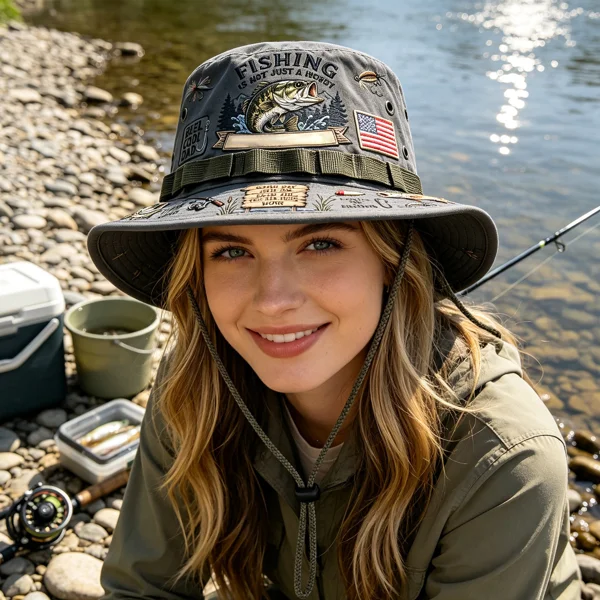
2. Best Fabrics for Custom Waterproof Bucket Hats
Fabric selection is one of the most important decisions when developing custom waterproof bucket hats.
Different materials offer different combinations of weight, hand feel, durability, flexibility, appearance, and water protection.
The following options are worth considering during product development.
2.1 Coated Polyester
Coated polyester is a practical material direction for brands looking for a balance between product structure, appearance, and water resistance.
A coating can create a barrier that reduces water penetration, depending on the coating system and test results.
Potential advantages include:
- Consistent fabric appearance.
- Different weights and surface textures.
- Options for different coating finishes.
- Compatibility with a range of outdoor product designs.
For brands developing fishing, outdoor, and promotional headwear, coated polyester may be worth evaluating.
The final choice should depend on the required water protection, fabric hand feel, and overall product construction.
2.2 Coated Nylon
Nylon is another common option for performance-oriented outdoor products.
It is valued for its strength-to-weight characteristics and can be developed with different coatings or laminations.
Coated nylon may be suitable for lightweight waterproof bucket hat designs where flexibility and durability are important.
When comparing nylon materials, brands should consider:
- Fabric weight and thickness.
- Surface texture and appearance.
- Coating or lamination type.
- Abrasion resistance.
- Color consistency.
- Flexibility after finishing.
Nylon and polyester should not be treated as automatically waterproof materials. Their performance depends on the actual fabric construction and finishing process.
2.3 Ripstop Fabric
Ripstop describes a fabric construction that uses reinforced yarns in a grid pattern to help limit the spread of tears.
It is often considered for outdoor and utility-style headwear.
However, ripstop does not automatically mean waterproof.
A ripstop fabric may be combined with a suitable coating or membrane to improve water resistance.
For brands developing technical fishing hats, hiking bucket hats, or outdoor collections, this combination can be worth evaluating.
2.4 Laminated Fabrics
Laminated fabrics use a functional layer bonded to a textile surface.
Depending on the material system, this construction can provide a water barrier while maintaining specific flexibility and performance characteristics.
Brands should evaluate:
- Waterproof performance.
- Breathability.
- Fabric flexibility.
- Bonding durability.
- Surface appearance.
- Compatibility with sewing and logo decoration.
A fabric that performs well in a flat material test may still behave differently after being cut and sewn into a hat.
2.5 PFAS-Free DWR Fabrics
PFAS-free DWR is an increasingly relevant consideration for brands developing outdoor and performance products.
Traditional water-repellent finishes may use fluorinated chemistry, while PFAS-free alternatives are developed without intentionally using PFAS in the relevant treatment system.
For brands considering PFAS-free materials, it is important to request supporting material documentation and test reports.
There are several points to understand:
- PFAS-free does not automatically mean waterproof.
- Water repellency and waterproofness are different performance characteristics.
- The exact fabric and finishing system should be evaluated.
- Chemical compliance documentation should be checked against the brand’s requirements.
PFAS-free DWR may be a useful material direction for brands that want to consider alternative water-repellent finishes in their headwear collections.
Fabric Comparison for Custom Waterproof Bucket Hats
| Fabric Type | Main Characteristics | Development Considerations |
|---|---|---|
| Coated Polyester | Structured, versatile | Coating performance and hand feel |
| Coated Nylon | Lightweight, flexible | Abrasion and coating durability |
| Ripstop | Reinforced grid construction | Requires suitable water-resistant finishing |
| Laminated Fabric | Functional barrier layer | Bonding and sewing compatibility |
| PFAS-Free DWR Fabric | Alternative water-repellent finish | Confirm performance and chemical documentation |
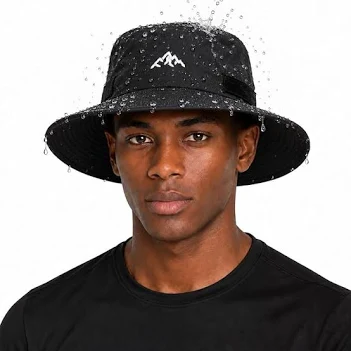
3. Waterproof Bucket Hat Construction: Seams, Brim and Ventilation
Fabric selection is only one part of waterproof bucket hat development.
The construction of the hat can significantly affect the finished product’s ability to resist water penetration.
For product developers, the following details deserve particular attention.
3.1 Crown Panel Seams
Most bucket hats are assembled from multiple fabric panels.
Each stitched seam creates potential penetration points because sewing needles pass through the fabric.
For products requiring higher levels of water protection, brands should discuss suitable seam-construction options with the manufacturer.
Depending on the product specification, these may include:
- Conventional stitched construction with an appropriate material system.
- Seam sealing or seam taping where compatible.
- Alternative construction methods for selected product areas.
Not every seam treatment is compatible with every fabric. The material, coating, construction, and appearance should be evaluated together.
3.2 Brim Structure
The brim is another important consideration.
A bucket hat brim needs to maintain its intended shape while providing the desired coverage.
For waterproof bucket hats, brands should evaluate:
- Brim width.
- Brim stiffness.
- Edge finishing.
- Stitching arrangement.
- Fabric compatibility.
- Water penetration around the crown-to-brim connection.
A wide brim may provide greater coverage, but it can also change the overall weight, drape, and visual proportions of the hat.
During sampling, brands should review the brim from the front, side, and top to ensure that the shape matches the approved design.
3.3 Ventilation and Eyelets
Ventilation is important for outdoor comfort, but ventilation openings can create potential entry points for water.
If a waterproof performance requirement is important, brands should carefully evaluate whether traditional eyelets or ventilation openings are suitable.
Possible considerations include:
- Whether ventilation is necessary for the intended application.
- Where openings are positioned.
- Whether protective construction is required.
- How the finished product performs during water testing.
There is often a trade-off between ventilation and water protection.
The right decision depends on the product’s primary purpose.
3.4 Sweatband and Internal Construction
The inside of the hat also deserves attention.
The sweatband, lining, and internal seams affect comfort and may influence how moisture behaves inside the product.
For outdoor bucket hats, brands should consider:
- Sweatband material.
- Skin-contact comfort.
- Lining weight.
- Internal seam finishing.
- Drying and maintenance requirements.
A waterproof outer fabric does not automatically prevent moisture from accumulating inside the hat.
The entire design should be considered as one functional product.
Construction Checklist for Buyers
| Component | What to Confirm |
|---|---|
| Crown panels | Seam construction and material compatibility |
| Brim | Width, stiffness, shape, and edge finish |
| Crown-to-brim connection | Stitching and water-entry risk |
| Ilhós | Ventilation and water-entry considerations |
| Sweatband | Comfort and moisture management |
| Lining | Weight, feel, and construction |
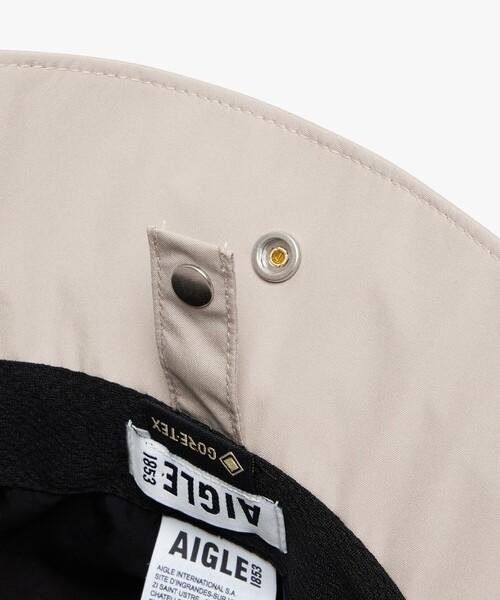
4. Custom Logo Options for Waterproof Bucket Hats
Logo decoration is an important part of custom headwear development.
For brands creating waterproof bucket hats, the selected logo method should match both the visual design and the material’s performance requirements.
Some decoration methods involve needle penetration, while others use heat, pressure, adhesives, or surface printing.
The compatibility of each method should be checked using the actual fabric.
4.1 Embroidery
Embroidery is widely used for branded headwear.
It creates a textured appearance and works well for many logos and brand marks.
However, embroidery involves needle penetration.
On coated or laminated waterproof materials, this may create small holes that affect the water barrier.
If embroidery is required, brands should review the backing, placement, stitching density, and any additional protection needed for the selected construction.
A sample should be evaluated before approving bulk production.
4.2 Woven Labels
Woven labels are useful for detailed brand identification.
They can be positioned on the front, side, back, or other selected areas of the hat.
For waterproof materials, the attachment method matters.
A sewn label creates needle holes, while an alternative attachment method may have different adhesion and durability requirements.
The final option should be checked against the material specification.
4.3 Silicone and PVC Patches
Silicone and PVC patches can provide a distinctive three-dimensional appearance.
They are commonly considered for outdoor, golf, and performance-inspired headwear.
Important development considerations include:
- Patch thickness.
- Logo details.
- Surface finish.
- Color matching.
- Attachment method.
- Compatibility with the fabric.
If the patch is sewn onto a waterproof fabric, the stitching area should be evaluated for potential water penetration.
4.4 Heat Transfer Logos
Heat transfer decoration can create a clean, relatively flat logo appearance.
It may be suitable for selected coated or laminated materials.
However, heat and pressure can affect certain coatings or surface finishes.
Brands should test the actual fabric before selecting this method.
Check adhesion, edge lifting, appearance, and durability under the intended use conditions.
4.5 Printed Logos
Printing is another option for custom waterproof bucket hats.
It can be useful for graphic designs, color variations, and larger logo areas.
The print system should be selected according to the fabric surface and its finishing characteristics.
For product development, evaluate:
- Color accuracy.
- Print adhesion.
- Surface appearance.
- Resistance to rubbing.
- Compatibility with the coating or laminate.
Logo Decoration Comparison
| Logo Method | Appearance | Important Consideration |
|---|---|---|
| Embroidery | Textured and dimensional | Needle holes and backing |
| Woven Label | Detailed brand identification | Attachment method |
| Silicone Patch | Raised, flexible appearance | Adhesion or stitching |
| PVC Patch | Defined three-dimensional design | Attachment and flexibility |
| Heat Transfer | Flat and clean | Heat compatibility |
| Printing | Suitable for graphics | Ink adhesion and coating compatibility |
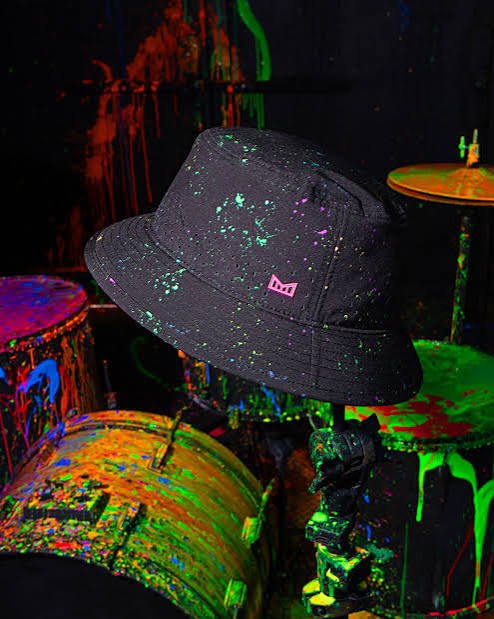
Sourcing Tip: Do not approve a logo method based on appearance alone. The logo should be tested on the actual production fabric, especially when waterproof performance is part of the product specification.
5. Sampling and Quality Control for Bulk Production
A good-looking sample is an important first step, but it should not be the only reference for bulk production.
For custom waterproof bucket hats, brands should confirm the critical material, construction, and decoration details before approving production.
Step 1: Confirm the Product Specification
Before sampling, prepare the basic development information:
- Reference images or tech pack.
- Target fabric type.
- Required water protection level.
- Hat crown and brim measurements.
- Logo size and placement.
- Color references.
- Labels and accessories.
- Target order quantity.
This helps the manufacturer understand the product rather than simply quote a generic bucket hat.
Step 2: Evaluate the Material
Review the selected fabric’s appearance, hand feel, weight, color, coating, and available test documentation.
If several fabric options are being considered, compare them against the same product requirements.
Step 3: Review the Physical Sample
The sample should be checked for:
- Overall shape and proportions.
- Crown depth and fit.
- Brim width and stiffness.
- Seam appearance.
- Logo placement.
- Internal finishing.
- Comfort and usability.
If water protection is a key requirement, the sample should also be evaluated under the agreed test conditions.
Step 4: Approve the Pre-Production Reference
Before bulk production, confirm the approved material, construction, logo specification, and measurements.
Any changes to fabric, decoration, or construction should be reviewed because they may affect the final product’s performance.
Step 5: Establish Bulk Quality-Control Checkpoints
| QC Item | Inspection Focus |
|---|---|
| Fabric | Material, color, coating, and visible defects |
| Construction | Seam quality and consistent stitching |
| Brim | Shape, symmetry, and edge finishing |
| Logótipo | Size, position, color, and attachment |
| Measurements | Consistency with the approved specification |
| Function | Performance against agreed requirements |
| Packing | Protection against crushing and deformation |
A clear approval record helps both the brand and manufacturer maintain consistency throughout the order.
6. What Affects the Cost of Custom Waterproof Bucket Hats?
The price of custom waterproof bucket hats depends on more than the base fabric.
Several development decisions can influence the final quotation.
6.1 Fabric Selection
Different materials, coatings, laminations, and fabric weights have different costs.
Custom colors or special material requirements may also affect sourcing and minimum quantities.
6.2 Construction Complexity
Additional construction requirements, such as special seam treatments, lining, or complicated brim structures, may increase production costs.
6.3 Logo Decoration
The price can vary depending on the logo method, dimensions, number of colors, and attachment requirements.
6.4 Order Quantity
Order quantity is another important pricing factor.
Larger production quantities may allow certain material and setup costs to be distributed across more units.
However, the most suitable order quantity should also consider the brand’s sales plan and inventory requirements.
6.5 Testing and Packaging
Specialized testing, customized labels, accessories, and retail packaging should be included in the quotation when required.
For an accurate quote, buyers should provide the intended product specification instead of requesting a price based only on the term waterproof bucket hat.
7. What Should Brands Include in a Waterproof Bucket Hat RFQ?
When contacting a waterproof bucket hat manufacturer, providing clear development information can make the quotation process more efficient.
Use the following checklist:
| Information | What to Provide |
|---|---|
| Product Type | Waterproof, water-resistant, or water-repellent bucket hat |
| Application | Fishing, outdoor, golf, travel, or lifestyle |
| Reference | Product images or existing sample |
| Fabric | Preferred material or fabric requirements |
| Performance | Required test method and acceptance criteria |
| Construction | Crown, brim, seams, lining, and ventilation |
| Logótipo | Artwork, size, placement, and decoration method |
| Cor | Pantone references or physical samples |
| Quantity | Estimated order quantity per style and color |
| Embalagem | Individual packaging and retail requirements |
If your team already has a tech pack, sharing it with the manufacturer can help reduce misunderstandings during development.
If you only have reference images, you can also begin with those and clarify the technical details during the sourcing discussion.
8. FAQ: Custom Waterproof Bucket Hats
Q1. Can a bucket hat be completely waterproof?
A bucket hat can be developed to meet a defined waterproof performance requirement.
However, the fabric alone is not enough. Seams, stitching, ventilation openings, brim connections, and logo decoration must also be considered.
The finished product should be evaluated under agreed testing conditions before making a waterproof claim.
Q2. What is the best fabric for a waterproof bucket hat?
There is no single best fabric for every project.
Coated polyester, coated nylon, ripstop with suitable finishing, and laminated fabrics are all worth evaluating.
The best choice depends on the required water protection, weight, flexibility, appearance, and target price.
Q3. What is the difference between waterproof and water-resistant bucket hats?
Water-resistant bucket hats are designed to resist water penetration under specified conditions.
Waterproof bucket hats are developed with a stronger water-barrier requirement.
The actual difference should be supported by test results rather than determined by the fabric name alone.
Q4. Can waterproof bucket hats have embroidered logos?
Yes, embroidery can be considered, but the stitching creates needle holes.
On coated or laminated materials, these holes may affect the water barrier.
The embroidery construction and any necessary protection should therefore be evaluated using the actual fabric.
Q5. Are PFAS-free DWR fabrics waterproof?
Not necessarily.
PFAS-free DWR describes a water-repellent finishing approach, not an automatic guarantee of waterproof performance.
Brands should review the fabric’s actual test results and distinguish water repellency from water resistance and waterproofness.
Q6. Which tests should brands request for waterproof bucket hats?
Depending on the product requirements, brands may consider ISO 811, AATCC TM127, AATCC TM22, or AATCC TM35.
These methods evaluate different aspects of textile water resistance.
For finished hats, a separate product-level evaluation should be defined to check potential water entry through seams, stitching, ventilation, and other construction details.
Q7. What is the MOQ for custom waterproof bucket hats at JoinTop?
JoinTop’s standard MOQ is 100 pieces per style per color.
The final quotation depends on the fabric, construction, logo decoration, accessories, packaging, and order quantity.
Brands can share their design requirements for a project-specific quotation.
9. Develop Custom Waterproof Bucket Hats with JoinTop
Developing a successful waterproof bucket hat collection requires the right balance between material performance, construction, branding, and production requirements.
For brands, wholesalers, and distributors, selecting a manufacturing partner that understands custom headwear development is an important part of the sourcing process.
At JoinTop, we work with custom headwear projects for brands looking to develop products according to their design and specification requirements.
For a custom waterproof bucket hat project, you can share:
- Your reference images or tech pack.
- Preferred fabric and material requirements.
- Target water protection level.
- Logo design and decoration preferences.
- Target quantity per style and color.
- Your intended market and product application.
Our standard MOQ starts at 100 pieces per style per color.
The project requirements can then be reviewed to determine the suitable material direction, construction details, and quotation.
Ready to Develop Your Custom Waterproof Bucket Hat Collection?
Whether you are developing a new outdoor headwear collection or adding waterproof bucket hats to an existing product line, the right material and construction decisions should be made before bulk production.
Send JoinTop your reference images, tech pack, or product requirements to start the discussion.
Request a Custom Waterproof Bucket Hat Quote
Explore More Custom Bucket Hat Development Options
Technical References
The following official resources can help product development teams understand the relevant textile testing methods:
- ISO 811:2018 – Textiles: Determination of Resistance to Water Penetration
- AATCC – Standard Test Methods and Procedures
Testing requirements and acceptance criteria should be agreed upon between the brand, manufacturer, and testing laboratory according to the intended product application.


 English
 German
 Spanish
 French
 Amharic
 Portuguese
 Italian
 Swedish
 Turkish
 Belarusian
 Danish