
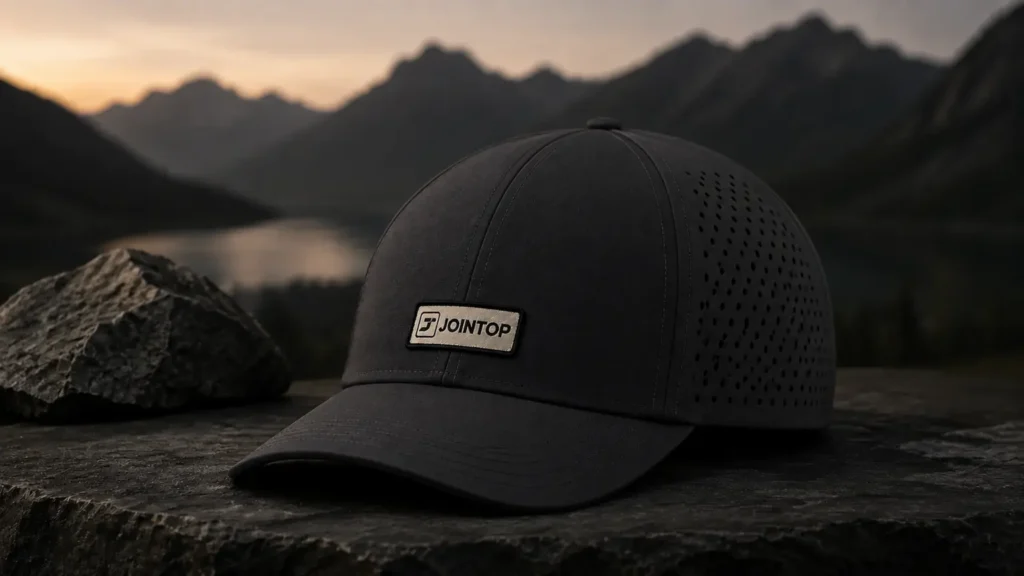
Children’s waterproof hats should be sourced as a complete, age-appropriate cap system rather than as a coated fabric with a “waterproof” label. For a brand, the first decision is the weather claim and the intended wearer. Then lock a five-panel or six-panel pattern, the shell and seam treatment, the fit range, the logo method, and the finished-cap test before asking for a bulk quote. A cap that sheds light spray can still leak through a center seam, visor join, embroidery holes, closure, or open ventilation. A practical purchase brief therefore states the exposure, the protected zones, the ventilation that remains open, the measurement range, the decoration, and the evidence required at approval.
Buyer answer: Choose a scaled five-panel or six-panel performance cap, define “waterproof” with a repeatable finished-cap test, approve the exact decorated sample on the target fit range, and keep the signed measurements and construction notes attached to every reorder.
This guide is written for children’s brands, outdoor retailers, school and team programs, importers, and sourcing teams. It focuses on normal five-panel and six-panel caps that can be developed in a smaller size range. A wide-brim rain hat may solve a different job, but it should not be used as the reference for a cap program that will be sold as a baseball-style waterproof hat.
Define the child’s use case before selecting a shell
“Waterproof” means different things in a school uniform, a rainy-day lifestyle collection, and an active outdoor line. Write the use case in one sentence and make the construction answer it. A child who walks from a car to a classroom needs weather coverage and easy care. A child who runs, cycles, or plays outside needs a stable fit, controlled heat, and a closure that will not loosen during movement. A resort or travel line may put more weight on packability and color stability than on prolonged rain exposure.
| Program job | Prioritize in the specification | Risk to resolve before bulk |
|---|---|---|
| School or everyday rain | Comfortable crown, clear size range, light weather barrier, easy-care sweatband, secure back closure | A stiff coating or oversized visor can make a child stop wearing the cap even when the weather protection is adequate |
| Outdoor play and active movement | Stable five- or six-panel block, low-bulk seams, controlled ventilation, secure fit, defined rain exposure | Open laser holes or unprotected needle points may conflict with the claim and can become visible failure points |
| Team, camp, or event program | Repeatable colors, readable logo, size grading, pack method, and replacement or reorder plan | One adult blank scaled down can produce a crown, visor, and closure that do not work together |
| Travel or resort capsule | Soft hand, crease recovery, packability, controlled brim, and clear care instructions | Extra reinforcement or a heavy barrier may reduce fold recovery and change the hand feel |
Set the claim level in writing. “Water repellent” can describe surface wetting behavior. “Rain resistant” should name the agreed exposure and observation period. “Waterproof” needs a defined test method for the shell, the seams, and the finished hat, along with any areas intentionally left open for airflow. Do not let a fabric swatch test become the only evidence for a finished-cap claim.
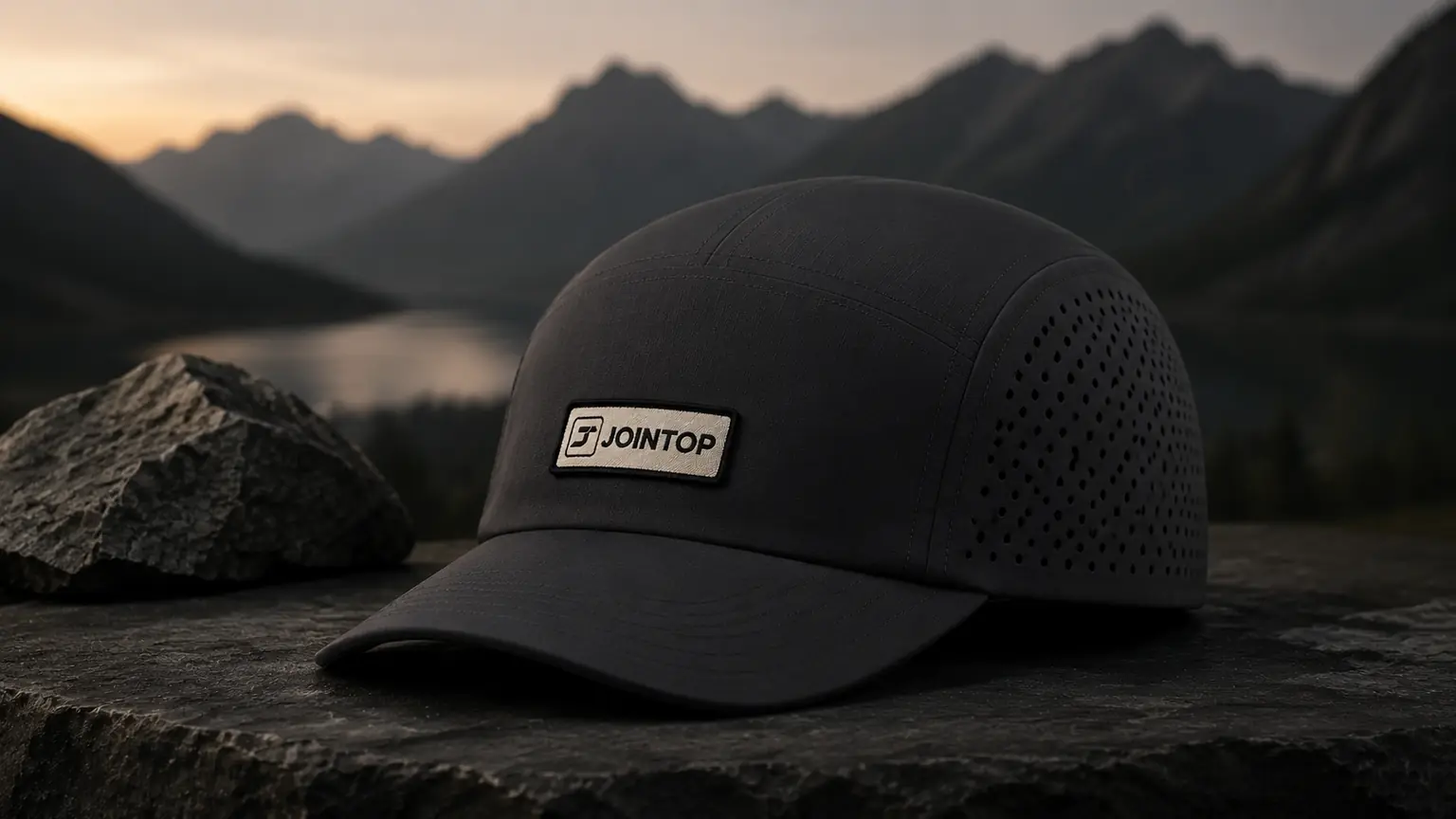
Choose a scaled five-panel or six-panel construction
Panel count does not decide waterproof performance by itself. It changes the seam map, the front logo area, the fit, and the places where a brand must control water entry. A child’s pattern should be developed from the target head-circumference range, not by shrinking an adult pattern by a percentage. Measure the intended wearer group, record the method, and grade the crown, visor, and closure together.
| Decision | Five-panel cap | Six-panel cap |
|---|---|---|
| Front appearance | Broad, uninterrupted front can suit a simple woven, print, or silicone badge | Familiar baseball profile, with a center-front seam that must be aligned and kept clear of the main logo |
| Seam and barrier map | Fewer front joins can simplify the visible seam map, but side and rear joins still need a defined treatment | More panel joins create more points to inspect, especially the center seam and visor attachment |
| Fit development | Can feel clean and light when the crown is correctly scaled, but a shallow front may sit poorly on some size ranges | Offers a familiar crown shape, yet the front height, crown curve, and back opening must be graded together |
| Logo control | Large front area is useful for simple marks, provided the decoration does not compromise the barrier | Centerline and seam allowance must be marked in the tech pack so the logo stays level and readable |
Specify the fit range with actual measurements. At minimum, record finished inside circumference, front crown height, side crown height, visor length, visor width, opening size at the smallest and largest adjustment positions, and the seam-to-logo distances. Add tolerances only after the sample is measured and worn. A tolerance that looks tidy on a spreadsheet can still create a noticeable fit change on a small cap.
Closures deserve child-specific review. A hook-and-loop strap, plastic adjuster, or elasticized opening creates different bulk, pull strength, and adjustment ranges. If a chin cord is part of the design, its release behavior, attachment, and market requirements need a separate review. Do not assume that an adult cord, buckle, or toggle is suitable for a children’s product. Keep any safety decision in the product file and verify it for the destination market.
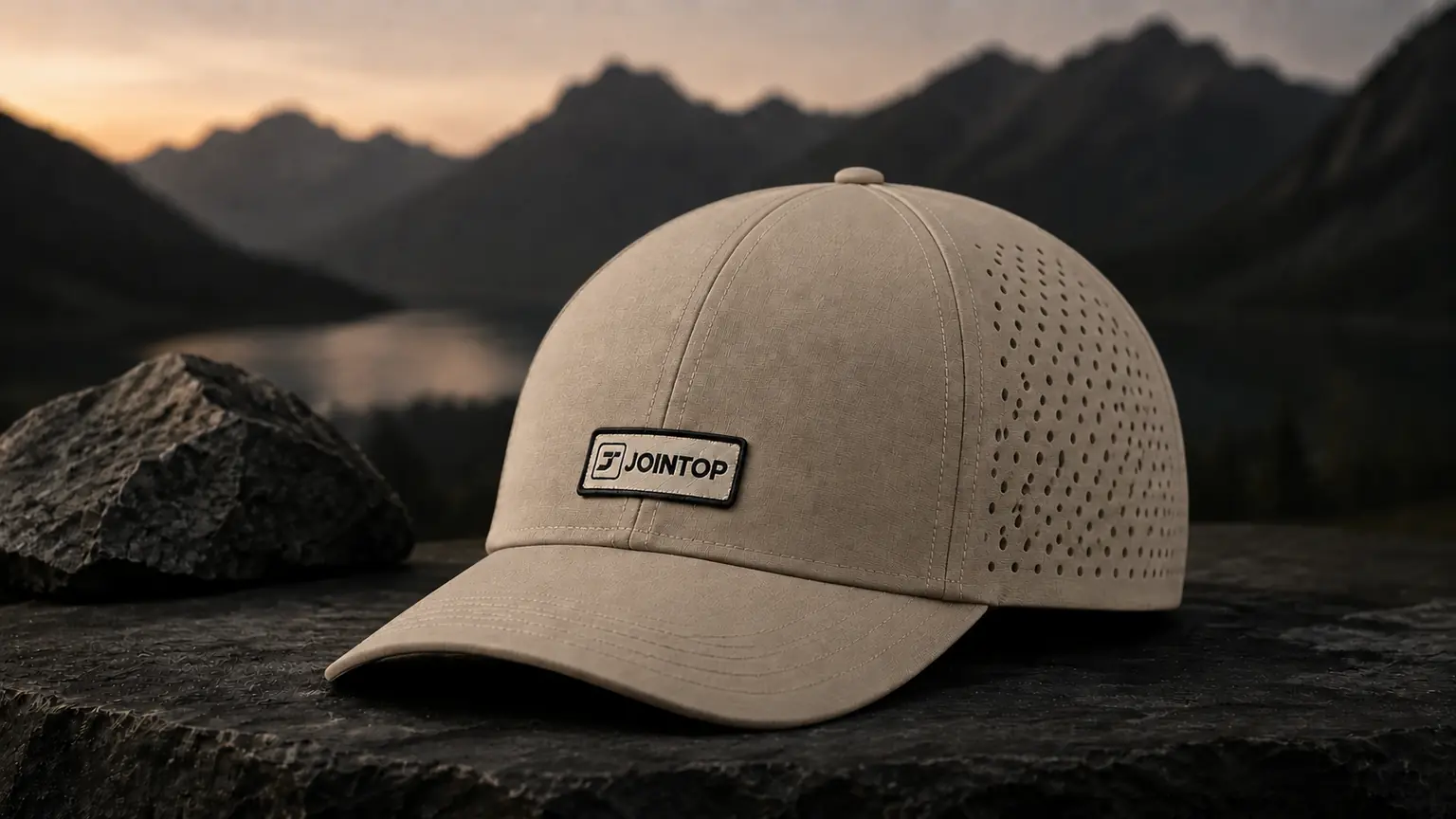
Build the fabric and performance stack around the claim
Polyester and nylon woven shells are common starting points for a lightweight performance cap because they can be specified in a range of weights, weaves, finishes, and colors. The correct choice depends on the hand feel, abrasion exposure, decoration, care method, and weather claim. A coating or laminate can improve resistance to water penetration, but it can also change stiffness, noise, breathability, bonding, and the way the crown recovers after packing. Ask for the construction and test evidence that support the claim instead of assuming that a fiber name guarantees a result.
| Component | What the buyer should specify | What to verify on the finished sample |
|---|---|---|
| Shell | Fiber choice, weave, color standard, hand feel, weight range, finish, and care method | Color and hand feel match the approved swatch; no coating marks, harsh edges, or unexpected noise |
| Barrier or finish | Whether the product is surface-repellent, rain-resistant, or built to a defined waterproof target | Agreed water test on the finished cap, including the seam map and any failure observations |
| Seams | Thread, seam construction, seam tape or sealant where required, and protected versus open zones | Continuous treatment where specified, no skipped stitches, puckering, lifted tape, or exposed needle path |
| Sweatband and lining | Contact comfort, absorbency or drying expectation, colorfastness, and attachment method | Stable attachment, no rough edge against the forehead, and no claim that the sweatband itself is waterproof unless tested |
| Visor | Length, curve, core flexibility, edge finish, and attachment to the crown | Shape matches the approved sample; visor join does not open or create an uncontrolled water path |
| Ventilation | Location, size, number, and whether the openings are excluded from the weather claim | Openings are clean and consistent, and the product label does not imply full waterproofing when ventilation is intentionally open |
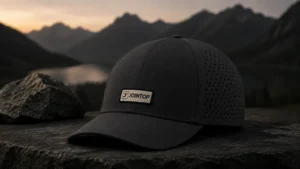
Performance Cap should be treated as a product system. A moisture-managing sweatband, controlled ventilation, a light shell, and a stable fit can make the cap more wearable during play, but each feature has to be stated separately. A quick-drying fabric does not prove that the sweatband, visor, and seam tape dry at the same rate. A water-repellent finish does not prove that an embroidered logo area will resist water after repeated handling. Keep performance language tied to the part and test that part in the finished construction.
Use decoration that respects the water path
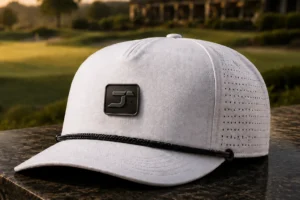
Logo execution is a construction decision. Dense embroidery adds needle penetrations and can distort a small front panel. A woven patch can preserve a clean mark, yet its perimeter, backing, and attachment must be checked for lifting and water entry. A printed mark avoids needle holes but requires a surface that accepts the ink and a care method that will not crack the print. A molded silicone or rubber badge adds a tactile finish, but its adhesive or stitching method has to match the shell and any coating.
For five-panel caps, define the logo centerline from the front seam or the finished front edge. For six-panel caps, show the center seam, seam allowance, and the no-decoration zone in the artwork proof. Give the supplier the logo’s finished width and height, thread or color references, edge treatment, and acceptable registration drift. Approve a decorated sew-out or physical badge on the actual shell. A digital mockup cannot reveal puckering, stiffness, needle marks, or a logo that becomes unreadable when the crown curves.
Turn the brief into a production-ready specification matrix
A useful matrix gives the factory and the buyer the same reference. It links the buyer’s promise to a measurable point and an approval record. Use the following as a starting format, then add the destination market and your own legal or testing requirements.
| Specification block | Write it as a decision | Approval evidence |
|---|---|---|
| Wearer and size | Age band, target head range, size label, and fit promise | Measurement chart, graded patterns, and wear trial notes |
| Pattern | Five or six panels, crown height, visor shape, closure, and ventilation map | Pattern or tech pack with marked seam and opening locations |
| Weather claim | Water repellent, rain resistant, or waterproof construction with stated exposure | Agreed finished-cap test and claim wording |
| Materials | Shell, barrier, sweatband, lining, visor core, thread, and care method | Approved swatches, component list, and sample comparison |
| Branding | Logo technique, location, dimensions, colors, backing, and no-go zones | Artwork proof, physical sew-out or badge, and placement measurements |
| Bulk control | Measurement tolerances, color standard, defect limits, packing method, and inspection plan | Signed preproduction sample, inspection records, and packing photos |
Approve the sample in the order the child will experience it
Sampling should answer product questions in sequence. Start with the brief and the size data, then approve the pattern and an undecorated shell. Check the crown height, visor proportion, opening range, and contact points on the intended fit range. Next, test the barrier and seam construction on the complete cap. Only after that should you approve the logo method, because decoration can alter stiffness, water paths, and balance.
- Brief review. Confirm age band, destination market, use case, weather claim, colors, quantity by size and color, and the evidence required for approval.
- Pattern sample. Measure the five- or six-panel block and check the closure at its smallest and largest settings.
- Construction sample. Inspect seam treatment, visor join, sweatband, ventilation, and care label placement.
- Wear trial. Have the target fit range assess crown pressure, visor coverage, visibility, heat, adjustment, and stability during movement.
- Decoration sample. Approve the exact logo on the actual shell, including edge, backing, color, and placement.
- Preproduction approval. Sign one complete reference cap and record the measurements, materials, decoration, packaging, and test observations.
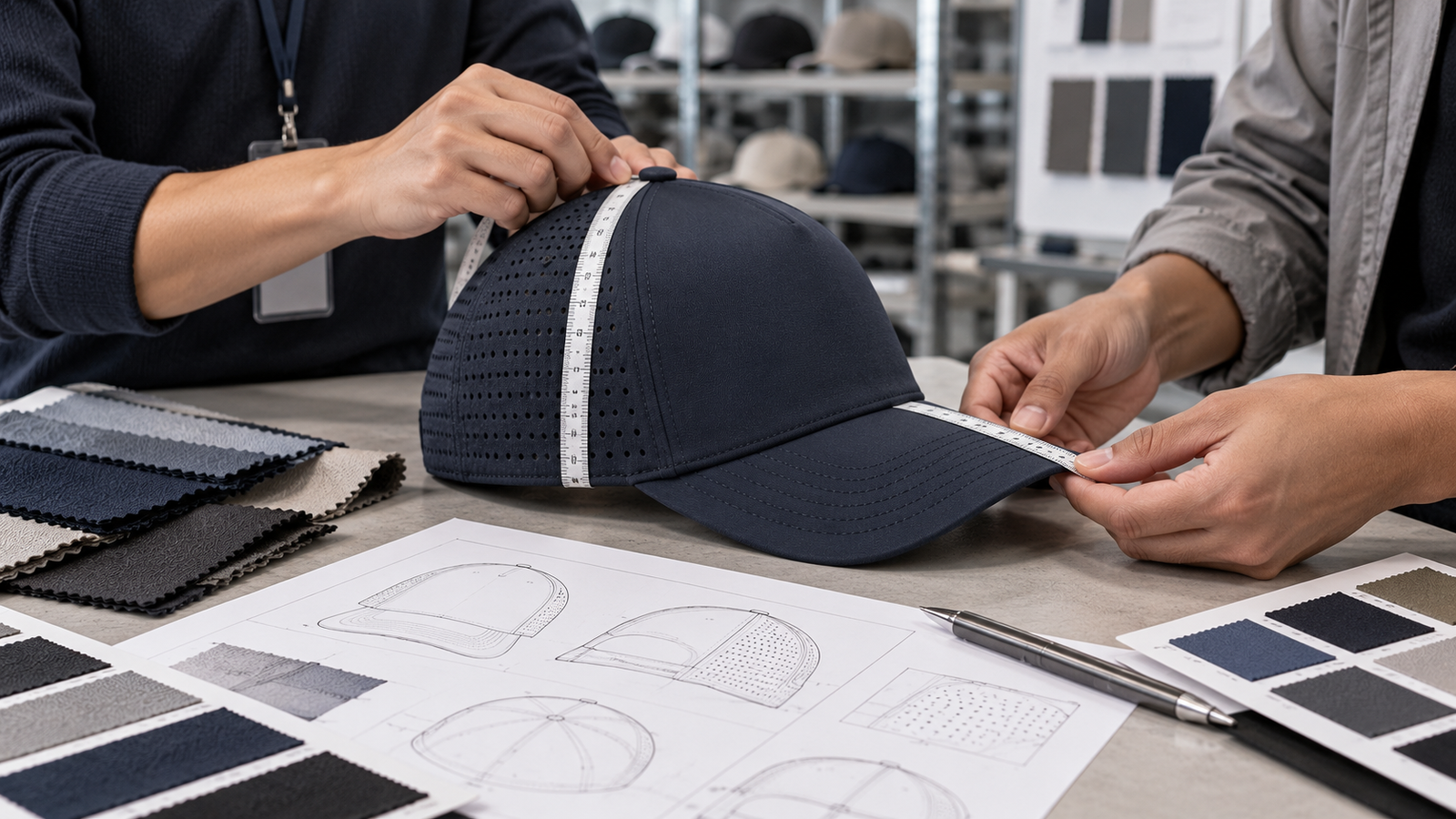
Control the bulk order with a child-specific checklist
Bulk inspection should compare production against the signed sample and the specification matrix. The inspector needs the same measurement points and the same claim boundaries used during development. Separate safety-critical or functional issues from appearance issues so that a minor thread tail does not receive the same treatment as an open seam, a loose closure component, or a failed water path.
- Pattern and fit: Measure inside circumference, crown height, visor dimensions, closure range, and logo position at the agreed points. Check the smallest and largest size or adjustment positions.
- Weather construction: Review seam treatment, visor attachment, front seam, rear opening, ventilation, and any taped or bonded areas. Record the test method and observations instead of writing “waterproof” without evidence.
- Materials and color: Compare shell, sweatband, lining, thread, and trim with approved references. Check for coating streaks, shade drift, harsh edges, odor, or surface damage.
- Logo and trim: Check registration, thread density or patch edge, color, backing, stitch security, and clearance from panel seams. Confirm that reflective or high-visibility details are present only where specified.
- Closure and components: Test adjustment, attachment, pull behavior, and finish. Look for sharp edges, loose parts, or component substitutions.
- Packaging: Verify size and color counts, barcode or label information, polybag or carton requirements, protection against crushing, and packing orientation that preserves the visor and crown.
If your organization uses AQL, write the inspection level, sample size, defect definitions, and acceptance decision into the purchase documents. Do not borrow an AQL number from another product and assume it fits a children’s waterproof cap. The buyer and supplier should agree on critical, major, and minor defect treatment before production starts.
Plan delivery, packaging, and reorders around the approved cap
Delivery planning begins when the specification is complete, not when a purchase order is emailed. Break the program into artwork, material, pattern, sample, testing, preproduction, bulk, inspection, packing, and freight milestones. Ask the supplier to confirm the sequence and the dependencies in writing. A supplier cannot give a reliable delivery commitment until the color count, size range, logo method, test scope, and packaging are known.
Waterproof or coated caps may need protection from creasing, abrasion, heat, or pressure during packing. Define whether the visor must remain flat or curved, how many pieces can share a carton, and whether each size needs separate inner packing. Photograph the approved packing method and attach it to the reorder file. The goal is to prevent a correct cap from arriving with a deformed visor, rubbed coating, or mixed size labels.
For reorders, keep the signed reference cap, shell and trim approvals, logo file, measurement chart, test method, inspection plan, carton marks, and approved care language together. If a material, closure, thread, or coating changes, treat the reorder as a new approval point. A lower unit price is not a saving if the fit, weather claim, or logo placement changes enough to create returns.
Compare suppliers by evidence, not by a waterproof keyword
When comparing manufacturers, ask each one to answer the same questions. Can they explain the difference between a shell test and a finished-cap test? Can they show how five- and six-panel patterns are scaled? Will they provide a decorated sample, measurement record, and bulk inspection plan? Can they identify which ventilation or closure points sit outside the weather claim? A clear answer is more valuable than a broad material list.
| Supplier evidence | Why it matters to a children’s program |
|---|---|
| Written claim and test plan | Keeps marketing language aligned with the construction and the evidence |
| Pattern and measurement control | Shows that the factory can scale the crown, visor, and closure together |
| Decoration approval process | Reduces the chance that a logo damages the barrier or becomes unreadable |
| Finished-cap inspection method | Creates a repeatable decision for seams, components, fit, color, and packing |
| Reorder record | Protects the approved construction when the program expands to more colors or sizes |
JoinTop’s custom hat sampling process page explains the sample handoff, and the hat quality control process page can be used alongside your own inspection plan. For decoration choices, use the logo techniques for custom hats reference. The Performance Cap special topic covers the broader performance system, while the JoinTop contact team can review a target size range, shell direction, logo file, quantity by color, and delivery market before sampling.
Send the supplier one complete brief instead of a keyword and a product photo. A clear buyer file makes it possible to compare a normal five-panel or six-panel construction, select a workable fabric and seam plan, approve the logo on the real shell, test the finished cap, and repeat the result when the children’s line grows.



 English
 German
 Spanish
 French
 Amharic
 Portuguese
 Italian
 Swedish
 Turkish
 Belarusian
 Danish