
A cap can match the approved color and logo and still fail in use. It may sit too high, press at the temples, touch the ears, slide backward, or change shape when the closure is tightened. A single person saying “it fits me” does not show whether the product fits the customers your brand plans to serve.
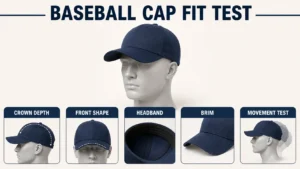
A custom baseball cap fit test gives the sample a defined job. It links the target wearer to measurable cap features, then records how the cap behaves across more than one head size.
Broad searches for custom baseball hats often focus on style and size. A mature brand needs a stronger answer: which fit block serves each customer group, what evidence supports the range, and which changes require the team to validate the cap again?
Fit is a system, not one circumference
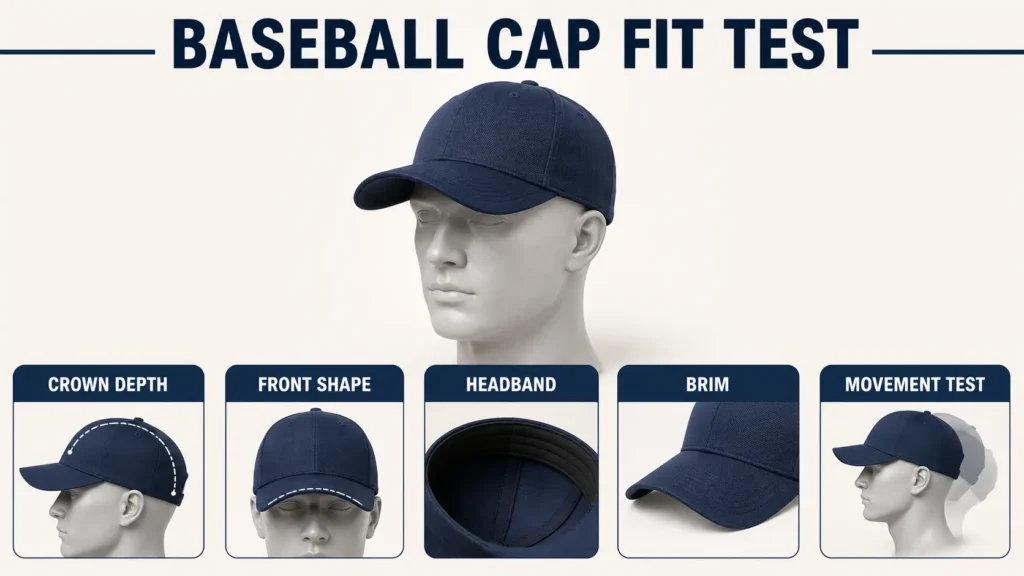
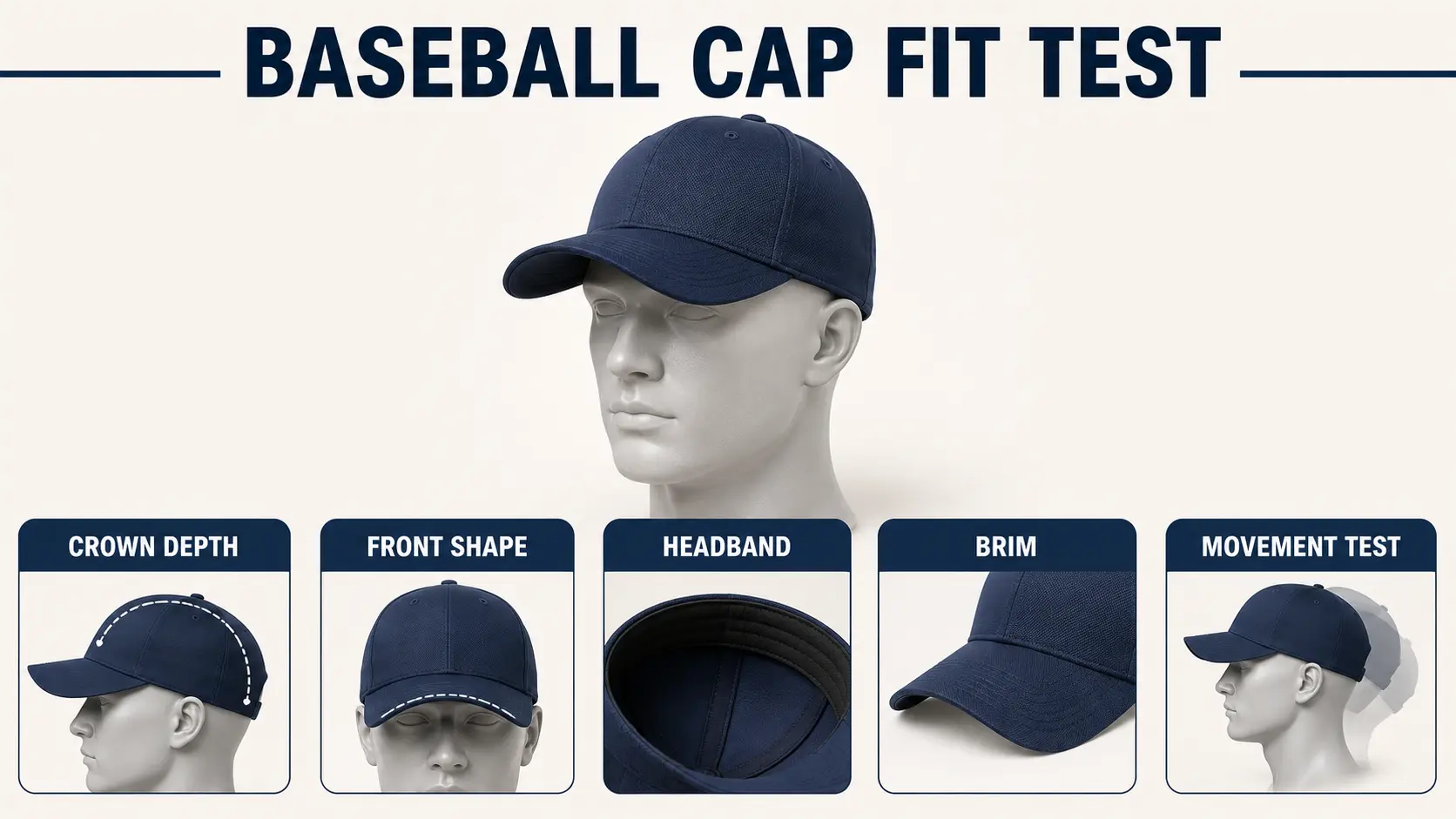
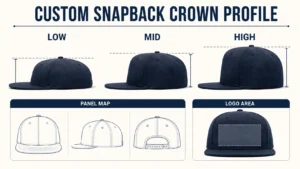
The inner opening matters, but it is only one part of fit. Crown depth controls how low the cap sits. Front-panel shape affects space at the forehead. Side-panel curve changes pressure around the head. The sweatband adds thickness and grip. The closure changes both the size and the shape of the rear opening.
Start with the intended customer. Is the cap for a unisex lifestyle collection, a women’s golf line, a youth team, or an outdoor program? Record the head-size range your product team wants to cover. ISO 8559-5 provides standardized head and face measurement definitions, which can help teams use the same measurement language. It does not decide your brand’s target range for you.
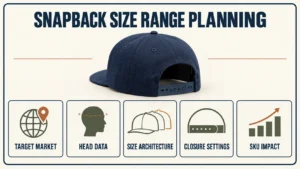
Build a fit architecture before testing individual SKUs
If a brand sells several cap families, define which styles share a fit block. A performance cap and a structured streetwear cap may use different crown depth, front shape, sweatband, and closure even when both are sold as adult adjustable. Giving every style the same size label does not make the fit consistent.
Create a fit architecture with the target wearer group, sales market, cap block, intended fit feel, closure system, and validated range for each family. Link every SKU to one approved block. If the material, lining, support, sweatband, or panel map changes enough to affect fit, mark that SKU for revalidation instead of inheriting the old result.
Use customer-service returns, product reviews, team feedback, and existing fit data as signals where available. Do not treat unstructured comments as proof. Group them by style, size, market, and failure location so the product team can decide whether the issue is isolated or built into the block.
- Block owner: the person who controls the approved pattern and measurement method;
- market scope: the wearer groups and sales regions the result is meant to cover;
- validation status: approved, conditional, or requiring another wearer test;
- change triggers: materials, structure, closure, sweatband, or pattern changes that reopen fit approval.
Measure the sample in a consistent condition
Do not compare one cap measured flat with another pulled tight. Let samples rest in the same room, close the adjuster at the named position, and use the same method each time. Take measurements to the precision that your materials and process can reasonably hold.
| Fit control | What to record | What the wearer may notice |
|---|---|---|
| Inner circumference | Method, closure position, and measured value | Overall tightness or looseness |
| Crown depth | Front, side, and back reference points | Cap sits high, low, or touches ears |
| Front-panel width/shape | Seam-to-seam width and structure | Forehead pressure or a boxy look |
| Sweatband | Width, thickness, stretch, and join | Grip, heat, and local pressure |
| Rear opening | Width and height at test positions | Hair clearance and back pressure |
| Brim | Width, length, curve, and angle | Field of view and balance |
For a detailed measuring method, see JoinTop’s guide on how to measure for a fitted baseball cap. Even when the final cap is adjustable, a clear measurement method makes sample comparisons more useful.
Use a small fit panel, not one convenient head
Select several testers near the lower, middle, and upper ends of the target range. More people can improve confidence, but even a small planned panel is better than passing the sample around without recording head size or closure position. Do not claim that a small test represents an entire market. Use it to find obvious pattern and comfort problems before bulk production.
If your company builds a larger fit database, record the population, sampling method, measurement definitions, and summary statistics. ISO 15535:2023 describes general requirements for anthropometric databases. That discipline helps a product team avoid mixing measurements taken by different methods.
Give testers the same short task. Ask them to put on the cap without instruction, adjust it, wear it for at least several minutes, look up and down, turn the head, and walk briskly. For a performance cap, add the real activity if practical. Record observations before the group discusses them, so the loudest opinion does not become the only result.
Check five things on every wearer
1. Position
Does the cap sit at the intended height? Check the distance above the ears and eyebrows. Note whether the back opening sits comfortably. If the tester keeps pulling the cap down, the crown may be too shallow or shaped poorly for the target.
2. Pressure
Ask where the cap feels tight, not only whether it is tight. Temple pressure, a hard front edge, and pressure at the closure suggest different changes. Red marks after a short test are useful evidence, but comfort over longer wear matters too.
3. Stability
Check whether the cap shifts during movement or in light wind. A tighter closure is not always the right fix; it may add pressure while the crown still lacks a stable shape. Sweatband grip, depth, panel pattern, and fabric can all contribute.
4. Shape
Look from the front and side. Does tightening the closure pull the rear panels into sharp folds? Does the front buckle or collapse? Does the crown look different at the two ends of the size range? Photograph each tester from the same distance and angle.
5. Brim and view
Confirm that the brim does not block normal vision or sit at an unwanted angle. For sport and golf products, check the view in the stance the customer will use. Brim curve can also change how wide or narrow the front appears.
Turn comments into sample changes
“Feels weird” is a clue, not a factory instruction. Link the feeling to a location, tester head size, closure position, photo, and measurement. Then write the change as a target: increase side crown depth by a defined amount, soften a named reinforcement, lengthen the sweatband, or change the rear opening.
Separate Must Fix from Preferred. A fit failure at the center of the target range is not the same as one tester preferring a different brim curve. JoinTop’s sample feedback method can help your team control photos, measurements, priorities, and versions.
Set release criteria before the team sees the result
Define what will pass, fail, or require a decision before the wear test begins. Otherwise, the team may change the rule after seeing a favorite sample. The criteria can include usable closure range, pressure limits based on the brand’s rating method, crown position, stability in the intended motion, shape at the ends of the range, and any must-fit wearer group.
Record both individual failures and patterns. One wearer preference may not require a pattern change, while the same temple pressure across several target wearers does. Assign an owner to each open issue: product, design, factory development, quality, or merchandising. Then name the evidence needed to close it.
When two markets need different fit, do not force one block to meet both if the result becomes weak for everyone. The commercial team should compare the cost of a second size or block with the expected customer and return risk. That is a product-line decision, not a sample-room guess.
Recheck fit after material or structure changes
A pattern approved in one fabric may not feel the same in another. Stretch, thickness, stiffness, lining, and sweatband choice can change the opening and crown. A switch from unstructured to structured construction also affects how the cap sits. Do not approve fit once and assume every colorway or material will behave identically.
Keep the approved sample, pattern version, measurement table, and test record together. Add fit checkpoints to the hat quality control plan so production inspection checks the features that matter.
Feed production and return data into the next buy
Fit approval should not end when the purchase order ships. Keep inspection measurements by lot and compare them with the signed sample. After launch, review fit-related returns or complaints using the same block and failure terms. If the signal is real, change the block through a new version and validate it before the next seasonal order.
This closed loop is especially important when several colorways or suppliers use one cap block. A small material or reinforcement change can create a fit difference that photos will not show. The block history should make that change visible before the brand assumes every reorder is identical.

 English
  German
  Spanish
  French
  Amharic
  Portuguese
  Italian
  Swedish
  Turkish
  Belarusian
  Danish