A golf hat used to be simple.
Put a logo on the front. Add a curved brim. Pick a few colors. Done.
That worked for a long time.
But today, golfers and everyday buyers expect more. They want a hat that can handle sun, sweat, light rain, travel, and still look good after the round. They do not want a cap that feels heavy, traps heat, stains too fast, or loses shape after a few weekends.
That is why the melin golf hat has become a useful product example for premium headwear brands.
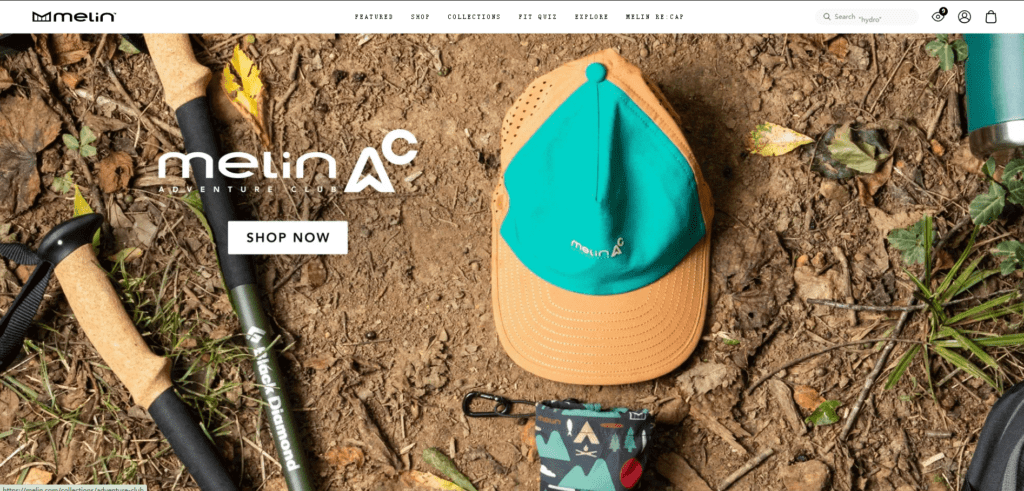
Melin did not build attention only with a logo. The bigger reason is product design. Its HYDRO collection focuses on water-repellent materials, breathable comfort, moisture control, and active outdoor use.
For golf brands, outdoor brands, lifestyle labels, and private label buyers, the lesson is not “copy Melin.”
The better lesson is this:
A premium golf hat should feel like useful gear, not free event merch.
If customers are already willing to pay more for better golf headwear, the real question is simple: how can your brand build a custom golf hat that feels premium, performs well, and still makes sense for your margin?
That is where product development matters. A good hat is not only about the logo. It is about fabric, fit, structure, comfort, branding, testing, and production quality.
For brands planning a new performance headwear line, working with a custom performance hats manufacturer can make this process easier from sample to bulk production.
Why People Search for “Melin Golf Hat”
When someone searches for melin golf hat, they are usually asking more than “where can I buy a cap?”
They want to know:
Is it worth the price?
Is it good for hot weather?
Does it handle sweat?
Can I wear it near water?
Will it keep its shape?
Will it look good off the course too?
That last question matters.
A modern golf hat is not only worn on the course. People wear it while traveling, fishing, walking, going to the beach, working out, or just covering a bad hair day. No judgment. That is part of the job.
So, for brands, a premium golf hat needs to do more than look sporty. It should feel comfortable, stay clean longer, support an active lifestyle, and make the customer feel the higher price is worth it.
A cheap cap carries a logo.
A better cap carries a brand promise.
What Brands Can Learn from Melin
Melin-style golf hats are often discussed because they combine function, fit, and clean design. Third-party golf media has also noticed this product story. MyGolfSpy’s Melin hats review talks about the brand’s performance positioning, while Golf Monthly’s Melin hats review highlights its quality, technology, and on-course/off-course wearability.
Here is the simple product lesson:
| Feature | Why It Matters |
|---|---|
| Water-repellent fabric | Useful for golf, beach, boat, travel, and summer use |
| Moisture-wicking lining | Helps manage sweat and comfort |
| Breathable structure | Makes the hat easier to wear in heat |
| Clean branding | Looks premium without being loud |
| Better fit | Helps customers wear the hat again and again |
This is why the melin golf hat topic is useful for brands. It shows how a hat can become more than a cap. It can become a better-designed product with a stronger reason to buy.
The Business Value of a Better Golf Hat
For a brand owner or buyer, comfort is only one part of the value.
A better performance golf hat can also support:
Higher retail pricing
Better product reviews
Lower return risk
Stronger brand image
More repeat purchases
More seasonal product line options
This is the part many brands miss.
They spend too much time asking, “What logo should we use?”
A better first question is:
What problem should this hat solve for our customer?
Is the customer a serious golfer? A resort guest? An outdoor buyer? A DTC lifestyle customer? A country club retail buyer?
Once the customer is clear, the product direction becomes much easier.
Before talking to a factory, a brand should think about five things:
| Question | Why It Matters |
|---|---|
| Who will wear this hat? | Different buyers need different fits and fabrics |
| Where will they wear it? | Golf, beach, boat, travel, or retail use changes the design |
| What price point do you want? | Price affects fabric, logo method, and finishing |
| What function matters most? | Water resistance, breathability, sweat control, or UPF |
| How many pieces do you want to test first? | A smaller first run can reduce risk before scaling |
A clear brief saves time, reduces sample revisions, and helps the manufacturer recommend the right structure from the start.
Water-Resistant Design: Useful, But Be Honest
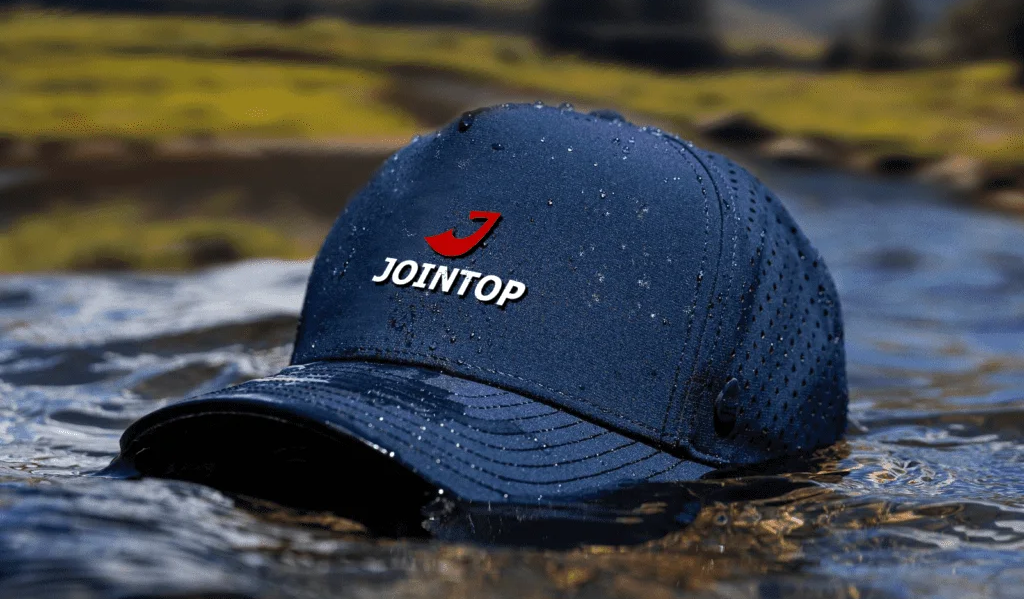
One big reason Melin gets attention is its water-friendly product story. Melin describes its HYDRO hats as water-friendly, breathable, floatable, and designed for active use around water.
That is a strong story.
But brands should be careful with the word “waterproof.”
A golf hat has panels, seams, stitching, sweatbands, and trims. Unless the product is specially tested and built for full waterproof performance, it is usually more accurate to say:
Water-repellent
Water-resistant
Hydrophobic exterior
Quick-dry
Water-friendly
These words still sound strong, and they are easier to support honestly.
For premium golf hats, a water-repellent finish can help water bead up and roll off the fabric. It can also make the hat easier to clean after sweat, rain, or outdoor use.
For brands that want to explore this category, this waterproof golf hats manufacturing guide explains how fabric, fit, brim structure, sweatband, logo method, and production quality work together in water-resistant golf headwear.
Sweat Control and Breathability
Sweat control is one of the most important parts of a custom golf hat.
A customer may buy the hat because of the outside design. But they keep wearing it because of the inside comfort.
A poor sweatband can ruin a good-looking hat. It can feel rough, trap heat, hold odor, or leave stains too quickly.
For premium golf hats, brands should pay attention to:
Moisture-wicking sweatband
Light and breathable lining
Quick-dry polyester or nylon fabric
Laser perforation or mesh panels
Structured front panel that is not too heavy
Golf does not look like a high-speed sport, but the heat is real. A good breathable golf cap should let heat escape while still keeping a clean shape.
Laser perforation works well for premium performance hats because it keeps the look modern and clean. Mesh works well for outdoor, fishing, trucker, and casual golf styles.
The right choice depends on the brand.
A country club brand may want a clean and quiet look. A younger golf lifestyle brand may want something more visible. An outdoor golf brand may want stronger airflow and a more rugged shape.
For more product-level details, JoinTop’s performance caps page shows related options such as fabric selection, logo process, customization location, order process, and common purchasing pitfalls.

Fit: The Detail That Decides Repeat Purchase
Fit is hard to explain, but easy to feel.
When a hat fits well, the customer may not say much. They just wear it again.
When a hat fits badly, they notice immediately.
Common problems include:
The crown is too tall
The front panel looks boxy
The brim is too wide
The hat sits too high
The closure feels cheap
The side profile looks strange
Premium golf hat development should include real fit testing. Test different head shapes, hair types, and style preferences.
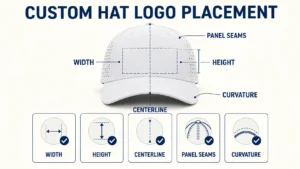
Brands should review crown depth, front panel height, brim curve, closure type, sweatband comfort, and side profile.
Fit is not only a comfort issue.
It is a brand loyalty issue.
If you are still comparing which cap shape fits your brand, this types of caps guide can help you compare common styles such as baseball caps, dad hats, snapbacks, trucker hats, rope hats, performance hats, and bucket hats.
Branding: Clean, Not Boring
Premium branding does not always mean big branding.
Many high-end golf customers prefer clean logos, simple colors, and subtle details.
Good logo options for premium golf hats include:
Silicone patch
TPU patch
Rubber badge
Flat embroidery
3D embroidery
Woven label
Heat transfer logo
Small side logo
Tonal logo
The logo method should match the fabric.
For example, heavy embroidery may not work well on thin performance fabric because it can pull the panel or create wrinkles. A silicone patch or TPU patch may work better on smooth technical fabric. A woven label may fit a softer lifestyle cap.
This is why sampling matters.
A logo can look perfect in a digital mockup and still fail on the real hat.
Mockups are polite.
Fabric tells the truth.
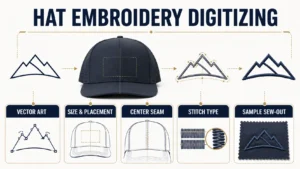
For brands that want a deeper look at stitched branding, this custom embroidered hats guide explains what brands should consider before production.

How to Build Your Own Premium Golf Hat
Brands should not build a copy of Melin.
They should build a product with their own reason to exist.
A simple development path can look like this:
- Choose the main use case
Is it for serious golfers, resorts, outdoor buyers, country clubs, events, or DTC lifestyle customers? - Pick the right fabric
For performance use, brands often choose polyester, nylon, poly-spandex, recycled polyester, mesh, or performance lining materials. - Build the right fit
Check the crown, brim, closure, sweatband, and side profile before finalizing the design. - Match the logo method to the fabric
Embroidery, silicone patches, TPU patches, woven labels, and heat transfer logos all work differently on different materials. - Test before bulk production
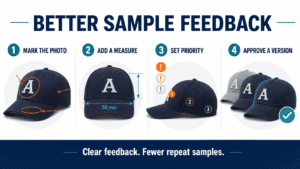
Review fit, fabric feel, sweatband comfort, logo placement, brim curve, stitching, water-repellent effect, color matching, and packing shape.
Small problems in sampling can become big problems in bulk production.
That is why a clear development process matters.
For a more detailed look at the full development path, this custom performance hats manufacturer guide explains how brands can think about fabric, structure, cost, production, and scaling with a manufacturing partner.
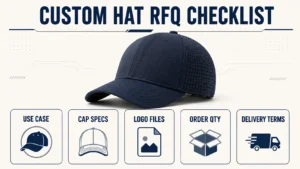
What to Include in Your Custom Golf Hat Brief
A good inquiry does not need to be complicated. But the more useful details you share, the faster a manufacturer can help.
A simple custom golf hat brief can include:
| Brief Item | Example |
|---|---|
| Target customer | Golf brand, resort shop, outdoor lifestyle buyer |
| Hat style | 5-panel cap, 6-panel cap, rope hat, snapback, dad hat, trucker cap |
| Main function | Water-repellent, breathable, moisture-wicking, lightweight, UPF-rated |
| Fabric direction | Nylon, polyester, poly-spandex, recycled polyester, mesh |
| Logo method | Embroidery, silicone patch, TPU patch, woven label, heat transfer |
| Quantity plan | Sample order, small test run, seasonal launch, bulk production |
| Target market | USA, Canada, Europe, Australia, Japan, or other market |
| Reference product | Melin-style golf hat, premium rope hat, outdoor performance cap |
You do not need every answer on day one. A good development partner can help fill in the blanks.
Where JoinTop Fits In
For brands, a manufacturer should not only “make the hat.”
A good manufacturer helps turn a product idea into something that can be sampled, tested, produced, and delivered with fewer surprises.
When a brand wants to develop a premium golf hat inspired by the melin golf hat category, the factory needs to help answer practical questions:
Which fabric can support water-repellent performance?
Will the logo method work on that fabric?
Will the crown shape stay clean after stitching?
Can the sweatband improve comfort in hot weather?
Can the first sample be adjusted before bulk production?
Can the supply chain support future repeat orders?
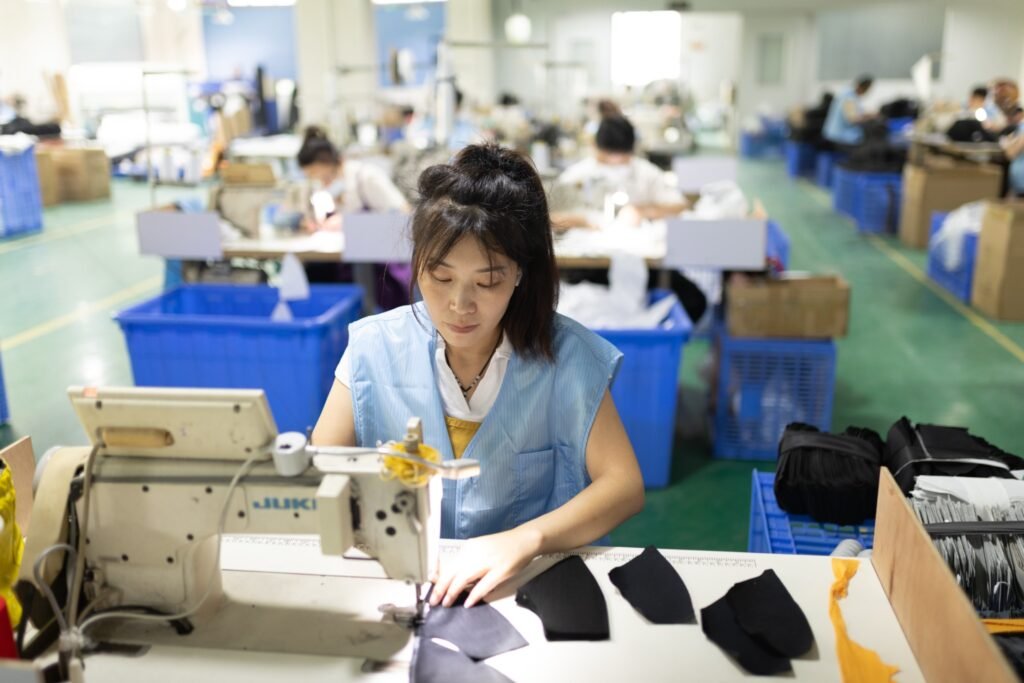
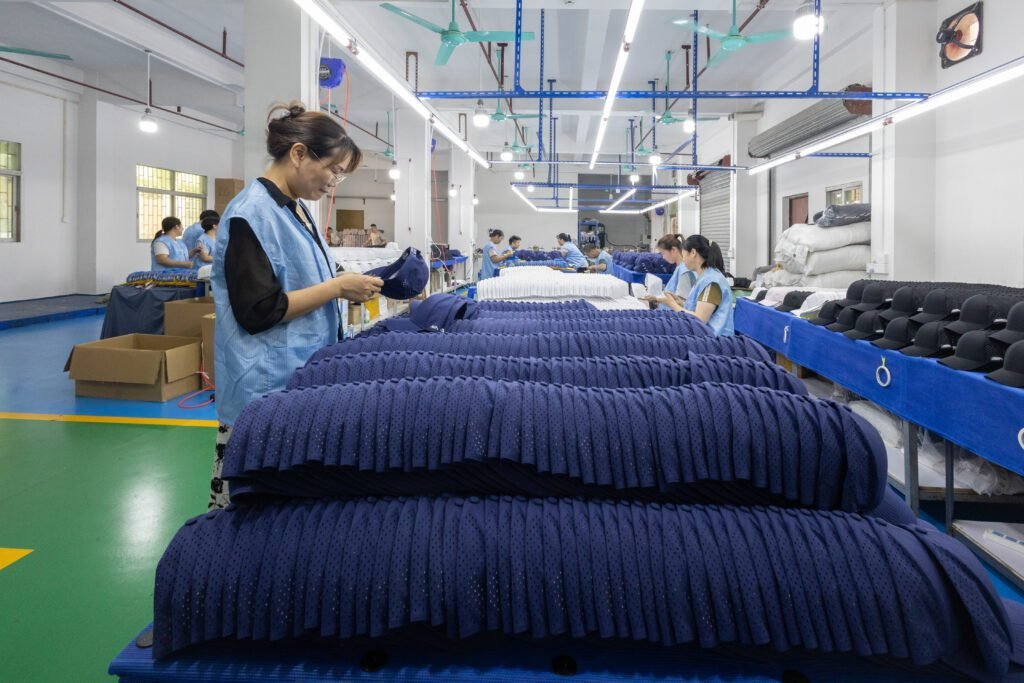
This is where JoinTop fits naturally into the process. JoinTop works with global headwear brands on custom performance hats, golf hats, outdoor caps, lifestyle caps, and private label headwear. With production support in China, Vietnam, and Bangladesh, JoinTop can help brands plan flexible sourcing, sample development, and bulk production for different market needs.
The brand brings the market idea.
The factory helps turn that idea into a real product through fabric selection, fit adjustment, logo testing, sample review, quality control, and production planning.
Compliance: Keep Claims Clear
Performance claims can help sell a product, but they need proof.
Brands should be careful with claims like:
Waterproof
UPF 50+
Antimicrobial
Odor-free
Sweatproof
Eco-friendly
Stain-proof
For UV protection claims, AATCC TM183 is a standard test method used to measure ultraviolet radiation blocked or transmitted by textile fabrics.
For harmful substance testing, OEKO-TEX STANDARD 100 is a well-known textile label for products tested for harmful substances.
For sustainability or eco-related marketing, brands should also review the FTC Green Guides, which help marketers avoid misleading environmental claims.
The simple rule is:
Say what the product can prove. Do not say more just because it sounds good.
Premium brands do not need loud claims.
They need believable ones.
FAQ: Custom Premium Golf Hats
What makes a premium golf hat different from a regular cap?
A premium golf hat usually has better fabric, better fit, better sweat control, cleaner branding, and stronger shape retention. It is designed for comfort, outdoor use, and a higher retail price point.
Can brands make a Melin-style golf hat without copying Melin?
Yes. Brands should not copy Melin’s exact design. Instead, they can learn from the product logic: water-repellent fabric, breathable structure, sweat management, clean branding, and better fit.
What materials are good for custom performance golf hats?
Common choices include polyester, nylon, poly-spandex, recycled polyester, mesh, and performance lining materials. The best choice depends on the use case, price point, logo method, and target customer.
What is the difference between water-resistant and waterproof golf hats?
Water-resistant or water-repellent hats can help resist light rain, sweat, and splashes. Waterproof hats require a much higher level of construction and testing. Most performance golf hats should be described as water-repellent or water-resistant unless full waterproof performance is tested and proven.
What should I prepare before asking for a custom golf hat quote?
A useful inquiry should include the target customer, hat style, material idea, logo method, estimated quantity, target market, and any reference products.
Planning a Premium Golf Hat Collection?
If your brand is planning a custom golf hat, performance cap, rope hat, or water-repellent headwear collection, start with a simple product brief.
You can include your target customer, preferred hat style, fabric direction, logo idea, quantity plan, and any reference products you like.
From there, a manufacturer can help you review the best material, fit, logo method, sample process, and production plan.
At JoinTop, we help brands develop custom performance hats from idea to sample to bulk production, with support across China, Vietnam, and Bangladesh.
Your next premium hat does not need to be a copy of Melin.
It needs to be the hat your customer reaches for again tomorrow.
Ready to build your next custom golf hat collection?
Contact JoinTop to request samples or discuss your custom hat project

 English
  German
  Spanish
  French
  Amharic
  Portuguese
  Italian
  Swedish
  Turkish
  Belarusian
  Danish