Buyer’s quick answer
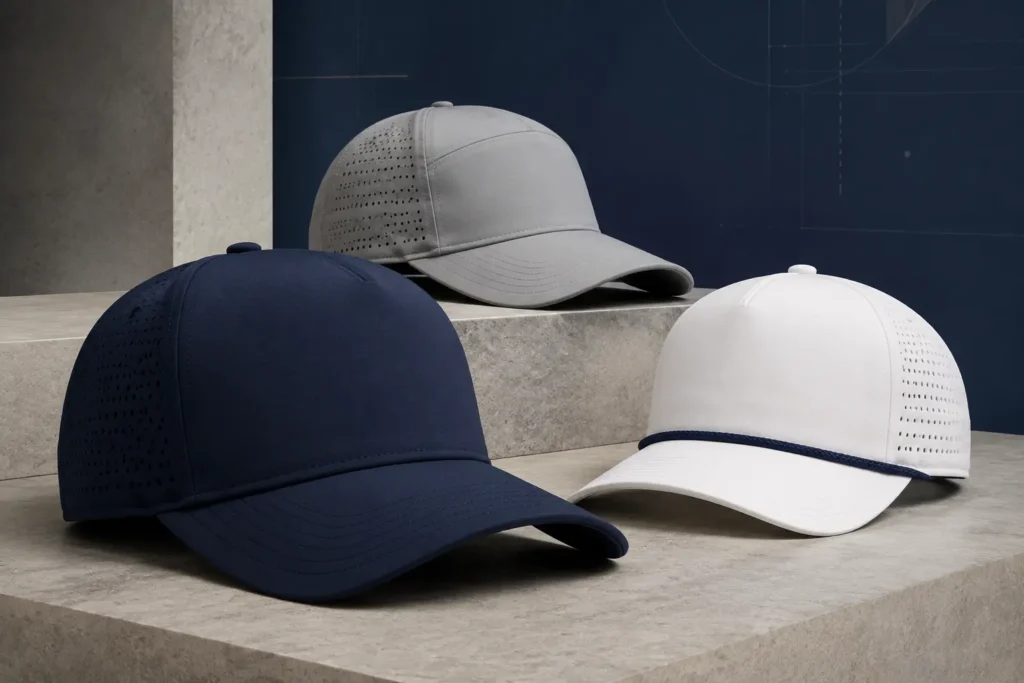
For custom performance hats, choose the fabric around the wearer, crown construction and logo process. Polyester and nylon can both work; neither fiber name alone proves quick drying, breathability or UV protection. Compare finished swatches, then test the actual five-panel or six-panel sample.
A golf brand and a running brand may ask for the same “lightweight cap” and expect different products. The golfer may want a structured front and a stable visor; the runner may prefer a softer crown and less bulk. A useful material brief describes those decisions before choosing a fabric code.
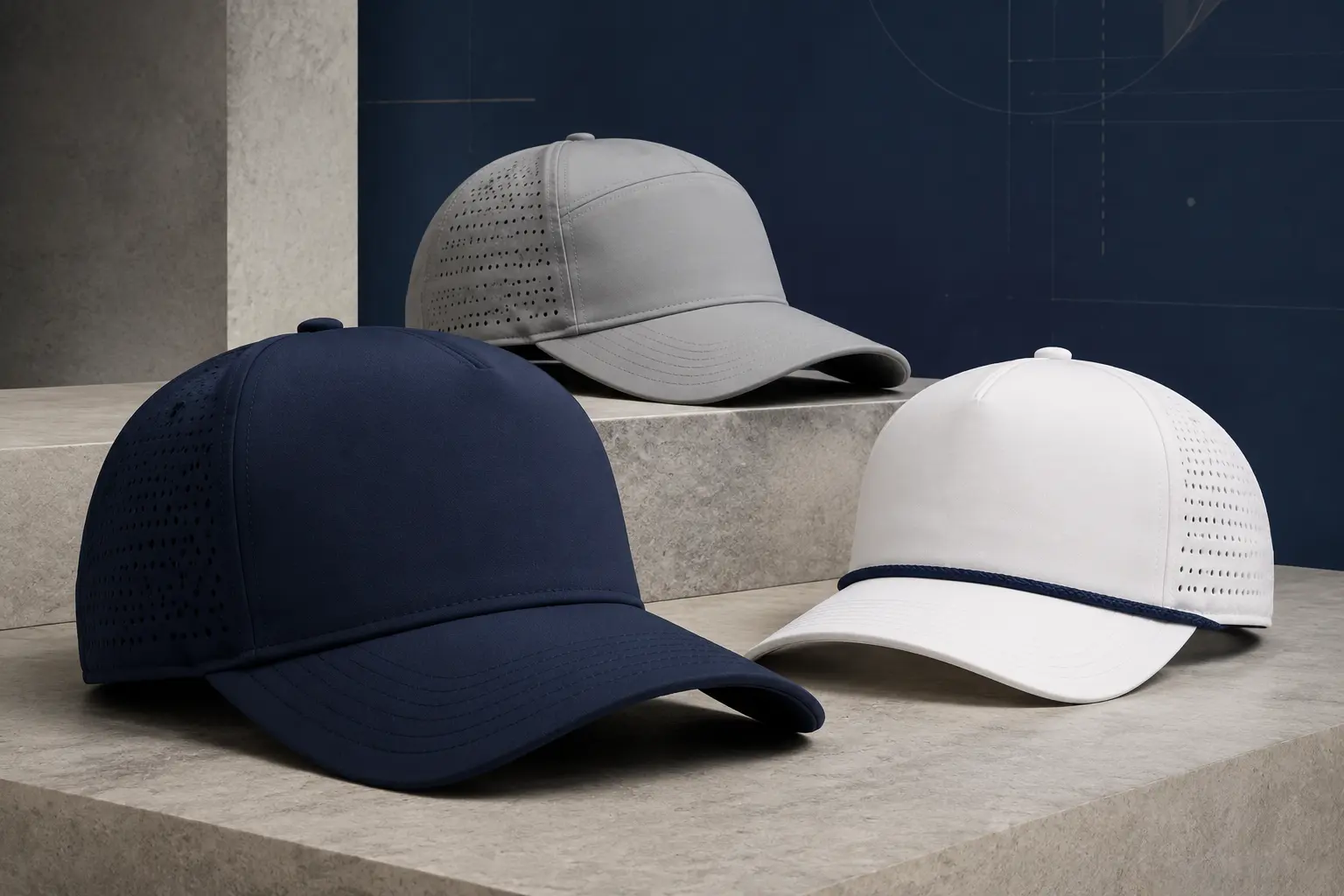
Polyester vs nylon hats: what should a brand compare?
For a first shortlist, ask for comparable fabric weights and constructions. Comparing a light nylon ripstop with a heavy polyester twill tells you little about the fiber itself. Request the composition, weight, weave, finish and available stock colors for each candidate.
| Material route | Useful starting point | Check before approval |
|---|---|---|
| Polyester woven fabric | Golf and training caps that need a consistent surface for branding | Hand feel, moisture behavior, color migration during heat application and seam appearance |
| Nylon woven or ripstop | Lightweight running and outdoor cap concepts | Coating or finish compatibility with transfers, surface marking and recovery after handling |
| Polyester or nylon with elastane | Stretch performance caps where comfort and recovery matter | Stretch direction, recovery, crown stability and logo distortion |
| Cotton or cotton blend | Lifestyle crossover collections with a familiar hand feel | Wet comfort, drying behavior, shrinkage and suitability for the intended activity |
These are development starting points, not performance ratings. Keep cotton options in the comparison when they serve the collection, but prioritize the technical fabrics that match your actual golf, running or outdoor brief.
Separate airflow, moisture movement and drying
“Breathable,” “moisture wicking” and “quick dry” describe different behaviors. An open panel can allow airflow while a sweatband still feels wet. A fabric can spread moisture without drying as quickly as another fabric under the same conditions.
- For airflow through fabric, discuss ASTM D737 air-permeability testing with the laboratory.
- For liquid moisture transport, AATCC TM195 evaluates the fabric’s moisture-management behavior.
- For a drying claim, agree a drying-rate method and conditions separately; the AATCC test-method directory includes TM201 for a heated-plate approach.
Specify the sample, pretreatment, method, target and report requirements before testing. A report for a different color, finish or construction may not support the proposed product claim. Assess the sweatband and assembled cap as well as the outer fabric.

Match the fabric to a five-panel or six-panel performance cap
A five-panel performance cap with a single front panel offers an uninterrupted logo area. A conventional six-panel baseball cap has a front center seam. Panel count does not set the crown depth, fit or stiffness: the pattern, lining, reinforcement and material all matter. Specify the front construction with a reference image because five-panel layouts also vary.
Use a soft material on the wrong structured block and the front may lose its intended shape; add too much backing and a light cap can feel bulky. Review the material after cutting, sewing and shaping. Our baseball cap specification guide explains which measurements to record.
Test the logo on the chosen fabric and color
For printed hats, confirm that the transfer adhesive and application conditions suit the actual finish. For embroidery, examine puckering, backing feel and crown distortion. For patches, check the edge attachment and how the patch follows the curved panel. See our hat printing comparison before choosing a process.
Do not approve a white logo only on a pale swatch if the order includes dark or printed polyester. Test the proposed combination. Keep a dated decorated sample, the logo dimensions and the agreed application details with the material reference.
Support UV and water-repellency claims with the right evidence
A fabric description is not a finished-cap test report. If the retail brief includes a UPF rating, ask which material, color and configuration were tested. Perforations and exposed areas need separate consideration. For water repellency, agree how the finish will be evaluated and what happens after care or wear; water beading alone does not establish a waterproof cap.
If you require PFAS-related testing or a restricted-substances specification, give the supplier the target-market requirements and requested test scope. “Not detected” should be interpreted with the reported analytes and detection limits, rather than turned into an absolute zero-content claim.
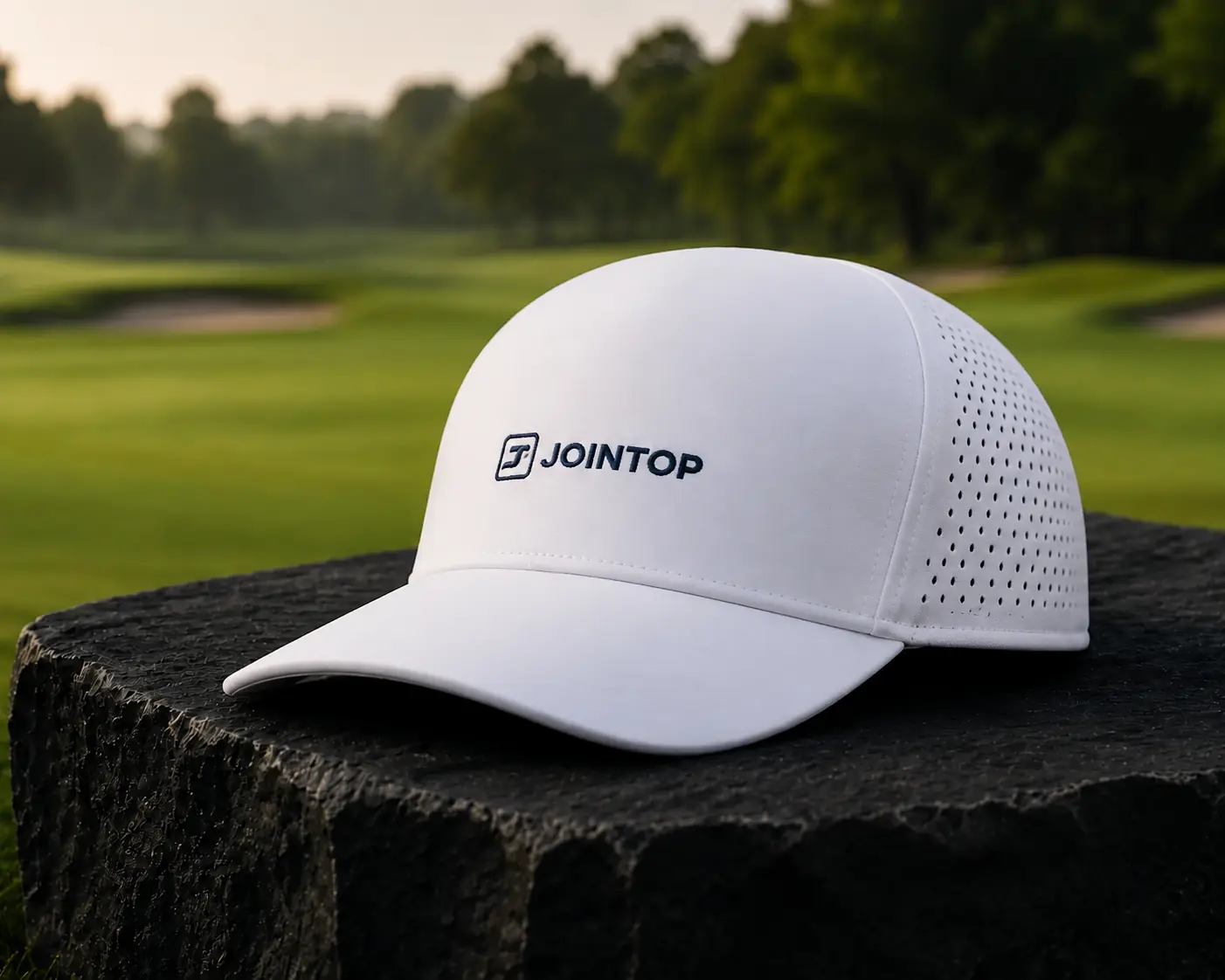
What to include in a custom hat fabric request
- End use: golf, running, training or outdoor retail.
- Five-panel or six-panel structure, target fit and visor shape.
- Preferred composition, weight, stretch and surface feel.
- Colors and quantity per style and color.
- Logo file, decoration method and placement.
- Required claims, test scope, care instructions and delivery destination.
Retain a swatch and an approved finished cap for each important colorway. Use those references when checking a reorder, including any changes to the material supplier, finish or decoration. Review JoinTop’s custom performance hat development options to connect the fabric brief to a complete product.
Questions brand buyers ask
Is polyester or nylon better for custom running hats?
Either can be suitable. Compare weight, construction, finish, moisture behavior and the completed cap rather than deciding from the fiber name. Fit and sweatband comfort also need a wear review.
Does laser perforation make every cap breathable?
It adds openings in selected areas, but whole-cap comfort still depends on panel coverage, backing, lining, fit and the sweatband. Define the intended ventilation layout and evaluate the assembled sample.
Can a fabric swatch confirm a UPF rating for the whole cap?
A fabric report applies to its tested scope. It does not automatically establish performance across ventilation holes, other materials or the wearer’s uncovered skin.
Can I start with 100 custom performance hats?
JoinTop’s usual MOQ for standard woven-cap programs is 100 pieces per style and color. Custom-dyed fabric, special trims or packaging may have separate minimums; confirm these in the project quotation.
Send your project details
Use the inquiry form below for a quotation or sample discussion. Include: Activity; five-panel or six-panel; preferred fabric; colors; quantity per color; logo method; required tests; destination and delivery date.
JoinTop’s usual MOQ for standard woven caps is 100 pieces per style and color. Special materials, trims and packaging are confirmed with the project.
Prefer to share files separately? Visit our contact page.



 English
 German
 Spanish
 French
 Amharic
 Portuguese
 Italian
 Swedish
 Turkish
 Belarusian
 Danish